Shop on Lazada
Chek Hup products
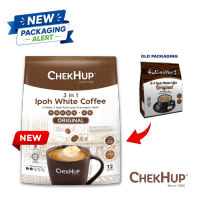
Chek Hup 3in1 Ipoh White Coffee Original (40g x 12)
₱360.00
Buy on Lazada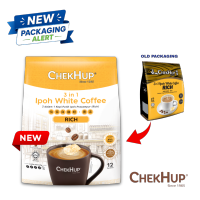
Chek Hup 3in1 Ipoh White Coffee Rich (40g x 12)
₱360.00
Buy on Lazada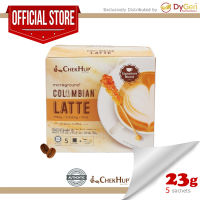
Chek Hup Microground Colombian Latte (23g x 5)
₱310.00
Buy on Lazada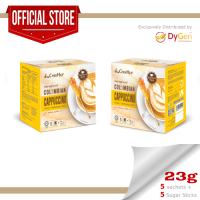
Chek Hup Microground Colombian Coffee Cappuccino (23g x 5)
₱310.00
Buy on Lazada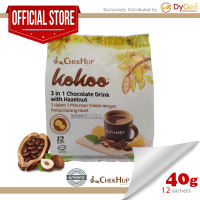
Chek Hup Kokoo 3in1 Chocolate Drink with Hazelnut (40g x 12)
₱360.00
Buy on Lazada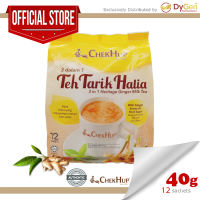
Chek Hup 3 in 1 Teh Tarik Halia (Ginger) 40g x 12
₱335.00
Buy on Lazada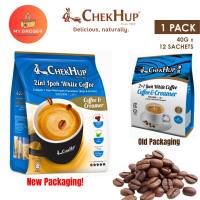
Chek Hup 2in1 Ipoh White Coffee & Creamer 30g x 12s
₱454.00
Buy on Lazada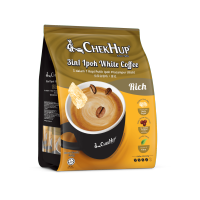
Chek Hup Ipoh White Coffee 3 in 1 – Rich
₱388.00
Buy on LazadaAbout Chek Hup
Overview
Chek Hup is a Malaysian food-and-beverage brand best known for its Ipoh White Coffee, instant coffee, rock sugar, tea, and chocolate beverages. Founded in Ipoh, Perak, in 1965, the company has evolved from a traditional rock-sugar producer into an international instant-beverage manufacturer with distribution across Southeast Asia and other overseas markets.1
Its story is particularly associated with Ipoh’s food culture, the development of Malaysian 3-in-1 beverages, and the use of rock sugar as a defining ingredient in its coffee products.
| Item | Details |
|---|---|
| Brand | Chek Hup |
| Chinese name | 澤合 |
| Founded | 1965 |
| Founder | Tan Soo Hor |
| Origin | Ipoh, Perak, Malaysia |
| Original business | Rock sugar |
| Main business today | Instant beverages and rock sugar |
| Best known for | Ipoh White Coffee |
| Major categories | Coffee, tea, chocolate, rock sugar |
| Headquarters / main base | Ipoh, Perak |
| Major market | Malaysia |
| International markets | Asia-Pacific, Greater China, UK, US and others |
| Business type | Food & beverage manufacturing |
| Corporate website | chekhup.com.my |
Chek Hup describes its business as covering the manufacture of rock sugars and instant beverages such as coffee, tea, and chocolate, while also participating in much of the coffee-making process from bean processing through to packaging.2
The meaning of “Chek Hup”
The name Chek Hup is a Cantonese expression meaning approximately “prosperity and unity.” The company states that the name was adopted when founder Tan Soo Hor entered the rock-sugar business in 1965.3
This origin is significant because Chek Hup did not begin as a coffee company. Its original identity was based on rock sugar, which later became one of the key ingredients that differentiated its instant coffee.
Founder — Tan Soo Hor
Chek Hup’s origins are closely connected to its founder, Tan Soo Hor, a Chinese immigrant entrepreneur.
According to the company’s history, Tan came to Malaysia from China in 1949 and initially helped relatives operate a grocery business in Rawang. He subsequently moved to Kuala Lumpur, where he became involved in selling traditional Chinese desserts.4
He eventually moved to Ipoh, where he established the well-known Funny Mountain Soya Bean business. This connection is historically notable because Funny Mountain and Chek Hup share the same founder. Reports indicate that Tan eventually handed the soya-bean business to his brother and concentrated on developing Chek Hup’s rock-sugar business.5
In simplified form, the founder’s trajectory was: China → Rawang → Kuala Lumpur → Ipoh → Funny Mountain → Chek Hup. Ipoh therefore became the foundation of both the founder’s entrepreneurial career and Chek Hup’s later identity.
1965 — Chek Hup begins as a rock-sugar company
In 1965, Tan Soo Hor entered the rock-sugar business and established Chek Hup. At this stage, Chek Hup was fundamentally a sugar manufacturer rather than a coffee brand. The company gradually built its reputation supplying rock sugar in Malaysia and eventually Singapore.6
By the 1990s, Chek Hup’s rock sugar had become an established product distributed across Malaysia and Singapore.7 This original business remains important today, as Chek Hup continues to manufacture and sell rock sugar alongside its beverage products.
The transition from sugar to coffee
The most significant turning point occurred around the late 1990s and 2000. Recognizing the growth of the 3-in-1 instant beverage market, Chek Hup entered the instant beverage business instead of remaining purely a sugar producer.
In 2000, it launched its first coffee beverage:
Chek Hup 3-in-1 Ipoh White Coffee
The product incorporated Chek Hup’s own rock sugar, connecting the company’s original business with its new coffee identity.8 This decision effectively transformed Chek Hup from a traditional ingredient manufacturer into a consumer-facing beverage brand.
Why Ipoh White Coffee became important
Chek Hup’s strongest association today is with Ipoh White Coffee. Ipoh is famous for its coffee culture, and Chek Hup used this regional identity to position its instant coffee as a convenient representation of the Ipoh-style coffee experience.
The company’s approach combined roasted coffee beans, milk or creamer components, its signature rock sugar, and instant-beverage technology into convenient sachets. The result was a product capable of reproducing the general experience of a creamy Malaysian coffee without requiring traditional coffee-shop preparation.
Chek Hup states that its signature white coffee uses selected coffee beans and its rock sugar, while its company history emphasizes efforts to preserve the taste and character associated with Ipoh coffee.9
Chek Hup’s coffee philosophy
A distinctive aspect of Chek Hup’s positioning is its emphasis on coffee + rock sugar. Historically, the company has emphasized coffee quality and the avoidance of artificial coffee flavouring. In a 2014 interview, managing director Joseph Tan stated that Chek Hup continued using rock sugar and did not use artificial flavours in its coffee. The same report described the company’s use of an Arabica/Robusta blend.10
This combination became an important part of the brand proposition: Coffee expertise + Malaysian heritage + rock sugar + convenience, rather than simply competing as another generic 3-in-1 coffee.
Expansion into other beverages
After establishing itself in coffee, Chek Hup expanded beyond white coffee. Its beverage portfolio came to include:
Coffee
- Ipoh White Coffee
- Black coffee
- Colombian coffee
- Gourmet coffee
- Cappuccino
- Latte
- Mocha
- Other specialty blends
Tea
- Teh Tarik
- Brown Sugar Milk Tea
- Other tea-based beverages7
Chocolate
- Kokoo Hot Chocolate
- White Hazelnut Hot Chocolate
- Other chocolate variants
The company describes its current portfolio as extending from traditional coffee and tea to more contemporary products, including gourmet coffee and options designed for particular dietary preferences.11
Teh Tarik
One particularly Malaysian component of Chek Hup’s portfolio is its Teh Tarik range. Teh tarik is traditionally prepared by repeatedly “pulling” tea between containers, producing its characteristic frothy texture.
Chek Hup developed an instant version intended to reproduce some of the characteristics of this Malaysian drink in a convenient format. The company states that its Teh Tarik is blended with its own rock sugar and does not use artificial tea flavouring.7 This illustrates an important aspect of Chek Hup’s brand strategy: taking familiar Malaysian drinks and converting them into convenient packaged beverages.
Rock Sugar — the original identity
Although many consumers associate Chek Hup primarily with coffee, rock sugar remains fundamental to the company. The brand has developed both traditional and convenience-oriented rock-sugar products.
Its rock-sugar range includes products such as:
- Traditional Rock Sugar
- Sugar Cane Rock Sugar
- Crystal Rock Sugar
- Brown Sugar
- Honey Rock Sugar
- Candied Melon
The company also introduced a Rock Sugar Convenience Series in 2017, using smaller pieces and resealable packaging to make rock sugar easier to measure, store, and use.12
There is a circularity in Chek Hup’s history: Rock sugar created Chek Hup → rock sugar helped create its coffee → coffee made Chek Hup internationally famous → Chek Hup continues selling rock sugar today.
Product evolution
A simplified timeline of product development appears below:
| Year | Development |
|---|---|
| 1965 | Chek Hup established as a rock-sugar producer |
| 1990s | Rock sugar expands across Malaysia and Singapore |
| 2000 | First Chek Hup instant coffee: 3-in-1 Ipoh White Coffee |
| 2003 | Kokoo Chocolate Drink introduced |
| 2007 | Teh Tarik range introduced |
| 2014 | Black Mandheling coffee introduced |
| 2015 | 50th anniversary and new headquarters |
| 2015 | Colombian Coffee using microground technology introduced |
| 2017 | Rock Sugar Convenience Series launched |
| 2019 | Low-GI certification obtained for relevant rock-sugar product |
| 2021 | E-shop, AirAsia partnership, Gourmet Coffee and other new products |
| 2021 | Bulletproof Coffee and Tarik Series introduced |
| 2022 | Kokoo Peppermint launched |
| 2023 | White Coffee with Soy Protein introduced |
| 2024 | Mobile application, revamped corporate website and new Gourmet Series products |
This chronology is based primarily on Chek Hup’s published corporate milestones.13
International expansion
Chek Hup’s growth has not been limited to Malaysia. The company states that it entered the export market in 2003, and its products subsequently expanded throughout Southeast Asia and Greater China.14
Its current corporate information lists markets including:
Asia-Pacific
- Malaysia
- Singapore
- Indonesia
- Brunei
- Myanmar
- Philippines
- Australia
- New Zealand
Greater China
- China
- Hong Kong
- Taiwan
Western markets
- United States
- United Kingdom
The exact distribution footprint can vary by product and period, but the overall strategy positions Chek Hup as a Malaysian beverage brand with an international consumer market.14
Manufacturing and corporate structure
Chek Hup operates several business entities connected to its beverage and sugar operations. The company’s corporate website identifies Chek Hup Beverage Sdn Bhd as the parent company and lists subsidiaries including:
- Chek Hup Sdn Bhd
- Innovate Instant Coffee Sdn Bhd
- Chek Hup Retail Sdn Bhd
Its manufacturing operations are based primarily around Ipoh, Perak, reinforcing the city’s importance to the brand.13 Chek Hup states that it is involved in much of the coffee process, from bean to bag, rather than simply purchasing finished coffee from another manufacturer.2
Scale
Chek Hup’s corporate history states that it produces more than 5,500 tonnes of instant beverages and rock sugar annually, with annual gross revenue of approximately RM100 million.13 These figures are company-reported rather than audited figures from a public listed-company filing and should be treated as an indication of scale rather than a current independently verified financial statement.
Brand identity
Chek Hup’s branding combines several ideas:
Malaysian heritage
The company draws heavily on Ipoh, Malaysian coffee culture, teh tarik, and traditional ingredients.
Convenience
Its principal consumer proposition is the ability to prepare familiar beverages quickly through sachets and instant formats.
Rock sugar
Rock sugar provides a direct link between the company’s historical identity and its modern beverage business.
Natural/quality positioning
Chek Hup emphasizes quality ingredients, product authenticity, and its stated mission of making products that are “delicious and natural.”9
Innovation
The company has expanded from conventional 3-in-1 coffee into microground coffee, gourmet beverages, plant-based offerings, and other contemporary formats.11
The Chek Hup logo
The Chek Hup logo features a distinctive rabbit motif accompanied by a wheelbarrow and coffee beans. According to the company:
- Rabbit — purity and honesty
- Upright ears — happiness and positivity
- CH — incorporated into the rabbit design
- Wheelbarrow — moving forward and staying ahead
- Coffee beans — represent the company’s core beverage business
The rabbit has subsequently become an important part of the brand’s visual identity.5
Brand mascots
Chek Hup has developed three rabbit characters:
Caffie
The “Hero Rabbit,” associated with genuineness, leadership, and being a companion to consumers.
Chekkie
The “Worker Rabbit,” representing skill, innovation, and commitment.
Huppie
The “Flying Rabbit,” representing efficiency, ambition, and achievement.
These mascots extend the rabbit symbolism of the corporate logo into consumer-facing brand communication.5
Sustainability
Since 2020, Chek Hup states that it has taken a more proactive approach to sustainability and has worked toward the United Nations Sustainable Development Goals (UN SDGs). The company frames sustainability around environmental, social, and governance considerations and the effect of its operations on people and the environment.9 This represents a shift from Chek Hup’s historical identity as a traditional food manufacturer toward a more modern corporate positioning.
Certifications
Chek Hup’s published corporate information lists certifications and registrations including:
- US FDA
- HACCP
- MeSTI Malaysia
- ISO 9001
- ISO 22000
These cover areas such as food safety, quality management, and manufacturing standards.9
Awards and recognition
Chek Hup has accumulated various awards over its history. Among those listed by the company are:
- International Taste & Quality Award — 2006, 2010, 2012
- Golden Bull Award — six times from 2006–2011
- Enterprise 50 Award — 2007–2009
- The BrandLaureate awards
- Brand of the Year — 2015
- Brand Icon Leadership Award — 2016
- Brand Excellence in Food & Beverage — 2016–2017
- World Halal BESTBRANDS e-Branding Award — 2021
- Marketing Excellence Awards — 2024, for multilingual marketing
These awards are reported on Chek Hup’s own website.9
What makes Chek Hup different
From a branding perspective, Chek Hup’s primary advantage is arguably its unusual origin story. Many instant-coffee companies begin as coffee companies; Chek Hup did not. Its evolution followed this path:
Traditional Chinese/Malaysian food entrepreneurship
↓
Rock sugar
↓
3-in-1 instant beverages
↓
Ipoh White Coffee
↓
International Malaysian beverage brand
This progression gives the company a credible heritage story that connects its current products to an actual manufacturing history rather than simply using “traditional Malaysian” as a marketing theme.
Chek Hup versus a typical 3-in-1 coffee brand
Chek Hup’s positioning can be understood through four layers:
| Layer | Chek Hup’s positioning |
|---|---|
| Heritage | Ipoh / Malaysian food culture |
| Ingredient | Signature rock sugar |
| Product | Instant coffee, tea and chocolate |
| Convenience | 3-in-1 / instant preparation |
| Expansion | Gourmet, specialty and newer lifestyle products |
| Geography | Malaysian origin with international distribution |
This combination allows Chek Hup to occupy a space between traditional Malaysian beverage culture and modern convenience FMCG.
Key products today
The modern Chek Hup portfolio is substantially broader than its original white coffee. Its website highlights several major product families:
Coffee
- Ipoh White Coffee
- Colombian Coffee
- Black Mandheling
- Gourmet Coffee
- Latte / Cappuccino / Mocha variants
Tea
- Teh Tarik
- Brown Sugar Milk Tea
Chocolate
- Kokoo Chocolate
- Hot Chocolate variants
Rock Sugar
- Traditional Rock Sugar
- Convenience Rock Sugar
- Specialty sugar products
The company also offers more recent products such as White Coffee with Soy Protein, which it describes as its first plant-based beverage.5
Chek Hup’s place in Malaysian food culture
Chek Hup is best understood not merely as a coffee manufacturer but as part of the broader Malaysian heritage-food and beverage industry. Its products commercialize items that Malaysians already recognize, including Ipoh white coffee, rock sugar, teh tarik, chocolate drinks, and kopitiam-style coffee.
The company’s strategy is essentially to take these familiar flavours and transform them into portable, shelf-stable, internationally distributable products. This explains why the brand’s identity remains strongly Malaysian even as it expands overseas.
A concise history
1965 — Foundation
Tan Soo Hor establishes Chek Hup in Ipoh as a rock-sugar business.1
1990s — Regional growth
Chek Hup’s rock sugar expands throughout Malaysia and into Singapore.7
2000 — Coffee breakthrough
The company launches its first 3-in-1 Ipoh White Coffee, marking its transition into instant beverages.8
2003 — Export expansion
Chek Hup begins developing its international export business.14
2003–2007 — Portfolio diversification
Chocolate and Teh Tarik products are added.7
2010s — Specialty coffee
The company expands into Colombian and Mandheling coffees, microground technology, and new rock-sugar formats.11
2020s — Modernization
Chek Hup expands its digital presence, sustainability initiatives, gourmet products, and newer lifestyle-oriented beverages.9
Today
Chek Hup remains an Ipoh-based Malaysian manufacturer and brand with a portfolio spanning coffee, tea, chocolate, and rock sugar, and an international market presence.14
References
- Brand Story – Chek Hup
- What We Do – Chek Hup
- Chek Hup continues to expand after launching Ipoh White Coffee in 2000 | The Star
- Chek Hup Ipoh White Coffee Original | Coffee Powder Malaysia
- Product – Chek Hup
- Chek Hup Ipoh White Coffee Malaysia | Buy Coffee Online
- Tea – Chek Hup
- Our Story | Life is Sweet | Chek Hup Rock Sugar | Ipoh Malaysia
- About – Chek Hup
- About Us – Chek Hup
- Coffee maker charts impressive progress | The Star
- Contact Us – Chek Hup
- CHEK HUP SDN. BHD.: Company & Credit Report | CTOS
- Chek Hup | mylkc