Shop on Lazada
Storck products
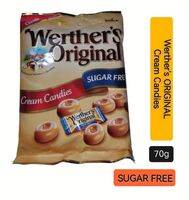
INTRODUCTORY SALE! Storck WERTHERS Original SUGAR FREE Cream Candies 70g
₱245.00
Buy on Lazada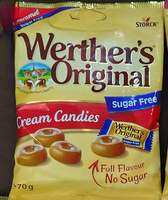
Werthers Original Assorted Flavor Sugar Free and Regular Candies - Creamy Filling Chewy Caramel Soft Chocolate Caramels Creamy Coffee Candies Chocolate Flavored Sugar Free
₱245.00
Buy on Lazada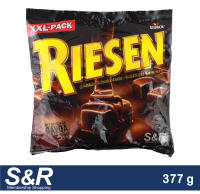
Storck Riesen Dark Chocolates 377g
₱279.00
Buy on Lazada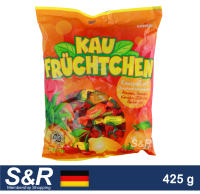
Storck Kau Fruchtchen Candy 425g
₱194.00
Buy on Lazada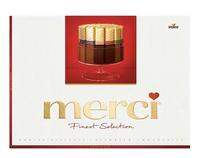
Storck Merci Red Assorted European Chocolates 250g
₱657.00₱658.00
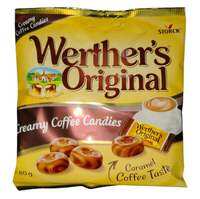
INTRODUCTORY SALE! Werthers Original CARAMEL Cream Candies/ Creamy COFFEE Candies/ SOFT CHOCOLATE Caramels Pack
₱195.00
Buy on Lazada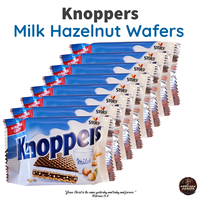
Storck Knoppers Milk Hazelnut Chocolate Wafers 4 pack or 8 pack
₱350.00
Buy on Lazada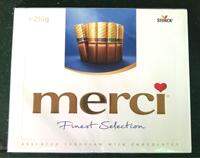
Storck Merci Blue Assorted European Milk Chocolates 250g
₱658.00
Buy on LazadaAbout Storck
August Storck KG, commonly referred to as Storck, is a privately held German confectionery manufacturer headquartered in Berlin, Germany. Established in 1903, the enterprise has expanded from a regional candy maker into one of the world’s leading confectionery groups. Its portfolio comprises internationally recognised brands including Werther’s Original, Toffifee, merci, Knoppers, Mamba, nimm2, RIESEN, and Dickmann’s.1
Storck remains an owner-managed family business with a global footprint, distributing products in more than 100 countries. As of 2026, the company reports over 8,500 employees, 22 international subsidiaries, and three primary production sites in Germany.1
Company profile
| Field | Information |
|---|---|
| Full legal name | AUGUST STORCK KG |
| Common name | Storck |
| Founded | 1903 |
| Founder | August Storck (later August Oberwelland) |
| Headquarters | Berlin, Germany |
| Industry | Confectionery / food |
| Products | Chocolate, candy, toffee, chewing gum, fruit gummies and other confectionery |
| Ownership | Privately owned, family-managed |
| Current family owner / managing head | Axel Oberwelland |
| Employees | 8,500+ |
| International presence | 100+ countries |
| International subsidiaries | 22 |
| Major German production locations | Berlin, Halle (Westphalia), Ohrdruf |
| Best-known brands | Werther’s Original, Toffifee, merci, Knoppers, Mamba, nimm2, RIESEN, Dickmann’s |
The company describes Storck as one of the largest confectionery manufacturers worldwide.1
History
Foundation: 1903
The origins of Storck date to 1903, when August Hermann Storck, who later adopted the surname Oberwelland, founded a candy factory in Werther, Westphalia.2
Originally operating under the name Werther’sche Zuckerwarenfabrik, the business began on a modest scale, producing sweets for retailers in the surrounding region.2 The company remained tied to the Oberwelland family throughout its expansion. In 1921, management passed to August Storck’s son, Hugo Oberwelland, who was instrumental in transforming the regional operation into a national confectionery business.2
The first major branded candy
A significant milestone occurred in 1934 with the introduction of the “1 Pfennig Riesen” candy. Rather than maintaining a vast assortment of unbranded sweets, the company focused on a distinct branded product. Storck regards this as a pivotal moment in its modern brand strategy and identifies it as Germany’s first branded candy.1 This product eventually evolved into the contemporary RIESEN brand.
Post-war expansion
Following the Second World War, Storck expanded both its production capabilities and product portfolio. Key developments during this period included:
- 1953: Launch of Mamba, which became Storck’s second major brand.
- 1954: Expansion into chocolate manufacturing.
- 1967: Establishment of a chocolate production facility in Berlin.
- 1969: Development of Werther’s Echte, the predecessor to Werther’s Original.
- 1971: Klaus Oberwelland assumed management, representing the third generation of family leadership.
The 1950s and 1960s marked Storck’s transition from a traditional candy producer to a diversified confectionery company.
Internationalization
From the 1970s onwards, Storck increasingly expanded beyond Germany by establishing international sales organisations and introducing products to new markets. During this era, the company developed several brands that would achieve global recognition. Notable developments included:
- 1983: Launch of Knoppers, a milk-hazelnut wafer.
- 1985: Introduction of Super Dickmann’s.
- 1988: Acquisition of the British confectionery company Bendicks of Mayfair.
- 1993: Opening of a modern production facility in Ohrdruf, Thuringia.
- 1996: Introduction of nimm2 Lachgummi.
- 1996: Adoption of the international name Werther’s Original as the standard branding for Werther’s.
In 1998, Storck relocated its management headquarters to Berlin, which remains the company’s principal base today.1
Fourth generation
A major generational transition took place in 2003 when Axel Oberwelland, a member of the fourth generation, assumed responsibility for the company. Under his leadership, Storck continued its international expansion and further developed existing brands across global markets. To mark its centenary, the company introduced a new corporate identity and the slogan “Storck – Part of Your World.” Axel Oberwelland remains the authorised representative and has been associated with the company’s management since 2003.
Major brands
Storck is distinguished by being better known as the parent company behind a portfolio of consumer brands than as a single consumer-facing candy label. Its portfolio includes:
Werther’s Original
Werther’s Original is among Storck’s most internationally recognisable brands, particularly associated with butter candies, caramel, and toffee products. The brand originated in Germany as Werther’s Echte in 1969 before adopting the Werther’s Original name for international markets.
Toffifee
Toffifee is a confection comprising a caramel shell containing hazelnut, nougat, and chocolate components. It is one of Storck’s major chocolate-confectionery brands and is sold internationally.
merci
merci is Storck’s chocolate gifting brand, characterised by individually wrapped chocolate pieces in assorted varieties. Unlike the company’s impulse-candy brands, merci is positioned around gifting and expressing appreciation.
Knoppers
Knoppers is best known as a layered wafer snack containing milk cream, hazelnut, and chocolate. Introduced in 1983, the brand has since expanded to include variations such as Knoppers NussRiegel.
Mamba
Mamba is Storck’s chewy fruit candy brand. Launched in 1953, it stands as one of the company’s longest-running brands.
RIESEN
RIESEN holds historical significance due to its roots in the 1 Pfennig Riesen introduced in 1934. It is primarily associated with dark chocolate-covered chewy caramel.
nimm2
nimm2 is a candy brand traditionally linked to fruit and vitamin-themed confectionery. The portfolio has expanded to include products such as nimm2 Lachgummi, a fruit-gummy candy.
Dickmann’s
Dickmann’s is Storck’s chocolate-coated marshmallow confectionery brand. The introduction of Super Dickmann’s in 1985 expanded the company’s presence in the foam-confectionery segment.
Storck’s official brand portfolio encompasses these and additional product lines.
Business model
Storck operates primarily as a brand-driven confectionery manufacturer. Instead of relying on a single flagship product, its strategy centres on a collection of highly recognisable individual brands occupying different segments of the market:
- Chocolate and praline-style products — merci, Toffifee
- Caramel and toffee — Werther’s Original, RIESEN
- Wafer snacks — Knoppers
- Chewy candy — Mamba
- Fruit gummies — nimm2
- Foam/chocolate confectionery — Dickmann’s
This diversified portfolio enables Storck to cater to various consumption occasions, ranging from everyday snacking and impulse purchases to gifting.
Manufacturing and operations
Storck maintains substantial production infrastructure within Germany. Its three principal locations are:
Berlin
Berlin serves as both a production and administrative centre and is the company’s primary management location. The chocolate factory at this site dates back to 1967.
Halle (Westphalia)
Halle in Westphalia is Storck’s main production and administrative factory, having served as a key company location for over 70 years. The site manufactures brands including Toffifee, Werther’s Original, nimm2, Mamba, and Dickmann’s. Storck also operates a logistics centre there for international distribution.
Ohrdruf
The Ohrdruf facility in Thuringia specialises in processed cocoa and chocolate confectionery. Products manufactured at this location include Knoppers, merci, and Werther’s Original.
Storck states that its products are developed, manufactured, marketed, and distributed through its own organisation, with production concentrated principally in Germany for international markets.
Global presence
Storck has evolved from a German confectionery company into an international group. According to current corporate information, Storck’s brands are sold in more than 100 countries, supported by 22 international subsidiaries and production and administrative infrastructure in Germany.1 This structure allows the company to adapt marketing, distribution, and brand management to individual markets while maintaining centralised manufacturing and corporate control.
Ownership and management
Unlike many large international food companies, Storck has neither become a publicly traded corporation nor been absorbed into a multinational conglomerate. It remains a privately owned, family-managed business.1
The company is part of the Oberwelland family succession. Axel Oberwelland, representing the fourth generation, has been responsible for the company since 2003.1 This independence is integral to Storck’s corporate identity; the company emphasises long-term development and sustainable growth over the short-term pressures often associated with publicly listed corporations.
Corporate philosophy
Storck articulates its corporate vision as making life “a bit sweeter, a bit warmer and a bit more cheerful.” Its stated principles include:
- Trust
- Responsibility
- Togetherness
- Commitment
- Growth
- Quality
The company places particular emphasis on maintaining consistent product quality and fostering long-term relationships with consumers, employees, suppliers, and retail partners.
Quality
Quality control is central to Storck’s positioning. The company states that its brands are developed using selected ingredients, modern production technology, and defined quality-control standards. Manufacturing systems adhere to recognised food-safety standards such as IFS Food and FSSC 22000. The overarching strategy combines large-scale industrial production with strong individual brand identities.
Sustainability
Storck has implemented sustainability initiatives covering responsible sourcing, production, employee welfare, and supply chains. In its sustainability reporting, the company highlights its status as an owner-managed family business with over 120 years of history, emphasising responsible growth and sustainable operations.
Storck’s position in the confectionery industry
Storck occupies a distinctive position in the global confectionery market due to several factors:
- German in origin — with over a century of history rooted in Westphalia.
- Family owned — unlike many competitors belonging to publicly traded multinational groups.
- Brand diversified — possessing numerous major consumer brands rather than a single dominant product.
- International — with products reaching more than 100 countries.
- Vertically capable — handling product development, manufacturing, marketing, and distribution through its own organisational structure.1
Its primary competitive asset is not merely manufacturing capacity but the collection of long-established brands that have secured strong consumer recognition across generations.
Name and corporate identity
The company is legally registered as AUGUST STORCK KG. The name derives from its founder, August Storck, who was born August Hermann Storck and later became known as August Oberwelland. The family name Oberwelland remains closely linked to the ownership and management of the company.2 Today, the corporate name Storck serves internationally as the umbrella identity for its portfolio of confectionery brands.
Timeline
| Year | Event |
|---|---|
| 1903 | August Storck establishes a candy factory in Werther, Westphalia |
| 1921 | Hugo Oberwelland takes over management |
| 1934 | “1 Pfennig Riesen” introduced |
| 1953 | Mamba launched |
| 1954 | Chocolate production begins |
| 1967 | Chocolate production facility established in Berlin |
| 1969 | Werther’s Echte introduced |
| 1971 | Klaus Oberwelland becomes head of the company |
| 1983 | Knoppers launched |
| 1985 | Super Dickmann’s introduced |
| 1988 | Bendicks of Mayfair acquired |
| 1993 | Ohrdruf production facility established |
| 1996 | nimm2 Lachgummi introduced |
| 1998 | Management headquarters moved to Berlin |
| 2003 | Axel Oberwelland assumes responsibility; Storck celebrates 100 years |
| 2003–present | Continued internationalization and expansion of the brand portfolio |
| Today | 8,500+ employees, 22 international subsidiaries and brands sold in 100+ countries |
Historical milestones are primarily based on Storck’s corporate history.1