Shop on Lazada
CJ products
![[CONDITION] Condition Hangover Stick Jelly 18g 5P/10P Condition Pills Korean Hangover Quick Hangover Relief](https://filebroker-cdn.lazada.com.my/kf/Sa893f3f133674cffb85197e2f38bd2732.jpg_200x200q80.jpg)
[CONDITION] Condition Hangover Stick Jelly 18g 5P/10P Condition Pills Korean Hangover Quick Hangover Relief
₱1,350.00₱2,051.00
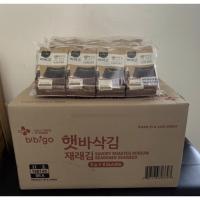
CJ BIBIGO SEAWEED 5G X 8 1 BOX (9PACK) / ONCHEONJI GWANGCHEON SEAWEED 1 BOX
₱1,568.00
Buy on Lazada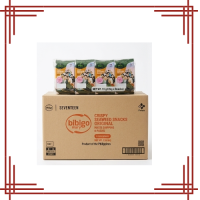
CJ Bibigo Hetbasak Jerekim4g*8 1box
₱1,836.00₱1,944.00
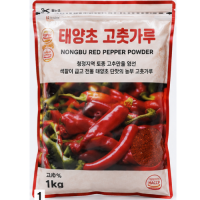
Nongbuga Chili Flakes For Kimchi 1kg
₱396.00
Buy on Lazada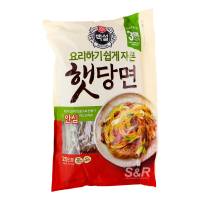
CJ Glass Noodle Vermicelli 500g
₱129.00
Buy on Lazada
CJ Hetban Cooked White Rice (210g x 3pcs)
₱285.00
Buy on Lazada
FRESHLY MADE KIMCHI 500GRAMS
₱150.00
Buy on Lazada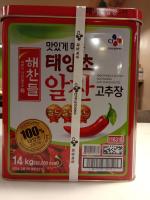
CJ Haechandeul Alchan Gochujang 14kg
₱2,100.00₱2,191.00
About CJ
Overview
CJ Group, commonly referred to as CJ, is a prominent South Korean conglomerate with business interests spanning food and food services, biotechnology, logistics and retail, and entertainment and media. Established in 1953 as CheilJedang, the company has grown from a sugar manufacturer into a global lifestyle and culture enterprise. It plays a significant role in the international expansion of K-food and K-culture.1
The group defines itself as a “Global Lifestyle Company” guided by the corporate philosophy of ONLYONE, which emphasizes being first, best, and different.2
| Item | Information |
|---|---|
| Name | CJ Group / CJ Corporation |
| Korean | CJ그룹 / CJ㈜ |
| Founded | 1953 |
| Original company | CheilJedang Co., Ltd. |
| Headquarters | Seoul, South Korea |
| Founder | Lee Byung-chull |
| Major business areas | Food & Food Service; Biotechnology; Logistics & New Distribution; Entertainment & Media |
| Corporate philosophy | ONLYONE |
| Vision | Global lifestyle company creating health, happiness and convenience |
| Corporate identity | CJ Blossom |
| Major global focus | K-food, K-beauty, K-content, logistics and global lifestyle businesses |
Originally part of the Samsung business empire, CheilJedang began manufacturing operations in 1953 and separated from Samsung during the 1990s. The CJ Group was formally established as an independent entity in 2002.3
Origin of the Name
The name CJ is derived from the company’s historical name, CheilJedang (제일제당), which formed the basis of its original corporate identity.
CheilJedang started as a food manufacturer and served as the foundation for the modern CJ Group. As the business expanded beyond food into entertainment, logistics, retail, and biotechnology, the group adopted CJ as its overarching corporate identity.4
It is important to distinguish between the two entities:
CJ Group ≠ CJ CheilJedang
CJ Group refers to the broader conglomerate, while CJ CheilJedang is a principal affiliate specifically responsible for food and biotechnology businesses.
History
1953–1960s: Foundation
CJ traces its origins to 1953, when CheilJedang Co., Ltd. was founded.
The company achieved a major milestone by producing Korea’s first domestically manufactured sugar, a vital consumer product in the postwar era. It subsequently diversified into flour, seasonings, and other food products.5
Key early milestones include:
- 1953 — Establishment of CheilJedang
- 1958 — Entry into flour manufacturing
- 1962 — Commencement of sugar exports
- 1963 — Expansion into the seasoning business
- 1965 — Launch of the Beksul food brand
Beksul grew to become one of the most recognized food brands in Korea.6
1970s–1980s: Diversification
During this period, CJ transitioned from a sugar producer to a diversified food and biotechnology company.
Significant developments included:
- 1973 — Entry into animal feed
- 1975 — Launch of Dasida seasoning
- 1978 — Establishment of a food research center
- 1979 — Entry into cooking oil
- 1980 — Expansion into meat processing
- 1987 — Entry into frozen foods
- 1988 — Expansion of biotechnology business into Indonesia
These initiatives transformed CheilJedang into a comprehensive food and bio enterprise.7
Separation from Samsung
A pivotal moment in the company’s history was its separation from the Samsung group. In 1993, CheilJedang declared independent management, followed by the formal establishment of the CheilJedang Group in 1996.8
This independence allowed the company to pursue strategies beyond food manufacturing. Throughout the 1990s, CJ entered new industries including food service, restaurants, film, television, cinema, information technology, construction, logistics, and retail. This diversification laid the groundwork for the modern CJ Group.
Transformation into a Lifestyle Conglomerate
The 1990s and early 2000s marked CJ’s transformation into a lifestyle conglomerate.
1994
Entry into dining and food-service businesses.
1995
Expansion into information systems, construction, and film.
1996
Establishment of the CheilJedang Group and entry into the cinema industry. The company also launched Hetbahn, which became an iconic packaged instant-rice brand in Korea.9
1997
Launch of VIPS steakhouse and TOUS les JOURS bakery. CJ also expanded into media and entered the Philippine animal-feed industry.
1998
Establishment of CJ GLS (now CJ Logistics) and opening of CGV Gangbyeon 11, Korea’s first multiplex cinema.
1999
Launch of Olive Young, Korea’s first health-and-beauty store.10
2000
Establishment of CJ Entertainment, the predecessor to the current CJ ENM entertainment division.
These strategic moves defined the four core pillars of the group: Food → Bio → Logistics/Retail → Entertainment/Media.
Formation of CJ Group
The CJ Group was formally established in 2002.11 This reorganization signaled a shift from a traditional food manufacturer to a diversified lifestyle and culture conglomerate.
The company sought to influence daily life through food consumption, distribution channels, shopping experiences, cinema viewing, music and television content, and the global reach of Korean culture.
Role in the Globalization of K-Culture
CJ is instrumental in the globalization of Korean culture, having built an ecosystem that encompasses production, distribution, cinemas, music, television, streaming, food, and consumer experiences.
Notable milestones include:
2006
Launch of tvN, now a major entertainment channel in Korea.
2009
Introduction of 4DX, a cinema technology incorporating physical and environmental effects.
2010
Launch of bibigo, a key global K-food brand, and CJ ONE, an integrated membership service.12
2011
Establishment of CJ E&M, which later merged to form CJ ENM.
2012
Inaugural KCON held in Los Angeles, establishing a major international platform for K-pop and Korean popular culture.13
2016
Establishment of Studio Dragon, a leading drama production company.
2020
The CJ-backed film Parasite won the Academy Award for Best Picture, marking a historic achievement for Korean cinema and CJ’s entertainment ecosystem.14
Business Sectors
CJ organizes its operations into four major sectors.15
Food & Food Service
This sector represents CJ’s historical roots, led primarily by CJ CheilJedang. Major brands and businesses include:
- bibigo
- Beksul
- Hetbahn
- Dasida
- CJ Foods
- CJ Foodville
- CJ Freshway
- TOUS les JOURS
- VIPS
bibigo is central to CJ’s strategy to establish Korean food as a global category. Products include mandu/dumplings, kimchi, rice, seaweed, sauces, and ready-to-eat meals. Global sales of bibigo mandu surpassed KRW 1 trillion in 2020.16
Biotechnology
Leveraging its food production expertise, CJ produces food ingredients, amino acids, feed ingredients, specialty ingredients, and biobased materials. The company has also expanded into microbiome research, health and wellness, and biodegradable materials.
In 2022, CJ launched CJ Bioscience and CJ Wellcare to strengthen its position in the microbiome and wellness sectors.17 This substantial industrial biotechnology operation distinguishes CJ from other entertainment-focused conglomerates.
Logistics & New Distribution
CJ Logistics operates across supply-chain management, transportation, warehousing, parcel delivery, e-commerce logistics, global logistics, and industrial logistics. The company views logistics as essential to becoming a global supply-chain-management leader.18
This network connects CJ’s consumer businesses to global customers, supporting the broader ecosystem by linking food production to retailers and end consumers.
Retail: Olive Young
Founded in 1999 as Korea’s first health-and-beauty store, CJ Olive Young has evolved into a lifestyle retailer closely associated with K-beauty.19
Its assortment includes skincare, cosmetics, haircare, personal care, health products, and lifestyle items. Olive Young serves as a discovery platform for Korean beauty brands, helping smaller companies reach international consumers.20
Entertainment & Media
This sector is CJ’s most internationally visible division.
- CJ ENM: One of Korea’s largest entertainment and media companies, covering television, film, music, live entertainment, content production, and distribution. Key properties include tvN, Mnet, KCON, and MAMA Awards.21
- Studio Dragon: A major drama production company within the CJ content ecosystem.
- TVING: A Korean streaming platform originating from CJ’s media operations.
- CJ CGV: Operates cinemas and develops technologies such as 4DX, SCREENX, IMAX-related experiences, and premium cinema concepts. CGV has expanded to hundreds of locations internationally.22
Major Brands
| Category | Major CJ companies / brands |
|---|---|
| Food | CJ CheilJedang, bibigo, Beksul, Hetbahn, Dasida |
| Bakery / Food Service | TOUS les JOURS, CJ Foodville, VIPS |
| Beauty / Retail | Olive Young |
| Logistics | CJ Logistics |
| Media | CJ ENM |
| Cinema | CJ CGV |
| Drama | Studio Dragon |
| Streaming | TVING |
| Music / Culture | Mnet, KCON, MAMA |
| Biotechnology | CJ CheilJedang Bio, CJ Bioscience |
| Digital / IT | CJ OliveNetworks |
| Commerce | CJ ENM Commerce / CJ ONSTYLE |
These businesses are officially grouped under CJ’s four major sectors.23
Corporate Philosophy and Identity
CJ’s corporate philosophy centers on ONLYONE, defined as First, Best, Different. The company aims to create differentiated products, services, and business models rather than replicating existing ones.24
Core values include:
- OnlyOne — First, Best, Differentiation
- Talent — Exceptional talent and strong/adaptive culture
- Shared Growth — Building ecosystems and shared value
Behavioral principles emphasize integrity, passion, creativity, and respect.
The corporate logo, known as the CJ Blossom, uses three signature colors representing health, happiness, and convenience. The symbol reflects CJ’s aspiration to bloom toward global markets while maintaining a fresh, approachable image consistent with its positioning as a Global Lifestyle Company.25
Connection to Korean Culture
CJ uniquely integrates commerce and culture across its ecosystem:
- Food: bibigo introduces Korean flavors globally.
- Beauty: Olive Young showcases K-beauty trends.
- Entertainment: CJ ENM produces and distributes Korean movies, dramas, and music.
- Cinema: CGV provides venues and technologies for cultural consumption.
- Logistics: CJ Logistics facilitates global supply chains for these products.
This integrated approach allows CJ to participate in both the creation and distribution of Korean lifestyle products and cultural content, aiming to make them part of everyday life worldwide.26
International Expansion
CJ has progressively expanded into major markets including the United States, China, Japan, Vietnam, Indonesia, Philippines, Brazil, Malaysia, Cambodia, Myanmar, Europe, and the Middle East.
Recent expansion efforts span food manufacturing, logistics, entertainment, and retail. Milestones for 2025 included a new CheilJedang factory in Chiba, Japan; a CJ Logistics distribution center in Saudi Arabia; expanded TVING global channels; and a new CJ Foodville factory in Georgia, USA.27
Presence in the United States
The United States is a key market for CJ, hosting operations across CJ CheilJedang, bibigo, CJ Logistics, CJ ENM, CJ CGV, Olive Young, and Foodville/TOUS les JOURS.
The food business expanded significantly following the acquisition of Schwan’s Company in 2019.28 Additionally, Olive Young announced its first U.S. store in Pasadena in June 2026, highlighting K-beauty as a growing component of CJ’s international strategy.29
Significance to the Korean Wave
CJ is closely associated with the commercialization and international expansion of the Korean Wave (Hallyu). Its contributions extend beyond financing to encompass:
- K-food: bibigo, CJ CheilJedang
- K-beauty: Olive Young
- K-pop: Mnet, KCON, MAMA
- K-drama: tvN, Studio Dragon, TVING
- K-film: CJ ENM film operations
- Cinema: CGV, 4DX, SCREENX
Consequently, CJ functions as a comprehensive K-culture ecosystem rather than a traditional conglomerate.
Key Milestones
- 1953: CheilJedang founded; Korea’s first domestic sugar production.30
- 1965: Beksul launched.
- 1975: Dasida launched.
- 1993: CheilJedang begins independent management.
- 1996: CheilJedang Group established; Hetbahn launched; CJ enters cinema.
- 1997: TOUS les JOURS and VIPS launched.
- 1998: CGV opens Korea’s first multiplex; CJ enters logistics.
- 1999: Olive Young launched.
- 2002: CJ Group formally established.
- 2006: tvN launched.
- 2009: 4DX launched.
- 2010: bibigo launched.
- 2011: CJ E&M established.
- 2012: KCON launched in Los Angeles.
- 2016: Studio Dragon established.
- 2019: CJ CheilJedang acquired Schwan’s Company.
- 2020: Parasite wins Best Picture at the Academy Awards.
- 2021: CJ ENM enters global film-production partnership via Endeavor Content.
- 2022: CJ Bioscience and CJ Wellcare launched.
- 2023: CJ celebrates its 70th anniversary.
- 2024: Olive Young opens innovation store, Olive Young N Seongsu.
- 2025: Expansion of international food, logistics, cinema, and streaming operations.31
Distinction from Other Chaebols
While sharing characteristics with other major Korean conglomerates, CJ possesses a distinct identity. Unlike groups focused on electronics, automobiles, or heavy industry, CJ concentrates on lifestyle, food, culture, distribution, and entertainment.
| Group | Primary Association |
|---|---|
| Samsung | Electronics, technology, semiconductors |
| Hyundai Motor Group | Automobiles |
| LG | Electronics, chemicals |
| SK | Energy, telecommunications, semiconductors |
| CJ | Food, culture, entertainment, logistics, retail |
CJ’s strategy focuses on transforming everyday lifestyle and culture into globally scalable businesses.
Broader Significance
CJ holds significance for three primary reasons:
- Transformation: Evolved from a 1953 sugar manufacturer into a diversified conglomerate spanning cinema, television, music, logistics, beauty, biotechnology, and retail.32
- Cultural Commercialization: Created channels such as KCON, Mnet, CJ ENM, CGV, Studio Dragon, bibigo, and Olive Young through which international consumers engage with Korean culture.
- Integration of Culture and Commerce: Uniquely encompasses the entire value chain from creation and production to marketing, distribution, retail, and consumption. For instance, CJ CheilJedang produces food products transported by CJ Logistics and sold globally, while CJ’s entertainment assets simultaneously promote the cultural appeal of those products.
CJ is a South Korean global lifestyle conglomerate that evolved from a 1953 sugar manufacturer into a diversified group spanning food, biotechnology, logistics, retail, beauty, cinema, television, music, and digital entertainment, serving as a major force behind the globalization of K-food and K-culture.33
The CJ logo represents a large business group whose consumer-facing portfolio ranges from bibigo and Beksul to Olive Young, CGV, TVING, Mnet, KCON, and Studio Dragon, supported by substantial industrial operations in food, biotechnology, and logistics.34
References
- History | CJ Group
- Our Company – CJ Newsroom
- CJ Group Introduction | CJ America
- | | | — | — | — | — | | C1 |
- History | CJ Cheiljedang
- CJ Group History | CJ America
- 소개 | CJ그룹
- 계열사 | CJ그룹
- 소개 | CJ그룹
- Press Release | CJ America
- CJ미디어라이브러리 – CJ NEWSROOM
- Food Industry Veterans See CJ as One Team
- CJ’s Golf Dreams: ‘Dream bigger, goal higher’
- Chairman Lee: ‘Only One, Next One, Number One’
- CJ Chairman Lee Visits THE CJ CUP 2026 – CJ NEWSROOM
- CJ그룹 2026년 정기임원인사 단행 – CJ 뉴스룸
- How CJ Fosters Global Talent Ep 3: Where Dreams “Blossom” for Scientists
- The Evolution of Korea’s First Sugar Manufacturer Over 70 Years
- CJ대한통운으로 설렘이 오네(O-NE)! 오네 기획 비하인드 스토리 – CJ 뉴스룸
- Part 8: The History of CJ CheilJedang – CJ Newsroom
- “백설표 하면 믿을 수 있게” 브랜드를 키우다 – CJ 뉴스룸
- 스튜디오드래곤, 글로벌 진출 가속화할 신규 CI · 슬로건 공개 – CJ 뉴스룸
- CJ ENM 출범 10주년, CI 리뉴얼 및 브랜드 재정비 – CJ 뉴스룸
- 연혁 | CJ그룹
- ABOUT CJ – CJ NEWSROOM
- CJ그룹
- CJ Group Entertainment & Media | CJ America
- CJ Group Entertainment & Media | CJ America
- CJ Logos | Media Assets – CJ Newsroom
- CJグループ紹介 | CJ Japan
- CJ Group Food & Food Service | CJ America
- Affiliates | CJ Group
- CJ Group | Media Assets – CJ Newsroom
- Brand Story | CJ Group