Shop on Lazada
Colourpop products
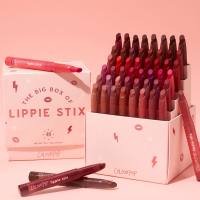
COLOURPOP LIPPIE STIX LIPSTICK VAULT (PER PIECE)
₱199.00
Buy on Lazada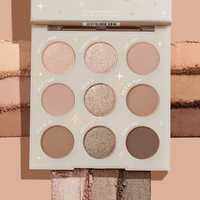
🇺🇸 COLOURPOP Deja Brew Eyeshadow Palette
₱1,099.00
Buy on Lazada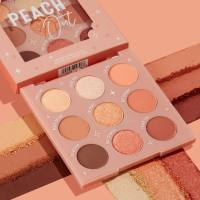
COLOURPOP PEACH OUT EYESHADOW PALETTE
₱880.00
Buy on Lazada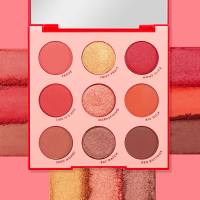
COLOURPOP MAIN SQUEEZE EYESHADOW PALETTE
₱880.00
Buy on Lazada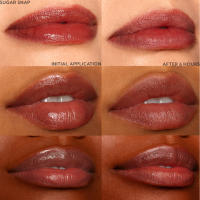
Colourpop Fresh Kiss Glossy Lip Stain 6g | Non-Drying Glossy Lip Stain
₱770.00
Buy on Lazada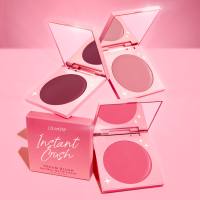
COLOURPOP CREAM BLUSH INSTANT CRUSH
₱599.00
Buy on Lazada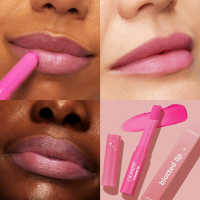
Colourpop Blotted Lip 1.6g | Weightless & Blurred Focus Matte Finish
₱660.00
Buy on Lazada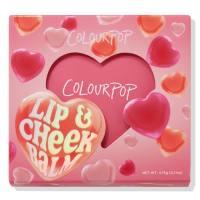
Colourpop - lip and cheek balm
₱599.00
Buy on LazadaAbout Colourpop
ColourPop Cosmetics, commonly referred to as ColourPop, is an American beauty and cosmetics brand established in 2014 by siblings Laura Nelson and John Nelson. The label is widely recognized for its vibrant, trend-responsive makeup, accessible price points, extensive shade ranges, frequent limited-edition releases, and collaborations with entertainment and pop-culture franchises.
ColourPop was created under Seed Beauty, the Nelson family’s beauty-brand development and manufacturing company. Its founding concept centered on making high-quality, fashionable cosmetics available at prices that encourage experimentation rather than treating makeup as an exclusive luxury.1
Brand profile
| Category | Information |
|---|---|
| Brand name | ColourPop Cosmetics |
| Common name | ColourPop |
| Industry | Cosmetics / Beauty |
| Founded | 2014 |
| Founders | Laura Nelson, John Nelson |
| Parent company | Seed Beauty |
| Base | California, United States |
| Original business model | Direct-to-consumer / e-commerce |
| Main categories | Eye, lip, face and body makeup |
| Brand positioning | Affordable, trend-driven, experimental beauty |
| Cruelty-free claim | Yes, according to ColourPop |
| Official website | colourpop.com |
According to the brand’s own history, ColourPop officially launched on May 1, 2014, debuting with 31 shades of Super Shock Shadow.2
Origins and founding
The origins of ColourPop predate its 2014 launch by several decades. The Nelson family possesses longstanding experience in cosmetics manufacturing, having acquired a Southern California cosmetics manufacturer in the late 1980s. They subsequently spent decades working with major beauty companies, gaining comprehensive knowledge of formulation, production, packaging, and market distribution.3
Their father’s company, Spatz Laboratories, was based in Oxnard, California. Laura and John Nelson grew up within the cosmetics industry and eventually utilized this manufacturing infrastructure as the foundation for a new type of beauty business.4
The siblings established Seed Beauty, which serves as the parent company behind ColourPop. Their core objective was to eliminate unnecessary layers between product development and the consumer, manufacture efficiently, respond rapidly to trends, and sell attractive cosmetics at accessible prices. This vertical integration became one of ColourPop’s defining competitive advantages.
Launch in 2014
ColourPop officially launched on May 1, 2014. Its debut collection consisted of 31 shades of Super Shock Shadow, a unique cream-to-powder eyeshadow formula that became a signature product associated with the brand.5
This launch diverged significantly from the traditional beauty-industry model of the era. Rather than relying primarily on department stores and physical counters, ColourPop was built as a digital-first brand. Social media, beauty influencers, online reviews, tutorials, and direct consumer feedback were central to its growth strategy.6 This approach aligned with the mid-2010s beauty landscape, where YouTube and Instagram were rapidly becoming primary sources for makeup discovery.
Business model
ColourPop operates on a business model designed around speed, manufacturing control, social media engagement, and direct consumer feedback. Seed Beauty’s relationship with the Nelson family’s manufacturing infrastructure allows ColourPop to keep product development and production unusually close together. Industry reporting has noted that ColourPop can develop products significantly faster than traditional beauty companies.7
Operational cycle
The brand follows a streamlined cycle: Trend → social media feedback → product concept → formulation → manufacturing → launch.
This structure enables ColourPop to react to shifting beauty trends much faster than conventional cosmetics companies. This agility has become intrinsic to the brand’s identity.
Affordable luxury philosophy
ColourPop’s central philosophy is best summarized as affordable or accessible luxury. The company explicitly describes its mission as making high-quality beauty accessible, arguing that luxury-quality cosmetics should not necessitate luxury pricing.8
This positions ColourPop between traditional drugstore makeup and prestige cosmetics. Current retail assortments include products such as:
- Super Shock Shadow
- 9-pan eyeshadow palettes
- Blush
- Concealer
- Foundation
- Lip oils
- Lip balms
- Lip gloss
- Lip pencils
- Eyeliners
- Brow products
- Body glitter
Listings at retailers like Ulta and Target show many ColourPop products priced in the lower-to-mid range, while larger palettes and elaborate sets occupy higher price points.9 Consequently, the brand’s value proposition is not merely low cost, but rather highly experimental makeup at prices that make experimentation relatively low-risk for consumers.
Product categories
Since its inception, ColourPop has expanded significantly beyond its original eyeshadow offerings.
Eyes
Eyeshadow remains one of ColourPop’s most recognizable categories. The portfolio includes:
- Pressed powder eyeshadows
- Eyeshadow palettes
- Super Shock Shadows
- Liquid eyeshadows
- Cream eyeshadows
- Eyeshadow sticks
- Eyeliners
- Mascaras
- Brow products
The Super Shock Shadow holds historical significance as part of the original 2014 launch.10 It continues to be featured prominently in current retail assortments.11
Lips
ColourPop has developed a comprehensive lip portfolio, including:
- Lipstick
- Liquid lipstick
- Lip liner
- Lip gloss
- Lip oil
- Lip balm
- Lip treatments
- Lip masks
- Lip scrubs
Current retail listings feature items such as Fresh Kiss Glossy Lip Balm, Ultra Glossy Lip, and various lip-pencil combinations.12
Face
The brand eventually expanded into complexion products. The face range includes:
- Foundation
- Tinted moisturizer
- Concealer
- Setting powder
- Blush
- Highlighter
- Primer
- Setting spray
- Complexion balms
In 2018, ColourPop launched its No Filter Foundation with 42 shades, marking a significant expansion from its original eye-focused identity into complexion makeup.13 Today, the Pretty Fresh line and other complexion products form a substantial part of its portfolio.14
Shade diversity
Shade variety is a fundamental component of ColourPop’s identity. The company has historically emphasized providing numerous colors and finishes rather than maintaining a conservative selection. This is evident across its eyeshadows, lip colors, foundation shades, concealers, blushes, and highlighters.
This approach aligns with ColourPop’s philosophy of being “priced to play,” making it easier for consumers to try colors, textures, and styles they might otherwise avoid due to cost or commitment.15
Social media strategy
ColourPop’s rise is intrinsically linked to the development of the beauty influencer economy. In the 2010s, YouTube beauty gurus, Instagram makeup artists, and beauty bloggers became major drivers of cosmetics discovery. ColourPop was uniquely suited to this ecosystem because its products were visually distinctive, inexpensive enough to encourage experimentation, highly shareable, released frequently, available in numerous colors, and easy to demonstrate through swatches and tutorials.
Fast Company described the brand’s strategy as essentially making makeup native to Instagram rather than designing it primarily around traditional retail shelves.16 This helped establish ColourPop as a pioneer of social-media-native beauty.
Collaborations
Collaborations are among ColourPop’s most recognizable marketing strategies. Instead of relying exclusively on conventional advertising, the brand repeatedly creates collections around recognizable entertainment, celebrity, and pop-culture properties.
A prominent example is Disney. ColourPop’s Disney collection includes makeup inspired by Disney characters and films, featuring eyeshadows, lip products, and face items.17 Historically, ColourPop has also collaborated with various personalities, influencers, and entertainment franchises. This approach transforms makeup collections into collectible cultural products rather than standard cosmetic releases.
Retail expansion
ColourPop originally operated primarily as an online direct-to-consumer business. As its popularity grew, it expanded into physical retail.
The brand entered Sephora in 2017 and subsequently expanded into Ulta Beauty.18 Today, ColourPop products are available through major retail channels including:
- ColourPop’s own website
- Ulta Beauty
- Target
Ulta currently lists approximately 60 ColourPop products, while Target carries a substantial assortment across eyes, lips, and face categories.19 This trajectory represents an evolution from a digital-native startup in 2014 to an influencer-driven online phenomenon in the mid-2010s, and finally to a brand with broad mainstream retail presence.
Manufacturing and vertical integration
A distinctive aspect of ColourPop is its relationship with Seed Beauty. While traditional cosmetics companies frequently rely on numerous outside suppliers, manufacturers, distributors, and retailers, ColourPop’s parent-company structure keeps much of the process within the Nelson family’s broader beauty-manufacturing ecosystem.
Industry reporting describes Seed’s operation as combining brand development, product development, and manufacturing capabilities, helping ColourPop move products from concept to consumer unusually quickly.20 This vertical integration is a key factor enabling rapid product launches, frequent new collections, limited-edition products, trend responsiveness, and comparatively low prices.
Cruelty-free positioning
ColourPop states that it is 100% cruelty-free and does not test its cosmetics on animals. The company’s stated philosophy is that cosmetics can be tested for safety without animal testing.21 This stance has been an important part of its brand positioning, particularly among younger beauty consumers.
It is important to distinguish cruelty-free from vegan, as they are not synonymous. A cruelty-free claim concerns animal testing, whereas vegan generally concerns the absence of animal-derived ingredients. Individual ColourPop products may have different formulation claims, so consumers are advised to check specific product details rather than assuming identical certification or ingredient status across the entire line.
Brand personality
ColourPop’s visual and verbal identity is deliberately playful. The name ColourPop communicates color, excitement, and visual impact. The company emphasizes originality, fun, experimentation, accessibility, community, and color.
ColourPop describes its philosophy as avoiding generic “me-too” products, focusing instead on creating proprietary formulas, shades, and packaging.22 This explains the brand’s frequent production of unusual colors, themed collections, and seasonal launches.
Industry influence
ColourPop’s significance extends beyond individual products. It demonstrated that a cosmetics company could build a major brand around a combination of social media, direct-to-consumer commerce, rapid manufacturing, influencer culture, and affordable pricing.
In this sense, ColourPop belongs to the generation of digital-native beauty brands that challenged the traditional prestige/drugstore division. Its model influenced the broader beauty market by showing that consumers could be persuaded to buy cosmetics through Instagram, YouTube, and online communities rather than discovering products exclusively through department-store counters.
Relationship with Gen Z and younger consumers
Although ColourPop’s initial rise predates Gen Z’s complete dominance of beauty culture, its business model aligns well with younger consumers. The brand offers a low barrier to experimentation; instead of purchasing one expensive prestige palette, a customer can acquire several inexpensive products to experiment with different looks.
This encourages trend participation, collecting, seasonal purchases, limited-edition acquisitions, fandom-based buying, and social-media sharing. The current assortment continues to reflect this strategy, featuring colorful products, themed collections, and pop-culture collaborations alongside everyday makeup.23
Sister brands and the Seed Beauty ecosystem
ColourPop is not the only beauty brand associated with the Nelson/Seed Beauty ecosystem. Fourth Ray Beauty operates in skincare, while Sol Body focuses on body-related beauty products.24 This illustrates the larger strategy behind Seed Beauty: functioning as a platform for creating and developing multiple beauty brands rather than operating as a conventional single-brand cosmetics company.
Notable milestones
1980s
The Nelson family’s involvement in cosmetics manufacturing begins with the acquisition of a Southern California cosmetics manufacturer.25
2014
Laura and John Nelson launch ColourPop. The brand debuts on May 1, 2014, with 31 Super Shock Shadow shades.
2014–2016
ColourPop rapidly develops an online following through social media, beauty influencers, and its affordable product strategy.26
2017
ColourPop begins its retail relationship with Sephora, marking an important step beyond its original online-only model.27
2018
The brand expands into complexion makeup with the No Filter Foundation, launched in 42 shades. ColourPop also becomes available through select Ulta Beauty locations.28
2019 onward
ColourPop continues expanding into skincare-adjacent, body, and complexion categories while increasing its collaborations and physical retail presence.
2020s
The brand continues operating as a major affordable beauty brand, with products available through its own website and major retailers such as Ulta and Target.29
Key brand associations
ColourPop’s reputation in the beauty industry is defined by several core associations:
- Color: Huge variety of shades and finishes.
- Accessibility: Products positioned at comparatively approachable prices.
- Speed: Frequent new releases and rapid reaction to trends.
- Social media: A brand built alongside the influencer/beauty-content ecosystem.
- Eyeshadow: Super Shock Shadow and extensive eyeshadow palettes were foundational to the brand.
- Experimentation: Makeup is presented as something to play with rather than a serious luxury purchase.
- Collaborations: Frequent collections based on celebrities, entertainment, and pop culture.
- Cruelty-free: The company states that its products are cruelty-free.30
Market positioning
ColourPop occupies a distinct middle ground in the beauty market, difficult to classify as purely “drugstore” or purely “prestige.”
| Traditional drugstore | ColourPop | Prestige beauty |
|---|---|---|
| Low price | Accessible price | High price |
| Mass distribution | Digital + mass retail | Department/specialty retail |
| Fewer trend-driven launches | Very frequent launches | Often slower launches |
| Functional branding | Playful/social branding | Luxury branding |
| Broad mainstream appeal | Trend/fandom/community appeal | Status/luxury appeal |
This intermediate positioning is arguably one of the primary reasons for the brand’s success.
Overall assessment
ColourPop’s significance lies less in inventing a particular type of makeup and more in changing how makeup could be created, marketed, and sold. The brand combined a pre-existing cosmetics-manufacturing background with a modern digital strategy. Instead of spending years developing a small number of products for traditional retail channels, ColourPop built a system around rapid development, online communities, trend responsiveness, affordable pricing, and frequent product launches.31
Its original 2014 launch of 31 Super Shock Shadows grew into a broad beauty business covering eyes, lips, complexion, and body products, while collaborations such as Disney collections helped turn makeup into a form of pop-culture merchandise.
ColourPop is a California-born, Seed Beauty-owned cosmetics brand that helped popularize the idea of fast, social-media-driven, affordable “indie” beauty at mainstream scale. Its core philosophy can essentially be reduced to making high-quality makeup affordable enough that people can have fun experimenting with it.
References
- About Us
- How ColourPop Is Putting A New Face On The Online Cosmetics Business – Fast Company
- ColourPop Founders Interview – Creating Kylie Lip Kit
- ColourPop – 60 Products | Ulta Beauty
- ColourPop products at Target
- ColourPop Makeup Essentials: Lipstick & Eyeshadow
- ColourPop Cosmetics
- ColourPop : Face Makeup : Target
- ColourPop®: Shop the ColourPop x Disney Collab Collection
- Who Owns ColourPop? A Privately Held Beauty Brand – LegalClarity
- ColourPop: Ten Years of Beauty Excellence
- About – ColourPop
- Laura Nelson – ColourPop
- Press Release – ColourPop
- Colourpop: Cruelty-Free Statement And Vegan Product List | Cruelty-Free Kitty
- 제6화. 슈퍼루키 브랜드, ColourPop (of Seed Beauty) – 아모레퍼시픽 스토리(AMOREPACIFIC STORIES)
- Kylie Jenner Built a Business Empire out of Lip Kits and Fan Worship | Vanity Fair
- Giới Thiệu-Colourpop
- About Us – colourpop
- ColourPop : Beauty : Target
- ColourPop : Makeup : Target
- ColourPop : Makeup : Target
- ColourPop : Makeup : Target
- ColourPop : Makeup : Target
- ColourPop : Makeup : Target
- ColourPop : Makeup : Target
- ColourPop : Makeup : Target
- ColourPop : Featured Brands : Target
- About Us – ColourPop®: Shop Eyes | Discover Stunning Eye Makeup
- About us | colourpop-dev2
- Colour Pop – Los Angeles, California, ColourPop Cosmetics | about.me