Shop on Lazada
Cross products
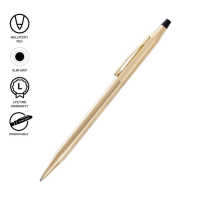
Cross Pens Classic Century Limited-Edition 23Kt Gold Plated Ballpoint Pen CAT0082-156
₱8,547.00₱14,245.00
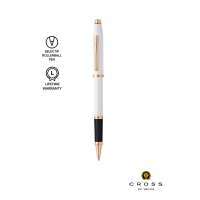
Cross Pens Century II Pearlescent White Lacquer with Rose Gold Rollerball Pen White CAT0085-113
₱12,596.00₱15,745.00
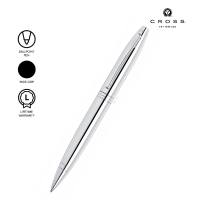
Cross Pens Calais Lustrous Chrome Ballpoint Pen Silver CAT0112-1
₱1,947.00₱3,245.00
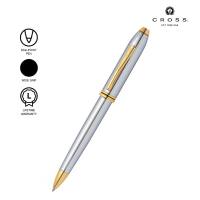
Cross Pens Townsend Wide Grip Medalist Ballpoint Two Tone Pen C502TW
₱11,716.00₱14,645.00
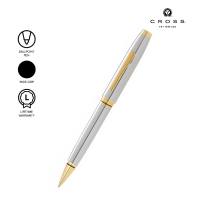
Cross Pens Two Tone Coventry Medalist Ballpoint Pen CAT0662-2
₱2,476.00₱3,095.00
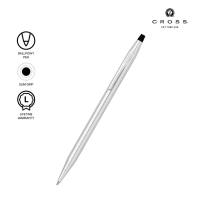
Cross Pens Classic Century Lustrous Chrome Ballpoint Pen Silver C3502
₱3,556.00₱4,445.00
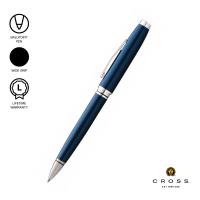
Cross Pens Blue Coventry Blue Ballpoint Pen CAT0662-9
₱2,276.00₱2,845.00
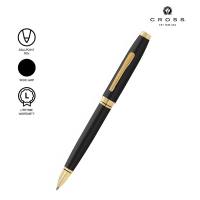
Cross Pens Two Tone Coventry Black with Gold Ballpoint Pen CAT0662-11
₱2,276.00₱2,845.00
About Cross
Cross, formally associated with the A.T. Cross Company, is an American fine-writing-instrument brand best known for its pens, mechanical pencils, and related accessories. Founded in 1846 in Providence, Rhode Island, Cross is one of the oldest continuously recognized names in the American writing-instrument industry. Its identity combines American industrial heritage, jewelry-inspired craftsmanship, classic design, and professional prestige.1
Overview
| Category | Information |
|---|---|
| Brand | Cross |
| Corporate name | A.T. Cross Company |
| Founded | 1846 |
| Founder | Richard Cross |
| Origin | Providence, Rhode Island, United States |
| Industry | Fine writing instruments and accessories |
| Best known for | Ballpoint pens, fountain pens, rollerballs, mechanical pencils |
| Notable collections | Century, Century II, Classic Century, Townsend, ATX, Peerless |
| Brand positioning | Premium / fine writing |
| International reach | Products distributed in about 140 countries |
| Signature reputation | Craftsmanship, reliability, classic American design |
| Notable association | Pens used for U.S. presidential and White House signing ceremonies |
| Current brand slogan | “Make Your Mark” |
Cross describes itself as a global leader in fine writing, with products distributed in approximately 140 countries.1
History
1846 — The beginning
Cross traces its history to 1846, when Richard Cross, from a family with a jewelry-making background, established the business in Providence, Rhode Island.
Rather than beginning as a conventional pen company, the business initially specialized in ornate gold and silver casings for wooden pencils. This jewelry heritage became an important part of Cross’s later approach to writing instruments: pens were treated not merely as utilitarian objects, but as carefully finished personal accessories.1
The company therefore has an unusual origin story: Cross entered the writing industry through jewelry craftsmanship.
Alonzo Townsend Cross
Richard Cross’s son, Alonzo Townsend Cross, became one of the most important innovators in the company’s early history.
During the late 19th century, Alonzo developed a series of patented writing-related inventions. Among them were the telescopic pencil, early mechanical-pencil mechanisms, and the stylographic pen. The latter is particularly significant because its controlled-ink-flow concept is regarded as an important technological predecessor to later ballpoint writing instruments.2
1879 — The Stylographic Pen
Cross’s stylographic pen was introduced in 1879. It used a different mechanism from traditional dip and fountain pens and was designed to provide a more consistent writing line and ink flow.
Cross consequently became associated not only with luxury and appearance but also with writing-instrument engineering and innovation.3
1889 — Peerless
In 1889, Cross introduced the Peerless fountain pen. The name was intended to communicate the product’s technological and design ambitions.1
Peerless is important in Cross history because it demonstrates how the company was moving from producing decorative components into becoming a manufacturer of complete fine writing instruments.
The Boss family era
A major turning point came in 1916, when Walter R. Boss, a Cross employee and salesman, acquired the company.
The Boss family subsequently played a major role in Cross’s development for generations. The company expanded its product range and strengthened its position in the American writing-instrument market.1
This period is significant because although the company retained the Cross name, its long-term management became strongly associated with the Boss family.
The Century
One of the most important names in Cross history is Century.
In 1946, to commemorate the company’s 100th anniversary, Cross introduced the Century Pencil in gold and silver finishes.1
The Century design eventually became one of the defining visual signatures of Cross: relatively slim, elegant, restrained, and highly recognizable.
In 1953, Cross introduced the Century ballpoint pen, based on an internal design patented by Ellery Boss. It became one of the company’s most successful and influential products.3
The Century concept would ultimately evolve into several generations and variants, including the Classic Century and Century II.
International expansion
Cross began expanding beyond the United States during the 20th century.
In 1970, it established its first international subsidiary, Cross Company of Japan Ltd. From there, the company developed a much broader international distribution network.2
Today, Cross states that its products are distributed in approximately 140 countries, making the brand substantially more international than its American origins might suggest.1
Cross and the White House
Perhaps the most distinctive part of Cross’s cultural reputation is its relationship with the U.S. presidency.
Cross pens have been associated with White House signing ceremonies since at least the 1970s. The Townsend collection became particularly famous for its association with presidents and official document signings, earning the informal description “Pen of Presidents.”1
The Century II also became associated with White House signing ceremonies and was used by both major U.S. political parties for official occasions.1
This association became an important part of Cross’s brand mythology. Rather than simply selling a pen as a luxury accessory, Cross could associate its products with leadership, authority, achievement, and historic moments.
That is one reason Cross pens have become popular as executive and commemorative gifts.
Major product families
Cross has produced a large number of writing instruments over its history. Its modern portfolio includes ballpoint pens, rollerballs/Selectip pens, fountain pens, mechanical pencils and refills.3
Classic Century
The Classic Century is arguably the most recognizable Cross design.
Its characteristics include:
- Slim cylindrical profile
- Conical tip
- Strongly restrained styling
- Metal finishes
- Characteristic Cross clip and detailing
- Strong association with professional and corporate writing
It is the type of pen many people immediately associate with the Cross brand.
Century II
The Century II takes the basic Century idea and gives it a somewhat broader body.
It retains the classic Cross visual language while offering a more substantial feel in the hand.
Townsend
The Townsend is one of Cross’s more prestigious collections.
It has a fuller body and a more elaborate, executive-oriented design, with Art Deco influences. Cross identifies Townsend as a collection associated with the “Pen of Presidents” reputation.2
ATX
The ATX represents Cross’s attempt to move beyond its traditional slim-pen aesthetic.
It has a more contemporary, sculptural appearance and helped demonstrate that Cross could produce modern designs without abandoning its traditional emphasis on fine writing instruments.
Peerless
Peerless is a premium Cross collection whose name recalls the company’s historic 1889 Peerless fountain pen.
The modern collection sits toward the higher end of Cross’s range and emphasizes premium materials and craftsmanship.
What makes Cross different?
Cross’s identity can be understood through several characteristics.
Heritage
Few writing brands can point to a history beginning in 1846. Cross’s long history is one of its strongest marketing assets.1
The brand does not present itself simply as a company that makes pens. It presents itself as part of the history of writing instruments.
Jewelry-inspired craftsmanship
Because Richard Cross came from a jewelry-making tradition, Cross historically treated writing instruments as objects requiring decorative metalwork and precision craftsmanship.
That heritage remains visible in the brand’s emphasis on:
- Metal finishes
- Lacquers
- Gold- and silver-colored appointments
- Precision components
- Balanced construction
- Decorative detailing
Cross says that its products undergo extensive inspection and testing, including multiple drop tests and finish testing.1
Classic American design
Cross generally favors timeless rather than aggressively fashionable designs.
The Classic Century, for example, has changed surprisingly little conceptually over the decades. This gives Cross pens a distinctive visual continuity.
A Cross pen can therefore look appropriate in:
- An office
- A boardroom
- A university
- A government environment
- A formal gift presentation
- Everyday professional use
Reliability
Cross has historically placed considerable emphasis on mechanical reliability.
The company currently offers a limited Lifetime Mechanical Warranty for qualifying writing instruments, reinforcing the idea that its products are intended to be durable rather than disposable.1
Cross as a luxury brand
Cross occupies an interesting position in the pen market.
It is premium, but it is not positioned in exactly the same way as ultra-luxury European penmakers.
For example, brands such as Montblanc tend to emphasize exclusivity, precious materials, heritage luxury and high-status collectibles. Cross, by contrast, has traditionally emphasized:
Professional elegance + reliability + American heritage + accessibility
That makes Cross particularly strong in the executive-gift and professional-writing category.
A Cross pen can be expensive enough to feel special without necessarily being so expensive that it becomes impractical as a daily writing instrument.
Cross and corporate gifting
Corporate gifting is an important part of Cross’s identity.
A quality pen has several advantages as a business gift:
- It is practical.
- It can be engraved.
- It has a relatively long lifespan.
- It can be carried every day.
- It communicates professionalism.
- It can commemorate promotions, graduations, anniversaries and achievements.
Cross itself markets its products for significant personal and professional milestones.1
This has helped make Cross particularly recognizable in offices, executive environments and institutional gift programs.
Brand identity
Cross’s modern identity is closely associated with the idea of leaving one’s mark.
Its branding has used the slogan:
“Make Your Mark”
The idea is broader than simply writing. It connects the physical act of signing one’s name with ambition, achievement, leadership and personal legacy.2
This works especially well for a pen brand because the product itself is literally an instrument for making a mark.
Logo and visual identity
Cross’s modern branding uses a distinctive lion symbol alongside its wordmark. The brand underwent a rebranding in 2015, adopting black and golden-yellow as core colors and introducing the lion as a symbol.2
The lion communicates ideas such as:
- Strength
- Confidence
- Leadership
- Prestige
- Achievement
Those qualities fit particularly well with Cross’s positioning around executives, professionals and significant personal accomplishments.
Cross today
Cross continues to focus primarily on fine writing instruments and related accessories.
Its current product philosophy emphasizes the combination of precision, materials, design and permanence. Cross describes luxury not merely in terms of price but in terms of purpose, craftsmanship and the experience of using a finely made writing instrument.1
The company’s current website highlights pens across categories such as:
- Ballpoint pens
- Fountain pens
- Rollerball/Selectip pens
- Mechanical pencils
- Luxury writing instruments
- Refills
- Gift-oriented products
Cross also continues to emphasize its lifetime mechanical warranty and its long history dating to 1846.1
Ownership and corporate history
It is useful to distinguish Cross the brand from A.T. Cross Company as a corporate entity.
The company went through several ownership and structural changes in the modern era. It was publicly traded for a period, was acquired by Clarion Capital Partners in 2013, acquired Sheaffer in 2014, and in 2017 its assets were acquired by Transom Capital Group. Sheaffer was subsequently sold in 2022.4
Despite these corporate changes, the Cross brand itself has retained its historic identity as an American-origin fine-writing brand.
Important historical timeline
- 1846 — Richard Cross establishes the business in Providence, Rhode Island.
- 1870s — Alonzo Townsend Cross develops patented writing-instrument innovations.
- 1879 — Cross introduces its stylographic pen, an important predecessor in the development of modern pen technology.
- 1889 — Cross introduces the Peerless fountain pen.
- 1916 — Walter Boss acquires the company, beginning the long Boss-family era.
- 1946 — Century Pencil introduced for Cross’s centennial.
- 1953 — Century ballpoint introduced.
- 1970 — Cross establishes its first international subsidiary in Japan.
- 1970s onward — Cross pens become strongly associated with U.S. presidential and White House signing ceremonies.
- 1990s — Townsend becomes particularly associated with U.S. presidents.
- 2000s — Cross expands its contemporary collections and accessories.
- 2013 — A.T. Cross becomes affiliated with Clarion Capital Partners.
- 2014 — Cross acquires Sheaffer.
- 2015 — Cross rebrands around the lion symbol and “Make Your Mark.”
- 2017 — Transom Capital Group acquires Cross’s assets.
- Today — Cross remains an internationally distributed fine-writing brand with a heritage dating back more than 175 years.12
In popular perception
Cross is generally perceived as a brand representing traditional professional success.
Its strongest associations are probably:
Pen → Executive → Signature → Achievement → Leadership → American heritage
This is why Cross works particularly well as a gift. A Cross pen isn’t marketed merely as something that writes; it can function as a symbolic object representing a milestone or accomplishment.
Its presidential associations strengthen that perception considerably.
Cross vs. other famous pen brands
| Brand | Core identity |
|---|---|
| Cross | American heritage, professional elegance, reliability |
| Parker | British heritage, classic everyday luxury |
| Waterman | French elegance and refined writing |
| Sheaffer | American pen heritage and technical innovation |
| Lamy | German functionalism and modern design |
| Pelikan | German craftsmanship and fountain-pen tradition |
| Montblanc | Ultra-premium luxury, prestige and status |
| Caran d’Ache | Swiss craftsmanship and luxury writing |
| Pilot | Japanese engineering, writing performance and broad range |
Cross’s distinctive territory is therefore heritage + executive professionalism + accessible luxury.
Overall assessment
Cross is one of the historically important names in the American writing-instrument industry. Its significance comes from more than its longevity.
The brand has three particularly strong pillars:
- History — originating in 1846 and participating in the evolution of modern writing instruments.
- Design — recognizable, conservative and enduring pen designs, particularly the Century family.
- Symbolism — its association with presidents, professional achievement, signatures and important occasions.
Its biggest competitive advantage is arguably that it occupies a middle ground: more prestigious and heritage-driven than an ordinary office pen, but generally more accessible and practical than an ultra-luxury collectible pen.
In that sense, the essence of Cross can be summarized as:
A historic American writing brand that transformed jewelry craftsmanship and mechanical innovation into elegant, reliable instruments associated with professionalism, achievement and lasting personal marks.12
Note: There are other businesses using the name “Cross,” so this overview refers specifically to A.T. Cross / Cross writing instruments, the pen brand.