Shop on Lazada
CTR Philippines products
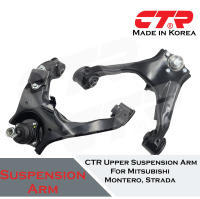
CTR (2pcs) Upper Suspension Arm Assembly for Mitsubishi Strada Triton and Montero Sport 2005-2015 - CQM-24L / CQM-24R (Left and Right)
₱5,605.00
Buy on Lazada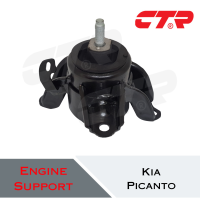
CTR (1pc) Engine Support For Kia Picanto TA 2011 - 2016 - CZKK4 - (Front)
₱2,758.00
Buy on Lazada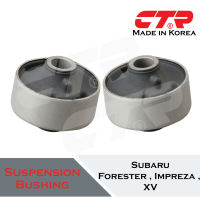
CTR (2pcs) Front Lower Arm Bushing (Big) Subaru Forester 2007-2018 | Impreza 2007-Up | XV 2011-Up - CVSU-1
₱650.00
Buy on Lazada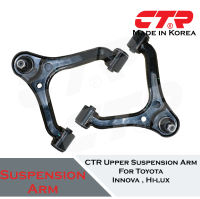
CTR (2pcs) Upper Suspension Arm Assembly for Toyota Innova 2KD | Hi-Lux Vigo 2KD - CQT-21L / CQT-21R (Left and Right)
₱5,049.00
Buy on Lazada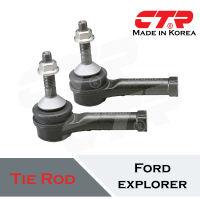
CTR (2pcs) Tie Rod End for Ford Explorer U502 2011-Up - CEF-31 (Left and Right)
₱1,981.00
Buy on Lazada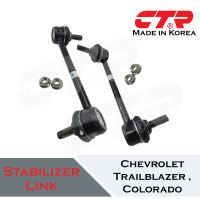
CTR (2pcs) Stabilizer Link for Chevrolet Trailblazer | Colorado 2013-2020 (Front Left and Right)
₱1,024.00
Buy on Lazada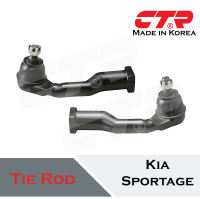
CTR (2pcs) Tie Rod End for Kia Sportage 1991-2003 - CEKK-16L / CEKK-16R (Left and Right)
₱1,367.00
Buy on Lazada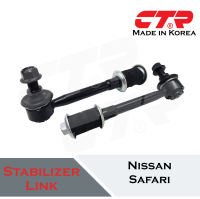
CTR (2pcs) Stabilizer Link for Nissan Safari 1997-2007 - CLN-64 (Front Left and Right)
₱868.00
Buy on LazadaAbout CTR Philippines
CTR Philippines refers to the Philippine market presence of CTR, an automotive aftermarket brand under Central Corporation, a South Korean manufacturer specializing in steering and suspension components. In the Philippines, CTR products are widely available through automotive parts distributors, retailers, and online marketplaces, catering primarily to owners of Japanese, Korean, American, and European vehicles.1
Note: “CTR Philippines” functions as a retail and distribution identity rather than a separately incorporated Philippine manufacturing entity. Publicly available sources identify the underlying manufacturer as Central Corporation/CTR of South Korea. The Philippine online shop currently operating under the name “CTR Philippines” describes itself as a supplier of OE-equivalent quality aftermarket products.
Overview
| Field | Information |
|---|---|
| Brand | CTR |
| Philippine market name | CTR Philippines |
| Industry | Automotive aftermarket |
| Primary products | Steering and suspension parts |
| Origin | South Korea |
| Manufacturer | Central Corporation / CTR |
| Major product types | Ball joints, tie-rod ends, rack ends, stabilizer links, control-arm components, bushings, shock mountings, and related chassis parts |
| Vehicle coverage | Japanese, Korean, American, and European vehicles |
| Market position | Aftermarket/OE-equivalent replacement parts |
| Philippine sales channels | Automotive-parts distributors, retailers, and online marketplaces |
| Official manufacturer domain | ctr.co.kr |
CTR catalogs identify the company as Central Corporation and categorize its offerings around steering and suspension systems for Japanese, Korean, American, and European vehicles.
History
CTR traces its automotive parts business to South Korea, where Central Corporation developed a specialization in chassis components. Historical catalogs indicate the company operated from Changwon, Gyeongsangnam-do, Korea, maintaining a substantial portfolio of steering and suspension parts.
Older corporate materials describe the company’s philosophy as “Trust and Creation,” emphasizing supply to global automotive manufacturers and expertise in joint components, particularly ball joints.
The brand has maintained extensive product catalogs for many years. A 2009 catalog, for instance, listed applications for Toyota, Nissan, Isuzu, Mitsubishi, Mazda, Honda, Suzuki, Daihatsu, and other manufacturers. The company subsequently expanded its aftermarket coverage; a 2022 catalog includes Japanese, Korean, American, and European vehicles alongside newly introduced products.
Product range
CTR is primarily a chassis, steering, and suspension parts manufacturer. Its core product lineup includes:
- Ball joints
- Tie-rod ends
- Rack ends
- Control-arm components
- Stabilizer links
- Lower and upper arms
- Bushings
- Shock mountings
- Torque rods
- Other steering and suspension components
Philippine automotive parts distributors typically separate the CTR range into steering products (tie rods, tie-rod ends, rack ends) and suspension products (ball joints, control arms, lower/upper arms, stabilizer links, torque rods).
Ball joints
Ball joints are central to CTR’s brand identity. As safety-critical components connecting suspension and steering systems while allowing wheel assembly movement, excessive wear can compromise steering precision, suspension function, and wheel alignment. Historical corporate material specifically cites CTR’s ambition to become a leading ball joint manufacturer.
The brand’s catalog demonstrates broad application coverage. CTR part numbers encompass vehicles such as the Toyota Yaris, Vios, Echo, Camry, Hilux, Tacoma, and Land Cruiser, as well as models from other Japanese and Korean manufacturers.
OEM supply relationship
CTR’s reputation in the aftermarket is partly derived from its stated relationship with the original-equipment (OE) automotive supply chain. Philippine automotive parts sources describe CTR as an OE supplier, specifically noting supply relationships with manufacturers such as Ford and GM.
International distributors also characterize Central Corporation as an OEM/Tier supplier associated with major automotive manufacturers. However, specific claims regarding current vehicle programs should be verified independently, as OEM contracts evolve over time.
It is important to distinguish between OEM supply history and aftermarket retail: not every CTR aftermarket part is identical to the component sold in an automaker’s branded packaging. CTR aftermarket parts are replacement components sold under the CTR brand with distinct part numbers and specifications.
CTR in the Philippines
In the Philippines, CTR maintains significant visibility in the replacement automotive parts market. A current Philippine online storefront named CTR Philippines offers a wide selection of steering and suspension components covering brands including:
- Toyota
- Honda
- Nissan
- Mitsubishi
- Isuzu
- Mazda
- Hyundai
- Kia
- Chevrolet
- Ford
- Subaru
This store characterizes its merchandise as aftermarket products of “OE equivalent quality.” Current listings include CTR ball joints for the Chevrolet Captiva and Orlando, Isuzu D-Max and MU-X, Mitsubishi Mirage, Ford Fiesta and EcoSport, Toyota Vios and Yaris, and various Hyundai and Kia models.
Other local retailers, such as TGC One Hub, list hundreds of CTR products including ball joints, shock mountings, and suspension components, indicating substantial local aftermarket penetration.
Typical Philippine applications
CTR is particularly relevant to owners of vehicles with readily available independent aftermarket support. Examples found in current Philippine listings include:
| Vehicle | Example CTR component |
|---|---|
| Toyota Vios/Yaris | Ball joint |
| Toyota Hilux | Ball joint |
| Toyota Camry | Ball joint |
| Honda City/Jazz | Tie-rod end |
| Mitsubishi Mirage | Ball joint |
| Isuzu D-Max | Ball joint |
| Isuzu MU-X | Ball joint |
| Chevrolet Captiva | Ball joint |
| Chevrolet Orlando | Ball joint |
| Ford Fiesta/EcoSport | Ball joint |
| Hyundai Tucson | Shock mounting |
| Kia Sportage | Shock mounting |
| Kia Forte/Cerato | Shock mounting |
| Ford Ranger | Ball joint |
These examples represent currently listed items rather than the complete catalog.
Product identification
CTR components generally carry a CTR-specific part number cross-referenced against OE numbers. For example, Philippine listings show products such as CTR CBKD-13 / 96852964 for a Chevrolet Captiva/Orlando ball joint.
The use of a proprietary numbering system alongside corresponding OE numbers allows mechanics and parts dealers to identify replacements by vehicle application, OE number, or CTR part number.
Brand positioning
CTR occupies a distinct position between generic aftermarket components and vehicle-manufacturer-branded replacement parts. The market hierarchy is generally understood as:
- Vehicle manufacturer genuine part
- Established OE/OES supplier such as CTR
- Other reputable aftermarket manufacturers
- Generic/low-cost aftermarket
CTR’s value proposition rests on its specialization in steering and suspension components, Korean manufacturing heritage, extensive vehicle coverage, and history within the automotive supply chain, rather than claiming universal superiority over all competing aftermarket brands.
Quality and engineering
Historical corporate information emphasizes engineering, manufacturing technology, and cooperation with automotive OEMs. Some international distributors report CTR production under IATF 16949-certified automotive manufacturing systems, though certification status should be verified against specific facilities and current documentation rather than assumed universally.
For consumers, steering and suspension parts should be sourced from authorized or reputable suppliers, as counterfeit or incorrectly specified components pose serious safety risks.
Market factors in the Philippines
Several characteristics contribute to CTR’s popularity in the Philippine aftermarket:
- Wide vehicle coverage: The catalog addresses many Japanese and Korean vehicles prevalent in the Philippines.
- Specialization: CTR focuses heavily on steering and suspension rather than functioning as a general-purpose parts label.
- OE cross-referenceability: CTR numbers frequently correspond to OE numbers.
- Availability: Components are accessible through local distributors and online sellers.
- Price positioning: Aftermarket CTR components often cost significantly less than genuine parts packaged under a vehicle manufacturer’s program.
- Manufacturing background: Central Corporation has a long history in automotive chassis components.
Comparison with genuine OEM parts
CTR should not be confused with Toyota Genuine Parts, Hyundai Mobis, Honda Genuine Parts, or similar marques. A CTR ball joint for a Toyota vehicle is a CTR-branded aftermarket replacement, even when its application corresponds to a Toyota OE component.
Advantages may include lower purchase price, wider independent-market availability, a dedicated aftermarket catalog, OE-number cross-referencing, and identification with an established manufacturer rather than an anonymous generic supplier. Genuine OEM parts, by contrast, are sold through the vehicle manufacturer’s authorized ecosystem and specified by that automaker.
Comparison with generic aftermarket parts
CTR’s reputation distinguishes it from unidentified generic alternatives. While a generic ball joint may be marketed solely by vehicle application, CTR has historically maintained a dedicated catalog covering thousands of steering and suspension applications and positions itself around automotive manufacturing expertise rather than miscellaneous importation. This makes CTR a more established option, although individual component quality still depends on authenticity, correct application, and proper installation.
Local market presence
The current CTR Philippines Shopee storefront serves as primary evidence of the brand’s direct-to-consumer presence, listing a broad range of components including ball joints, tie-rod ends, bushings, and shock mountings.
Philippine automotive retailers explicitly categorize CTR as Central Corporation, reinforcing that locally sold CTR products are associated with the South Korean automotive parts manufacturer rather than a domestic entity using similar initials.
Corporate identity
The underlying company has historically appeared as Central Corporation or CTR. Historical catalogs place its Korean headquarters in Changwon, Gyeongsangnam-do, South Korea, with the website ctr.co.kr.
More recent patent records show the corporate name CTR Co., Ltd. in connection with intellectual property formerly assigned to Central Corporation, suggesting an evolution in corporate identity. Given these changes, the brand is best described as CTR (Central Corporation/CTR Co., Ltd.) rather than treating “CTR Philippines” as the manufacturer’s legal corporate name.
Trademark note
Evidence indicates the CTR mark has been used in Philippine intellectual property records by entities unrelated to the automotive manufacturer. For example, an unrelated Philippine registration for “CTR” appears in an IPOPHL gazette under Better Image Philippines, Inc. in Class 44.1
Consequently, CTR must always be interpreted in context. Within the automotive parts sector discussed here, CTR refers to the Korean steering and suspension parts brand associated with Central Corporation.
Summary
CTR Philippines is best understood as the Philippine aftermarket presence of the South Korean CTR automotive brand rather than a distinct Philippine automotive manufacturer. The underlying CTR/Central Corporation business specializes in steering and suspension components, with particular expertise in ball joints, tie-rod ends, and related chassis parts.
The brand maintains a long-running catalog covering Japanese, Korean, American, and European vehicles and has been associated with the automotive OEM supply chain. In the Philippines, products are sold through independent automotive parts channels and online marketplaces, positioned as OE-equivalent aftermarket replacements.
For Filipino car owners, mechanics, and parts dealers, CTR is a South Korean automotive chassis parts brand specializing in steering and suspension components—particularly ball joints and tie-rod assemblies—with a substantial aftermarket presence in the Philippines.