Shop on Lazada
Daikin products
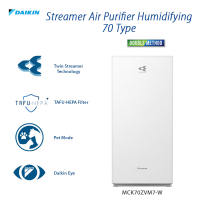
Twin Streamer Air Purifier Humidifying 70 Type
₱45,500.00
Buy on Lazada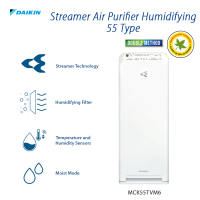
Streamer Air Purifier Humidifying 55 Type
₱29,800.00
Buy on Lazada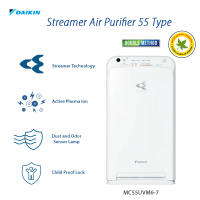
Streamer Air Purifier 55 Type
₱25,400.00
Buy on Lazada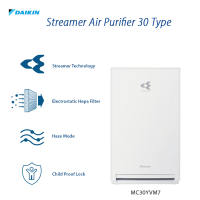
Streamer Air Purifier 30 Type
₱15,200.00
Buy on Lazada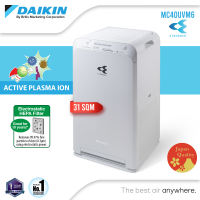
DAIKIN MC40UVM Air Purifier w/ STREAMER Technology I Electrostatic HEPA Filter I Deodorising Filter I 31sqm
₱17,680.00₱20,800.00
Basic Air Purifier 30 Type
₱10,000.00
Buy on Lazada
Daikin 1.5HP Split Type Inverter Aircon Amihan Series (FTKE35AVA) *WITH FREE 10FT PIPING!*
₱29,800.00₱37,500.00
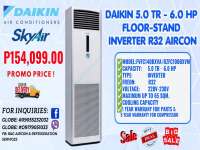
🎉BRAND NEW DAI.KIN 6.0 HP - 5.0 TR TOWER FLOOR - STAND INVERTER AIRCON R32 RAINY DAYS PROMO 2026🎉
₱154,099.00
Buy on LazadaAbout Daikin
Daikin is a Japanese multinational corporation best known worldwide for its air conditioners, heating systems, refrigeration, ventilation, and indoor-air-quality technologies. Its parent company, Daikin Industries, Ltd., is headquartered in Osaka, Japan. Founded in 1924 as a small metalworking and aircraft-parts manufacturer, the company has grown into one of the world’s largest HVAC&R (heating, ventilation, air conditioning, and refrigeration) groups.1
A distinctive aspect of Daikin’s business model is its dual focus on both air-conditioning equipment and refrigerants and fluorochemical materials. This vertical integration allows the company to develop both the machinery and the critical chemical substances used within it.2
Quick facts
| Category | Information |
|---|---|
| Company | Daikin Industries, Ltd. |
| Japanese name | ダイキン工業株式会社 |
| Founded | October 25, 1924 |
| Incorporated | February 11, 1934 |
| Founder | Akira Yamada |
| Origin | Osaka, Japan |
| Headquarters | Osaka, Japan |
| Industry | HVAC&R, chemicals, industrial technology |
| Main products | Air conditioners, heat pumps, refrigeration systems, ventilation systems, air purifiers, chillers, refrigerants, fluorochemicals |
| Global presence | More than 170 countries and regions |
| Employees | 104,095 as of March 31, 2026 |
| Group companies | 324 consolidated subsidiaries as of March 31, 2026 |
| Current President & COO | Naofumi Takenaka |
| Capital | ¥85 billion |
| Core identity | Air and environmental technology |
The employee and subsidiary figures above reflect Daikin’s latest corporate data available as of March 31, 2026.3
Business scope and philosophy
While often described simply as an air-conditioning manufacturer, Daikin operates across a broad technological ecosystem. Its operations encompass residential and commercial HVAC, industrial climate control, refrigeration, heat pumps, ventilation, humidity control, air purification, chillers, building management systems, oil hydraulics, electronics, and specific defense-related systems.
The company describes its primary focus as air conditioning, while increasingly creating value around “air and the environment.”4 Its corporate philosophy is summarized by the phrase “Perfecting the Air,” which reflects an objective to control not only temperature but also humidity, cleanliness, airflow, and overall indoor environmental quality.5
Origin of the name
The company was originally established in 1924 in Osaka under the name Osaka Kinzoku Kogyosho Limited Partnership. The term “Kinzoku” (金属) means metal in Japanese, referencing the firm’s initial business in metalworking and aircraft components.6
As the company shifted its focus toward refrigeration, air conditioning, and fluorochemical technologies, the original name became less representative of its activities. The nickname “Daikin” was derived by combining:
- Dai (大) — from Osaka (大阪)
- Kin (金) — from Kinzoku (金属)
In 1963, the company officially adopted the name Daikin Kogyo Co., Ltd., before becoming Daikin Industries, Ltd. in 1982.7
History
Early years and foundation
Daikin’s history began in Osaka in 1924 with the manufacture of aircraft radiator tubes and other metal components, bearing little resemblance to its modern consumer products.8 A significant turning point occurred in 1933 when the company began researching fluorine-based refrigerants, establishing a technological foundation that remains central to its business.9 By 1935, Daikin had successfully manufactured fluorocarbon gas, developing expertise in both refrigerants and fluorochemical materials.10
In 1936, the company’s Mifujirator refrigeration technology was deployed in a railway application. This early integration of refrigerant chemistry, compressor technology, and equipment manufacturing became a defining characteristic of Daikin’s approach to engineering.11
Post-war transformation
Following World War II, Daikin concentrated increasingly on refrigeration and air conditioning. In 1951, it developed Japan’s first packaged air conditioner. Throughout the subsequent decades, the company expanded its portfolio to include window air conditioners, heat-pump systems, commercial units, chillers, multi-split systems, and refrigeration equipment. By the 1960s, air conditioning had become central to the company’s identity.
During the 1960s and 1970s, Daikin moved beyond individual room units to develop sophisticated commercial and centralized systems. Key milestones included the expansion of commercial production, the development of centrifugal chillers and multi-room systems, and the advancement of fluorochemical materials. In 1972, the establishment of Daikin Europe N.V. marked a significant step in its international expansion.12
VRV and inverter innovation
One of Daikin’s most influential contributions to the industry is VRV (Variable Refrigerant Volume) technology. Developed in the 1980s, this multi-split system allows a single outdoor unit to connect to multiple indoor units while modulating refrigerant flow based on zone-specific requirements. This technology proved particularly valuable for offices, hotels, residential buildings, retail spaces, and large commercial facilities, becoming a foundation of modern commercial HVAC. Daikin regards the development of VRV as a pivotal moment in establishing new standards for air conditioning.13
Note: While the generic industry term VRF (Variable Refrigerant Flow) is commonly used for this type of system, VRV is Daikin’s trademarked terminology.
Daikin also played a major role in the commercialization of inverter air-conditioning technology, marketing its first inverter-type unit in 1984.14 Unlike traditional fixed-speed compressors that cycle on and off, inverter systems vary compressor speed to match cooling or heating demand. This technology offers more precise temperature control, reduced fluctuations, lower energy consumption, quieter operation, and improved comfort. Although now widespread across the HVAC industry, its development is a key part of Daikin’s technological heritage.
Refrigerants and R-32
Daikin distinguishes itself through its long-standing involvement in both air-conditioning hardware and the chemical refrigerants used within it. Its fluorochemical product history includes brands such as DAIFLON, POLYFLON, DAI-EL, and NEOFLON. Having begun fluorine-refrigerant research in 1933, the company continues to develop these technologies alongside its HVAC equipment.15
This vertical integration is strategically significant because refrigerant technology directly influences energy efficiency, cooling performance, equipment design, environmental impact, and regulatory compliance. Daikin has been closely associated with the adoption of R-32 refrigerant, establishing a mass-production plant in 1997. In 2012, the company introduced the Ururu Sarara 7, utilizing R-32, and subsequently expanded this technology globally.
To encourage broader adoption of environmentally preferable technology, Daikin announced in 2015 that it would provide worldwide free access to basic patents for air conditioners using HFC-32.
Product categories
Daikin maintains an extensive product portfolio serving diverse market segments.
Residential air conditioning
Consumer-facing products include wall-mounted split systems, multi-split systems, ducted units, ceiling-mounted cassettes, floor-standing systems, heat pumps, air purifiers, and ventilation products. Specific lineups vary significantly by country.
Commercial air conditioning
Daikin holds a strong position in the commercial HVAC sector with systems designed for environments ranging from small shops to large industrial facilities. Products include VRV/VRF systems, SkyAir units, chillers, rooftop systems, air-handling equipment, fan-coil units, building controls, heat pumps, and refrigeration systems.
Heating and heat pumps
Heating has become an increasingly important component of Daikin’s business. A notable example is Daikin Altherma, an air-to-water heat-pump system introduced in Europe in 2006. Heat pumps support sustainability goals by providing heating via electricity rather than direct combustion.
Refrigeration
The company manufactures refrigeration technology for supermarkets, food storage, cold chains, transportation, and industrial facilities, positioning Daikin as an HVAC and refrigeration provider rather than solely an air-conditioning manufacturer.
Air purification and ventilation
Daikin develops technologies to manage indoor air quality, having introduced its first air purifier in 1975. Modern solutions incorporate advanced filtration, ventilation, and air treatment to control overall indoor air quality rather than just temperature.
Major business divisions
Beyond its consumer air-conditioning business, Daikin Industries operates several major divisions:
- Air Conditioning & Refrigeration: The company’s dominant and best-known segment.
- Chemicals: Fluorochemical technologies and related materials.
- Oil Hydraulics: Hydraulic equipment for industrial applications.
- Defense Systems: Specialized defense-related technologies.
- Electronics: Electronic components supporting industrial and HVAC businesses.
The overall business structure is built around air conditioning, chemicals, and diversified technology sectors.
Global expansion and acquisitions
Daikin has transformed from a domestic Japanese manufacturer into a global corporation with operations in more than 170 countries and regions. The company maintains manufacturing, sales, R&D, and service networks across Asia, Europe, North America, Latin America, the Middle East, Africa, and Oceania. Rather than relying solely on exports, Daikin emphasizes local production and development to adapt products to regional climates, building standards, energy systems, regulations, and customer preferences.
Strategic acquisitions have been instrumental in this expansion:
- O.Y.L. Industries (2006): The acquisition of this major international air-conditioning manufacturer significantly strengthened Daikin’s commercial HVAC presence globally.
- Goodman (2012): Acquiring this major U.S. residential HVAC company greatly enhanced Daikin’s position in the North American residential market. Goodman subsequently became part of Daikin’s North American operations.
Presence in Indonesia
Daikin has a long-established history in neighboring Indonesia, entering the market in 1970. Key milestones in the Indonesian market include:
| Year | Milestone |
|---|---|
| 1970 | Daikin enters Indonesia |
| 1985 | First VRV application in Indonesia |
| 2012 | PT Daikin Airconditioning Indonesia established |
| 2013 | National dealer network reaches 500 locations |
| 2013 | Bandung branch established |
| 2013 | VRV IV launched |
Today, Daikin serves both residential and commercial customers throughout Indonesia.
Industry position and reputation
Daikin is widely regarded as one of the world’s leading HVAC manufacturers. The company describes itself as the world’s No. 1 air-conditioning company, while its European organization identifies Daikin Industries as a market leader in heat pumps, air conditioning, and air filtration.
Key factors contributing to its reputation include:
- HVAC Specialization: Unlike diversified electronics brands, Daikin has focused primarily on air and climate-control technologies throughout its history.
- Vertical Integration: The company controls the technology stack from refrigerants and compressors to equipment manufacturing, controls, and service.
- Commercial Expertise: Daikin is particularly influential in commercial systems such as VRV/VRF, chillers, and building climate solutions.
- Inverter Technology: It was an early developer and marketer of inverter air conditioning.
- Refrigerant Expertise: Its fluorochemical business provides specialized knowledge in refrigerant science.
- Global Scale: As of 2026, the company employs over 100,000 people across more than 170 countries and regions.
Unlike conventional consumer-electronics brands that may outsource components, Daikin’s historical model involves researching refrigerants, developing compressors and HVAC technologies, designing systems, manufacturing equipment, developing controls, and providing service. This comprehensive approach underpins its technological standing in the HVAC sector.
Principal competitors in the global market include Carrier, Trane Technologies, Mitsubishi Electric, Panasonic, LG, Samsung, Johnson Controls, Midea, Gree, and Fujitsu General, though competitive positions vary by product category and geography.
Corporate philosophy and sustainability
Daikin’s modern corporate vision centers on “providing new value to the world through air and the environment.” The slogan “Perfecting the Air” reflects an evolution from viewing air conditioners merely as cooling devices to treating them as tools for controlling the environments where people live, work, and interact. This encompasses temperature, humidity, ventilation, air cleanliness, energy efficiency, heating, cooling, refrigeration, and indoor comfort, with the ultimate goal of making spaces happier and more comfortable.
Regarding sustainability, Daikin addresses climate change by reducing the environmental impact of air conditioning while simultaneously using HVAC technology to improve energy efficiency. Initiatives include inverter compressors, heat pumps, high-efficiency heat exchangers, advanced controls, efficient refrigerants, heat recovery, building energy management, and refrigerant reclamation.
Key technologies
Technologies and product families strongly associated with Daikin include:
- VRV: Variable Refrigerant Volume commercial HVAC systems.
- Inverter: Variable-speed compressor technology for efficient temperature control.
- Daikin Altherma: Air-to-water heat-pump technology.
- SkyAir: Commercial air-conditioning systems for smaller commercial spaces.
- R-32 technology: Refrigerant technology used in many Daikin systems.
- Heat-recovery systems: Systems capable of simultaneously providing heating and cooling to different zones.
- Air purification: Technologies intended to improve indoor air quality.
Corporate structure
The parent company, Daikin Industries, Ltd., operates through a large international group of subsidiaries. As of March 31, 2026, the company reported:
- 104,095 employees
- 324 consolidated subsidiaries
- 31 subsidiaries in Japan
- 293 overseas subsidiaries
- ¥85 billion capital
Its headquarters are located at Osaka Umeda Twin Towers South in Osaka, Japan.
Timeline
- 1924 — Founded in Osaka as Osaka Kinzoku Kogyosho
- 1933 — Begins research into fluorine refrigerants
- 1935 — Fluorocarbon gas production
- 1936 — Mifujirator refrigeration technology used in railway application
- 1951 — Develops Japan’s first packaged air conditioner
- 1958 — Markets window AC with rotary compressor
- 1963 — Company renamed Daikin Kogyo
- 1972 — Establishes Daikin Europe
- 1973 — Develops multi-split AC
- 1975 — Introduces its first air purifier
- 1982 — Company becomes Daikin Industries, Ltd.
- 1984 — Markets inverter AC
- 1980s — Expansion of VRV technology
- 1990s — Development and expansion of advanced refrigerant and HVAC technologies
- 2006 — Acquires O.Y.L. Industries
- 2006 — Launches Daikin Altherma
- 2012 — Acquires Goodman
- 2012 — Introduces R-32-based Ururu Sarara 7
- 2015 — Opens basic R-32 AC patents worldwide
- 2020s — Expands focus toward energy efficiency, indoor air quality, heat pumps, digitalization, and environmental solutions
- 2026 — More than 104,000 employees and operations spanning more than 170 countries and regions
Summary
Daikin Industries, Ltd. is a Japanese multinational HVAC&R and technology company founded in Osaka in 1924 by Akira Yamada. Originally a manufacturer of metal and aircraft components, Daikin gradually moved into refrigeration, fluorochemicals, and air conditioning, developing Japan’s first packaged air conditioner in 1951 and subsequently pioneering technologies such as inverter air conditioning and VRV variable-refrigerant systems. Through international expansion and acquisitions including O.Y.L. Industries and Goodman, Daikin became a global HVAC leader with operations in more than 170 countries and regions. Today, its businesses encompass residential and commercial air conditioning, heating and heat pumps, refrigeration, ventilation, air purification, chillers, fluorochemicals, oil hydraulics, electronics, and other technologies. Its modern corporate vision, “Perfecting the Air,” reflects a broader ambition to use air and environmental technology to improve human comfort, health, energy efficiency, and sustainability.
References
- Corporate Data | Corporate Information | Daikin Global
- Daikin Global | A leading air conditioning and refrigeration innovator and provider for residential,commercial and industrial applications
- About | Daikin
- Daikin’s Vision | Corporate Information | Daikin Global
- Corporate Information | Daikin Global
- FAQ | Daikin Global
- Chronology | Corporate Information | Daikin Global
- History of Daikin Innovation | Daikin Achievements | Daikin Global
- About Daikin | Daikin Global
- Sejarah – Daikin Indonesia
- History and Innovation | Corporate Information | Daikin Global
- History of Daikin Innovation
- Daikin History | Our Journey in HVAC Innovation | Daikin
- From aircraft to air-conditioners and beyond – Our history | Daikin
- Our global history | Daikin