Shop on Lazada
Denon products
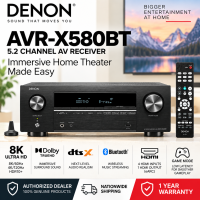
Denon AVR-X580BT 5.2ch 8K AV Receiver Bluetooth Home Theater Amplifier w/ Room Calibration AVRX580BT
₱29,990.00₱31,990.00
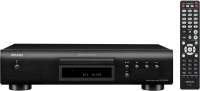
Denon DCD-600NE CD Player AL32 Processing HiFi Audio Player DCD600NE
₱22,871.00₱27,990.00
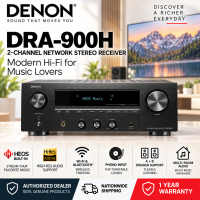
Denon DRA-900H - Stereo receiver with built-in Wi-Fi Bluetooth Apple AirPlay 2 HDMI and HEOS Built-in DRA-900 DRA900H DRA900
₱47,511.00₱55,990.00
Denon AVR-X250BT Entry-Level 5.1 Channel 4K Home Theater AV Receiver - AVRX250BT
₱22,871.00₱27,990.00
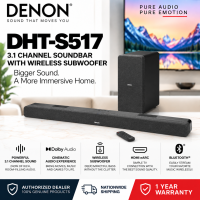
Denon DHT-S517 Dolby Atmos Soundbar Wireless Subwoofer Bluetooth Home Theater System DHTS517
₱26,391.00₱31,990.00
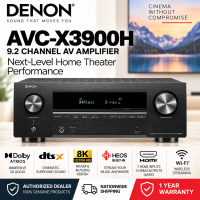
Denon AVC-X3900H 9.4CH 8K AV Receiver | Dolby Atmos | DTS:X | HEOS Built-in | HDMI 2.1 | Wi-Fi | Bluetooth
₱87,991.00₱101,990.00

Denon PerL Pro True Wireless Earbuds ANC Personalized Sound Bluetooth Premium Earphones (Black)
₱13,191.00₱15,990.00
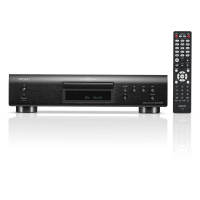
Denon DCD-900NE CD Player Advanced AL32 USB HiFi Audio Source DCD900NE
₱35,191.00₱41,990.00
About Denon
Denon is a Japanese-origin audio brand best known for home hi-fi systems, AV receivers, amplifiers, network audio devices, headphones, speakers, and home theatre equipment. With roots tracing back to 1910, it stands as one of the longest-running names in consumer audio. The brand is particularly associated with Japanese engineering, digital audio innovation, AV receivers, turntables and cartridges, and a sound philosophy described by Denon as detailed, vivid, and spacious.1
As of 2026, Denon belongs to Sound United, which was acquired by HARMAN International in September 2025; HARMAN is a wholly owned subsidiary of Samsung Electronics. Despite this ownership structure, Denon continues to operate as a distinct audio brand rather than being absorbed into the JBL or Harman Kardon portfolios.2
Quick facts
| Denon | |
|---|---|
| Brand | Denon |
| Japanese name | デノン |
| Origins | Japan |
| Founded | 1910 |
| Founder | Frederick Whitney Horn |
| Original predecessor | Nippon Phonograph Co. |
| Industry | Consumer & professional audio |
| Major products | AV receivers, amplifiers, CD players, turntables, cartridges, headphones, speakers, network audio |
| Major technology | Digital audio, Dolby/DTS home cinema, HEOS multi-room audio |
| Current parent | HARMAN International |
| Ultimate parent | Samsung Electronics |
| Major historical corporate relationship | Nippon Columbia → D&M Holdings → Sound United → Masimo → HARMAN |
| Heritage | Japanese audio engineering |
| Official philosophy | Craftsmanship, simplicity and technology |
The 1910 founding date is significant, though Denon’s modern corporate history is complex. The brand evolved through several companies and mergers rather than existing as a continuous corporate entity since its inception. Nevertheless, Denon’s official historical materials trace its origins to Frederick Whitney Horn’s 1910 record company in Japan.3
Brand identity and positioning
Denon is fundamentally an audio company rather than a general consumer electronics manufacturer. Its products traditionally occupy the space between mass-market electronics and specialist audiophile equipment. Historically, the brand has sought to combine high-quality audio reproduction, advanced electronics, Japanese engineering, straightforward operation, home theatre integration, and compatibility with emerging audio formats.
This combination is most visible in Denon’s AV receiver business. Modern Denon receivers integrate amplification, HDMI video switching, Dolby Atmos, room correction, network streaming, and multi-room functionality into a single component.4 The brand also maintains a strong two-channel hi-fi heritage, offering amplifiers, CD players, network players, turntables, and cartridges.
Origin of the name
The modern Denon brand emerged from the Japanese audio engineering organisations associated with Japan Denki Onkyo and Nippon Columbia. Historical records indicate that Nippon Columbia acquired Japan Denki Onkyo in 1963, with the Denon name beginning to be used for consumer products in 1970.3
Consequently, there is a distinction between the brand’s historical roots (1910) and its emergence as a recognisable consumer brand (1970). This explains why descriptions of Denon often cite 1910 as the founding date even though the modern brand identity was established considerably later.
History
Early years and broadcasting era
Denon’s history begins with Frederick Whitney Horn, an American entrepreneur who established a record and phonograph business in Japan in 1910. Initially known as Nippon Phonograph Co., the company marketed phonographs under names including Nipponophone. Corporate histories confirm that the company introduced Japanese-made gramophones during this period, contributing to the development of Japan’s domestic recording and playback industry.3
A pivotal aspect of Denon’s development was its relationship with NHK, Japan’s national broadcaster. During the 1930s and 1940s, the company shifted towards professional recording technology. In 1939, a Japanese disc recorder/player was delivered to NHK.4 This professional broadcasting background helped distinguish Denon from companies focused solely on consumer electronics, fostering an engineering culture centred on recording quality, signal accuracy, mechanical precision, and broadcast reliability.
The 1945 Imperial recording
One of the most historically significant events involving Denon occurred in 1945, when a Denon recording machine was used to record the voice of Emperor Hirohito announcing Japan’s surrender at the end of World War II. Denon describes this as the first time the Japanese public heard the Emperor’s recorded voice, demonstrating the use of its technology for nationally significant professional recording rather than merely home entertainment.5
Vinyl and the LP era
Following World War II, Denon continued to advance recording technology. In 1951, it became the first Japanese company to record and sell LP records.5 The company also developed tape-recording equipment and other professional audio technologies. This era established a key aspect of Denon’s identity: involvement in the technology used to create and record music, not just equipment for listening to it.
The DL-103 cartridge
The DL-103 phono cartridge remains one of Denon’s most influential products. Developed in connection with NHK, this moving-coil design was officially delivered to the broadcaster in 1964.6 The DL-103 established Denon as a serious name among vinyl enthusiasts and contributed to a reputation that extends beyond AV receivers to include traditional hi-fi and analogue audio.
Consumer expansion and digital audio
Denon released its first headphones, the SH-31, in 1966, and began using the Denon brand for consumer products in 1970.7 The company subsequently expanded into turntables, amplifiers, tuners, receivers, tape decks, CD players, and loudspeakers, becoming internationally recognised as a premium Japanese hi-fi brand.
Denon played a significant role in the transition from analogue to digital audio. It developed technology underlying early PCM digital recording systems and was involved in digital audio development before the consumer CD era.8 Denon identifies 1981 as the year it invented the first CD player, followed by a professional-use model in 1982.9 While Philips and Sony were simultaneously central to the Compact Disc standard, Denon’s involvement in early professional digital recording and CD technology remains a core part of its historical identity.
Home theatre and modern era
In 1995, Denon produced what it describes as the world’s first home theatre system supporting Dolby Digital decoding.10 This marked a major transformation from traditional stereo hi-fi to home theatre, creating demand for equipment capable of handling multiple channels, surround sound, digital audio, video switching, and eventually HDMI and network streaming.
Corporate history timeline
Denon’s corporate evolution involves multiple mergers and acquisitions:
- 1910: Frederick Whitney Horn establishes the predecessor of Denon in Japan.11
- 1930s: Increased involvement in professional recording and NHK equipment.12
- 1945: Denon-related equipment records Emperor Hirohito’s voice.13
- 1951: First Japanese company to record and sell LP records.14
- 1963: Nippon Columbia acquires Japan Denki Onkyo.15
- 1964: DL-103 cartridge officially delivered to NHK.16
- 1966: Introduction of SH-31 headphones.17
- 1970: Denon name adopted for consumer products.18
- 1980s: Key player in digital recording and CD technology.19
- 1995: Introduction of home theatre system with Dolby Digital decoding.20
- 2002: Merger with Marantz to form D&M Holdings.21
- 2017: Sound United acquires D+M Holdings.22
- 2022: Masimo acquires Sound United.23
- May 2025: Masimo announces agreement to sell consumer audio business to HARMAN for $350 million.24
- September 2025: HARMAN completes acquisition; Denon becomes part of the HARMAN/Samsung family.25
- 2026: Denon continues as a standalone audio brand under HARMAN.26
Denon under Samsung and HARMAN
The 2025 acquisition of Sound United by HARMAN International for $350 million brought Denon, Marantz, Bowers & Wilkins, Polk Audio, Definitive Technology, HEOS, Classé, and Boston Acoustics into HARMAN’s portfolio.27 As HARMAN has been owned by Samsung Electronics since 2016, the corporate structure places Denon ultimately under Samsung.
Despite this, Denon remains a distinct audio brand with its own heritage and product identity. The acquisition provided HARMAN/Samsung with a broader premium audio portfolio, complementing existing brands like JBL, Harman Kardon, AKG, Mark Levinson, Revel, and Arcam with Denon’s strength in traditional hi-fi, home theatre, and premium loudspeakers.28
Product families
AV receivers and amplifiers
AV receivers are arguably Denon’s most recognisable category. Current lineups include the AVR-S series, AVR-X series, AVC-X series, and flagship AVR-A/AVC-A models.29 These range from accessible home theatre receivers to high-end units. The flagship AVR-A1H, for example, is a 15.4-channel, 150 W, 8K AV receiver supporting HEOS and Dolby Atmos.30 Current models typically support 4K/8K video, Dolby Atmos, HEOS networking, and Audyssey room correction.31
Stereo amplifiers
Denon continues to manufacture traditional hi-fi electronics, including integrated amplifiers, stereo receivers, network amplifiers, and preamplifier/power amplifier combinations aimed at two-channel music listening.
CD players
Despite the decline of physical media, Denon maintains a range of CD players, consistent with its history in digital disc technology since the inception of consumer CD.
Network audio and wireless speakers
Modern Denon products utilise the HEOS platform for network streaming and multi-room audio. HEOS allows compatible equipment to function as part of a distributed system and supports services such as Spotify, Amazon Music, TuneIn, Deezer, and TIDAL, depending on the region.32 The Denon Home family represents the brand’s entry into modern wireless audio, combining Wi-Fi, multi-room capabilities, voice assistant integration, and traditional Denon sound tuning.
Headphones
Denon’s headphone lineage dates back to the SH-31 of 1966.33 Modern offerings include wired hi-fi headphones, wireless headphones, noise-cancelling models, and wireless earbuds, with a strategy emphasising music listening over lifestyle or fitness positioning.
Turntables and phono equipment
Turntables remain a key part of Denon’s heritage, connecting the modern brand to its analogue hi-fi history of the 1950s–1970s. The company continues to produce turntables alongside its renowned moving-coil cartridges.
Sound philosophy and technology
Denon’s current brand messaging emphasises a vivid, spacious, and detailed presentation, combined with extensive engineering and tuning. Products are hand-tuned by a “Sound Master,” currently Shinichi Yamauchi.34 The brand identifies three guiding principles:
- Craftsmanship: Japanese manufacturing heritage and attention to construction.
- Simplicity: Ensuring sophisticated technology remains relatively easy to use.
- Technology: Emphasising new formats and engineering advances rather than preserving analogue technology solely for nostalgia.35
While there is no single objective “Denon sound” due to varying technologies across product generations, enthusiasts often describe the signature as energetic, clear, slightly warm or smooth, spacious, dynamic, and suitable for long listening sessions. AV receivers, in particular, are noted for balancing music listening and cinema performance.
Market position and comparisons
Denon spans the middle-to-upper tier of the audio market. A $400–$1,000 Denon product serves as a mainstream premium consumer item, while flagship AVRs costing several thousand dollars target serious home theatre enthusiasts.
Denon vs. Marantz
Denon and Marantz merged in 2002 to form D&M Holdings, later acquired by Sound United in 2017.36 Despite shared corporate history, they maintain distinct identities. Denon is generally positioned around versatility, home theatre, AV receivers, and broad connectivity, while Marantz focuses on premium hi-fi, musicality, elegant design, and luxury home theatre.
Denon vs. Yamaha
Both are major Japanese audio brands with extensive AV receiver histories. Denon is strongly associated with home theatre, HEOS, Dolby Atmos, and Audyssey room correction. Yamaha offers a similarly extensive ecosystem with proprietary technologies like MusicCast and Cinema DSP. Choice between them typically depends on room acoustics, speaker matching, interface preference, and specific feature requirements.
Other competitors
In the crowded Japanese AV market, Denon’s historical competitors include Sony, Pioneer, Onkyo, Integra, Technics, Panasonic, and Kenwood. Denon has maintained a strong position in the premium AV receiver category by successfully transitioning from a traditional hi-fi manufacturer to a maker of sophisticated networked home theatre systems.
Manufacturing and heritage
Although part of an international group, Japanese engineering heritage remains central to Denon’s identity. The brand highlights its Shirakawa Audio Works facility in Japan as a key part of its manufacturing and engineering legacy.37 However, like most global electronics companies, Denon utilises an international supply chain. The “Japanese” identity is best understood as encompassing engineering heritage, product development philosophy, and brand history rather than exclusive domestic manufacturing.
Legacy
Denon’s historical significance can be viewed through three distinct eras that remain visible in the modern brand:
- The recording company (1910–1960s): Deeply involved in Japanese recording, broadcasting, and professional audio.
- The hi-fi company (1960s–1990s): A manufacturer of turntables, cartridges, amplifiers, CD players, and serious hi-fi equipment.
- The AV/network company (1990s–present): Focused on AV receivers, surround sound, HDMI, streaming, and connected home entertainment.
Unlike companies that entered the audio market during the Bluetooth era, Denon possesses historical continuity across multiple generations of audio technology, from phonographs and professional recording to digital audio and network streaming.38
Historically significant technologies
| Era | Product/technology | Importance |
|---|---|---|
| 1910s | Nipponophone | Early Japanese phonograph/record business |
| 1930s–40s | Professional recording equipment | NHK/broadcasting |
| 1945 | DP-17K-era recording equipment | Hirohito recording |
| 1950s | LP/tape technology | Japanese recording industry |
| 1960s | DL-103 | Legendary moving-coil cartridge |
| 1966 | SH-31 | Early Denon headphones |
| 1970s | Direct-drive turntables | Professional & consumer hi-fi |
| 1980s | Digital recording/CD | Digital-audio heritage |
| 1990s | Dolby Digital home theatre | AV receiver/home-theatre expansion |
| 2000s | AVR-X and related AV products | Modern home theatre |
| 2010s | HEOS | Network/multi-room audio |
| 2020s | Denon Home / advanced AVRs | Connected home audio |
References
- Our Story
- Built on 110 Years of Innovation
- Legacy of Firsts | Denon Brand Stories | Denon™
- AV Receivers | Denon – Global
- Craft, clarity, and purpose
- AV Receivers – Home Theater & Cinema Systems | Denon US
- Denon
- Masimo
- MASIMO CORP_January 3, 2026
- HARMAN absorbs Sound United, putting B&W, Denon and Marantz under one roof · Sound Technology
- Harman International Completes Deal To Buy Sound United’s Audio Brands From Masimo
- Harman now owns Bowers & Wilkins, Marantz and Denon as Masimo deal completes | What Hi-Fi?
- sec.gov
- Masimo verkoopt consumentenaudio o.a. B W, Denon en Marantz aan Harman International
- Harman To Acquire B&W, Denon, Polk And Marantz From Masimo In $350 Million Deal
- sec.gov
- Terms of Use | Denon
- The Denon brand: owner, production, and products | Tab-TV
- sec.gov
- デノン創業110周年記念コンテンツ7 CDプレーヤー開発者 平山 広宣&大塚 旬インタビュー Part.1 | Denon 公式ブログ
- デノン110周年記念モデル発表会レポート | Denon 公式ブログ
- 日本のオーディオ技術に貢献したデノン | Denon 公式ブログ
- Brand Stories
- Built on 110 years of innovation
- Our Story
- Legacy of Firsts
- X-Series AV Receivers | Denon – Global
- Une histoire faite de premières
- X Series AV Receivers | Denon US
- AV Receivers | Denon – Australia
- AV Receivers | Denon – Australia
- How to setup your Denon AVR to output audio to a Bluetooth device.
- Our Story
- Craft, clarity, and purpose
- Inside Denon
- Network Audio Players | Denon – Global
- Over-Ear Headphones | Denon – Global
- Our Story