Shop on Lazada
Dilmah products
Dilmah Yum Teas & Variations (25 Bags)
₱338.00
Buy on Lazada
Dilmah Pure Green Tea 20 Bags
₱240.00₱255.00
Dilmah Chamomile Flowers | 100 Individually Wrapped Tea Bags | Green Tea Selection
₱1,249.00
Buy on Lazada
Dilmah Earl Grey | 100 Individually Wrapped Tea Bags | Gourmet
₱850.00
Buy on Lazada
Dilmah Green Tea with Moroccan Mint 20 Bags
₱255.00₱275.00
Dilmah Sencha Green Tea (100 Individually Wrapped Tea Bags)
₱850.00
Buy on Lazada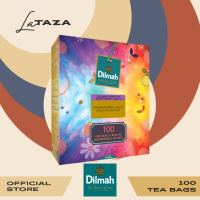
Dilmah Jasmine Green Tea (100 Individually Wrapped Tea Bags)
₱799.00
Buy on Lazada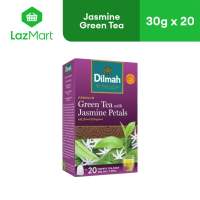
Dilmah Jasmine Green Tea 20 Bags
₱255.00₱260.00
About Dilmah
Overview
Dilmah is a Sri Lankan tea brand established in 1985 by Merrill J. Fernando. The company specialises primarily in Ceylon tea, the traditional designation for tea produced in Sri Lanka. Dilmah gained prominence for its emphasis on producing, processing, packaging, and branding tea within its country of origin, rather than exporting bulk tea as a commodity for blending and packaging overseas 1.
The name Dilmah was derived from the first names of Fernando’s two sons, Dilhan and Malik. The brand was founded with the objective of bringing authentic, single-origin Ceylon tea directly from Sri Lanka to international consumers while retaining greater economic value within the producing country 1.
Dilmah describes itself as a family-owned tea business that has evolved from a domestic Sri Lankan producer into an international brand. According to company materials, its products are sold in more than 100 countries 2.
History
Early life of Merrill J. Fernando
The history of Dilmah is intrinsically linked to its founder, Merrill J. Fernando, who was born in 1930 in Negombo, Sri Lanka. Fernando entered the tea industry during the era when Sri Lanka was still internationally known as Ceylon.
In the 1950s, he travelled to London to train as a tea taster, subsequently gaining extensive experience in the international tea trade. During his career, he observed that Sri Lankan tea was frequently treated primarily as a commodity; although grown and manufactured in Sri Lanka, it was often exported for blending, branding, and packaging elsewhere 3.
Fernando’s response was to establish a tea business that would retain greater control over the product from cultivation through to the finished package.
Founding of Dilmah
Prior to creating the Dilmah brand, Fernando established various businesses within the tea industry. His vision was realised in 1985 when Dilmah was launched as a branded Ceylon tea company 1.
This concept was relatively unusual for the international tea industry at the time: tea would be grown, traditionally manufactured, packaged, and branded in Sri Lanka, rather than being exported as bulk tea to multinational companies for subsequent blending and packaging.
Dilmah describes this approach as pioneering single-origin tea. Its products emphasise the distinct character of Ceylon tea, particularly through the company’s practice of offering unblended teas packed at source 4.
International expansion
Dilmah initially developed a significant international presence in Australia, where the brand was introduced during the 1980s. Expansion subsequently continued into other markets, including New Zealand, Europe, North America, and other regions worldwide 3.
The company’s growth demonstrated that a Sri Lankan tea producer could successfully develop and market its own consumer brand internationally, rather than primarily supplying tea to larger foreign brands. Today, Dilmah states that its tea is enjoyed in over 100 countries 2.
The name “Dilmah”
The brand name Dilmah is a combination of the names of Merrill J. Fernando’s sons:
- Dilhan Fernando
- Malik Fernando
Both sons subsequently became involved in the family business and its development. Dilhan Fernando currently serves as Chairman and Chief Executive Officer of Dilmah Ceylon Tea Company PLC, while Malik Fernando is associated with the family’s leisure and hospitality businesses 1.
Business and corporate structure
The principal corporate entity associated with the brand is Dilmah Ceylon Tea Company PLC, a Sri Lankan tea company. The company is part of the wider MJF Group, which is associated with the Fernando family.
It is important to distinguish between the Dilmah brand, the tea company, and the wider family-owned business group. While Dilmah is primarily recognised by consumers as a tea brand, its corporate operations extend into areas such as beverages, hospitality, social initiatives, and environmental conservation.
Dilmah Ceylon Tea Company PLC publishes integrated annual reports covering its financial, environmental, and social performance. Its latest report covers the financial year ending 31 March 2026 and details the company’s 40-year history of value creation.
Products
Dilmah’s core business is tea, particularly Ceylon tea from Sri Lanka. Its product portfolio includes various categories and formats:
- Black tea
- Green tea
- White tea
- Herbal and infusion products
- Flavoured teas
- Specialty and premium teas
- Tea bags
- Loose-leaf tea
- Gift and specialty collections
- Iced tea and other tea-based beverages
The company’s fundamental distinction lies in its emphasis on tea origin and freshness. Dilmah promotes tea that is picked, processed, and packaged at source in Sri Lanka 4.
Ceylon tea and “single origin”
A significant component of Dilmah’s brand identity is its association with Ceylon tea. “Ceylon” is the historical name of Sri Lanka, and the term remains widely used in the international tea industry to describe Sri Lankan tea.
Unlike commodity tea, which may be blended from leaves originating in different countries or regions, Dilmah emphasises the individual character of Sri Lankan tea. The company describes its tea as garden-fresh and unblended, with manufacturing and packaging taking place entirely in Sri Lanka 5.
This concept is central to the company’s positioning: consumers are intended to know that the tea originates specifically from the country associated with its production, rather than being a generic blend of indeterminate origin.
Production philosophy
Dilmah’s production philosophy combines traditional tea-making methods with modern quality control. The company emphasises a continuous chain of custody:
Origin → harvesting → processing → tasting → packaging → consumer
Rather than treating tea simply as an agricultural commodity, Dilmah presents it as an agricultural product whose flavour is influenced by cultivar, altitude, climate, soil, rainfall, geography, harvesting, and manufacturing processes.
The company also states that its tea experts taste thousands of teas each week as part of rigorous quality evaluation.
Brand philosophy
A defining feature of Dilmah is the philosophy established by Merrill J. Fernando:
“Business is a matter of human service.”
For Fernando, commercial success was intended to serve a social purpose. This philosophy remains central to the company’s identity 1.
Dilmah currently articulates its purpose through four closely related concepts:
- Quality — maintaining the quality and authenticity of Ceylon tea.
- Integrity — conducting business responsibly from tea garden to consumer.
- People — supporting employees, growers, and communities.
- Nature — protecting the ecosystems and biodiversity connected with tea production.
The company also frequently summarises its brand proposition through the phrase “Taste, Goodness and Purpose.”
Social responsibility
Social responsibility is not presented by Dilmah as a separate corporate programme but as an integral part of its business model.
Merrill J. Fernando established the MJF Charitable Foundation, which supports social and humanitarian initiatives in Sri Lanka and elsewhere. The foundation has worked in areas including:
- Education
- Community development
- Support for people with disabilities
- Entrepreneurship
- Nutrition
- Healthcare
- Women’s and youth empowerment
- Support for disadvantaged communities
Dilmah states that a portion of the economic value generated by the tea business is directed toward these initiatives 1.
Environmental conservation
Environmental protection is another major component of the Dilmah philosophy. The company established Dilmah Conservation to support environmental research, biodiversity protection, and conservation projects.
Its environmental activities have included work relating to:
- Biodiversity
- Wildlife
- Forest ecosystems
- Habitat restoration
- Environmental education
- Sustainable agriculture
- Climate-related initiatives
Dilmah describes environmental responsibility as fundamental to its business because tea production depends directly on healthy ecosystems 1.
Sustainability
Dilmah has incorporated sustainability into its corporate reporting and strategy. Its current sustainability approach includes efforts involving carbon reduction, plastic reduction, biodiversity protection, responsible sourcing, and social development. The company states it is committed to science-based targets for reducing its carbon footprint across its supply chain.
For example, the company’s 2023–24 sustainability reporting highlighted reductions in plastic packaging and conservation work in Sri Lanka’s Central Highlands.
Dilmah’s latest integrated annual report for 2025/26 continues to present financial and non-financial performance together, reflecting the company’s approach to integrating commercial, environmental, and social considerations.
Family ownership and leadership
Dilmah remains closely associated with the Fernando family. Leadership has transitioned from founder Merrill J. Fernando to the second generation, particularly his sons Dilhan Fernando and Malik Fernando, with the third generation also becoming involved in the family enterprise.
This family ownership is a key element of Dilmah’s corporate identity. Rather than positioning itself solely as a large multinational consumer-goods corporation, the company emphasises its identity as a family tea business with a long-term connection to Sri Lankan tea production.
Global presence
Dilmah has developed from a domestic Sri Lankan tea enterprise into an internationally recognised tea brand. According to the company, its products are available in more than 100 countries. Its international presence encompasses retail tea, hospitality, and food-service channels, as well as specialty tea experiences and related businesses 2.
Internationally, the brand is particularly associated with the concept of premium Ceylon tea produced in Sri Lanka.
Tea tourism and hospitality
The Dilmah family’s activities extend beyond packaged tea. One example is Tea Trails, a tea tourism concept located in Sri Lanka’s central tea-growing region. It offers visitors the opportunity to experience historic tea estates, plantation landscapes, and the culture associated with Ceylon tea.
This reflects a broader strategy of presenting tea not merely as a beverage but as part of Sri Lanka’s agricultural, cultural, and environmental heritage.
Marketing and brand identity
Dilmah’s marketing has traditionally focused on three themes:
- Ceylon origin
- Tea expertise
- Ethical and social purpose
The founder himself became an important part of the brand’s identity. Rather than presenting Dilmah as an anonymous corporate brand, the company has consistently associated the product with Merrill J. Fernando and his personal commitment to tea.
The slogan “Do try it” became particularly associated with the brand during its international expansion in Australia 3.
This founder-led identity helped distinguish Dilmah from multinational tea companies whose brands were generally disconnected from the individual producers and tea-growing regions behind their products.
Differentiation
Dilmah’s differentiation can be summarised as follows:
| Area | Dilmah’s approach |
|---|---|
| Origin | Sri Lanka / Ceylon |
| Founded | 1985 |
| Founder | Merrill J. Fernando |
| Name | Dilhan + Malik |
| Core product | Ceylon tea |
| Production philosophy | Tea made and packed at source |
| Tea style | Strong emphasis on single-origin, unblended tea |
| Ownership | Family-owned |
| Key philosophy | Business as a matter of human service |
| Social arm | MJF Charitable Foundation |
| Environmental arm | Dilmah Conservation |
| International reach | 100+ countries |
| Brand pillars | Taste, Goodness and Purpose |
| Corporate values | Quality, Integrity, People and Nature |
Timeline
1930
Merrill J. Fernando is born in Negombo, Sri Lanka.
1950s
Fernando trains in the international tea trade and becomes a professional tea taster in London 3.
1960s–1980s
Fernando develops his own tea businesses and works toward greater Sri Lankan ownership and participation in the tea trade.
1985
Dilmah is launched, named after Fernando’s sons Dilhan and Malik 1.
Late 1980s
Dilmah expands internationally, particularly into Australia, and begins establishing itself as a consumer tea brand rather than simply a bulk tea supplier 3.
1990s–2000s
The company expands into additional international markets and develops its social and environmental activities.
2007
Dilmah Conservation is established as part of the company’s environmental commitment.
2010s
Dilmah develops a broader portfolio of specialty teas, tea experiences, and sustainability initiatives while continuing its international expansion.
2020s
The business continues under the Fernando family’s second and third generations, with greater emphasis on sustainability, climate action, biodiversity, and integrated social impact 1.
2025–2026
Dilmah’s latest integrated annual report marks 40 years of the Dilmah brand, covering the financial year ending March 2026. The report records revenue of more than LKR 22.14 billion and profit before tax of approximately LKR 2.45 billion for the year.
Founder: Merrill J. Fernando
Merrill Joseph Fernando is the central figure in the Dilmah story. His importance extends beyond founding a tea brand; his business model challenged the traditional structure of the international tea industry by seeking to move Sri Lankan tea producers further up the value chain—from simply growing and exporting tea to manufacturing, branding, and selling finished tea products internationally.
His philosophy held that commercial activity should create benefits beyond shareholders, extending to employees, communities, farmers, and the natural environment.
This philosophy continues to define Dilmah’s corporate identity following his death, with his sons and grandchildren continuing the family business 1.
Dilmah today
As of 2026, Dilmah is best understood as a vertically integrated, family-owned Sri Lankan tea business and international consumer brand, rather than simply a packaged-tea label.
Its distinctive proposition combines Sri Lankan origin, tea expertise, family ownership, single-origin positioning, social responsibility, and environmental conservation.
The company remains strongly tied to Sri Lanka’s Ceylon tea heritage while operating internationally. Its current corporate strategy continues to emphasise quality, authenticity, sustainability, and the principle that commercial success should contribute to both people and nature.