Shop on Lazada
Doona products
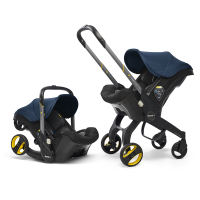
Doona+ Infant Car Seat and Stroller - Latest Collection
₱26,999.00
Buy on Lazada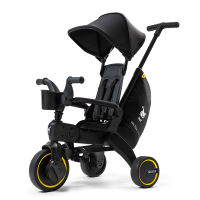
Liki Trike - Midnight Edition (Limited Edition)
₱19,999.00
Buy on Lazada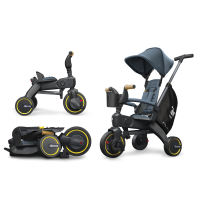
Liki Trike S5 - Deluxe
₱17,999.00
Buy on Lazada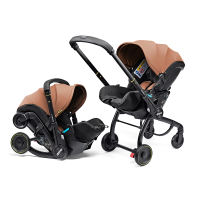
Doona X Infant Car Seat and Stroller
₱42,999.00
Buy on Lazada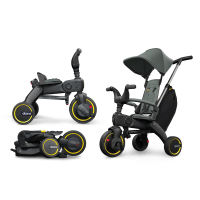
Liki Trike S3 - Premium
₱15,999.00
Buy on Lazada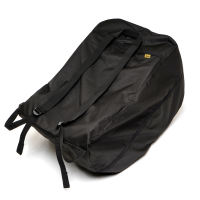
Doona Travel Bag
₱2,699.00
Buy on Lazada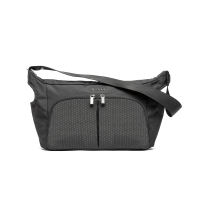
Doona Essentials Bag
₱3,499.00
Buy on Lazada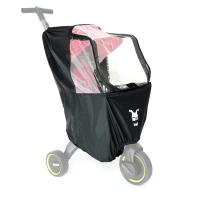
Liki Trike Rain Cover
₱2,599.00
Buy on LazadaAbout Doona
Doona is a baby-products and mobility brand best known for creating the Doona Car Seat & Stroller, an integrated infant car seat that transforms into a stroller. The brand positions itself around a simple idea: making parenthood and travelling with young children easier without compromising functionality, safety, or quality.1
Overview
| Category | Details |
|---|---|
| Brand | Doona™ |
| Industry | Baby products / juvenile mobility / travel |
| Best known for | Doona Car Seat & Stroller |
| Core concept | An infant car seat that converts directly into a stroller |
| Founder | Yoav Mazar |
| Target users | Parents and caregivers of infants, particularly families who travel or frequently move between cars and other environments |
| Brand positioning | Innovation, convenience, safety, mobility and modern parenting |
| Other products | Liki Trike, SensAlert, bases and various accessories |
| Official tagline/theme | “Parenting made simple.” |
Doona describes itself as a company focused on developing innovative products that address unmet needs in everyday parenting, particularly situations involving transportation and mobility.1
History
Origins
The story of Doona began with Yoav Mazar, who was looking for a better way to handle the everyday transition between an infant car seat and a stroller after becoming a parent.
According to Doona’s official account, Mazar found the repeated process of taking his newborn daughter in and out of the car seat, transferring her to a stroller, and carrying multiple pieces of equipment unnecessarily complicated. He began working on a solution in his workshop: essentially transforming the infant car seat itself into a stroller.1
That concept became the foundation for the Doona product.
The central innovation
Traditional infant travel systems generally involve two separate pieces:
- An infant car seat.
- A stroller.
Doona’s approach combines those functions into a single integrated product. Its wheels and stroller components are incorporated into the car-seat design and can be deployed when the product is outside the vehicle.1
This is the fundamental idea that differentiates Doona from conventional stroller systems.
The Doona Car Seat & Stroller
The flagship Doona product is simultaneously designed as an infant car seat and stroller.
The company describes it as a fully integrated travel system that can transition from car-seat mode to stroller mode in seconds.1
Three basic modes
The product can function in three principal configurations:
- Car-seat mode — installed in a vehicle as a rear-facing infant car seat.
- Stroller mode — wheels are deployed for pushing the child.
- Pull-along mode — the product can be manoeuvred by pulling it in certain situations.1
The conversion is one of the product’s defining characteristics.
Instead of:
Car → remove baby → remove car seat → assemble stroller → transfer baby
the Doona concept is essentially:
Car seat → deploy wheels → stroller
This makes it particularly attractive for short trips, airports, public transportation, shopping trips and situations where parents want to minimise equipment.
Product Design
Doona’s design philosophy revolves around integrating multiple functions into one compact object.
The product incorporates:
- Integrated wheels
- Adjustable handlebar
- Five-point harness
- Infant insert
- Head support
- Protective shell
- Canopy
- Washable/removable textiles
- Vehicle-seat compatibility
- Optional installation bases and accessories1
One particularly notable design feature is the handlebar. In stroller mode it functions as a handle, while in the vehicle configuration it also serves as an anti-rebound component.1
The result is a product that looks considerably different from a conventional stroller because the stroller mechanism is effectively built around an infant car-seat structure.
Safety Positioning
Safety is a major component of Doona’s brand identity.
The company states that its products undergo internal and external testing and mandatory certification processes appropriate to the markets in which they are sold. The company’s product materials reference applicable car-seat, stroller and carrier standards.1
Features highlighted by Doona include:
- Rear-facing infant-car-seat configuration
- Five-point harness
- Side-impact protection
- Energy-absorbing structures
- Anti-rebound handlebar
- Infant insert
- Head support
- Fail-safe mechanisms
- Aircraft/travel approval for applicable models1
Importantly, certification and permitted use can vary by country and model, so parents should always follow the current local regulations and the specific Doona user manual rather than assuming that an approval in one market applies everywhere.
Travel and Mobility
Travel is one of Doona’s strongest use cases.
The company specifically promotes the product for:
- Car travel
- Public transportation
- Air travel
- Train journeys
- Shopping
- Errands
- Urban environments
- Travel where luggage and boot space are limited1
The basic advantage is space and transition efficiency.
A conventional stroller can occupy substantial boot or luggage space. Because the Doona combines the car-seat and stroller functions, parents can potentially avoid carrying a separate stroller during the infant stage.
This makes the product especially relevant to families who value portability and convenience over having a full-size stroller system.
Product Evolution
Doona’s product lineup has expanded beyond the original concept.
As of 2026, the company’s principal car-seat/stroller lineup includes the Doona X, Doona i and Doona +, depending on market availability.1
Doona +
The Doona + represents the established version of the core concept and remains part of the company’s lineup.
It provides the familiar integrated car-seat/stroller architecture with a rear-facing infant car-seat configuration.1
Doona X
The Doona X is positioned as a newer generation of the concept.
Its major distinguishing feature is a three-position recline system, allowing the child to move between different positions including Sit, Relax and Lean Back.1
This addresses one of the limitations of the original fixed-position concept by providing additional flexibility for the child’s comfort.
Beyond the Doona Car Seat
Although the Doona Car Seat & Stroller remains the company’s signature product, the brand has developed a broader ecosystem.
Liki Trike
Liki is Doona’s compact tricycle product line for toddlers.
The company describes it as a 5-in-1 compact tricycle, extending the brand’s philosophy of compact, multifunctional mobility products beyond infancy.1
Current products include versions such as the Liki Trike S3 and S5.1
SensAlert
Doona also offers SensAlert, a child car-seat alert solution designed to provide additional awareness around a child remaining in a vehicle.1
Accessories
The company has built a fairly extensive accessory ecosystem around its products, including:
- ISOFIX/LATCH bases
- Storage solutions
- Travel bags
- Rain covers
- Sunshade extensions
- Insect nets
- Winter covers
- Footmuffs
- Vehicle seat protectors
- Wheel covers
- Infant inserts
- Head supports
- Replacement textiles and components1
This creates a broader Doona ecosystem rather than positioning the company solely as a one-product business.
Brand Philosophy
Doona’s stated mission is centred on simplifying parenthood.
Its philosophy can be summarised through several principles:
1. Convenience
Parents frequently have to move children between cars, homes, stores, airports and public transportation. Doona attempts to reduce the number of steps involved.
2. Multifunctionality
Rather than buying separate equipment for every situation, Doona combines multiple functions into a single product.
3. Mobility
The company designs around families who are frequently on the go, particularly in cities and during travel.
4. Safety
Because the flagship product is fundamentally an infant car seat, safety is positioned as a core design requirement rather than simply an additional feature.
5. Design
Doona’s products have a distinctive, modern appearance. The brand has increasingly emphasised colours, materials, finishes and accessories in addition to basic functionality.
The company summarises this philosophy as creating practical solutions for families on the go while maintaining functionality, safety and quality.1
Target Market
Doona primarily appeals to parents of newborns and infants who place a high value on convenience and mobility.
Its strongest customer segments include:
- Urban parents
- Frequent travellers
- Parents who regularly use cars
- Parents who use public transportation
- Families with limited storage space
- Parents who dislike carrying bulky baby equipment
- Families looking for an all-in-one infant travel solution
The product is particularly compelling for parents who frequently encounter the situation:
“I only need to go from the car to somewhere nearby, but I don’t want to carry a separate stroller.”
That is essentially the problem Doona was designed to solve.
What Makes Doona Different?
The most important distinction is that Doona is not simply a stroller with a car-seat attachment.
A conventional travel system generally works like this:
Infant car seat + stroller = two connected products
Doona instead approaches the problem as:
Infant car seat + integrated wheels/stroller mechanism = one product
That difference is fundamental to the brand.
The company’s own description calls it a fully integrated travel system, emphasising the ability to transition between modes without transferring the child to another seat.1
Advantages
From a product-positioning perspective, Doona’s main advantages include:
- Exceptional convenience for car-to-stroller transitions.
- Compactness, because a separate stroller isn’t required during use of the Doona.
- Travel friendliness, including applications involving airports and public transportation.
- Distinctive design, making the product immediately recognisable.
- Reduced transfers, since the infant can remain in the same seat during the transition.
- Integrated ecosystem, with bases and accessories designed around the core product.1
Limitations and Trade-offs
Doona’s unique design also creates trade-offs.
It is primarily an infant-stage mobility solution, rather than a conventional stroller designed to grow with a child for many years.
The standard Doona +, for example, is specified for infants up to 13 kg / 28.6 lb and up to 81.3 cm / 32 inches, with rear-facing use.1
Other considerations include:
- It is heavier than many conventional infant car seats because of the integrated stroller mechanism.
- It is not intended to replace a full-size toddler stroller.
- Its useful life is limited by infant car-seat/stroller specifications.
- Accessories and bases can add substantially to the total cost.
- Parents must pay close attention to local car-seat regulations and installation requirements.
So the product’s value proposition isn’t necessarily “the best stroller for every stage.”
It is more accurately: “A highly convenient mobility solution for the infant stage.”
Brand Positioning
Doona occupies an interesting position between several traditional baby-product categories:
Baby car seat
↓
Travel system
↓
Stroller
↓
Travel product
Rather than competing exclusively with ordinary strollers, the brand sells a lifestyle and mobility solution.
Its strongest marketing proposition is therefore not simply:
“Buy our stroller.”
It is closer to:
“Make moving around with your baby dramatically easier.”
That distinction helps explain why Doona has developed a recognisable identity despite essentially beginning with one highly specialised product concept.
Doona’s Brand Identity
Visually and commercially, Doona has developed an identity around:
Innovation + Safety + Convenience + Mobility + Modern Parenting
The brand presents itself as a technology/design-oriented baby company rather than a traditional nursery-goods manufacturer.
Its products tend to emphasise:
- Minimalist industrial design
- Compact engineering
- Premium-looking materials
- Neutral and fashion-oriented colours
- Modular accessories
- Travel
- Urban mobility
- Convenience for modern parents
The company also says its products have received multiple international innovation and design awards.1
Doona Today
As of 2026, Doona has evolved from its flagship car-seat/stroller concept into a broader parenting-mobility brand.
Its current ecosystem includes:
For infants
- Doona X
- Doona i
- Doona +
For toddlers
- Liki Trike
For vehicle safety/awareness
- SensAlert
For the ecosystem
- Bases
- Storage
- Travel accessories
- Weather protection
- Safety accessories
- Replacement parts1
The company continues to frame the overall brand around its central mission: “Parenting made simple.”1