Shop on Lazada
Dr Pepper products
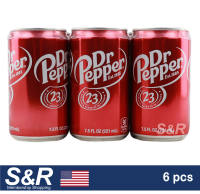
Dr. Pepper 23 Flavors Cola 6 cans
₱341.00
Buy on Lazada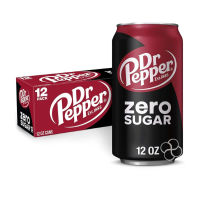
Dr. Pepper Zero Sugar 12 x 355mL
₱1,999.00
Buy on Lazada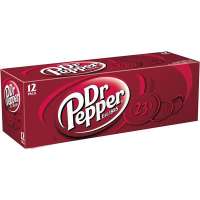
Dr Pepper Soda 7.5 Fl. Oz 12x221ml) 12 Count USA
₱980.00
Buy on Lazada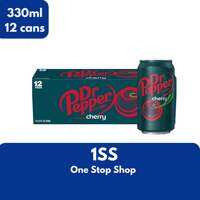
Dr. Pepper Cherry 330ml x 12 cans
₱1,055.00₱1,099.00
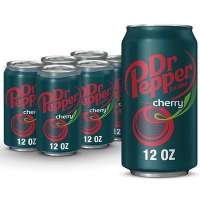
Dr. Pepper Cherry 6 x 330mL
₱599.00₱699.00
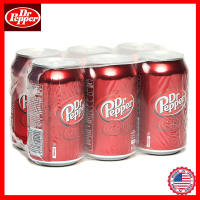
Dr. Pepper Regular 6 x 330mL
₱599.00₱699.00
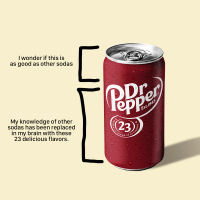
Dr. Pepper 23 Flavors Cola 221mL x 6 cans
₱559.00₱599.00
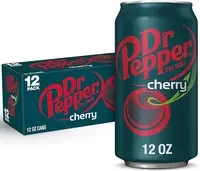
Dr. Pepper Cherry Soda 12 x 355mL
₱1,099.00₱1,599.00
About Dr Pepper
Overview
Dr Pepper is an American carbonated soft drink brand distinguished by a unique flavor profile that defies traditional categorization. Created in 1885 in Waco, Texas, it is widely recognized as the oldest major soft-drink brand in the United States, having been introduced one year before Coca-Cola. Today, Dr Pepper serves as a flagship beverage for Keurig Dr Pepper, one of North America’s leading beverage companies 1.
| Category | Information |
|---|---|
| Brand | Dr Pepper |
| Product type | Carbonated soft drink |
| Country of origin | United States |
| Origin | Waco, Texas |
| Year created | 1885 |
| Creator | Charles Alderton |
| Original location | Morrison’s Old Corner Drug Store |
| Parent company | Keurig Dr Pepper |
| Signature claim | Blend of 23 flavors |
| Primary market | United States, with international distribution |
| Major competitors | Coca-Cola, Pepsi, Mountain Dew, and other flavored/cola soft drinks |
| Notable slogan | “I’m a Pepper” |
| Famous historical slogan | “10, 2 and 4” |
History
Origins in Waco, Texas
Dr Pepper was formulated in 1885 at Morrison’s Old Corner Drug Store in downtown Waco, Texas. The inventor was Charles Courtice Alderton, a pharmacist employed at the establishment.
Alderton was intrigued by the complex aromas emanating from the drugstore’s soda fountain, where various fruit syrups were blended to create carbonated beverages. Rather than producing another standard fruit-flavored soda, he sought to capture the overall scent and complexity of the fountain itself. Through experimentation with different combinations, he developed a beverage with a distinct and singular flavor 1.
Patrons initially ordered the beverage as a “Waco.” Its popularity eventually extended beyond the drugstore, generating demand for the syrup among other soda fountains.
The exact formula remains a closely guarded trade secret. While the brand describes the taste as a combination of 23 different flavors, the specific ingredients and proportions have never been publicly disclosed 2.
The name “Dr Pepper”
Several accounts exist regarding the origin of the name. According to official corporate history, Wade Morrison, the drugstore owner, named the beverage after Dr. Charles Pepper, a physician from Virginia with whom Morrison had a prior connection before relocating to Texas 3.
However, historical evidence surrounding the naming is not entirely definitive. The Dr Pepper Museum notes that the brand’s early history contains elements that are somewhat disputed.
The brand originally utilized the styling “Dr. Pepper.” The period following “Dr” was removed during the 1950s, establishing the modern “Dr Pepper” typographic identity 3.
Early commercialization
During the late 19th century, Dr Pepper transitioned from a local soda-fountain novelty to a commercial product.
In 1891, Wade Morrison and beverage chemist Robert S. Lazenby established a business dedicated to the production and distribution of Dr Pepper syrup. By the late 1890s, the syrup was being distributed more broadly through soda fountains 1.
The corporate structure evolved subsequently. The Southwestern Soda Fountain Company acquired the rights to produce and sell Dr Pepper fountain syrup in 1898 and later adopted the Dr Pepper name. The Dr Pepper Company was formally incorporated in 1923 2.
National expansion
A significant milestone occurred at the 1904 World’s Fair in St. Louis, where Dr Pepper was introduced to a vast national audience. According to Keurig Dr Pepper, the beverage reached nearly 20 million visitors at the exposition, helping to establish the brand outside of Texas 3.
This era was pivotal as American soda consumption expanded rapidly. The growing popularity of drugstore soda fountains and bottled soft drinks provided Dr Pepper with a platform for national growth.
The “10-2-4” era
One of the most enduring elements of Dr Pepper’s early advertising was the “10-2-4” campaign.
This slogan encouraged consumers to drink Dr Pepper at 10 a.m., 2 p.m., and 4 p.m. It was tied to research and advertising claims regarding daily fluctuations in energy and blood sugar levels. During the 1940s, the slogan also became associated with efforts to maintain soft drink availability amid wartime sugar restrictions 1.
The campaign became integral to Dr Pepper’s identity and remained recognizable for decades.
Flavor and formulation
Dr Pepper is notable among major soft drinks because its flavor does not fit neatly into a single traditional category.
It is frequently described as containing notes reminiscent of:
- Cherry
- Vanilla
- Caramel
- Spice
- Fruit
- Almond-like notes
- Other sweet and aromatic flavors
These descriptions should not be interpreted as a complete ingredient list. The brand officially characterizes Dr Pepper as a blend of 23 flavors, while the actual formula remains proprietary 1.
A persistent rumor claims that Dr Pepper contains prune juice. The brand has explicitly rejected this assertion; Dr Pepper’s flavor is derived solely from its proprietary flavor blend rather than prune juice 4.
Product development
Throughout its history, Dr Pepper has expanded significantly beyond its original formulation.
Notable variations include:
- Diet Dr Pepper — a lower-calorie version of the drink.
- Caffeine-free Dr Pepper — introduced as an alternative for consumers avoiding caffeine.
- Cherry Dr Pepper — combines the original flavor profile with cherry.
- Dr Pepper & Cream Soda — blends Dr Pepper with a cream-soda flavor.
- Dr Pepper Creamy Coconut — a limited or seasonal flavor variant.
- Blackberry Dr Pepper — a newer flavor combining the core profile with blackberry.
- Various other limited-edition and regional flavors.
Keurig Dr Pepper states that the brand has continued to experiment with flavors throughout the 21st century while maintaining the original 23-flavor concept 3.
Diet and zero-sugar products
Dr Pepper has developed products targeting consumers seeking reduced-sugar alternatives.
Diet Dr Pepper represents one of the brand’s most significant extensions. The company traces its sugar-free experimentation to 1962, when Sugar-Free Dr Pepper was introduced; it was subsequently renamed Diet Dr Pepper 3.
Modern markets also offer zero-sugar versions. Formulations vary by country, but these products generally utilize artificial or alternative sweeteners rather than conventional sugar. For example, the UK formulation of Dr Pepper Zero uses sweeteners including aspartame, acesulfame-K, and sucralose 5.
Corporate history
Dr Pepper’s corporate ownership has undergone considerable changes throughout its history.
During the 20th century, the company grew into a major American beverage business, eventually becoming involved in mergers and acquisitions within an increasingly consolidated industry.
In 1986, Dr Pepper merged with the Seven-Up Company, creating Dr Pepper/Seven-Up 2.
In 1995, Cadbury acquired the beverage business, and the North American operations eventually became part of Cadbury Schweppes Americas Beverages.
In 2008, the North American beverage business was separated from Cadbury Schweppes, forming the Dr Pepper Snapple Group 3.
A major transformation occurred in 2018, when Keurig Green Mountain and Dr Pepper Snapple Group combined to create Keurig Dr Pepper (KDP).
Today, Dr Pepper is a principal brand within KDP’s portfolio, which includes a vast collection of soft drinks, coffee, water, tea, and other beverages. KDP states its portfolio contains 150+ iconic brands across multiple categories 1.
Branding and advertising
Dr Pepper has cultivated a distinctive advertising identity over its long history.
Some of its best-known slogans and campaigns include:
- “Drink a Bite to Eat at 10, 2 and 4”
- “The Friendly Pepper-Upper”
- “Be a Pepper”
- “I’m a Pepper”
- “Wouldn’t You Like to Be a Pepper Too?”
- “Just What the Doctor Ordered”
- “What’s the Worst That Could Happen?”
- “There’s Just More to It”
- “Fansville”
The word “Pepper” became central to the brand’s identity, with consumers and advertising campaigns sometimes referring to themselves as “Peppers.”
The “I’m a Pepper” campaign stands out as one of the most recognizable advertising concepts in American soft drink history. The brand’s marketing has consistently emphasized individuality and the notion that Dr Pepper differs from conventional cola 6.
Relationship with sports and popular culture
Dr Pepper maintains a strong presence in American popular culture.
The brand has engaged in sponsorships and advertising connected with:
- American football
- College sports
- Music
- Television
- Movies
- Gaming
- Internet culture
One prominent modern campaign is Fansville, an advertising universe centered on American college football fandom. This campaign translates the intense behavior of sports fans into a fictional small-town setting.
The brand has also appeared via product placement and promotional partnerships in various entertainment media.
Dr Pepper Museum
The history of the brand is preserved at the Dr Pepper Museum in Waco, Texas.
Located in the former Artesian Manufacturing and Bottling Company building, the museum documents the history of Dr Pepper and the broader American soft-drink industry. It is not owned or operated by Keurig Dr Pepper, although the company provides support 6.
The museum holds particular significance as Waco is the birthplace of the drink and the site of the original Morrison’s Old Corner Drug Store.
International presence
Although Dr Pepper originated in Texas and remains strongly associated with American culture, the brand is sold in numerous international markets.
Formulation, packaging, availability, and distribution arrangements vary between countries. For instance, Dr Pepper products are sold in the United Kingdom and Canada, where the brand has developed distinct product lineups and marketing histories 5.
Cultural identity
A defining aspect of Dr Pepper is an identity built around being difficult to categorize.
Unlike Coca-Cola or Pepsi, whose traditional products are understood as colas, Dr Pepper occupies an ambiguous flavor category. It possesses characteristics associated with cola, fruit soda, spice, and cream-like flavors without completely resembling any single one.
This ambiguity is integral to the brand’s personality. Rather than attempting to simplify the flavor description, Dr Pepper’s marketing frequently leverages its unusual character as an advantage.
In this context, “23 flavors” is not merely a formulation detail but a central component of Dr Pepper’s brand mythology.
Major milestones
| Year | Event |
|---|---|
| 1885 | Charles Alderton creates Dr Pepper in Waco, Texas |
| 1891 | Morrison and Robert S. Lazenby establish a business associated with Dr Pepper production |
| 1898 | Southwestern Soda Fountain Company acquires production/sales rights |
| 1902 | Southwestern Soda Fountain Company adopts the Dr Pepper Company name |
| 1904 | Dr Pepper receives major national exposure at the St. Louis World’s Fair |
| 1923 | Dr Pepper Company is formally incorporated |
| 1940s | “10-2-4” becomes a major advertising theme |
| 1950s | The period in “Dr.” is dropped from the brand name |
| 1962 | Sugar-Free Dr Pepper introduced |
| 1982 | Caffeine-free Dr Pepper introduced under the name Pepper Free |
| 1986 | Dr Pepper merges with Seven-Up |
| 1995 | North American beverage business becomes part of Cadbury Schweppes |
| 2008 | Dr Pepper Snapple Group is established |
| 2018 | Keurig Green Mountain and Dr Pepper Snapple Group combine to form Keurig Dr Pepper |
| 2025 | Brand celebrates 140 years of Dr Pepper history |
Ownership today
Dr Pepper is currently part of Keurig Dr Pepper Inc. (KDP). KDP is a major North American beverage company whose portfolio extends beyond soft drinks to include coffee, tea, water, and other beverage categories 3.
The company’s official website is DrPepper.com, while corporate information is available through Keurig Dr Pepper.
Significance
Dr Pepper’s importance in beverage history stems from several factors:
- Age: Created in 1885, it is one of the earliest major American soft drinks.
- Distinctive formulation: The 23-flavor concept provides a flavor identity unlike traditional cola.
- Strong regional origins: Its connection to Waco and Texas remains central to its history.
- Longevity: The brand has survived more than 140 years of changes in consumer tastes and the beverage industry.
- Marketing innovation: Campaigns such as “10-2-4,” “I’m a Pepper,” and Fansville have made the brand culturally recognizable.
- Product innovation: Diet, zero-sugar, cherry, cream-soda, and other variations have allowed it to reach diverse consumer groups.
- Corporate evolution: Its history reflects the broader consolidation of the American beverage industry.
In popular understanding
Dr Pepper is often summarized as “the soda that doesn’t taste like anything else.” This description encapsulates much of its commercial strategy: rather than competing solely as a superior cola, the brand has built its identity around uniqueness.
From a pharmacist’s experiment at a Texas drugstore in 1885 to an internationally recognized beverage brand under Keurig Dr Pepper, its history illustrates how an unusual regional soda became a major American consumer brand.
In summary, Dr Pepper is a historic American soft-drink brand originating in Waco, Texas, in 1885, created by pharmacist Charles Alderton and famous for its secret 23-flavor formula. Its distinctive taste, unusual branding, extensive history, and strong cultural presence have established it as one of the most recognizable soft drinks globally 1.