Shop on Lazada
Godiva products
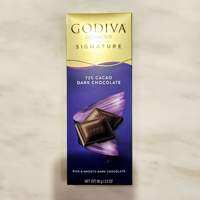
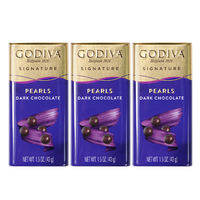
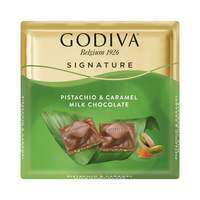
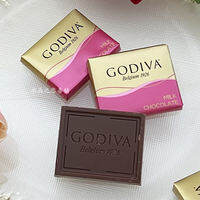
About Godiva
Overview
Godiva is a premium chocolate and confectionery brand established in Brussels, Belgium, in 1926. Internationally recognised for its pralines, truffles, chocolate assortments, biscuits, beverages, and ice cream, the company has grown from a local workshop into a global luxury label 1. In 2026, Godiva marks its centenary, celebrating one hundred years of Belgian chocolate-making heritage 1. The brand’s identity is closely linked to Belgian craftsmanship, elegant packaging, and the historical figure of Lady Godiva.
Brand Profile
| Category | Information |
|---|---|
| Brand name | Godiva |
| Industry | Confectionery / Food & Beverage |
| Product category | Premium chocolate and confectionery |
| Founded | 1926 |
| Origin | Brussels, Belgium |
| Founder | Pierre Draps Sr. |
| Original business | Chocolate-making / pralines |
| Signature products | Pralines, truffles, chocolate assortments, biscuits, chocolate drinks |
| Brand inspiration | Lady Godiva |
| Positioning | Premium / luxury chocolate |
| Heritage | Belgian |
| Major international expansion | Europe, North America, Japan and other Asian markets |
| 100th anniversary | 2026 |
History
Origins in Brussels
The history of Godiva began in 1926 when Belgian chocolatier Pierre Draps Sr. started producing chocolates and pralines in a small Brussels workshop 1. His sons, including Joseph, François, and Pierre Jr., later joined the family enterprise and helped expand it into a larger chocolate business. From its earliest days, the company was shaped by the Belgian tradition of fine chocolate making. Rather than treating chocolate as a mass-market commodity, the Draps family prioritised craftsmanship, refined recipes, presentation, and the sensory experience of consuming chocolate.
The Godiva Name
The name Godiva references Lady Godiva, the legendary 11th-century English noblewoman famous for her protest against oppressive taxation in Coventry. According to the company’s historical account, the Draps family drew inspiration from this legend when naming their business 1. The story came to symbolise boldness, courage, generosity, and independence—qualities that were subsequently woven into the brand’s identity. Consequently, the image of Lady Godiva riding a horse became a central and enduring element of the brand’s visual identity.
Development of the Brand
Throughout the 1930s and 1940s, the Draps family continued to develop distinctive recipes and products. Pierre Draps Jr. played a significant role in creating formulations that enhanced the company’s reputation. Notably, the Truffe Originale, introduced in 1946, remains one of Godiva’s most iconic creations 2. During this period, the company also became known for combining chocolate craftsmanship with elaborate presentation. Packaging, ribbons, and gift boxes evolved into essential components of the brand experience rather than mere protective coverings.
International Expansion
Godiva began expanding beyond Belgium in the second half of the 20th century, establishing boutiques in key international markets. This growth transformed the company from a local Belgian chocolatier into a globally recognised premium brand 1. Significant milestones included the opening of a boutique at Brussels’ Grand Place in 1958, which solidified its status as a luxury destination 1. In 1966, Godiva entered the United States market with a store on Fifth Avenue in New York City, linking its Belgian heritage with American luxury retail 1. Japan subsequently emerged as a vital market; the brand opened a boutique in Tokyo’s Ginza district in 1972, further cementing its global presence 1.
Royal Recognition
In 1968, Godiva was appointed an official chocolatier to the Royal Court of Belgium 1. This Royal Warrant reinforced the brand’s association with Belgian quality and craftsmanship, serving as a cornerstone of its international positioning as a premium chocolatier.
Products
While primarily associated with chocolate, Godiva’s portfolio has diversified significantly over the decades.
Chocolate
Chocolate remains the core of the business. Godiva produces a wide array of items including pralines, truffles, bars, assortments, filled chocolates, seasonal collections, and gift boxes. Pralines hold particular significance due to the brand’s origins in Pierre Draps Sr.’s early Brussels workshop 1.
Truffles
Truffles are integral to the brand’s identity. The Truffe Originale, developed in 1946, is cited as a historic signature product that exemplifies the company’s confectionery expertise 2.
Biscuits and Baked Goods
The brand has expanded into biscuits, cookies, and other baked confections, allowing it to reach consumers seeking alternatives to traditional boxed chocolates.
Cafés and Beverages
In 2006, Godiva introduced chocolate cafés, offering beverages and desserts alongside retail products 1. This move signalled a strategic shift from selling chocolate solely as a packaged luxury good towards providing a broader experiential chocolate encounter.
Ice Cream and Regional Variations
Depending on the specific market, Godiva’s offerings may include ice cream, ready-to-drink beverages, and seasonal confectionery. Product ranges vary considerably by country to suit local preferences.
Brand Identity
Godiva’s identity is constructed around several interconnected pillars.
Belgian Heritage
Belgium is the most critical component of the brand’s historical narrative. Godiva consistently emphasises its 1926 Brussels origins, traditional chocolate-making methods, and generations of artisanal expertise 1. This heritage is presented as central to its contemporary identity.
Luxury Positioning
Godiva positions itself distinctly above mass-market chocolate. Products are frequently marketed as premium gifts for occasions such as birthdays, Valentine’s Day, Christmas, anniversaries, weddings, and corporate events. Consequently, packaging is treated with the same importance as the confectionery itself in communicating luxury.
Gifting Culture
Gifting is fundamental to the business model. Chocolate boxes are designed to convey sophistication and generosity, placing Godiva at the intersection of traditional chocolatier and luxury gift brand.
Sensory Experience
The brand philosophy increasingly frames chocolate consumption as a complete sensory experience. Official communications emphasise the interplay of texture, aroma, appearance, and flavour rather than taste alone 1.
Visual Identity
Key elements of Godiva’s visual language include:
- Lady Godiva: The central historical symbol linking the modern brand to its namesake legend.
- Gold: Extensively used to signify premium positioning.
- Dark Brown Tones: Reinforcing the product category and sense of richness.
- Elegant Typography: Designed to communicate sophistication.
- Gift-Box Presentation: A crucial component of the customer experience.
International Presence
Over its century of operation, Godiva has established a substantial footprint, particularly in Europe, North America, and Asia. Japan stands out as an especially important market. The global strategy typically combines a consistent brand identity with localised products and retail formats. For instance, Godiva’s Japanese operations have developed extensively; the local entity was established in 1994 and has since undergone changes in ownership and corporate structure 3. This illustrates a key characteristic of the global model: while the brand operates internationally, business structures and product offerings often differ significantly between markets.
Ownership
Corporate ownership of Godiva has evolved over time. Previously owned by Campbell Soup Company, the brand was acquired by Yıldız Holding in the late 2000s, becoming part of its global food and snack portfolio 4. Market-specific corporate arrangements also exist. For example, corporate records for Godiva Japan indicate a transfer of ownership to VM Holdings, associated with MBK Partners, in 2019 3. Given these variations, it is necessary to distinguish between the global brand and individual national operating companies.
Marketing and Cultural Significance
Historically, Godiva’s marketing has focused less on everyday consumption and more on occasion-oriented luxury experiences. The brand promotes an idea of chocolate associated with romance, celebration, generosity, sophistication, indulgence, European luxury, and Belgian craftsmanship. This positioning has made Godiva particularly recognisable as a gift chocolate brand. Its gold packaging and Lady Godiva emblem serve as visual shortcuts, allowing consumers to identify the product before reading the brand name.
Key Milestones
- 1926: Pierre Draps Sr. begins making chocolates in Brussels 1.
- 1930s–1940s: The Draps family develops the business and new chocolate recipes.
- 1946: The Truffe Originale becomes a historic signature product 2.
- 1958: Godiva establishes a flagship boutique at Brussels’ Grand Place 1.
- 1966: Entry into the United States via a Fifth Avenue boutique in New York 1.
- 1968: Appointed official chocolatier to the Royal Court of Belgium 1.
- 1972: Significant expansion in Japan, including Tokyo presence 1.
- 2006: Expansion into chocolate cafés and experiential retail 1.
- 2007–2008: Acquisition by Yıldız Holding 4.
- 2010s: Growth of packaged products, cafés, and international retail.
- 2025: Approaches centennial while emphasising Belgian heritage 1.
- 2026: Celebrates 100 years since founding in Brussels 1.
Industry Significance
Godiva’s importance lies in its ability to translate Belgian chocolate craftsmanship into an internationally recognisable luxury brand. While traditional Belgian companies often competed primarily on product quality, Godiva added dimensions of branding and luxury retail. The company helped popularise the concept of premium chocolate functioning not merely as food but as a luxury gift, fashion-like brand, and lifestyle experience. Its influence can be understood through the progression: chocolate craftsmanship leading to Belgian heritage, which in turn supports luxury branding. This combination forms the foundation of its international identity.
Brand Philosophy
Godiva continues to uphold principles inherited from its history:
- Craftsmanship: Maintaining chocolatier techniques and attention to detail.
- Quality: Selecting ingredients and ensuring consistency.
- Innovation: Developing new flavours, formats, and experiences.
- Luxury: Preserving premium presentation and positioning.
- Heritage: Connecting contemporary products to Belgian origins.
- Experience: Presenting chocolate as an emotional and sensory encounter rather than just a food product 1.
Centenary in 2026
The year 2026 is particularly significant as it marks Godiva’s centenary. The company is celebrating 100 years since its 1926 origins in Brussels, framing the anniversary around a century of Belgian tradition, craftsmanship, and innovation 1. The brand’s evolution encompasses three broad stages: a Belgian family workshop in 1926, an international premium chocolatier in the 20th century, and a global luxury confectionery brand in the 21st century. Throughout these transitions, the central concept has remained consistent: Belgian chocolate craftsmanship presented as an exceptional experience 1.