Shop on Lazada
Dunu products
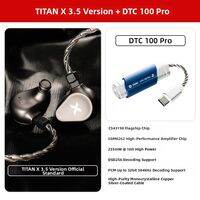
Dunu | HiFi Gaming Wired Headphones
₱5,577.36
Buy on Lazada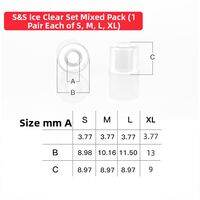
Dunu | Human Voice Friendly Silicone Ear Tips
₱594.67
Buy on Lazada
Dunu | OTG Support Upgraded Type-C to Type-C Audio Cable
₱1,107.33
Buy on Lazada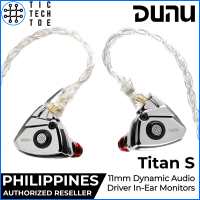
DUNU Titan S Metal Alloy Shell Dynamic Driver Silver Plated Detachable Cable IEM In-Ear Earphones
₱3,679.00₱5,000.00
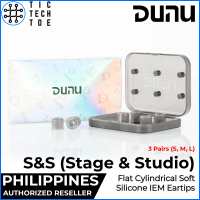
DUNU S&S (Stage & Studio) Flat Tips Soft Silicone Upgrade Replacement IEM 3 Pairs Set Eartips
₱799.00₱1,200.00
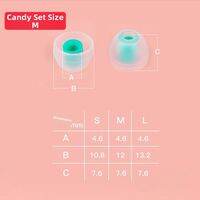
Dunu | Sound Quality Enhancing Silicone Ear Tips
₱500.00
Buy on LazadaAbout Dunu
Dunu, also referred to as Dunu-Topsound, is a Chinese audio equipment manufacturer specialising in in-ear monitors (IEMs), earphones, headphones, cables, and related accessories. Headquartered in Dongguan, Guangdong, China, the company traces its origins to 1994 12.
Within the audiophile community, Dunu is recognised for technically ambitious IEMs featuring hybrid-driver configurations, proprietary dynamic drivers, precision metal housings, modular cable systems, and tuning that balances technical performance with musicality. Its product portfolio spans from accessible entry-level earphones to high-cost flagship IEMs 2. Unlike many contemporary boutique Chi-Fi brands, Dunu began as an OEM/ODM manufacturer, producing earphones and components for other companies before establishing its own consumer brand 3.
Company overview
| Category | Information |
|---|---|
| Brand | Dunu / Dunu-Topsound |
| Founded | 1994 |
| Industry | Consumer electronics / Audio |
| Main products | IEMs, earphones, headphones, cables, accessories |
| Main manufacturing location | Dongguan, Guangdong, China |
| Corporate/manufacturing entity | Dongguan Dadian Electronics Co., Ltd. |
| Original business | OEM/ODM audio manufacturing |
| Specialty | High-end and enthusiast-oriented personal audio |
| Current focus | IEMs, headphones, cables and audio accessories |
Dunu identifies its corporate entity as Dongguan Dadian Electronics Co., Ltd., located in Shijie Town, Dongguan, Guangdong, China 1.
History
Foundation and OEM/ODM origins
Dunu was established in 1994 as an OEM/ODM manufacturer specialising in earphones and associated components. Rather than competing directly with consumer-facing audio brands, the company initially operated behind the scenes, manufacturing products and components for international clients 3.
This manufacturing foundation became a defining characteristic of the brand. Dunu developed expertise not only in assembly but also in driver development, acoustic engineering, metal and composite diaphragm fabrication, mould making, manufacturing processes, and acoustic measurement 3. The company’s parent organisation is also associated with Topsound, which explains why the brand is frequently referred to as Dunu-Topsound. Corporate materials state that Dunu developed high-precision composite and metal diaphragms as thin as 6 μm, 5 μm, and 4 μm, alongside proprietary driver-development capabilities 3.
Transition to the Dunu consumer brand
For many years, Dunu’s primary business was OEM/ODM manufacturing. The company eventually leveraged its accumulated manufacturing and acoustic development experience to launch products under its own brand. This transition allowed Dunu to exercise greater control over the entire product development process, from acoustic design and driver development to mechanical engineering and production 4.
The brand subsequently gained recognition beyond its manufacturing operations, particularly among enthusiasts seeking sophisticated multi-driver earphones. Dunu entered the Japanese consumer market around 2011–2012, where its products began appearing at specialist audio events 4.
The DN-1000 and market breakthrough
The DN-1000 stands as one of the most significant products in Dunu’s history. Released during the early phase of the brand’s consumer expansion, it featured a hybrid driver configuration comprising one dynamic driver and two balanced-armature drivers. The model served as a critical demonstration of Dunu’s ability to design and manufacture sophisticated hybrid IEMs 4.
The DN-1000 attracted considerable attention in Japan and internationally, helping to establish Dunu as a serious enthusiast-audio manufacturer rather than merely an OEM supplier 4. This period marked a pivotal shift in the company’s identity, transitioning from manufacturing earphones for third parties to becoming an audio brand with its own engineering philosophy.
The DN-2000 generation
Following the success of the DN-1000, Dunu developed increasingly sophisticated hybrid IEMs, including the DN-2000 and subsequent models such as the DN-2000J. The DN-2000 series helped establish the brand’s reputation for combining dynamic drivers, balanced-armature drivers, sophisticated acoustic crossover systems, metal construction, detailed high-frequency reproduction, strong bass performance, and high technical performance relative to price. These models were particularly well-regarded within the enthusiast community and helped define Dunu’s early audiophile identity, with contemporary Head-Fi coverage repeatedly highlighting the company’s hybrid designs and engineering approach 4.
Engineering philosophy
Dunu’s product philosophy emphasises engineering, acoustic performance, mechanical construction, and manufacturing control. Historical materials describe the company’s objectives through the acronym D-U-N-U, representing products that are Delicate, Unique, and Utmost in quality 4. While marketing language has evolved, the underlying philosophy remains consistent: Dunu prioritises engineering and physical product quality over mere specification competition or branding.
Driver technology
A core strength of Dunu lies in its driver development capabilities. Unlike brands that rely primarily on standardised third-party drivers, Dunu has historically emphasised in-house development and manufacturing of driver technologies, specifically highlighting thin composite and metal diaphragms and proprietary driver designs 3.
Dynamic drivers
Dunu has produced numerous IEMs utilising dynamic drivers, including titanium-diaphragm designs. The Titan series, particularly the Titan 1, is a notable example that demonstrated the brand’s competence in the dynamic-driver enthusiast market 4.
Balanced armature drivers
Balanced-armature drivers have been used extensively across Dunu’s catalogue, particularly within hybrid configurations.
Hybrid systems
Hybrid IEMs have become a signature of the brand. A typical Dunu hybrid design combines dynamic and balanced-armature drivers, assigning each type to specific frequency ranges. Later generations have employed considerably more elaborate architectures.
Planar and electrostatic technologies
Modern flagship products have expanded beyond conventional dynamic and balanced-armature hybrids. The Glacier flagship, for example, utilises a configuration of one dynamic driver, four balanced-armature drivers, and four electrostatic drivers per side, totalling nine drivers 1. This illustrates the significant evolution of Dunu’s product architecture from its early two- or three-driver hybrids.
Acoustic and manufacturing technology
Dunu’s OEM heritage is evident in its investment in professional acoustic measurement equipment and specialised manufacturing infrastructure. Corporate information describes the use of B&K frequency-response analysis equipment, acoustic testing apparatus, and dedicated anechoic facilities 3.
This vertical integration provides Dunu with substantial control over driver production, driver matching, housing design, injection moulding, CNC machining, acoustic testing, assembly, and quality control. This level of manufacturing autonomy distinguishes Dunu from many smaller enthusiast IEM companies.
Product philosophy
Dunu positions itself towards the audiophile and enthusiast market rather than the mass-market consumer electronics sector. Its products typically emphasise several key areas:
Sound quality
Acoustic performance is the primary focus. Dunu frequently designs products around specific tuning targets while emphasising technical characteristics such as resolution, imaging, separation, and dynamics.
Build quality
The brand has developed a reputation for substantial metal construction, precision-machined components, and elaborate faceplate and housing designs.
Accessories
Dunu is known for providing comprehensive accessory packages with its higher-end IEMs, often including multiple eartips, premium detachable cables, carrying cases, adapters, modular connectors, interchangeable plugs, and cleaning tools.
Modular cables
The brand has become closely associated with modular cable systems. Higher-end products frequently feature interchangeable termination systems that allow users to switch between common amplifier and source connectors without replacing the entire cable, a feature particularly valued by audiophiles using multiple sources.
Notable product families
While Dunu’s catalogue has evolved significantly, several product families have been particularly influential.
DN Series
The DN series represents much of Dunu’s early hybrid-IEM history. Key models include the DN-1000, DN-2000, DN-2000J, DN-2002, and their DK-series successors. The DN-1000 was instrumental in establishing the brand’s international reputation 4.
Titan Series
The Titan family focused heavily on dynamic-driver technology. The Titan 1, notable for its titanium diaphragm, demonstrated that Dunu could compete in both the dynamic-driver and hybrid enthusiast markets 4. The series later evolved into products such as the Titan S and subsequent generations.
DK Series
The DK series encompasses Dunu’s more ambitious hybrid designs, including models such as the DK-2001, DK-3001, DK-3001 Pro, DK-4001, and DK3001BD. The modern DK3001BD employs a complex hybrid configuration and occupies a prominent position in the current product hierarchy 12.
Modern product portfolio
Dunu has expanded substantially beyond the products that originally established its reputation. The current catalogue includes in-ear monitors, full-size headphones, earphones, cables, eartips, amplification accessories, and limited collaborations. The company has identified full-sized headphones as an area of expansion, marking a move beyond its traditional IEM-centric identity 12.
Current flagship products
- Glacier: A flagship IEM featuring a nine-driver-per-side architecture (1 dynamic + 4 balanced armature + 4 electrostatic), placing it in the ultra-high-end category 1.
- Arashi: A flagship-level product representing the company’s focus on high-performance dynamic-driver engineering.
- DK3001BD: A modern hybrid design listed alongside flagship products as a major upper-tier model 12.
- KIMA / KIMA 2: Represents the more affordable segment of the catalogue, demonstrating the brand’s strategy of covering multiple price categories 1.
Price range and positioning
Dunu’s pricing spans from budget-friendly enthusiast products to four-figure flagship IEMs. Models such as the KIMA 2 occupy the lower-hundreds-of-dollars range, while the Glacier and Arashi target the high-end market 12. This creates a product ladder ranging from entry-level to flagship, rather than limiting the brand to a single price segment.
Position in the Chi-Fi market
Dunu is frequently grouped within the broader Chi-Fi (Chinese hi-fi) industry, though it occupies a distinctive position. While many newer Chinese IEM brands gained prominence through inexpensive products assembled from commercially available components, Dunu’s history dates to 1994 and began as an established OEM/ODM manufacturer 3. Consequently, Dunu is better understood as an older-generation Chinese personal-audio manufacturer that later became a prominent consumer-facing audiophile brand. Its OEM background provides substantially more manufacturing experience than the Chi-Fi label alone might suggest.
Reputation among audiophiles
Dunu has cultivated a strong reputation in the enthusiast community for several reasons:
- Hybrid IEM expertise: As an early prominent adopter of multi-driver hybrid designs, products like the DN-1000 and DN-2000 became important reference points in enthusiast hybrid IEM development 4.
- Technical performance: Products are commonly praised for resolution, imaging, separation, bass quality, treble extension, dynamic range, and driver integration.
- Build quality: Machined metal housings and sophisticated mechanical construction have become part of the brand’s identity.
- Accessories: Historically comprehensive accessory packages accompany many higher-end products.
- Engineering credibility: Dunu’s long history in driver development and OEM manufacturing provides genuine engineering and production expertise, distinguishing it from brands that simply purchase generic IEM designs 3.
Industry positioning
Dunu operates across the middle to upper end of the IEM market spectrum. This broad positioning has allowed the brand to remain relevant despite the enormous growth in Chinese IEM manufacturers during the 2020s. Rather than relying exclusively on low prices, Dunu competes through driver engineering, industrial design, manufacturing quality, and acoustic tuning.
Collaborations
Dunu has increasingly collaborated with other companies and individuals in the audio community. Current collaborations include:
- Dunu × FitEar Kaoru
- Dunu × Effect Audio
- Mirai (involving Precogvision)
Some of these are offered as limited-edition products 12. These partnerships demonstrate Dunu’s evolution from a conventional manufacturer towards a recognisable enthusiast-audio brand with its own design ecosystem.
Current status
As of 2026, Dunu remains primarily associated with high-end personal audio, particularly IEMs, though its portfolio continues to broaden. The current website categorises products into In-Ear Headphones, Over-Ear Headphones, and Accessories, with active promotion of full-sized headphone products 12. The lineup ranges from affordable models such as the KIMA 2 and Titan S2 to high-end offerings like the Glacier and Arashi 12.
Significance in the personal audio industry
Dunu’s importance stems from its combination of manufacturing heritage and enthusiast-oriented product development. The brand’s evolution can be traced through distinct phases:
- 1994: Established as an OEM/ODM manufacturer.
- 2000s: Expanded driver-development and manufacturing capabilities.
- Early 2010s: Launched the consumer-facing Dunu brand.
- DN-1000 / DN-2000 era: Gained recognition as a major hybrid-IEM manufacturer.
- Titan / DK generations: Expanded dynamic and hybrid technology sophistication.
- 2020s: Introduced modular cables, high-end IEMs, collaborations, and complex driver architectures.
- 2026: Operates as an established international enthusiast-audio brand with products spanning affordable IEMs to ultra-high-end flagships and an expanding full-size headphone portfolio 12.
Unlike newcomers that emerged during the recent Chi-Fi boom, Dunu’s underlying manufacturing and driver-development history dates to 1994. This extensive OEM/ODM background is a fundamental factor enabling the brand to compete effectively at the high end of the IEM market 3.