Shop on Lazada
Estée Lauder products
![[UP TO 20% OFF] Estee Lauder Advanced Night Repair Serum Synchronized Multi-Recovery Complex | Best Seller Facial Serum & Essence ANR | 7ml 20ml 30ml 50ml 75ml](https://ph-live.slatic.net/p/4ce77ffda0432ba660c2cc75ede49c08.jpg_200x200q80.jpg)
[UP TO 20% OFF] Estee Lauder Advanced Night Repair Serum Synchronized Multi-Recovery Complex | Best Seller Facial Serum & Essence ANR | 7ml 20ml 30ml 50ml 75ml
₱15,000.00
Buy on Lazada![[NOW P3120] NEW Estee Lauder Double Wear Stay-In-Place Longwear Matte Foundation SPF10/PA++ | Best Seller Foundation | 30ml](https://ph-live.slatic.net/p/81be221ac6f1ca361ffc02960909aa54.png_200x200q80.jpg)
[NOW P3120] NEW Estee Lauder Double Wear Stay-In-Place Longwear Matte Foundation SPF10/PA++ | Best Seller Foundation | 30ml
₱3,120.00
Buy on Lazada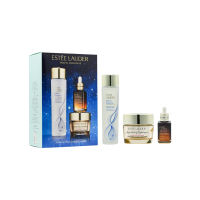
ESTEE LAUDER Advanced Night Repair Synchronized Recovery Complex Serum Anti-aging Radiant Hydration Hyaluronic Acid Reduce Wrinkles (50ml / 100ml / set)
₱14,832.00₱32,630.00
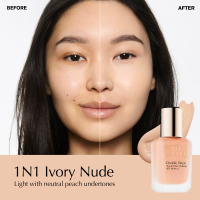
NEW Estee Lauder Double Wear Stay-In-Place Longwear Matte Foundation SPF10/PA++ | Best Seller Foundation | 15ml
₱1,535.00
Buy on Lazada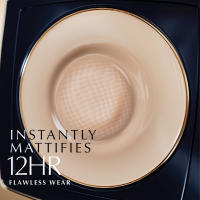
Estee Lauder - Double Wear Stay-in-Place Matte Powder Foundation
₱3,120.00
Buy on Lazada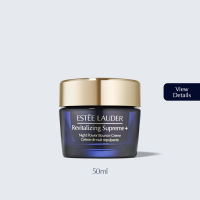
Estee Lauder Revitalizing Supreme+ Night Power Bounce Creme Moisturizer | Best Seller Facial Moisturizer | 50ml 75ml
₱8,600.00
Buy on Lazada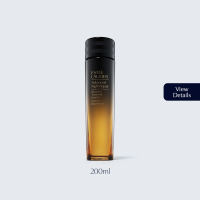
NEW Estée Lauder Advanced Night Repair Recovery Treatment Essence | Lightweight Treatment Lotion Hydrating and Soothing Boosts Resilience | All skin types | 100ml | 200ml
₱6,100.00
Buy on Lazada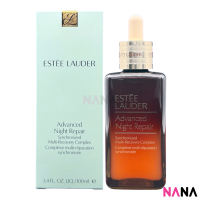
Estee Lauder Advanced Night Repair Synchronized Multi-Recovery Complex 100ml (7th Generation)
₱5,600.00₱7,980.00
About Estée Lauder
Estée Lauder is an American luxury beauty and cosmetics brand established in New York City in 1946 by Estée Lauder and her husband, Joseph Lauder. It serves as the flagship brand of The Estée Lauder Companies Inc. (ELC), one of the world’s leading prestige beauty groups. The brand specialises primarily in skincare, makeup, and fragrance, with a reputation built on high-performance formulations, sophisticated presentation, scientific research, and personalised beauty services.1 Today, Estée Lauder products are sold in more than 150 countries and territories, making it one of the most internationally recognised names in prestige beauty.2
Basic information
| Category | Information |
|---|---|
| Brand name | Estée Lauder |
| Founded | 1946 |
| Founder | Estée Lauder |
| Co-founder | Joseph Lauder |
| Origin | New York City, United States |
| Parent company | The Estée Lauder Companies Inc. |
| Industry | Cosmetics, skincare, fragrance, beauty |
| Market position | Luxury / prestige beauty |
| Main categories | Skincare, makeup, fragrance |
| Global presence | 150+ countries and territories |
| Corporate headquarters | New York City |
| Official website | Estée Lauder |
Origins
The history of Estée Lauder begins with Josephine Esther Mentzer, who later became known professionally as Estée Lauder. She developed an interest in beauty at an early age when her uncle, a Hungarian chemist, taught her how to formulate and work with facial creams. This early exposure laid the foundation for her future career.3
In 1930, Estée married Joseph Lauter. The couple later adopted the surname Lauder, correcting a spelling variation associated with Joseph’s family’s immigration to the United States.4 Before formally establishing the company, Estée sold skincare products directly to customers, particularly through beauty salons. Her selling technique was notably personal; she would demonstrate products on customers’ skin to show immediate results. This direct engagement approach became a foundational element of the eventual Estée Lauder business model.
Founding in 1946
Estée and Joseph Lauder officially established their cosmetics company in New York in 1946. The business initially operated on a small scale, with Estée personally demonstrating and selling the products. The original lineup consisted of just four skincare products.5
A significant breakthrough occurred in 1947 when Estée Lauder received its first major department store order: US$800 worth of products from Saks Fifth Avenue.6 This milestone was pivotal as department stores were becoming key destinations for American consumers seeking premium beauty products. Rather than simply placing cosmetics on shelves, Estée emphasised personal demonstrations, customer relationships, product sampling, attractive packaging, high-quality formulations, and direct interaction between beauty advisers and consumers. These principles helped establish the company’s distinctive “high-touch” approach to beauty retailing.
Marketing innovations
Estée Lauder made several lasting contributions to beauty industry marketing practices.
Gift with Purchase
The brand is widely credited with popularising the “Gift with Purchase” promotional concept. Instead of discounting products, customers received complimentary beauty items when purchasing qualifying products. This strategy encouraged consumers to try additional items while preserving the perception of luxury. It became an influential model throughout the cosmetics industry, and Estée Lauder describes the Gift with Purchase as one of Mrs Lauder’s major innovations.7
Sampling and personal selling
Sampling was another cornerstone of the brand’s strategy. Estée understood that allowing consumers to physically experience a product could be more persuasive than conventional advertising, making beauty advisers an integral part of the brand experience. The company’s philosophy was heavily influenced by Estée’s belief that beauty products should be demonstrated rather than merely advertised, creating a distinctive relationship between the customer, beauty adviser, and brand.
Youth-Dew: The breakthrough fragrance
One of the most significant products in the brand’s history is Youth-Dew. Launched in 1953, it was initially introduced as a bath oil that could also function as a fragrance.8 This innovation was partly commercial; at the time, perfume was often viewed as a gift for special occasions. Estée’s concept was to create a product women could purchase for themselves and use frequently. Youth-Dew became a major success, transforming Estée Lauder from a small cosmetics company into a significantly larger beauty business and establishing it as a serious fragrance house.9
Expansion into luxury beauty
Following its early success, Estée Lauder expanded beyond basic skincare into a broader prestige beauty portfolio. The company developed products across skincare, makeup, and fragrance, later adding additional beauty categories through the wider Estée Lauder Companies portfolio. The brand became increasingly associated with luxury, sophistication, scientific research, and premium customer service. Corporate descriptions emphasise extensive research, product evaluation, and the development of skincare, makeup, and fragrance products.10
Skincare focus
Skincare is central to the brand’s identity. Rather than positioning itself solely as a colour cosmetics company, Estée Lauder has consistently invested in skincare research and technology. Its philosophy combines science, luxury, performance, and sensory experience. The skincare portfolio includes products targeting hydration, skin ageing, fine lines and wrinkles, firmness, radiance, skin texture, eye care, and nighttime repair.
Advanced Night Repair
The brand’s most renowned modern skincare product is Advanced Night Repair. Originally introduced in 1982, it became one of the best-known products in prestige skincare and helped establish the dedicated nighttime treatment serum as a major category.11 The iconic brown bottle became strongly associated with the brand. According to Estée Lauder, Advanced Night Repair remains one of its most extensively tested and trusted products.12 Its success illustrates a broader shift in beauty consumption, where consumers began viewing skincare in terms of routines, treatments, active ingredients, and long-term skin appearance rather than simple moisturisers.
Makeup
Makeup is the brand’s second major category. Products include foundation, concealer, powder, blush, bronzer, eyeshadow, eyeliner, mascara, lipstick, and lip gloss. One of the company’s best-known makeup franchises is Double Wear, particularly its foundation. Double Wear is associated with long-wearing, high-coverage complexion makeup while maintaining the brand’s luxury positioning. The company currently describes Double Wear as one of its iconic products.13
Fragrance
Fragrance has been part of the Estée Lauder identity almost from its inception. Following Youth-Dew, the brand expanded into numerous perfumes. Important fragrance names include Youth-Dew, Beautiful, Pleasures, Knowing, Modern Muse, and Bronze Goddess. Beautiful, launched in the 1980s, became another major fragrance icon. Estée Lauder describes its vision for Beautiful as a fragrance designed to make a woman feel like “the most beautiful” person in the room.14
The Estée Lauder Companies
It is important to distinguish between Estée Lauder, the individual beauty brand, and The Estée Lauder Companies Inc., the larger corporate group. Founded by Estée and Joseph Lauder in 1946, the corporation has grown into a global entity owning or operating a portfolio of prestige beauty brands including Clinique, M·A·C, Bobbi Brown, La Mer, Aveda, Jo Malone London, Origins, Too Faced, Dr.Jart+, The Ordinary, and TOM FORD, among others. The exact portfolio changes over time as the company acquires, divests, licenses, or restructures brands.15 Conceptually, Estée Lauder represents one luxury beauty brand, while The Estée Lauder Companies is the multinational corporation behind the broader portfolio.
Brand positioning
Estée Lauder occupies the prestige and luxury segment of the beauty market. It sits above mass-market cosmetics brands in terms of pricing, retail environment, packaging, brand heritage, product development, customer service, beauty adviser experience, and brand storytelling. Its core image is elegant, sophisticated, scientific, feminine, luxurious, and performance-oriented. Official descriptions emphasise “innovative, sophisticated, high-performance” skincare and makeup alongside iconic fragrances.16
Target consumer
Historically, Estée Lauder was strongly associated with mature, affluent female consumers. However, its contemporary positioning is broader, targeting consumers interested in premium skincare, anti-aging and skin longevity, high-performance makeup, luxury fragrance, beauty technology, and premium beauty experiences. Digital media and social platforms have enabled the brand to reach younger demographics. Estée Lauder reports engaging consumers in more than 150 countries and territories through both physical and online channels.17
Brand identity and heritage
Unlike some modern beauty brands built around celebrity or social media culture, Estée Lauder maintains a founder-led heritage. Estée Lauder is presented as a pioneering female entrepreneur who understood beauty, selling, customer psychology, and branding. Her personal philosophy became part of the company’s mythology. The brand continues to emphasise her entrepreneurial qualities, including her instinct for understanding consumers, persistence, salesmanship, and willingness to challenge established conventions.
Packaging and visual language
Estée Lauder packaging is characterised by elegant typography, dark blue or navy tones, gold accents, glass bottles, minimal but luxurious presentation, and strong visual consistency. The deep blue packaging is particularly significant to the brand’s identity. The combination of blue, gold, glass, and refined typography communicates classic American luxury rather than trend-driven youth beauty. This visual language is intended to position products as luxury objects rather than ordinary cosmetics.
Retail strategy
Historically, Estée Lauder developed through department stores and prestige beauty counters. Products have traditionally appeared in luxury department stores, specialty beauty retailers, high-end perfumeries, travel retail locations, brand boutiques, and e-commerce websites. The current distribution strategy combines physical stores, online shopping, and travel retail. This omnichannel approach allows the brand to maintain its traditional high-touch retail experience while adapting to online beauty shopping.
Global expansion
Although founded in New York, Estée Lauder began its international expansion in the 1960s and today operates across more than 150 countries and territories.18 The broader Estée Lauder Companies reports affiliate offices in more than 50 countries and regions, with major geographic markets including the Americas, Europe, the Middle East, Africa, the UK, Ireland, Asia-Pacific, and Mainland China.19
Important milestones
| Year | Event |
|---|---|
| 1946 | Estée and Joseph Lauder officially launch the company |
| 1947 | First major department store order from Saks Fifth Avenue |
| 1953 | Youth-Dew launches |
| 1960s | International expansion accelerates |
| 1964 | Aramis introduced by the broader company |
| 1968 | Clinique is launched by The Estée Lauder Companies |
| 1982 | Advanced Night Repair introduced |
| 1980s | Beautiful becomes a major fragrance franchise |
| 1990s | Global prestige beauty footprint expands substantially |
| 2000s–2010s | Major expansion through acquisitions and international growth |
| 2020s | Increased focus on digital commerce, skincare science, Asia, and younger consumers |
| 2026 | Brand celebrates 80 years since founding |
The company’s official 80th anniversary campaign in 2026 highlights Youth-Dew, Beautiful, Advanced Night Repair, and Double Wear among its enduring icons.20
Estée Lauder today
As of 2026, Estée Lauder remains the flagship brand of The Estée Lauder Companies and focuses on three major categories. Skincare is the strongest modern category, with Advanced Night Repair as its signature franchise. Makeup features complexion products such as Double Wear alongside lip, eye, and other colour cosmetics. Fragrance remains rooted in the brand’s early history, with Youth-Dew and Beautiful among its best-known historic scents. The brand continues to combine its historical luxury positioning with contemporary digital commerce, social media, beauty technology, and skincare science.21
Legacy and philosophy
Estée Lauder’s significance extends beyond individual products. The company helped change how beauty products are sold and experienced through personalised selling, product demonstrations, generous sampling, Gift with Purchase marketing, prestige department store counters, founder-driven branding, the integration of scientific skincare with luxury, and the globalisation of American prestige beauty. Estée Lauder herself became one of the most prominent female entrepreneurs of the 20th century. She retired in 1995 and died in 2004, but the Lauder family has remained deeply connected to the company.22
The brand’s philosophy posits that beauty should feel personal, luxurious, effective, and empowering. Historically, the company succeeded by understanding that cosmetics represent confidence, identity, aspiration, femininity, and personal ritual, not merely functional utility. Estée Lauder helped establish the modern concept of prestige beauty, turning shopping into an experiential journey involving demonstration, sampling, consultation, and personal relationships. This model created the commercial and cultural framework in which modern luxury beauty operates.23
Official resources
- Estée Lauder — official website
- Estée Lauder brand history
- The Estée Lauder Companies — About Us
- The Estée Lauder Companies — Estée Lauder brand profile
References
- Estée Lauder – The Estée Lauder Companies Inc.
- Corporate Information | Estée Lauder
- About Us – The Estée Lauder Companies Inc.
- Our Founder – The Estée Lauder Companies Inc.
- About Estée Lauder – Discover the story of Estée Lauder | Estée Lauder Australia
- Beauty | Estée Lauder
- Celebrate 80 Years of Estée Lauder | Iconic Beauty & Luxury Gifts
- el-20250630
- el-20240630
- Brand Story | Estée Lauder
- | Estée Lauder
- el-20251231
- THE ESTĒE LAUDER COMPANIES INC.’s Virtual Shareholder’s Meeting – Meeting page
- EDGAR Filing Documents for 0001104659-25-093189
- sec.gov
- The Estée Lauder Companies Inc. (via Public) / Annual Report for Fiscal Year Ending June 30, 2025 (Form 10-K)
- The Estée Lauder Companies Inc. – 10K – Annual Report – August 20, 2025
- sec.gov
- sec.gov
- sec.gov
- sec.gov
- About Us – The Estée Lauder Companies Inc.
- Resources & Reports – The Estée Lauder Companies Inc.
- Annual Reports – The Estée Lauder Companies Inc.