Shop on Lazada
Fanta products
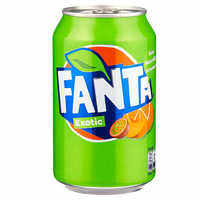
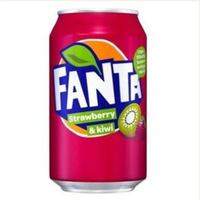
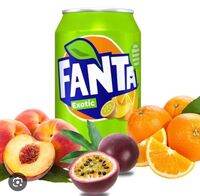
About Fanta
Fanta is a globally recognized brand of fruit-flavored carbonated soft drinks owned by The Coca-Cola Company. While best known for its bright orange-colored Fanta Orange, the brand produces numerous flavors that vary substantially from country to country. The Coca-Cola Company describes Fanta as its second-oldest brand, after Coca-Cola itself.1
The brand has a particularly unusual history: the name and original Fanta drink originated in Germany during World War II, while the modern orange version of Fanta was developed in Italy and the United States in the 1950s.1
Quick facts
| Category | Information |
|---|---|
| Brand | Fanta |
| Owner | The Coca-Cola Company |
| Product type | Fruit-flavored carbonated soft drink |
| Origin of original Fanta | Germany |
| Original launch | 1940 |
| Modern Fanta Orange | Developed in 1955 |
| Modern orange Fanta origin | Naples, Italy / Atlanta, USA |
| Best-known flavor | Orange |
| Major markets | Global |
| Number of flavors | More than 90 globally, with some sources reporting substantially more depending on how regional variants are counted1 |
| Caffeine | Generally caffeine-free |
| Parent company | The Coca-Cola Company |
What is Fanta?
Fanta is a carbonated soft-drink brand centered on fruit flavors. Unlike Coca-Cola, which is primarily associated with one signature cola flavor, Fanta has built much of its identity around variety, fruit, color, experimentation, and fun.
Fanta Orange is the brand’s internationally recognizable flagship. However, Fanta is not simply an orange soda; depending on the country, consumers may encounter flavors such as grape, lemon, apple, strawberry, pineapple, passion fruit, mango, exotic fruit, berry, and other locally developed varieties.1
This localization is one of Fanta’s defining characteristics. There is not necessarily one identical Fanta product sold worldwide; recipes, sweeteners, juice content, packaging, and available flavors can differ between markets.
The origin of Fanta
Germany, 1940
Fanta’s story begins in Germany in 1940, during the Second World War.
At the time, Coca-Cola’s German operations faced a major problem: the ingredients and Coca-Cola concentrate normally imported into Germany became difficult or impossible to obtain because of wartime restrictions. Max Keith, who was managing Coca-Cola’s German business, instructed his team to develop an alternative beverage using ingredients that were available locally.1
The resulting beverage was very different from today’s Fanta Orange. The original formula used ingredients including whey and apple pomace, along with other available fruit materials.
Where did the name “Fanta” come from?
The name came from a brainstorming exercise involving the German Coca-Cola team.
The word is associated with the German Fantasie, meaning “imagination.” The team was encouraged to use their imagination when coming up with a name, eventually producing the short name Fanta. Historical accounts state the name was registered in 1940.3
Consequently, while Fanta’s name dates from 1940, the Fanta Orange that most people recognize today came later.
Fanta during World War II
The wartime history of Fanta is often misunderstood.
Fanta was created by Coca-Cola’s German operation because of wartime shortages and restrictions. Historical material states that Max Keith and his employees developed the drink as an alternative when Coca-Cola concentrate could no longer be imported into Germany.1
There is a persistent claim that Fanta was “invented by the Nazis.” The Coca-Cola Company explicitly rejects that characterization, stating that Max Keith and the Coca-Cola bottling operation were not affiliated with the Nazi regime.
The historical context is nevertheless important: the original Fanta existed because World War II disrupted Coca-Cola’s German business and supply chain.
After the war, Coca-Cola production resumed in Germany, and the original wartime Fanta disappeared. The Fanta name was subsequently retained and eventually reused for a new product.
The birth of modern Fanta Orange
The Fanta people recognize today has a different origin.
In 1954, an Italian Coca-Cola bottler, Ermelino Matarazzo di Licosa of the Naples Bottling Company, proposed producing an orange-flavored soft drink using locally available Italian oranges. Market research suggested that fruit-flavored beverages could complement Coca-Cola rather than simply compete with it.1
In 1955, Coca-Cola developed the formula for Fanta Orange in Atlanta, Georgia. The product was first introduced in Naples, Italy, making the modern Fanta essentially a combination of a German name, an Italian orange-drink idea, and American Coca-Cola development.
Historical material identifies Fanta Orange as the first new product to be distributed by the company.
Global expansion
Following its introduction in 1955, Fanta expanded internationally.
The brand became particularly important in Europe, Latin America, and Africa, while its expansion into the United States happened later. Historical accounts say Fanta had reached 36 countries by 1960.
The American market initially received less emphasis because Coca-Cola did not want Fanta to undermine its flagship Coca-Cola brand. Fanta’s international development therefore became an important part of its identity.
Today, Fanta is sold across a very large international market. Brand material describes it as available in more than 190 countries, while the exact number of flavors depends on how regional and limited-edition products are counted.
Flavors
Fanta’s most famous product is Fanta Orange. It is the brand’s signature flavor and one of the most recognizable orange sodas worldwide.
However, Fanta has an unusually broad flavor portfolio. Examples found in different markets include:
- Orange
- Grape
- Lemon
- Strawberry
- Apple
- Pineapple
- Mango
- Passion fruit
- Berry
- Exotic fruit
- Peach
- Raspberry
- Fruit punch
- Regional/local fruit flavors
Some flavors are permanent in particular countries, while others are seasonal, promotional, experimental, or exclusive to individual markets.
For example, The Coca-Cola Company’s Philippine portfolio includes Fanta Orange and Fanta Apple Delite, demonstrating how the brand’s lineup can differ by country.1
This market-by-market approach is one of the reasons Fanta can feel like a different brand depending on where one lives.
Product characteristics
Fanta is generally positioned as a bright, fruity, sweet, carbonated soft drink.
The exact formulation varies by country, but products commonly contain some combination of:
- Carbonated water
- Sugar and/or high-intensity sweeteners
- Fruit flavorings
- Acids
- Food coloring
- Stabilizers
- Preservatives, depending on the market
For example, one current market listing for Fanta Orange describes a formulation containing carbonated water, sugar, acidulants, stabilizers, orange flavor, sweeteners, and coloring.1
Fanta is also generally marketed as caffeine-free.2
Importantly, a Fanta purchased in one country does not necessarily have exactly the same ingredients or nutritional values as Fanta bought elsewhere.
Brand identity
Fanta’s personality is deliberately different from Coca-Cola.
Where Coca-Cola has traditionally emphasized ideas such as heritage, optimism, and togetherness, Fanta has leaned heavily into:
- Fun
- Youthfulness
- Playfulness
- Color
- Fruit
- Creativity
- Individuality
- Experimentation
The brand’s visual identity has consequently tended to use bright orange, blue, yellow, green, and other vivid colors, depending on the product and campaign.
The name itself reinforces this personality: Fanta derives from Fantasie, meaning imagination.3
Packaging and logo
Fanta has undergone numerous changes to its packaging and visual identity throughout its history.
One historically significant design was the Fanta Ring Bottle, associated with industrial designer Raymond Loewy. Historical material identifies Loewy with the development of the distinctive Fanta bottle design.1
Modern Fanta packaging typically emphasizes:
- A large Fanta wordmark
- Strong orange/fruit imagery
- Bright colors
- Bubbles/carbonation
- Dynamic typography
- Fruit illustrations
Packaging varies substantially by country and product line.
Marketing
Marketing has always been central to Fanta’s identity.
Rather than presenting itself simply as a beverage, Fanta frequently sells an experience and attitude: colorful, energetic, spontaneous, and fun.
Its advertising has commonly targeted younger consumers, particularly teenagers and young adults.
The brand has also become associated with seasonal campaigns and special occasions. Coca-Cola Europacific Partners, for example, highlights Fanta’s recurring Halloween-themed transformations and promotions.2
The flexibility of Fanta’s flavors also gives The Coca-Cola Company an opportunity to create limited-time products and local campaigns without changing the core identity of the brand.
Fanta and The Coca-Cola Company
Fanta is part of the enormous brand portfolio of The Coca-Cola Company.
It occupies a different position from Coca-Cola itself:
| Brand | Core identity |
|---|---|
| Coca-Cola | Cola / classic soft drink |
| Fanta | Fruit-flavored soft drinks |
| Sprite | Lemon-lime soft drink |
| Diet Coke / Coca-Cola Zero Sugar | Reduced/no-sugar cola alternatives |
Fanta is therefore an important part of Coca-Cola’s flavored carbonated soft-drink business.
The Coca-Cola Company currently describes Fanta as its second-oldest brand, emphasizing its long history within the company.
Fanta around the world
One of Fanta’s most interesting characteristics is its local adaptation.
The same global brand can have completely different products in different countries.
For example, The Coca-Cola Company’s Philippine website currently lists Fanta Orange and Fanta Apple Delite.1
In other countries, consumers can find flavors that might be unusual or completely unavailable elsewhere.
This means that asking “What does Fanta taste like?” does not have one universal answer. Fanta is essentially a global brand platform for fruit-flavored carbonated drinks.
Fanta in popular culture
Fanta has become one of the world’s most recognizable orange-soda brands.
Its distinctive orange color, fruit-oriented identity, and playful branding have made it particularly recognizable among younger consumers.
The brand’s unusual World War II origin has also made Fanta’s history a frequent subject of discussion. Unlike many modern soft-drink brands, its story involves a genuine historical transition: wartime German substitute, discontinued product, Italian-inspired orange beverage, and finally a global fruit-drink brand.
That makes Fanta’s history considerably more complicated than the simple origin story of many soft drinks.
Common misconception: Was Fanta originally orange?
No.
The original Fanta developed in Germany in 1940 was not the modern orange Fanta. It was a wartime beverage made from locally available ingredients, including whey and apple pomace.
The modern orange formulation was developed in 1955, with the concept originating in Italy and the formula developed by Coca-Cola in the United States.1
The timeline is as follows:
- 1940: Original Fanta created in Germany
- 1945: Original wartime Fanta disappears
- 1954: Italian proposal for an orange drink
- 1955: Modern Fanta Orange developed and launched
- 1960: Fanta reaches 36 countries
- Today: Global portfolio of fruit-flavored beverages
Why Fanta is important as a brand
Fanta is significant for several reasons.
Historical significance
It is a rare example of a major global consumer brand whose origin is directly connected to the supply-chain problems created by World War II.
Product innovation
The brand demonstrates how a company can take an unexpected wartime substitute and eventually transform the name into a completely different global product.
Global localization
Fanta has embraced different flavors for different markets rather than forcing a single universal taste.
Brand personality
Its emphasis on fun, color, youth, and imagination gives it a distinct personality within The Coca-Cola Company’s portfolio.
Longevity
Fanta has existed in some form since 1940, making it one of Coca-Cola’s longest-running brands.
Fanta today
Today, Fanta remains a major global fruit-soft-drink brand under The Coca-Cola Company.
Its portfolio includes Orange, Zero/No-Sugar variants, and numerous regional fruit flavors. Various regional operations report dozens of flavors worldwide, with some official brand materials putting the global total at more than 90 and other sources giving higher counts depending on how regional varieties are counted.1
The fundamental brand proposition, however, has remained remarkably consistent: fruity, fizzy, colorful, and fun.