Shop on Lazada
Fire-Maple products
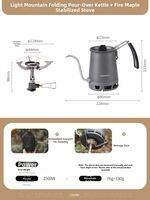
Fire-Maple | Outdoor Camping Coffee Pot Lightweight
₱4,659.63₱5,498.36
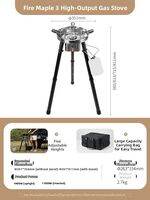
Fire-Maple | Portable Single Ring High Power Outdoor Cooking Stove
₱7,081.91₱10,728.30
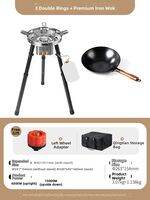
Fire-Maple | High-power Portable Camping Stove
₱10,864.24₱15,341.21
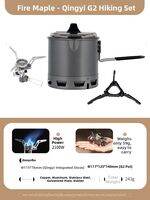
Fire-Maple | All-in-one Lightweight Portable Gas Stove
₱2,252.60₱2,474.19
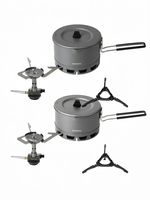
Fire-Maple | Integrated Windproof Lightweight Portable Camping Stove
₱2,849.86₱3,957.30
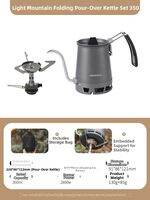
Fire-Maple | Portable Lightweight Camping Cooking Set
₱2,530.66₱3,606.38
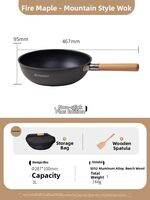
Fire-Maple | Chinese Non-stick Portable Camping Frying Pan
₱3,499.97₱4,182.71
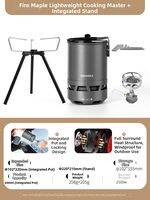
Fire-Maple | Windproof Portable Outdoor Cooking Set for Hiking Camping
₱4,078.87₱4,797.84
About Fire-Maple
Fire-Maple (also styled FIREMAPLE or Fire Maple) is a Chinese outdoor equipment manufacturer established in 2003, best known for its camping stoves, integrated cooking systems, and lightweight cookware. Originally rooted in contract manufacturing, the company has developed a distinct identity centred on fuel-efficient, portable gear designed for backpacking, hiking, mountaineering, and expedition use 1. Its core concept revolves around enabling users to prepare hot meals and beverages in wilderness settings without carrying excessive weight.
Overview
| Field | Information |
|---|---|
| Brand | Fire-Maple / FIREMAPLE |
| Founded | 2003 |
| Founder | David Lv / David Lyu |
| Origin | China |
| Industry | Outdoor recreation / camping equipment |
| Core specialty | Outdoor cooking equipment |
| Main products | Gas stoves, cooking systems, cookware, kettles, lanterns, accessories |
| Materials | Titanium, aluminium, stainless steel, and other outdoor-grade materials |
| Target users | Backpackers, campers, hikers, climbers, overlanders, and expedition users |
| International presence | Sold internationally; newer brand history states availability in 80+ countries |
| Positioning | Lightweight, practical, performance-oriented outdoor cooking at accessible prices |
While older regional pages cite distribution in 45+ countries, the brand’s updated corporate history lists presence in over 80 nations. This higher figure represents the company’s most current stated reach rather than an independently verified distribution count 2.
History
Origins
Before establishing its own consumer label, the factory behind Fire-Maple was already producing camping stoves and cookware for overseas brands on a contract-manufacturing basis between 2001 and 2002. The proprietary brand was subsequently launched for the domestic Chinese market in 2003 3.
Corporate narratives identify founder David Lyu (or Lv) as an early Chinese hiking enthusiast who sought to address shortcomings in existing outdoor cooking gear, which he found too heavy, fragile, or complex for practical field use 4.
Name origin
The name Fire-Maple derives from a specific experience during a hike in southeastern China in 2003, where the founder encountered maple trees with vivid red foliage that evoked the imagery of fire 5. The brand interprets this symbolism as follows:
- Fire: Warmth, cooking, and humanity’s oldest outdoor companion.
- Maple: Resilience, adaptability, and the natural environment.
This combination forms a deliberate part of the brand’s identity rather than serving as an arbitrary corporate title 6.
Development timeline
- 2003: Brand founded and own-factory operations commenced 7.
- 2004: First product entered the market 8.
- 2011: Active expansion into international markets began 9.
- 2013: The Hornet Titanium stove received an ISPO Gold Award, marking a significant milestone in global recognition 10.
- 2014: Equipment tested on Mount Everest to validate performance in extreme conditions 11.
- 2015: Cumulative sales reached five million units 12.
- 2017–2018: Two additional ISPO Gold Awards were secured 13.
- 2018: New manufacturing facility opened 14.
- 2020: Antarcti cookware series launched 15.
- 2024: Petrel series introduced, featuring lightweight heat-exchange technology.
- 2026: Brand reports operations in 80+ countries with 234 products, extending beyond stoves into a broader outdoor equipment ecosystem 16.
Product range
Although frequently associated primarily with camp stoves, Fire-Maple’s current catalogue encompasses a wider array of outdoor gear.
Camping stoves
Stoves remain the cornerstone of the portfolio, including canister stoves, remote-canister models, integrated cooking systems, multi-fuel and liquid-fuel options, high-output camping stoves, backpacking stoves, and pressure-regulated variants. Current offerings emphasise high efficiency, rapid boiling times, portability, adjustable flame control, and fuel economy 17. Representative families include Hornet, Polaris, Saturn, GreenPeak, Buzz, and Star. For instance, the GreenPeak Standard outputs 2.8 kW at just 85 g, while the GreenPeak Pro incorporates pressure regulation at 95 g 18.
Integrated cooking systems
These systems combine a burner and pot into a single compact unit, often featuring a heat exchanger at the base. Benefits include faster boiling, improved fuel efficiency, reduced packed volume, lower wind sensitivity, and simplified setup. The Star X2 Pro Cooking System exemplifies this category, offering a 1-litre capacity rated at 2.2 kW 19.
Heat-exchanger technology
A key design element across many products is HX (Heat Exchange) technology, which uses a finned structure around the pot base to capture heat that would otherwise escape up the sides. Fire-Maple claims this improves boiling speed, fuel efficiency, and overall thermal performance. Specifically, the Petrel series is marketed as achieving 30% greater thermal efficiency through HX technology, though this remains a manufacturer specification rather than an independent standard 20.
Cookware
Cookware is produced in three primary materials:
- Titanium: Prioritised for ultralight applications due to low weight, corrosion resistance, and strength-to-weight ratio. It is less effective for even heat distribution compared to aluminium, making it better suited to boiling than frying.
- Aluminium: Widely used for lightweight pots and integrated systems due to good heat distribution, low cost, and manageable weight. Some models feature hard-anodised finishes for enhanced durability 21.
- Stainless steel: Selected for applications where deformation resistance and longevity outweigh minimum weight considerations.
The cookware line spans from 600 ml solo pots to larger group-oriented sets 22.
Petrel series
Introduced in 2024, the Petrel family targets modern ultralight enthusiasts. Models such as the Petrel G3 600 ml HX Pot (162 g) and Petrel G2 750 ml Pot prioritise minimal weight, compact packing, and heat-exchange efficiency for solo backpacking, fast trekking, and minimalist camping 23.
Antarcti series
Launched in 2020, the Antarcti line addresses more substantial outdoor cooking needs, including stainless-steel vessels and frying pans. This series reflects the brand’s evolution from purely minimalist backpacking gear towards covering the full spectrum of outdoor kitchen requirements 24.
Lanterns
Gas lighting includes models like the Tulip Gas Lantern, listed at 84 g with a claimed runtime of up to 27.5 hours. This category extends the brand’s philosophy of combining utility with traditional camping atmosphere beyond cooking alone 25.
Accessories and expanded categories
Beyond core cooking gear, the catalogue now includes windscreens, fuel-canister stands, adapters, igniters, carrying cases, tableware, drinkware, camping furniture, tents, and bushcraft equipment. This positions Fire-Maple as a broader outdoor lifestyle brand, although cooking remains its historical and technical foundation 26.
Design philosophy
Four principles underpin product development:
- Lightweight: Consistent focus on reducing mass and packed size, particularly evident in titanium cookware and backpacking stoves.
- Efficient: Burner, heat exchanger, and system designs aim to maximise useful heat extraction per unit of fuel.
- Durable: Use of titanium, stainless steel, and hard-anodised aluminium supports reliability in demanding environments.
- Accessible: Historically offers sophisticated technology at price points below premium Western specialist brands, occupying a niche between generic budget gear and high-end manufacturers.
Market positioning
Fire-Maple distinguishes itself from generic low-cost alternatives through dedicated product development, international distribution, and engineering heritage. It competes primarily on value rather than luxury status. In categories like lightweight stoves and integrated systems, it is comparable to brands such as Jetboil, MSR, Optimus, Soto, and Primus, while its cookware faces a broader competitive field.
Manufacturing background
Unlike brands that solely import finished goods, Fire-Maple originated from a factory already experienced in OEM production for overseas clients before launching its own label. This manufacturing-first origin explains the enduring emphasis on stove and cooking technology over apparel or lifestyle marketing.
Testing and expeditions
The brand associates its products with rigorous field validation, citing testing in high-altitude and harsh conditions, use on Mount Everest, and feedback from outdoor professionals and adventurers. Collaboration with enthusiasts, engineers, and designers for real-world testing further supports claims of field reliability, which is critical for safety-dependent equipment like stoves.
Awards and recognition
Success at ISPO, a major international sporting goods trade fair, has been pivotal:
- 2013: ISPO Gold Award for Hornet Titanium.
- 2017/18: Two additional ISPO Gold Awards.
These accolades helped reposition Fire-Maple as a serious design-led manufacturer rather than merely a low-cost producer.
Major product families
| Series | General role |
|---|---|
| Hornet | Ultralight backpacking stoves |
| Polaris | Backpacking / pressure-regulated stoves |
| GreenPeak | Lightweight backpacking stoves |
| Buzz | Compact lightweight stoves |
| Star | Integrated cooking systems |
| Saturn | Higher-output camping / cooking stoves |
| Petrel | Lightweight HX cookware |
| Antarcti | Substantial outdoor cookware |
| Tulip | Gas lanterns |
Specific models and configurations are subject to periodic updates.
Target market
Equipment serves diverse user groups:
- Backpackers: Benefit from low weight, compactness, fast boiling, and fuel efficiency.
- Campers: Utilise larger cookware and higher-output stoves for site-based cooking.
- Hikers and trekkers: Rely on compact systems for multi-day journeys.
- Mountaineers: Value cold-weather and high-altitude performance.
- Overlanders: Integrate larger systems into vehicle-based kitchens.
- Bushcraft practitioners: Engage with traditional wilderness-cooking tools in the expanded range.
Brand philosophy
Fire-Maple treats outdoor cooking as an integral part of the adventure rather than a mere necessity. Official messaging consistently highlights how hot food and beverages enhance the outdoor experience. This perspective drives the expansion from simple burners to a comprehensive portable kitchen ecosystem encompassing stoves, pots, pans, utensils, tableware, drinkware, lanterns, and furniture.
Visual identity
The name Fire-Maple conveys dual imagery: fire suggests heat, survival, and primitive living, while maple evokes forests, autumn, and natural beauty. This pairing creates a more evocative identity than purely technical nomenclature and informs storytelling that links fire, maple trees, and wilderness cooking.
Reputation
Among outdoor users, Fire-Maple is particularly recognised for stoves and integrated systems. Key strengths include price-to-performance ratio, lightweight design, heat-exchange innovation, broad cookware selection, and mid-tier innovation. It appeals to those seeking sophistication beyond generic gear without premium pricing. Customer reviews on the official store indicate significant engagement, though these are hosted by the brand and should not be considered independent research.
Warranty and support
Regional terms vary; for example, the UK site advertises a three-year warranty, spare parts, and customer service. Given that stove components like valves and seals may require maintenance, buyers should verify local warranty and service availability through their specific distributor rather than assuming uniform global coverage.
Current status
As of 2026, Fire-Maple has evolved from a Chinese camping-stove maker into a comprehensive outdoor equipment provider spanning stoves, integrated systems, cookware, tableware, lanterns, furniture, tents, and bushcraft gear. Despite this diversification, outdoor cooking remains its central specialisation, with continued emphasis on making field preparation easier, faster, and more enjoyable.
References
- About FIREMAPLE | Official Outdoor Cooking Gear Brand
- О компании
- Unsere Geschichte | Outdoor-Begeisterung seit dem ersten Tag – Fire Maple
- The Story of Fire Maple – FireMaple UK
- About | Fire-Maple JAPAN
- Camping Cookware | Pots, Pans, Kettles, Sets | Fire Maple
- Home
- Best-Selling Camping Gear – FireMaple Official Store – Fire Maple
- FIREMAPLE Cookware | Durable & Lightweight Outdoor Cooking Gear
- FIREMAPLE Official | Outdoor Stoves, Cookware & Camping Gear
- 〖火枫户外炉具〗品牌介绍→火枫户外炉_火枫炊具-买购APP
- 火枫官网 – 官网大全
- About FIREMAPLE | Official Outdoor Cooking Gear Brand
- About FIREMAPLE | Official Outdoor Cooking Gear Brand
- About FIREMAPLE | Official Outdoor Cooking Gear Brand
- 파이어메이플 | 당신의 움직이는 주방
- Homepage – FireMaple UK
- Fire Maple – Kitchen Without Walls
- Fire Maple – Kitchen Without Walls
- Fire Maple – Kitchen Without Walls – Page 2
- Fire Maple – Kitchen Without Walls – Page 5
- 火枫FIREMAPLE运动休闲_永康市火枫野营用品厂
- Fire-Maple Camping Equipment Co.,Ltd | LinkedIn
- FireMaple : équipement cuisine camping innovant & léger
- Fire Maple Reviews – Trailspace
- FIRE MAPLE : unsere Produkte – ekosport