Shop on Lazada
FOGG products
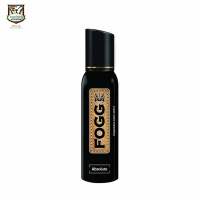
Fogg Perfume Body Spray for men from India
₱320.00₱450.00
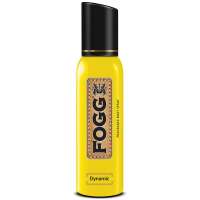
Fogg Dynamic Fragrance Body Spray 150ml {Made in India}
₱449.00₱549.00
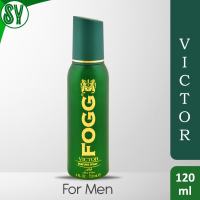
FOGG Fragrance Body Spray Long Lasting for Men -No Gas- 120ml ORIGINAL
₱299.00₱420.00
Fogg Black Series Fresh Oriental Perfume Body Spray For Men Long-Lasting & No Gas Deodorant 75ml
₱259.00
Buy on Lazada
Fogg Deodorant for Men No Gas Long-Lasting Perfume Body Spray 150 ml
₱320.00₱450.00
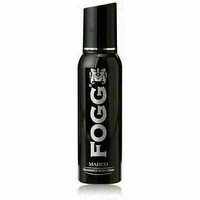
Fogg Perfume Body Spray Long Lasting No Gas 120ml
₱349.00
Buy on Lazada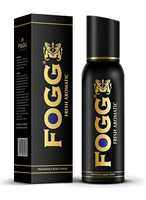
Fogg Fresh Aromatic Premium No Gas Fragrance for Men Long-Lasting Perfume Body Spray 75ML
₱249.00₱280.00
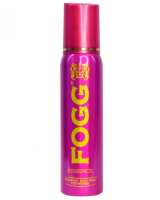
FOGG Essence Fragrance Body Spray for Women 120ml {Made in India}
₱439.00₱499.00
About FOGG
FOGG is an Indian personal-care and fragrance brand best known for its deodorants, body sprays, perfumes, and related fragrance products. Owned by Vini Cosmetics, the brand was created by entrepreneur Darshan Patel, who previously helped build several well-known consumer brands at Paras Pharmaceuticals. FOGG became one of India’s most prominent deodorant brands by differentiating itself around product longevity and value, rather than relying primarily on the traditional “attract the opposite sex” advertising associated with many deodorants at the time.1
Quick facts
| Category | Information |
|---|---|
| Brand | FOGG |
| Industry | Personal care, fragrances & grooming |
| Origin | India |
| Parent company | Vini Cosmetics Pvt. Ltd. |
| Founder | Darshan Patel |
| Established/launched | 2011 |
| Headquarters/company base | Ahmedabad, Gujarat, India |
| Original flagship product | Deodorant/body spray |
| Core proposition | Long-lasting fragrance and reduced product wastage |
| Famous positioning | “No Gas, No Wastage” |
| Major markets | India, Middle East, Southeast Asia and Africa |
| Major investor in parent company | KKR |
Vini Cosmetics has expanded beyond India, with a presence in Southeast Asia, the Middle East, and Africa.2
History
Origins
The history of FOGG is closely connected with Darshan Patel, an entrepreneur from the Patel family behind Paras Pharmaceuticals. During his time at Paras, Patel was associated with brands including Moov, Krack, D’Cold, and Dermicool. After leaving Paras, he founded Vini Cosmetics to pursue opportunities in consumer personal care.
Vini was established around 2009–2010, while FOGG emerged as its breakthrough brand in 2011. Although sources differ slightly on the exact founding chronology, 2011 is consistently identified as the year FOGG entered the deodorant market.3
The consumer problem
At the time of FOGG’s launch, India’s deodorant market was crowded with brands such as Axe, Park Avenue, and Nivea. Advertising commonly concentrated on fragrance, attractiveness, and social or romantic appeal. However, Patel’s consumer research identified a different issue: consumers felt that deodorant cans finished too quickly. The core insight was that buyers did not necessarily need another deodorant, but rather one that lasted longer and provided more usable sprays. Consequently, FOGG attempted to compete on value and efficiency rather than simply on fragrance.1
The “No Gas” innovation
FOGG’s most significant early differentiator was its non-aerosol pump format. While traditional aerosol deodorants use propellant gases to expel fragrance, FOGG positioned itself as a “no-gas” spray using a pump mechanism. The marketing message emphasized that this technology could reduce wastage and provide substantially more sprays per bottle.
The brand’s famous proposition became “No Gas, No Wastage,” and the company promoted an 800-spray guarantee for some of its products. This was a critical marketing decision; instead of claiming superior scent, FOGG offered consumers a simple, measurable reason to switch brands.
Rise of the brand
FOGG experienced unusually rapid growth. Within roughly two years of its launch, it had become a major competitor to established deodorant brands. Contemporary reporting in 2014 estimated FOGG’s all-India value share at approximately 11.9%, noting that it had overtaken Axe in the category.4 Forbes India later described FOGG as having surpassed Hindustan Unilever’s Axe to become India’s largest-selling deodorant in less than two years.
The brand’s success demonstrated a key principle in FMCG marketing: a new brand could challenge multinational incumbents by identifying an overlooked consumer problem and communicating the solution simply.
Brand positioning
FOGG’s original positioning rested on four major elements:
- Longevity: The brand emphasized how long the product would last rather than merely how attractive its fragrance was.
- Value for money: The “more sprays” proposition gave consumers an easy way to rationalize purchasing FOGG.
- No-gas technology: The physical product format supported the marketing promise and differentiated FOGG from aerosol competitors.
- Mass-market accessibility: FOGG was designed to be affordable and widely distributed rather than positioned solely as a luxury fragrance brand.
This combination allowed FOGG to appeal strongly to mass-market and young-consumer segments.
Advertising and marketing
Advertising played a major role in FOGG’s cultural visibility. Instead of focusing exclusively on conventional deodorant tropes, the brand repeatedly reinforced its product benefit: more sprays and less wastage. This approach turned a relatively technical characteristic—the absence of propellant gas—into a memorable consumer proposition.
One of the most recognizable ideas associated with the brand was the repeated “Fogg chal raha hai?” advertising phrase, which became closely linked to the brand in popular culture. The broader strategy followed a consistent pattern of identifying a consumer problem, offering a product solution, creating a simple slogan, and executing mass advertising. This simplicity was a significant factor in FOGG’s success.1
Expansion beyond men’s deodorants
Although FOGG initially gained fame as a men’s deodorant and body spray brand, Vini subsequently expanded the portfolio considerably. The range grew to include:
- Men’s deodorants and body sprays
- Women’s deodorants and body sprays
- Perfumes
- Fragrance products
- Pocket-sized fragrance products
- Gift packs
- Multiple fragrance variants
Business Today reported that the brand expanded from its original seven or eight variants to more than 40 variants, while also developing women’s fragrances and perfume products.3 This expansion transformed FOGG from a single-product deodorant brand into a broader fragrance platform.
From deodorant to fragrance brand
The evolution of FOGG represents a shift from a functional product to a lifestyle brand. Initially defined as a no-gas deodorant, FOGG later established itself as a comprehensive fragrance and personal-care brand. The introduction of perfumes and other formats allowed the brand to participate in additional segments and price points.
Perfumes became an increasingly important part of the business, and FOGG utilized smaller packs to penetrate smaller towns and cities.3 This reflects a classic FMCG brand-extension strategy, where trust established in one category is leveraged to enter adjacent categories.
FOGG and Vini Cosmetics
FOGG operates as a brand within Vini Cosmetics rather than as an independent company. Founded by Darshan Patel, Vini established FOGG as its flagship success, which effectively positioned the parent company as a major player in the personal-care sector.2 Vini subsequently built a portfolio of brands to reduce dependence on FOGG alone.
The company’s general strategy involves identifying consumer needs, creating differentiated products, investing in strong branding and mass distribution, running heavy advertising campaigns, and expanding successful brands into adjacent categories.
KKR investment
FOGG’s success attracted significant institutional investment. In 2021, KKR announced an agreement to acquire a majority stake in Vini Cosmetics from the founder group and Sequoia Capital for approximately US$625 million.2 The transaction valued Vini at roughly US$1.2 billion.3
This investment highlighted that FOGG had evolved from a successful domestic deodorant into a significant consumer-brand asset with international potential.
International presence
While FOGG was built primarily around the Indian market, Vini has expanded its personal-care business internationally. The company identifies key markets in Southeast Asia, the Middle East, and Africa. Additionally, FOGG is marketed in the United States through Vini International’s operations.2 This international strategy reflects the broader opportunity for affordable Indian fragrance and personal-care brands in emerging markets.
Factors in FOGG’s success
FOGG’s market performance can be attributed to a combination of consumer insight, product differentiation, and marketing execution:
- Consumer insight: The company identified consumer frustration regarding deodorants finishing quickly.
- Product differentiation: FOGG utilized a pump-based, non-aerosol format and built its positioning around this feature.
- Simple communication: The “No Gas, No Wastage” tagline was easily understood by consumers.
- Strong distribution: Vini built a broad network capable of placing FOGG in a vast number of retail outlets.
- Aggressive advertising: The brand invested heavily in memorable mass-media campaigns.
- Brand extensions: Following its initial success, Vini expanded into women’s fragrances, perfumes, pocket products, and gift packs.
These factors enabled the brand to transition from a single differentiated deodorant proposition to a broad fragrance portfolio.1
Significance in marketing
FOGG is frequently cited as a notable example of FMCG disruption. Its significance lies not in inventing the deodorant category, but in changing the basis on which it was marketed. Prior to FOGG, advertising typically focused on attractiveness; FOGG shifted the conversation to value and quantity. Darshan Patel’s philosophy of identifying unmet consumer needs and building brands around them is credited with redefining the deodorant market through this differentiated positioning.
Brand timeline
| Year | Milestone |
|---|---|
| 2009–10 | Vini Cosmetics established under Darshan Patel |
| 2011 | FOGG launched in India’s deodorant market |
| 2011–12 | “No Gas, No Wastage” positioning gains traction |
| 2013–14 | FOGG rapidly gains market share and challenges Axe |
| 2014 onward | Brand expands into additional fragrance variants and women’s products |
| 2016 | Forbes India reports Vini revenue exceeding ₹610 crore |
| Late 2010s | FOGG expands its fragrance/perfume portfolio and international reach |
| 2021 | KKR agrees to acquire a majority stake in Vini Cosmetics |
| 2020s | FOGG operates as a broader personal-care/fragrance brand rather than only a deodorant |
Note: Dates regarding Vini’s founding vary among published accounts; 2011 is generally considered the definitive launch year for FOGG, while the parent company’s establishment is often reported as 2009 or 2010.3
Business model
FOGG follows a classic FMCG brand model encompassing manufacturing, distribution, retail, mass advertising, brand recognition, and repeat purchase. Its competitive advantage combines product, price, distribution, advertising, and consumer insight. This holistic approach is essential in markets where fragrance products compete across thousands of retail outlets against numerous inexpensive alternatives.
Founder: Darshan Patel
Darshan Patel is the entrepreneur most closely associated with FOGG. Before founding Vini Cosmetics, he was involved with Paras Pharmaceuticals and brands such as Moov, Krack, D’Cold, and Dermicool. His approach to branding emphasizes consumer research and identifying market gaps. The philosophy behind FOGG was to avoid creating generic iterations of existing products and instead solve specific consumer frustrations.
Brand identity
FOGG’s identity has evolved from an efficient, long-lasting deodorant to a mass-market fragrance and grooming brand. Core associations include:
- Long-lasting fragrance
- Value
- More sprays
- Youth
- Masculine and feminine fragrances
- Affordable personal grooming
- FMCG innovation
Comparison with competitors
FOGG originally competed against established brands such as Axe, Park Avenue, Nivea, Wild Stone, and Engage. Its key difference was that it did not initially attempt to win purely through fragrance superiority. Instead, it created a distinct category proposition around quantity and longevity. This differentiation helped FOGG gain attention in a saturated market, with industry reporting specifically crediting its “no gas/no wastage” proposition for its rapid rise.4