Shop on Lazada
Fortuner products
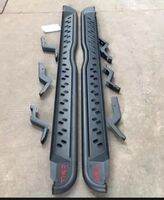
FORTUNER TRD STEEL STEPBOARD 2016 UP TO 2025 MODEL
₱9,850.00
Buy on Lazada
FORTUNER SNORKEL 2005-2014
₱6,000.00
Buy on Lazada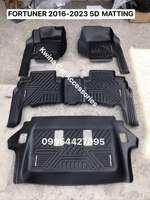
FORTUNER 2016-2024 5D FULLY EXTENDED DEEP DISH MATTING
₱3,299.00
Buy on Lazada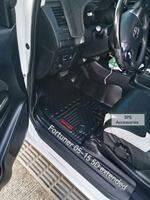
FORTUNER 2009 2010 2011 2012 2013 2014 2015 model 5D FULLY EXTENDED DEEP DISH MATTING
₱8,580.00
Buy on Lazada
Toyota Fortuner 2016 to 2023 G VARIANT Door handle cover chrome 2017 2018 2019 2020 2021 2022 (Car accessories)
₱679.00₱1,198.00

Fortuner 2016-2026 Rear stepsill Thailand made
₱1,250.00
Buy on Lazada
High Quality Dashboard Cover for Toyota Fortuner 2016-2026 Mat Dashmat Dash Cover
₱1,499.00₱2,800.00
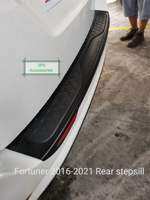
Fortuner 2016 2017 2018 2019 2020 2021 2022 2023 2024 2025 Rear stepsill THAILAND made
₱1,290.00
Buy on LazadaAbout Fortuner
Toyota Fortuner is a mid-size, body-on-frame sport utility vehicle (SUV) manufactured by Toyota Motor Corporation. Developed primarily for emerging markets, it forms part of the IMV (Innovative International Multi-purpose Vehicle) family alongside the Toyota Hilux pickup and Toyota Innova MPV. The Fortuner merges the durable architecture of a pickup-based platform with a three-row passenger cabin designed for family and daily use 1.
Since its introduction in the mid-2000s, the nameplate has become significant across Southeast Asia, South Asia, the Middle East, Latin America, and other regions. Toyota’s original objective was to produce an affordable yet sturdy family SUV with genuine off-road capability 2. In the Philippines, the Fortuner is positioned as a premium mid-size SUV that bridges the gap between utilitarian transport and lifestyle-oriented family mobility.
Overview
| Category | Information |
|---|---|
| Manufacturer | Toyota Motor Corporation |
| Vehicle class | Mid-size SUV |
| Body style | 5-door SUV |
| Seating | Typically 7 passengers |
| Construction | Body-on-frame / ladder frame |
| Related vehicles | Toyota Hilux, Toyota Innova |
| Project | Toyota IMV |
| First generation | 2004–2015 |
| Second generation | 2015–present |
| Primary markets | Asia, Middle East, Latin America, Africa, Oceania |
| Indonesian market launch | 2005 |
| Indonesian production | Began 2006 |
| Manufacturer in Indonesia | PT Toyota Motor Manufacturing Indonesia (TMMIN) |
Specifications regarding engines, transmissions, trim levels, dimensions, and equipment vary considerably by country and model year.
History
Origins
The Fortuner was conceived under Toyota’s IMV Project, an international manufacturing and product development program centered on a common vehicle family for emerging markets. This strategy utilized shared engineering and manufacturing resources while adapting each vehicle type to a specific role:
- Toyota Hilux: Pickup truck
- Toyota Innova: MPV
- Toyota Fortuner: SUV
Within this family, the Fortuner occupied the SUV segment, utilizing the rugged fundamentals of the Hilux platform while offering a more enclosed, passenger-oriented body. Toyota targeted Asian markets where demand was growing for a relatively affordable family vehicle capable of handling poor road conditions and off-road terrain.
First generation (2004–2015)
The first-generation Fortuner was introduced internationally in 2004, with sales commencing in various markets throughout 2005. It utilized a ladder-frame chassis, an architecture strongly associated with traditional off-road vehicles and pickup trucks. This construction gave the Fortuner a fundamentally different character compared to unibody crossover SUVs.
Indonesia became a primary production base for this generation, with manufacturing beginning in September 2006. Early versions featured a 2.7-liter gasoline engine, with diesel variants introduced subsequently. These models emphasized a 7-seat configuration, ladder-frame construction, and selectable four-wheel drive on appropriate variants 2.
Second generation (2015–present)
Toyota launched the second-generation Fortuner in 2015. While retaining the core formula of body-on-frame construction, three-row seating, and off-road capability, the new model shifted further toward the modern family SUV market. The design philosophy aimed to balance ruggedness and off-road ability with styling, comfort, practicality, and modern equipment, creating what Toyota described as a “true SUV” with greater confidence and style.
In key regional markets such as Indonesia, the All-New Toyota Fortuner was recorded as launching in 2016 following the global second-generation introduction 4.
Design and engineering
Ladder-frame construction
A defining characteristic of the Fortuner is its body-on-frame construction. Unlike unibody crossovers where the body and chassis are integrated, the Fortuner uses a separate frame. This architecture provides high structural durability, suitability for rough roads, strong towing and load-bearing characteristics, and compatibility with four-wheel-drive systems. However, this traditional approach can result in a ride quality that feels less car-like than comparable unibody competitors.
Powertrains
Throughout its production run, the Fortuner has been offered with various gasoline and diesel engines depending on the market. Engine options have included:
- 2.0-liter gasoline engines (select markets)
- 2.7-liter gasoline engines
- 2.4-liter turbo-diesel engines
- 2.5-liter diesel engines (earlier generations)
- 2.8-liter turbo-diesel engines (later versions)
- Market-specific powerplants
Manufacturing operations in Indonesia produce TR-series gasoline engines used in IMV vehicles, including the Fortuner 3. Consequently, the engine lineup is specific to the market and model year rather than being uniform globally.
Drivetrain
The Fortuner has historically been available in two primary drivetrain configurations:
- 4×2: The majority of versions use rear-wheel drive, targeting urban driving, highway travel, and general family transportation.
- 4×4: Higher-specification models feature four-wheel drive for additional traction in mud, gravel, steep terrain, and slippery conditions.
The combination of a ladder frame, rear-wheel-drive architecture, and available 4×4 system distinguishes the Fortuner as a more traditional SUV compared to many modern crossover competitors.
Interior and practicality
The interior is designed around the Fortuner’s role as a family-oriented SUV. Its identity in markets like the Philippines and Indonesia is anchored by a three-row, seven-seat configuration. The layout typically includes two front seats, a second-row bench, and a third-row seating area. While the third row enhances utility for families, rearmost seats in this vehicle class are generally less spacious than the first two rows. The vehicle also offers a relatively high driving position and substantial ground clearance compared to passenger cars.
Regional significance: Indonesia
While the Fortuner is sold globally, Indonesia serves as a critical hub for its history and production. Marketing began there in 2005, followed by local production in 2006 4. The market’s suitability for the Fortuner stemmed from large family-car demand, intercity travel needs, variable road quality, preference for diesel and seven-seat vehicles, and interest in durable, high-riding SUVs.
Indonesia subsequently evolved into a major export center for the model. Exports have reached destinations across the Middle East, Southeast Asia, South Asia, Latin America, Africa, and the Caribbean 5. This established the Fortuner not merely as an imported Japanese SUV, but as a key component of the region’s automotive manufacturing industry.
Generations and updates
| Generation | Approx. period | General characteristics |
|---|---|---|
| First generation | 2004/2005–2015 | Original IMV SUV; rugged design; 7 seats; gasoline and diesel engines; 4×2/4×4 |
| Second generation | 2015–present | More sophisticated styling; improved interior; more technology; continued body-on-frame construction |
| Later updates | 2020s | Facelifts, revised styling, additional driver-assistance and infotainment technology, market-specific engine updates |
Rather than altering its fundamental identity, Toyota has progressively modernized the Fortuner through facelifts. Updates typically involve redesigned front fascias, LED lighting, revised grilles, updated bumpers, new wheels, upgraded infotainment, improved interior materials, additional safety systems, and suspension tuning. This evolutionary approach maintains the model’s recognizable identity while ensuring competitiveness against newer SUVs.
Gazoo Racing
Toyota has incorporated GR Sport / Gazoo Racing branding into Fortuner variants in several markets. These versions emphasize a sportier appearance and equipment package rather than fundamentally transforming the vehicle. Features may include aggressive exterior styling, GR badging, distinctive wheels, sportier interior details, suspension or chassis adjustments, and higher equipment levels. This initiative aims to broaden the model’s appeal beyond purely utilitarian buyers 6.
Safety and technology
Modern generations have adopted technologies that were uncommon on earlier versions. Depending on the market and trim level, features may include anti-lock braking, electronic stability control, traction control, multiple airbags, hill-start assistance, downhill-assist functions, parking sensors/cameras, adaptive cruise control, pre-collision warning, lane-departure warning, and other Toyota Safety Sense features. Equipment specifications vary significantly by country.
Global significance
The Fortuner is one of Toyota’s most recognizable SUVs in emerging markets. Global sales increased from approximately 50,000 units in its first year to around 150,000 units annually during the early development phase of the second generation, as market coverage expanded beyond Asia 5. Its success is attributed to a specific formula: Hilux-derived durability combined with SUV practicality, seven-seat capacity, and relatively accessible pricing.
Factors contributing to popularity
- Durability: Body-on-frame architecture provides robustness suitable for difficult environments.
- Seven-seat capacity: Combines SUV styling with practical family transportation.
- Diesel availability: Historically attractive in markets prioritizing fuel economy, torque, and long-distance driving.
- Off-road ability: Available 4×4 systems, high ground clearance, and ladder-frame construction offer genuine off-road credentials.
- Toyota’s reputation: Extensive dealer and service networks in emerging markets enhance appeal.
- Resale value: Strong brand positioning supports long-term ownership value.
Criticism and disadvantages
Traditional SUV engineering entails compromises. Compared to crossover SUVs, the Fortuner may exhibit a heavier structure, firmer ride quality, higher center of gravity, more noticeable body movement, higher fuel consumption, and less car-like handling. Additionally, the third row can be tight for adults, and substantial exterior dimensions can complicate urban parking.
Position in Toyota’s SUV lineup
The Fortuner occupies a distinct position within Toyota’s global portfolio, sitting between car-based crossovers and the Land Cruiser family.
| Toyota SUV | General character |
|---|---|
| Raize | Small crossover |
| Yaris Cross | Subcompact crossover |
| Corolla Cross | Compact crossover |
| RAV4 | Compact/mid-size crossover |
| Fortuner | Body-on-frame mid-size SUV |
| Land Cruiser Prado / 250 | Premium, more capable off-road SUV |
| Land Cruiser | Full-size flagship off-road SUV |
Manufacturing
Indonesia plays a pivotal role in Fortuner manufacturing. Production occurs at the Karawang manufacturing complex, serving both domestic and international markets. This facility is integral to Toyota’s global IMV production network.
Name and identity
The name Fortuner evokes concepts of fortune and prosperity, aligning with its positioning as an upscale family SUV. In regional markets, it developed an image associated with status, success, family mobility, and ruggedness, distinct from purely utilitarian off-roaders. Visual resemblance to the larger Land Cruiser in early generations also contributed to its strong road presence.
Legacy
The Toyota Fortuner’s significance lies in successfully combining established concepts for emerging markets rather than introducing radical new technology. Its formula integrates Toyota reliability, IMV pickup-derived architecture, SUV body styling, 7-seat interior, diverse powertrains, and 4×2/4×4 capability within a global production network. This combination has made the Fortuner one of Toyota’s most successful body-on-frame SUVs outside the Land Cruiser family.
References
- All-new Fortuner Adds Refined Style and Comfort to Off-road Capability | Toyota Motor Corporation Official Global Website
- Rekam Jejak Sejarah Toyota Fortuner di Indonesia, Diawali Mesin Bensin dan Terus Berkembang Hingga Mendapatkan Sentuhan GAZOO Racing | Toyota Pressroom
- Bedah Mesin New Fortuner, Hadirkan Teknologi Canggih dan Powerful Untuk Mendukung Mobilitas On-road dan Off-road | Toyota Pressroom
- Wujud Apresiasi Terhadap Pasar Indonesia, Toyota Hadirkan Line-Up Fortuner Yang Lengkap | Toyota Pressroom
- Toyota Expands Exports From Indonesia | Toyota Motor Corporation Official Global Website
- NEW FORTUNER GR SPORT – Toyota Indonesia Sentosa