Shop on Lazada
Frederic Malle products
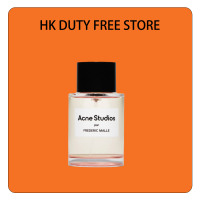
Frederic Malle EDP Acne Studios 100ML
₱3,316.00₱8,975.00
New Frederic Malle EDP Acne Studios 100ML
₱3,255.00₱8,769.00
Frederic Malle Acne Studios EDP UNISEX 100ML
₱2,788.00₱5,898.00
Original Frederic Malle Acne Studios Floral edp 100ml
₱3,210.00₱7,012.00
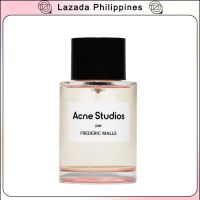
NEW Frederic Malle Acne Studios Floral edp 100ml
₱3,216.00₱8,215.00
Original 100% Frederic Malle Rose Tonnerre Musc Ravageur Portrait OF A Lady EDP Perfume Spray 100ml
₱2,930.00₱9,500.00

【100% AUTHENTIC PERFUME】Frederic Malle Rose Tonnerre 100ml DISCOUNT EVENT Eau De Parfum
₱3,659.00₱6,000.00
Original Frederic Malle Leau Dhiver Rose Tonnerre En Passant 100ML EDP
₱2,865.00₱10,000.00
About Frederic Malle
Editions de Parfums Frédéric Malle, commonly referred to simply as Frédéric Malle, is a French luxury fragrance house established in Paris in 2000 by Frédéric Malle. The brand is distinguished by its philosophy of positioning perfumers as the primary creative authors of a fragrance, rather than obscuring their identities behind a fashion label or corporate brand name. This approach combines high perfumery, artistic freedom, exceptional raw materials, and deliberately understated packaging.1
Since January 2015, Frédéric Malle has been part of The Estée Lauder Companies, which acquired the brand while allowing it to retain its distinct identity within the luxury beauty sector.2
Quick facts
| Category | Information |
|---|---|
| Full name | Editions de Parfums Frédéric Malle |
| Common name | Frédéric Malle |
| Founded | 2000 |
| Founder | Frédéric Malle |
| Origin | Paris, France |
| Industry | Luxury fragrance / haute parfumerie |
| Parent company | The Estée Lauder Companies |
| Acquisition | January 2015 |
| Core product | Fine fragrance |
| Positioning | Ultra-luxury / niche perfumery |
| Creative philosophy | Perfumers as authors |
| Notable feature | Perfumer’s name prominently displayed on the bottle |
| Known for | Complex compositions, artistic freedom, high-quality ingredients |
The founder: Frédéric Malle
Frédéric Malle was born into a family with deep ties to the French perfume industry. Rather than training as a traditional perfumer who physically compounds fragrances, he developed his expertise from the perspective of a fragrance editor, creative director, and connoisseur.
His background is notably interdisciplinary. He studied art history, photography, and advertising before joining Roure, the historic French fragrance company that later became part of Givaudan. At Roure, he worked closely with some of the industry’s most significant perfumers and gained an extensive understanding of fragrance creation.1 This experience proved fundamental to the identity of his eventual company.
Malle did not aspire to become another “nose.” Instead, he sought to create an institution where exceptional perfumers could work with extraordinary freedom. Consequently, Frédéric Malle functions less as a traditional perfume brand and more as a publishing house for perfumers. The company explicitly compares its model to publishing: the perfumer acts as the author, while Frédéric Malle serves as the editor who discovers, guides, and publishes the creative work.2
Foundation in 2000
Frédéric Malle founded Editions de Parfums Frédéric Malle in 2000. The timing was significant; during the 1990s, the mainstream fragrance industry had become increasingly reliant on consumer testing, market research, celebrity associations, and marketing strategies designed to produce scents with broad appeal. Malle viewed this trend as producing safer, commercially predictable perfumes at the expense of individuality.2
His response was to grant perfumers greater freedom. The house launched on the premise that perfume should be treated as a serious creative discipline, akin to literature, architecture, music, or fine art, rather than merely a luxury accessory. The company officially opened on June 6, 2000, a date Malle deliberately chose to reference the Allied landings in Normandy on June 6, 1944.
Revealing the perfumer
The most defining characteristic of Frédéric Malle is the reversal of traditional industry hierarchy. Historically, consumers recognized the fashion designer, celebrity, or luxury house behind a fragrance but rarely knew the perfumer who composed it. Malle placed the perfumer’s name directly on the bottle, treating them as authors rather than invisible technicians.2
Notable examples include:
- Portrait of a Lady — Dominique Ropion
- Vetiver Extraordinaire — Dominique Ropion
- Musc Ravageur — Maurice Roucel
- En Passant — Olivia Giacobetti
- Eau d’Hiver — Jean-Claude Ellena
- Carnal Flower — Dominique Ropion
- Iris Poudre — Pierre Bourdon
This practice, comparable to displaying an author’s name on a book cover, brought perfumers “out of the shadows” and became a hallmark of modern niche perfumery.
The “publishing house” concept
The use of the word Éditions is intentional. In French, édition relates to publishing. The company’s concept is not simply manufacturing perfume, but rather publishing the work of great perfume authors. Frédéric Malle selects or collaborates with renowned perfumers, providing a platform for them to create under their own names.2
The brand’s philosophy emphasizes:
- Creative freedom
- Exceptional raw materials
- Individuality
- Technical excellence
- Minimal marketing constraints
- Long development periods
- Respect for the perfumer’s artistic identity
The Estée Lauder Companies describes the concept as fragrances created by some of the world’s greatest “noses” and sold under their creators’ names.2
Creative freedom
A significant component of the brand’s reputation stems from the unusual degree of liberty granted to its creators. According to the house, perfumers receive no fixed time or budget limits in the traditional sense and are provided with high-quality raw materials. The objective is to allow the perfumer to pursue the composition rather than forcing it toward a predetermined mass-market brief.2
This differs fundamentally from the conventional commercial model, which typically follows a linear path from target customer and market research to marketing brief and consumer testing. The Frédéric Malle process is closer to: great perfumer → creative idea → experimentation → composition → refinement → publication. This approach accounts for the diversity of the collection.
The perfumers
Frédéric Malle has collaborated with a distinguished group of perfumers, including:
- Dominique Ropion
- Jean-Claude Ellena
- Maurice Roucel
- Pierre Bourdon
- Olivia Giacobetti
- Anne Flipo
- Carlos Benaïm
- Sophia Grojsman
- Edouard Fléchier
- Ralf Schwieger
- Bruno Jovanovic
- Julien Rasquinet
- Fanny Bal
- Suzy Le Helley
- Annick Ménardo
The house often describes these perfumers through artistic archetypes—such as Dominique Ropion as “the architect” and Jean-Claude Ellena as “the watercolorist”—reinforcing the idea that each possesses a distinct creative language.2 Unlike brands that enforce a standardized “house style,” the Frédéric Malle collection is intentionally eclectic.
Olfactory profile
There is no single olfactory signature that defines Frédéric Malle. The collection spans vastly different territories, including florals, roses, iris, jasmine, tuberose, vetiver, woods, musk, amber, vanilla, leather, incense, patchouli, citrus, aldehydes, green notes, and oriental compositions.
One fragrance may be elegant and restrained, while another is dense, sensual, animalic, or deliberately unconventional. The collection is not built around a recognizable “Malle DNA” in the scent itself; rather, the DNA is philosophical, prioritizing individuality over uniformity. The house describes its portfolio as encompassing different styles and families while revisiting classics and exploring new territory.2
Notable fragrances
Portrait of a Lady
Perfumer: Dominique Ropion
One of the house’s best-known compositions, Portrait of a Lady is a powerful rose-centered fragrance built around an unusually rich combination of rose, patchouli, incense, fruits, and woods. It exemplifies the brand’s approach of taking a familiar material and pushing it toward something dramatic and architectural.
Carnal Flower
Perfumer: Dominique Ropion
Considered a modern classic, Carnal Flower centers on tuberose. Rather than treating it as a simple sweet white floral, Ropion constructs a detailed, radiant composition featuring green notes, melon-like freshness, coconut nuances, musk, and floral creaminess.
Musc Ravageur
Perfumer: Maurice Roucel
This fragrance represents the sensual side of the house. It combines musk with warm spices, vanilla, amber-like warmth, and woods to create a scent that is deliberately provocative rather than conventionally “clean.”
Vetiver Extraordinaire
Perfumer: Dominique Ropion
An interpretation of vetiver that explores the material through a modern, polished structure rather than a traditional dry profile. It demonstrates the house’s method of deeply studying and reinterpreting classic ingredients.
Eau d’Hiver
Perfumer: Jean-Claude Ellena
Known for its soft, delicate, and airy character, Eau d’Hiver showcases Jean-Claude Ellena’s minimalist approach. It illustrates that the collection includes both quiet and explosive creations, countering the assumption that niche perfumes are always intense.
Packaging and visual identity
The visual identity of Frédéric Malle is characterized by rectangular, transparent, minimalist bottles with black-and-white typography. The design is almost pharmaceutical or laboratory-like, placing the perfume and perfumer’s name at the center rather than using decorative ornamentation.2
This creates a deliberate contrast between the complex, luxurious compositions inside and the restrained packaging outside. The graphic design draws inspiration from French publishing houses, particularly the visual language of Gallimard for perfumes and Éditions de Minuit for the home-scent line, reinforcing the publishing-house concept.
Retail experience
Frédéric Malle boutiques are designed to differ from conventional perfume counters. The brand describes its stores as a hybrid of an elegant home and a fragrance laboratory, featuring signature smelling columns and refrigerated perfume cabinets. Some locations are designed by Malle himself, while others involve renowned architects.
The retail environment emphasizes consultation and discovery over transactional sales. Customers are encouraged to discuss preferences with specialists and gradually understand the collection, acknowledging that the fragrances can be complex and may not fit traditional shopping categories.
Relationship with The Estée Lauder Companies
In January 2015, The Estée Lauder Companies acquired Editions de Parfums Frédéric Malle.2 This placed the brand within a portfolio that includes Estée Lauder, Clinique, La Mer, Jo Malone London, Le Labo, By Kilian, Aveda, and Tom Ford Beauty.
Despite the acquisition, Frédéric Malle has retained its distinct identity and positioning as an artistic luxury fragrance house. While Malle’s original philosophy was partly a reaction against commercialized mainstream fragrance, joining a major global group provided greater international resources and distribution while preserving the brand’s niche character.
Comparison with mainstream perfume brands
| Mainstream designer fragrance | Frédéric Malle |
|---|---|
| Fashion/celebrity brand is central | Perfumer is central |
| Broad consumer appeal | Individual artistic expression |
| Heavy marketing | Product-focused philosophy |
| Seasonal commercial launches | Curated artistic collection |
| Brand image drives the fragrance | Fragrance author drives the creation |
| Often designed for immediate accessibility | Can be challenging or unconventional |
| Bottle may emphasize luxury decoration | Bottle emphasizes simplicity |
| Perfumer often secondary | Perfumer’s name prominently displayed |
While luxury designer houses also produce excellent perfumes, this distinction highlights the historical reason Frédéric Malle became significant in niche perfumery.
Significance in perfume history
Frédéric Malle’s primary contribution to perfume history is the shift in the relationship between the perfumer and the consumer. Prior to this brand, perfumers were frequently invisible technical specialists. Malle helped popularize the model of “perfumer as author,” making consumers more interested in who composed a fragrance rather than merely which fashion house sold it.
This shift was part of a broader transformation in late 20th and early 21st-century niche perfumery, associating fragrance increasingly with craftsmanship, individuality, artistic authorship, and connoisseurship.
Brand philosophy
The core philosophy of Frédéric Malle can be summarized as: the perfume should be the star, and the perfumer should receive the credit. The company consistently emphasizes freedom, exceptional ingredients, craftsmanship, individuality, and artistic excellence.1
Definition of luxury
The brand’s luxury proposition relies on expertise and the scarcity of creative talent rather than ostentatious displays. Value is derived from working with elite perfumers, utilizing high-quality raw materials, allowing lengthy development times, and maintaining artistic freedom. The Estée Lauder Companies describes the collection as exclusive, sophisticated, ultra-luxury fragrances created by highly talented perfumers.2
Target audience
Frédéric Malle appeals primarily to individuals interested in perfume as an art form rather than those seeking a fragrance attached to a fashion label. Typical enthusiasts include fragrance collectors, niche perfume customers, admirers of specific perfumers, and luxury consumers who value craftsmanship. While one does not need to be an expert to wear the fragrances, the brand is particularly rewarding for those wishing to explore perfumery as a craft.
Position in modern niche perfumery
Frédéric Malle is often discussed alongside houses such as Le Labo, By Kilian, and Diptyque. However, its identity remains distinctive. While Le Labo emphasizes the laboratory concept and personalization, By Kilian focuses on storytelling and sensuality, and Diptyque encompasses a broader lifestyle aesthetic, Frédéric Malle places unique emphasis on the perfumer as author.
Aesthetic
Aesthetically, the brand combines French intellectual luxury, haute parfumerie, publishing culture, and modern minimalism. Visually, it is defined by black, white, red, typography, glass, and laboratory motifs. Olfactorily, the scents are complex, sophisticated, technically elaborate, and highly individual. Culturally, the brand promotes connoisseurship over conspicuous consumption, emphasizing the quality of the work rather than the price.
Strengths
Artistic credibility
Association with internationally respected perfumers grants the collection significant credibility among enthusiasts.2
Strong creative identity
The brand maintains one of the clearest philosophies in modern niche perfumery.
Excellent perfumer roster
Collaborations with figures such as Dominique Ropion, Jean-Claude Ellena, Maurice Roucel, Olivia Giacobetti, and Pierre Bourdon give the collection considerable historical importance.2
Diverse collection
The absence of a single “house smell” allows for wide-ranging artistic expression.
Distinctive visual identity
The minimalist bottles are immediately recognizable.
Transparent authorship
Displaying the perfumer’s name makes the creative relationship unusually clear.
Criticisms and controversies
Like many luxury niche houses, Frédéric Malle is not universally acclaimed. Some consumers find the fragrances expensive, too powerful, overly intellectualized, or difficult to understand. Others perceive them as occasionally old-fashioned or less immediately crowd-pleasing than designer alternatives.
A notable tension exists in the brand’s history: a house founded to challenge commercial perfume eventually became part of one of the world’s largest beauty corporations. Additionally, some enthusiasts argue that niche perfumery can create its own form of status marketing, where prestige becomes as important as the fragrance itself.
Legacy
Frédéric Malle’s legacy extends beyond its product catalog. Its most significant innovation was establishing the idea that a perfume could be marketed around the identity of its creator. This shifted consumer inquiry from “Which brand is this?” to “Who composed it?” Although common today, this was rare in mainstream culture when the brand launched in 2000. The house occupies a vital position in the development of contemporary niche perfumery, helping to make the perfumer visible as a creative professional.
Summary
Frédéric Malle operates similarly to a publishing house commissioning a novel from a famous author. Whereas a conventional model might demand a fragrance represent a brand, Frédéric Malle provides extraordinary perfumers with the freedom and materials to create something exceptional, then places their name on the product.1
Founded in Paris in 2000, it is considered one of the most influential modern French niche fragrance houses. Its uncompromising approach to creation, minimalist packaging, and distinguished roster of perfumers have made it a key reference point in haute parfumerie. Since its 2015 acquisition by The Estée Lauder Companies, it has operated within a major global group while retaining its avant-garde identity.2
Ultimately, Frédéric Malle functions as a publishing house for great perfumers, where the perfume is the artwork, the perfumer is the author, and Frédéric Malle is the editor bringing the work to the world.