Shop on Lazada
Alpecin products
Alpecin C1 Caffeine Shampoo 250ml IPromotes Natural Hair Growth And Thickness
₱585.00₱895.00
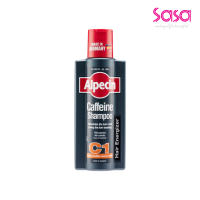
ALPECIN Caffeine Shampoo - C1 (375ml)
₱1,470.00₱2,940.00
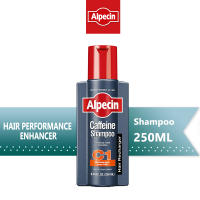
Alpecin C1 Caffeine Shampoo for Men Promote Natural Hair Growth 250ml
₱688.00₱1,243.00
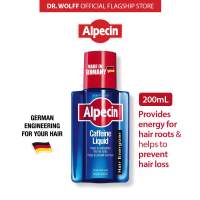
Alpecin Caffeine Liquid (200ml) - Strengthen Hair Growth & Reduce Hair Loss Hair Grower
₱849.00
Buy on Lazada
Alpecin C1 Caffeine Shampoo 250ml
₱1,039.86₱2,426.76
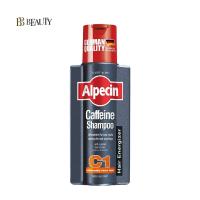
Alpecin C1 Caffeine Shampoo 250ml
₱979.00₱1,041.00
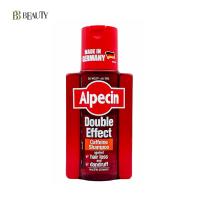
Alpecin Double Effect Caffeine Shampoo 200ml
₱1,079.00₱1,500.00
![[Bundle of 2] Alpecin Caffeine Liquid (200ml) - Strengthen Hair Growth & Reduce Hair Loss Hair Grower](https://ph-live.slatic.net/p/a11d9acddb2a36f624df6e8a5c0f5fa3.jpg_200x200q80.jpg)
[Bundle of 2] Alpecin Caffeine Liquid (200ml) - Strengthen Hair Growth & Reduce Hair Loss Hair Grower
₱1,698.00
Buy on LazadaAbout Alpecin
Alpecin is a German hair-care brand best known for its caffeine-based shampoos and scalp treatments marketed primarily toward men experiencing hereditary hair loss (androgenetic alopecia). The brand is owned and developed by Dr. Wolff, a fourth-generation, family-owned German company headquartered in Bielefeld. Alpecin’s identity combines German cosmetic and scalp research, caffeine-based formulations, and highly recognizable sports-oriented advertising.1
Brand overview
| Category | Information |
|---|---|
| Brand | Alpecin |
| Origin | Germany |
| Headquarters / parent company | Dr. Wolff, Bielefeld, Germany |
| Parent group | Dr. Wolff Group |
| Brand established | 1930 |
| Best known for | Caffeine shampoo and caffeine-based hair/scalp products |
| Primary target | Men, particularly those concerned about hereditary hair loss |
| Core ingredient/technology | Alpecin Caffeine Complex |
| Major breakthrough | Introduction of caffeine shampoo in 2004 |
| Main product categories | Shampoos, caffeine liquids/scalp treatments, specialized hair-care products |
| International presence | Sold in more than 60 countries, according to Alpecin |
| Brand positioning | Scientific, functional, masculine, performance-oriented |
| Country of manufacture | Germany; Dr. Wolff says its products continue to be manufactured in Bielefeld |
Product concept and positioning
Alpecin is essentially a scalp and hair-care brand built around the idea that caffeine can support hair-root activity. Unlike conventional shampoo brands that primarily emphasize cleansing, fragrance, softness, or cosmetic appearance, Alpecin positions its products as functional hair-care products. Its central marketing proposition is that caffeine-containing formulations can reach the hair follicle and help support the hair roots.
The company explains that its caffeine formulations are designed to reach the hair follicle during washing and that caffeine can remain detectable there for an extended period. Alpecin describes this as its “German engineering for your hair” approach.1
It is important to note that Alpecin is primarily a cosmetic hair-care brand rather than a pharmaceutical hair-loss treatment. Claims about reducing or preventing hair loss are distinct from the claims and regulatory status of established medical treatments for androgenetic alopecia.
History
Origins of Dr. Wolff (1905)
Although Alpecin itself dates to 1930, its history is closely connected to the older Dr. Wolff company. Pharmacist and chemist Dr. August Wolff founded a chemical and pharmaceutical factory in Bielefeld in 1905. The company subsequently developed expertise in pharmaceutical, dermatological, and cosmetic products, emphasizing that scientific research has been part of its identity since its foundation.11
Launch of Alpecin (1930)
The Alpecin brand was introduced in 1930. The original formulation was based on tar, sulfur, and salicylic acid and was marketed as a hair and scalp treatment intended to help maintain healthy scalp and hair. At this stage, Alpecin was already developing an identity as a men’s hair-care brand.2 Notably, the brand did not originally begin as a caffeine shampoo; caffeine became the defining technology of the modern brand much later.
The Alpecin method (1950s)
During the 1950s, Dr. Wolff developed a more systematic approach to different scalp types. The company identified characteristics associated with dry, flaky, and oily scalps and developed different care approaches for them. This helped establish Alpecin as a specialist rather than simply a generic shampoo brand.3
Connection with sport (1960s–1970s)
Sport became an important part of Alpecin’s communication strategy. In 1969, Dr. Wolff became involved in cycling through the Batavus-Alpecin racing team. This was significant for the brand because professional sport provided a natural platform for communicating ideas such as performance, strength, endurance, and energy.4 This sports connection eventually became an important component of Alpecin’s brand personality.
Mass-market recognition (1990s)
Alpecin increasingly used celebrities and prominent advertising campaigns to build awareness. One of the best-known examples was German boxer Henry Maske, who appeared in Alpecin advertising in the 1990s. His memorable shower advertisement helped make the brand much more recognizable among consumers.
The caffeine revolution (2004)
The most important moment in modern Alpecin history came in 2004 when Dr. Wolff introduced what it describes as the world’s first caffeine shampoo.5 This transformed Alpecin from a traditional scalp-care brand into a specialist caffeine-based hair-care brand and created the basic proposition that still defines the line today: caffeine penetrates the hair follicle to support hair-root activity for stronger-looking hair.
This move was strategically important because caffeine gave Alpecin a simple, memorable hero ingredient that could differentiate the brand from conventional anti-hair-loss shampoos. The company subsequently developed a range of caffeine-containing shampoos and scalp products.
The Alpecin Caffeine Complex
The Caffeine Complex is the central technological concept behind the brand. According to Alpecin, caffeine is intended to penetrate toward the hair follicles and support activity at the hair root. The company specifically connects this mechanism with hereditary hair loss, also known as androgenetic alopecia.
A notable feature of Alpecin’s products is the recommended two-minute application time for its caffeine shampoo. The company argues that this provides sufficient contact time for the caffeine-containing formulation to act on the scalp and hair follicles.6
Clinical research and efficacy
It is useful to separate brand claims from broader scientific evidence regarding topical caffeine. Research suggests that topical caffeine has potential for supporting hair growth and reducing hair shedding. A 2025 systematic review identified nine clinical trials involving 684 participants and concluded that the evidence was promising, though it emphasized that the quality of evidence ranged from medium to very low in most studies and that better-designed trials are needed.
Clinical studies specifically involving Alpecin or formulations associated with its manufacturer have also been conducted. For example, a randomized controlled study involving 66 men with androgenetic alopecia compared Alpecin Caffeine Shampoo C1 with a caffeine-free control shampoo over six months and reported improvements in several hair-loss-related measures.14
More recently, a 2025 randomized, double-blind, placebo-controlled study of 154 men examined a shampoo containing dimethylglycine sodium salt (DMG-Na) and caffeine. The study reported improvements in hair-pull-test results, hair density, and other growth parameters after six months. However, the study included employees of Dr. Kurt Wolff among its authors, which is an important consideration when interpreting the evidence.7
Consequently, while Alpecin’s caffeine-based products have clinical research behind them and caffeine shows promising evidence for hair-loss applications, the overall evidence base for topical caffeine remains less established than that for mainstream pharmaceutical treatments for androgenetic alopecia. The 2025 systematic review specifically concluded that additional high-quality clinical trials are necessary.
Main product categories
Alpecin has expanded considerably beyond its original caffeine shampoo.
Alpecin Caffeine Shampoo C1
This is the brand’s flagship product. It is designed for men concerned about hereditary hair loss and contains the brand’s caffeine-based technology. It is intended to be left on the scalp for approximately two minutes before rinsing.8
Alpecin Caffeine Liquid
This is a leave-on scalp treatment rather than a rinse-off shampoo. The product is designed to deliver caffeine to the scalp and hair roots without being washed away immediately.9
Alpecin Double-Effect Caffeine Shampoo
This product combines the brand’s caffeine positioning with anti-dandruff and scalp-care functionality.
Alpecin Hybrid Caffeine Shampoo
Designed for people with sensitive or itchy scalps while retaining the brand’s caffeine concept.10
Alpecin Grey Attack
Introduced as a product aimed at gradually making grey hair appear darker while incorporating caffeine-based hair care.
DMG + caffeine technology
Dr. Wolff has moved beyond caffeine alone in newer research, investigating combinations of dimethylglycine (DMG) and caffeine, including in a 2025 clinical trial.7
Target consumer
Alpecin’s core consumer is relatively distinctive. The primary target demographic consists of men concerned about hereditary hair loss, thinning hair, weakening hair, scalp health, maintaining hair density, dandruff or scalp problems, and premature-looking hair aging. The brand’s own positioning explicitly describes its focus as the male problem of hereditary hair loss. This male orientation is a major difference between Alpecin and many mainstream hair-care brands.
Advertising and marketing
Marketing has been one of Alpecin’s greatest strengths. One of the company’s most famous slogans is “Doping for your hair,” which deliberately connects caffeine with energy and performance.9 This positioning turns an otherwise ordinary cosmetic ingredient into something that sounds powerful and performance-enhancing. Dr. Wolff states that campaigns such as “Doping for your hair” and its “baldness calculator” helped increase Alpecin’s popularity.
Cycling has also become closely associated with Alpecin. The brand’s historical involvement with competitive cycling dates back to the late 1960s, and in modern times, Alpecin has continued to use professional cycling as a major sponsorship and branding platform. This association creates a logical link between athletes, performance, energy, caffeine, and the brand, giving Alpecin a more dynamic identity than a conventional men’s shampoo.4
In the United States, the brand explicitly uses the phrase “Fight for your hair,” while some international markets use “Doping for your hair.”8
Parent company: Dr. Wolff
Alpecin is part of the Dr. Wolff Group, a family-owned German business. The group operates several brands, including Alpecin (men’s hair/scalp care), Plantur (caffeine-based women’s hair care), ALCINA (professional hair and beauty products), Linola (dermatological skin care), KAREX (oral care), Bioniq (oral care), and Vagisan (women’s health). Dr. Wolff describes itself as a fourth-generation family business with more than 900 employees worldwide.
Within this portfolio, Alpecin and Plantur occupy complementary positions. Alpecin targets men with caffeine hair and scalp care, while Plantur targets women with phyto-caffeine hair care. Alpecin serves as the male-oriented flagship caffeine hair-care brand within the broader Dr. Wolff portfolio.
International presence and manufacturing
Alpecin began as a German brand but has become international. The company says its products are now available in more than 60 countries. In Asia, Dr. Wolff’s regional operations in Singapore cover markets including Malaysia, Singapore, Thailand, Indonesia, and Hong Kong.
Alpecin retains a strong “Made in Germany” identity. Dr. Wolff’s Asian operation states that its products continue to be manufactured in Bielefeld, Germany, according to EU and ISO standards. Manufacturing in Germany supports the brand’s broader positioning regarding German engineering and scientific quality.11
Major milestones
- 1905: Dr. August Wolff establishes the company in Bielefeld.11
- 1930: Alpecin brand is launched with a scalp/hair formulation based on tar, sulfur, and salicylic acid.2
- 1950s: Development of specialized scalp-care concepts for different scalp types.3
- 1969: Dr. Wolff becomes involved in cycling through Batavus-Alpecin.12
- 2004: Dr. Wolff launches what it describes as the world’s first caffeine shampoo.13
- 2023: Introduction of Grey Attack, aimed at gradually darker-looking hair.
- 2025: Publication of a randomized controlled study investigating a DMG + caffeine shampoo for male pattern hair loss.7
Market position and assessment
Alpecin occupies the space between ordinary shampoo, functional scalp-care shampoo, cosmetic hair-loss products, and medical hair-loss treatments. It is primarily in the functional and cosmetic hair-care area and should not automatically be considered equivalent to pharmaceutical treatments such as minoxidil or finasteride. While clinical research has investigated caffeine-based topical formulations alongside conventional treatments, this does not imply that every commercially available caffeine shampoo is equivalent to an approved medicine.
The brand’s success stems from combining German scientific heritage, men’s hair loss, caffeine, performance, sport, and aggressive advertising into a coherent brand system. Although it began in 1930 as a traditional scalp-care product, its transformation in 2004 created the modern Alpecin identity centered on caffeine technology.17
Key differentiators include its specific focus on men’s hair loss, the distinctive use of caffeine as a hero ingredient, a strong German engineering narrative, and unusually aggressive marketing.1516 However, challenges remain, including the fact that evidence for topical caffeine is not yet definitive compared to pharmaceutical options, the risk of consumers confusing cosmetic products with medical treatments, and the limitation of a strictly male-focused audience.
References
- Alpecin: German engineering for your hair | About us
- Alpecin – Dr. Wolff Group
- Alpecin | Research
- The Alpecin Story | About us
- Research & Studies | Alpecin
- Study: Efficacy of a cosmetic caffeine shampoo for the treatment of androgenetic alopecia in men
- Study: Effectiveness of DMG and caffeine-containing shampoo
- Alpecin: Fight for your hair | About us
- Alpecin: Doping for your hair | About us
- Alpecin – Dr. Wolff Group
- The Alpecin Story | About us
- The Alpecin Story | About us
- Alpecin | Recherche
- Study: Use of a caffeine shampoo for the treatment of androgenetic alopecia in men
- Study confirms the effectiveness of Alpecin Caffeine Shampoo
- Alpecin | Çalışmalar
- About us: The development of caffeine hair care | Alpecin Shop – Alpecin NORDICS