Shop on Lazada
Gamakatsu products
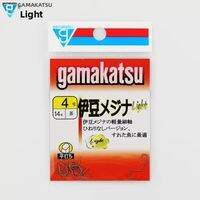
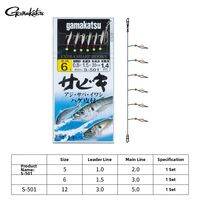
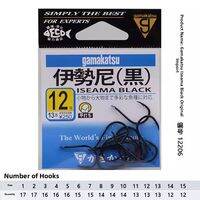
About Gamakatsu
Brand Overview
Gamakatsu (がまかつ) is a Japanese fishing tackle manufacturer best known internationally for its high-performance fishing hooks. Established in 1955 in Nishiwaki, Hyōgo Prefecture, the company began as a small handmade hook maker and evolved into one of Japan’s leading hook manufacturers. Its product portfolio has since expanded to include fishing rods, terminal tackle, apparel, accessories, and other fishing equipment 1.
The brand is particularly associated with sharpness, strength, and precision manufacturing. Gamakatsu hooks are utilised across diverse fishing styles, ranging from Japanese saltwater and freshwater angling to bass fishing, offshore applications, fly fishing, and various lure fishing techniques 2.
Basic Information
| Category | Information |
|---|---|
| Brand | Gamakatsu / がまかつ |
| Country of origin | Japan |
| Founded | 1955 |
| Original business | Fishing hooks |
| Founder | Shigekatsu Fujii |
| Current corporate group | Gamakatsu |
| Headquarters | Osaka, Japan |
| Singapore headquarters | GAMAKATSU PTE LTD |
| Main specialization | Fishing hooks and fishing tackle |
| Major markets | Japan, North America, Europe, Asia and other international markets |
| Known for | Hook sharpness, strength, consistency and specialized designs |
| Official philosophy/theme | “Nature and Technology” |
Corporate information lists the modern structure as including GAMAKATSU PTE LTD, with its Singapore headquarters and Japanese headquarters in Osaka. The group reports approximately 1,000 employees 3.
Corporate Identity and Product Range
Gamakatsu is fundamentally a fishing hook company that grew into a comprehensive fishing tackle manufacturer. Unlike brands whose identity centres on rods, reels, or lures, Gamakatsu established its reputation through a single component: the hook. This focus shaped the brand’s identity, driving significant investment in metallurgy, heat treatment, forming, sharpening, and hook geometry. Consequently, the hook is positioned as a precision-engineered piece of equipment rather than a mere consumable accessory 4.
The company currently produces a broad range of products, including:
- Fishing hooks (treble, single, worm, assist, jig, fly-fishing, saltwater, and bass-fishing)
- Fishing rods
- Terminal tackle
- Fishing accessories
- Storage products
- Apparel
- Other fishing-related equipment
The Japanese product catalogue covers numerous rod categories ranging from rock fishing and surf fishing to boat, freshwater, saltwater lure, and offshore applications 5.
History
Foundation and Early Years
Gamakatsu traces its origins to 1955, when it began producing fishing hooks in Hyōgo Prefecture. The company states it was initially the smallest hook manufacturer in Japan, with hooks produced entirely by hand. Founder Shigekatsu Fujii established the business with the goal of producing higher-quality fishing hooks 6. This origin is significant as the brand’s later identity was built upon applying increasingly sophisticated industrial technology to traditional hook manufacturing.
Automation and Industrialisation
A major turning point occurred in 1963 with the introduction of an automated heating facility. This allowed for more efficient manufacturing while maintaining greater consistency in the heat-treatment process, helping propel Gamakatsu toward the forefront of the Japanese hook market.
By 1974, the company introduced fully automated hook-making machines. Rising demand necessitated the construction of a second factory, marking a transition from a small craft-oriented manufacturer to large-scale industrial production.
Diversification
After establishing itself as a leading Japanese hook manufacturer, Gamakatsu began developing fishing rods in 1976, initiating its transformation into a broader fishing equipment manufacturer. The company upgraded its hook-manufacturing machinery again in 1986. By 1987, the product range had expanded considerably to include rods, apparel, and other fishing-related products, although the hook remained the technological foundation of the business.
International Expansion
Gamakatsu expanded internationally in the late 1980s. In 1988, it established Gamakatsu International Co., Ltd. in Thailand, followed by Gamakatsu Shantou Co., Ltd. in China in 1989. These operations supported activities such as hook snelling, rigging, fly tying, and packaging.
The brand formally established Gamakatsu USA, Inc. in 1992, securing a dedicated presence in the American market. This proved significant as the United States became one of Gamakatsu’s most important overseas markets, particularly among bass anglers and lure-fishing communities.
In 1994, SPRO N.V. was established in the Netherlands as Gamakatsu’s exclusive European agent. The corporate structure subsequently expanded through additional companies and subsidiaries.
In 2000, Gamakatsu established GAMAKATSU PTE LTD. Today, Singapore serves as an important corporate base for the group; official corporate information lists Singapore as the headquarters of GAMAKATSU PTE LTD alongside the Japanese headquarters in Osaka.
Manufacturing Technology
The central reason for Gamakatsu’s prominence is its manufacturing technology. The company emphasises three fundamental aspects of hook production.
High-Carbon Steel
Gamakatsu uses high-carbon steel specifically selected for fishing hook manufacture. The company worked with a material manufacturer to develop steel with relatively high carbon content and low impurities, intended to provide the combination of strength and performance required for fishing hooks 7.
The objective is not simply maximum strength. A fishing hook requires an appropriate balance between strength, hardness, flexibility, and sharpness. A hook that is extremely hard but brittle can fail under load, while one that is excessively flexible may straighten. Gamakatsu’s manufacturing philosophy focuses on balancing these properties.
Heat Treatment
One of Gamakatsu’s most important technological claims concerns tempering. The company developed an electronic tempering process intended to control heat-treatment conditions consistently. According to Gamakatsu, each hook style and size receives a temperature treatment appropriate to its characteristics before being cooled in oil. The objective is to produce hooks that are strong without becoming excessively brittle 8.
This process is critical because two hooks made from similar steel can have vastly different mechanical properties depending on heat treatment. The manufacturing philosophy holds that while the material matters, the treatment of that material is equally important.
Hook Sharpness
Perhaps the characteristic most strongly associated with Gamakatsu is sharpness. Gamakatsu describes its points as being conically needle-honed, producing a fine, penetrating point 9. This is valuable because a fishing hook must penetrate the fish’s mouth quickly during the hook-set. A sharp hook can potentially require less force to penetrate, improve penetration depth, maintain better penetration after repeated use, work effectively with finesse presentations, and reduce the margin for error during a hook-set.
Actual performance depends on hook design, application, fish species, tackle, and the condition of the individual hook.
Hook Design and Specialisation
Gamakatsu produces a vast variety of specialised designs intended for particular fishing techniques rather than generic hooks. Examples include:
- Worm hooks: Designed primarily for soft-plastic bass fishing.
- Offset hooks: The offset geometry helps position soft plastics and facilitates weedless presentations.
- Extra Wide Gap (EWG): Provides a wider gap between the shank and point, giving soft-plastic baits more room. Gamakatsu identifies EWG designs as one of its notable innovations 10.
- Treble hooks: Used on hard lures such as crankbaits, jerkbaits, topwater lures, spoons, and plugs.
- Assist hooks: Common in jigging and offshore applications.
- Saltwater hooks: Designed for larger species where corrosion resistance and mechanical strength are paramount.
- Fly hooks: Designed around the specific geometry required for tying artificial flies.
G-Series Technology
One of Gamakatsu’s technologically advanced modern hook families is the G-Series, which includes lines such as G-Finesse and G-Power. G-Finesse targets technical and finesse-oriented fishing, while G-Power is intended for heavier applications such as fishing around heavy cover 11.
A major component of G-Series technology is Tournament Grade Wire (TGW). According to Gamakatsu, TGW allows hooks to be made thinner while retaining high strength. The series also uses a Nano Smooth Coat, designed to reduce surface resistance and improve penetration 12. The engineering philosophy is to achieve thinner wire and less resistance for sharper, faster penetration while maintaining sufficient strength.
Product Philosophy
Gamakatsu’s product development philosophy can be summarised as:
- Sharp: The hook should penetrate effectively.
- Strong: It should withstand forces generated during a fight.
- Consistent: Hooks of the same model and size should behave predictably.
- Specialized: Different fishing techniques require different geometries.
- Technological: Materials and manufacturing processes should continually improve performance.
The company describes this philosophy through its long-running theme of “Nature and Technology” 13.
Market Presence and Application
Bass Fishing
Gamakatsu has developed a strong reputation among bass anglers due to the sport’s requirement for specialised hooks, including Texas-rig, flipping, finesse, drop-shot, shaky-head, swimbait, treble, trailer, and weedless hooks. The brand’s development philosophy fits this environment well as it designs hooks around specific baits and techniques. The G-Series, in particular, was developed with input from professional bass anglers 14.
Japanese Fishing
In Japan, Gamakatsu produces equipment for numerous forms of fishing, including iso fishing (rock fishing), surf and shore fishing, ayu fishing, freshwater fishing, herabuna fishing, boat fishing, offshore fishing, saltwater lure fishing, and various traditional Japanese techniques. The Japanese catalogue contains dedicated rod and tackle categories for these applications. This breadth positions Gamakatsu as a comprehensive Japanese fishing equipment manufacturer rather than solely a bass hook brand.
Global Operations
Gamakatsu has developed an international distribution and corporate network. Key milestones in its global expansion include:
| Year | Development |
|---|---|
| 1955 | Hook production begins in Japan |
| 1963 | Automated heating facility introduced |
| 1974 | Fully automated hook-making machines |
| 1976 | Fishing-rod manufacturing begins |
| 1988 | Gamakatsu International established in Thailand |
| 1989 | Gamakatsu Shantou established in China |
| 1992 | Gamakatsu USA established |
| 1994 | SPRO established in Europe |
| 2000 | GAMAKATSU PTE LTD established in Singapore |
| 2010 | Guangzhou Gamakatsu Trading established |
| 2014 | JASPO Thailand established |
| 2017 | Japanese headquarters structure expanded |
These dates are derived from Gamakatsu’s corporate history 15.
Brand Positioning and Reputation
Differentiation from Generic Hooks
Gamakatsu positions its hooks as premium fishing components rather than competing primarily on price 16. While a generic hook may appear visually identical to a Gamakatsu hook, differences exist in steel composition, forming, heat treatment, hardness, flexibility, sharpening, coating, geometry, and quality control.
Angler Reputation
Gamakatsu has built a reputation as a premium hook brand centred on extremely sharp points, reliable geometry, high-quality steel, consistent manufacturing, specialised designs, strong performance under load, and a large selection of styles. The company describes itself as a leading fish hook manufacturer in Japan with a worldwide customer base 17.
However, claims such as “sharpest” or “best” represent marketing positioning rather than universal scientific conclusions. Specific models may excel in one technique while another manufacturer’s hook may be better suited to a different application.
Technological Evolution
Gamakatsu built its identity around the concept that hook manufacturing is an engineering discipline. Its development path progressed from handmade hooks to mechanical production, automated heating, automated forming, advanced tempering, high-carbon steel, precision sharpening, specialised geometries, advanced coatings, and application-specific engineering.
Corporate Structure and Philosophy
Modern Organisation
The modern Gamakatsu organisation has evolved significantly from its 1955 origins. Official company information identifies GAMAKATSU PTE LTD (Singapore headquarters) and a Japanese headquarters in Osaka. The group is involved in the manufacture and sale of fishing-related products as well as corporate investment activities. This structure is somewhat unusual for a Japanese fishing brand, with Singapore playing a significant corporate role.
Environmental Philosophy
Gamakatsu has used “Nature and Technology” as a theme since 1955. The concept suggests that fishing equipment should utilise modern technology while respecting the natural environment. This is understood as the company’s stated philosophy regarding its connection to outdoor ecosystems.
Brand Image
Gamakatsu’s brand image combines Japanese precision, fishing-specific engineering, and premium hook performance. Compared to mass-market brands, it maintains a technical and specialist image. Key associations include Japan, fishing hooks, sharpness, precision, high-carbon steel, professional anglers, bass fishing, saltwater fishing, and technical tackle.
Etymology
The Japanese brand is written がまかつ and romanised as Gamakatsu. The company’s historical origin connects to Gamae (蒲江) in Nishiwaki, Hyōgo Prefecture, where the founding hook business was established in 1955. Company history identifies the original business as 蒲克鈎本舗.
Current Status
As of 2026, Gamakatsu remains a major international fishing tackle brand with an identity anchored in hooks. The current product ecosystem encompasses modern specialised hook technologies, fishing rods, terminal tackle, storage, and accessories. For example, its European operation markets products ranging from dropshot hooks and swimbait hooks to specialised G-Series products and tackle storage systems.
Despite this diversification, the hook remains the core of the Gamakatsu identity. The company’s trajectory is defined by its original specialisation: attempting to make a better fishing hook, with subsequent growth stemming from that foundation.
Assessment
Strengths
- Exceptional specialisation in hooks
- Long manufacturing history dating to 1955
- Strong reputation among serious anglers
- Extensive selection of specialised designs
- Sophisticated heat-treatment technology
- High-carbon-steel construction
- Strong presence in both Japanese and international markets
- Significant involvement in professional and technical fishing
- Expanded product ecosystem beyond hooks
Potential Drawbacks
- Premium products can cost more than generic hooks
- Some models are highly technique-specific
- “Best” or “sharpest” claims are marketing assertions rather than universal scientific rankings
- Different models can have varying characteristics, making brand-level comparisons potentially misleading
Comparison with Typical Fishing Hook Brands
| Feature | Gamakatsu | Generic hook |
|---|---|---|
| Manufacturing history | Since 1955 | Varies |
| Primary specialization | Hooks | Often broader tackle |
| Material engineering | Major focus | Varies |
| Heat treatment | Highly emphasized | Varies |
| Hook designs | Very extensive | Usually fewer |
| Technique-specific models | Extensive | Varies |
| Sharpness reputation | Very strong | Highly variable |
| Price | Usually premium | Often cheaper |
| Professional use | Strong | Varies |
| Global reputation | Very high | Varies |
References
- Company History & Hook Crafting Technology – Gamakatsu USA
- 会社情報 | がまかつ
- Gamakatsu, History of the World’s Best Fish Hooks – Gamakatsu USA Fishing Hooks
- Why Choose Gamakatsu Fishing Hooks? – Gamakatsu USA
- 製品ページ | がまかつ
- About Us – Gamakatsu Clothing
- Blog Archives – Gamakatsu USA Fishing Hooks
- GAMAKATSU FISHING GEAR CATALOG 2025_鈎カタログ
- 公司介绍-伽玛卡兹
- Gamakatsu – Capitol Fishing Tackle Company
- Gamakatsu – A.C. Kerman, Inc.
- Company information | 株式会社がまかつ – Powered by IPROS GMS
- 企業情報 | がまかつ 本社 – Powered by イプロスものづくり
- 株式会社がまかつ – Powered by IPROS GMS
- Gamakatsu USA, Inc | Manufacturing / Processing – Fife Milton Edgewood Chamber of Commerce
- 2016 Catalog World`s Finest Hooks www.gamakatsu.com – fishing
- Gamakatsu 2020 Catalog, Page 8