Shop on Lazada
General Motors products

Chevrolet Trailblazer Colorado TURBO- Air Cleaner DUCT Outlet Assembly - GM KOREA - 52086620
₱1,500.00₱7,500.00

Chevrolet Trailblazer / Chevrolet Colorado 2013 - 2022 Power Window Motor
₱1,500.00₱3,000.00

Brake Master Cylinder with Reservoir - Genuine GM 52132338 - Chevrolet Trailblazer Colorado Automatic Transmission 4x4 2012-2020 - VIN is required before placing Order!
₱12,000.00
Buy on Lazada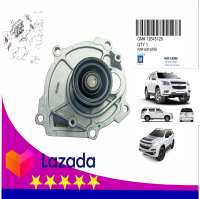
Chevrolet Trailblazer Colorado 2012 - 2019 - GM KOREA 12645126 Water Pump
₱2,000.00₱8,500.00

Chevrolet Trailblazer 2012 -2020 - Rear Tail Gate Door Latch for GM 13515944 trailblazer trax/spin aveo/sonic orlando
₱1,000.00₱2,500.00
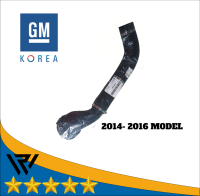
Chevrolet Trailblazer Turbo Hose (Outlet) Throttle Body Hose (3 Bends) GM KOREA
₱1,600.00₱5,000.00

Engine Support 4x2 4x4 - GM 52129329 - Chevrolet Trailblazer Colorado 2017-2020
₱8,500.00
Buy on Lazada
CV Joint Outer - AC DELCO ACD94768945 - Chevrolet Trailblazer Colorado 4x4 LTZ Z71 2.8 2012-2016
₱8,400.00
Buy on LazadaAbout General Motors
Overview
General Motors (GM), officially General Motors Company, is an American multinational automotive manufacturer headquartered in Detroit, Michigan. Founded on September 16, 1908, in Flint, Michigan, by William C. “Billy” Durant, the corporation evolved from a collection of automobile companies into one of the largest and most historically influential vehicle manufacturers globally. Its principal vehicle brands today are Chevrolet, Buick, GMC, and Cadillac.1
The company currently develops and sells passenger cars, pickup trucks, SUVs, commercial vehicles, components, and software-enabled automotive services. It also operates GM Financial, its captive finance subsidiary. While continuing to sell internal-combustion-engine vehicles, General Motors is pursuing a strategic transition toward electric vehicles, connected mobility, advanced driver-assistance systems, artificial intelligence, and software-defined transportation.
General Information
| Item | Information |
|---|---|
| Full name | General Motors Company |
| Abbreviation | GM |
| Founded | September 16, 1908 |
| Founder | William C. “Billy” Durant |
| Founded in | Flint, Michigan, United States |
| Headquarters | Detroit, Michigan, United States |
| Industry | Automotive |
| Main businesses | Automobiles, automotive components, software/services, automotive finance |
| Major brands | Chevrolet, Buick, GMC, Cadillac |
| Finance subsidiary | GM Financial |
| Chair & CEO | Mary T. Barra |
| President | Mark Reuss |
| Stock symbol | NYSE: GM |
| Employees | Approximately 155,000 worldwide at December 31, 2025 |
| 2025 revenue | US$185.019 billion |
| Corporate structure | General Motors Company and subsidiaries |
According to its 2025 annual report, General Motors employed approximately 155,000 people worldwide at the end of 2025 and reported US$185.019 billion in total net sales and revenue for the fiscal year.2
History
Foundation
General Motors was established during the rapid expansion of the American automobile industry in the early 20th century. Prior to entering the automotive sector, founder William Durant had achieved success as a carriage manufacturer before taking control of Buick and transforming it into a major automobile producer.
On September 16, 1908, Durant incorporated General Motors in Flint, Michigan. His foundational concept was unconventional for the era: rather than relying on a single model or marque, GM would consolidate multiple automobile manufacturers under one corporate umbrella. Buick and Oldsmobile served as the cornerstones of this early enterprise.3 This strategy eventually established one of the corporation’s defining characteristics: a diversified portfolio of brands targeting distinct customer segments and price points.
Although GM expanded aggressively by acquiring numerous automobile and component companies, this rapid growth precipitated financial difficulties. By 1910, bankers assumed control of the company, and Durant temporarily lost his leadership position.4
Chevrolet and Durant’s Return
In 1911, Durant partnered with race-car driver and engineer Louis Chevrolet to establish the Chevrolet Motor Company. The new venture found success with relatively affordable automobiles. Leveraging his ownership stake in Chevrolet, Durant regained control of General Motors in 1916, and Chevrolet was subsequently integrated into GM’s expanding portfolio.5 This acquisition was strategically significant as it provided GM with a stronger foothold in the lower-priced mass market.
Alfred Sloan and Modern Management
Alfred P. Sloan Jr. is widely regarded as one of the most pivotal figures in the corporation’s history. Upon becoming president in 1923, Sloan implemented a management philosophy predicated on decentralized operations combined with coordinated corporate control, a model that became highly influential for large American corporations.
Sloan also formalized the concept of offering “a car for every purse and purpose.” Rather than allowing internal competition between marques, each brand was positioned within a specific market segment. Chevrolet targeted the mainstream and entry-level markets, while Buick and Cadillac occupied progressively more premium tiers.6 This hierarchical approach helped establish GM as a dominant force in the American automobile market throughout the 20th century.
International Expansion
Throughout the 1920s and 1930s, General Motors expanded its international footprint by establishing manufacturing and distribution operations outside the United States. The company acquired or developed numerous marques, including:
- Cadillac
- Chevrolet
- Buick
- GMC
- Oldsmobile
- Pontiac
- Oakland
- Vauxhall
- Opel
- Holden
By the early 1930s, GM operated in more than 17 countries, eventually establishing a presence across multiple continents.7 Over subsequent decades, it grew to become one of the world’s largest industrial corporations.
Engineering and Innovation
Engineering has long been central to the corporate identity of General Motors. In 1920, the company established General Motors Research Corporation, leveraging technological capabilities from earlier acquisitions. Early research initiatives focused on anti-knock gasoline additives, automotive safety glass, paints, valve technology, and chrome plating.8
In 1924, GM opened the Milford Proving Ground in Michigan, which became a critical facility for testing vehicle performance, durability, and safety.9 The company’s historical research activities also extended beyond conventional automobiles to include refrigeration, medical technology, and other engineering disciplines.10
World War II and Postwar Era
During World War II, General Motors served as a major military-industrial manufacturer in the United States, redirecting its infrastructure to produce engines, trucks, aircraft-related equipment, and other wartime materials. Following the war, the company resumed civilian automobile manufacturing and capitalized on the substantial growth of the American consumer economy.
The postwar decades were among GM’s most successful. The corporation became synonymous with the American automobile industry, producing iconic models through Chevrolet, Pontiac, Buick, Oldsmobile, and Cadillac. Its vehicles emerged as symbols of postwar prosperity, suburbanization, and mass consumer culture. During the 1950s and 1960s, GM was particularly noted for dramatic styling, powerful engines, and frequent model updates.
Oil Crisis and Competition
GM’s market dominance faced significant challenges during the 1970s. The 1973 oil crisis and subsequent fuel price increases shifted consumer preferences toward smaller, more fuel-efficient vehicles. Concurrently, Japanese manufacturers such as Toyota, Honda, and Nissan expanded their presence in the United States. Like other domestic manufacturers, GM confronted rising production costs, intensifying competition, and evolving consumer expectations, responding with restructuring efforts and new vehicle programs.
Global Restructuring
In the late 20th and early 21st centuries, GM continued to expand internationally while periodically restructuring its portfolio. At various times, its global holdings included Opel, Vauxhall, Saab, Daewoo, and Holden. Some of these operations were eventually sold or discontinued as the company sought to concentrate resources on its strongest markets and core brands.
2009 Bankruptcy and Reorganization
A defining moment in the corporation’s modern history occurred during the 2008–2009 global financial crisis. Driven by declining sales, high structural costs, and severe financial pressure, GM filed for bankruptcy protection in the United States in June 2009.
The company underwent a comprehensive government-supported restructuring. The former General Motors Corporation was reorganized, and a new entity, General Motors Company, was incorporated in Delaware in 2009.11 This process resulted in the discontinuation or divestiture of several marques, including Pontiac, Saturn, Hummer’s original business, Saab, and Oldsmobile, allowing the reorganized company to focus on a streamlined core portfolio of Chevrolet, Buick, GMC, and Cadillac.
Current Vehicle Brands
Today, General Motors identifies four principal vehicle brands in its portfolio:
Chevrolet
Chevrolet, commonly referred to as Chevy, is GM’s largest mainstream marque, offering passenger cars, trucks, SUVs, and performance vehicles. Notable products include the Silverado, Equinox, Tahoe, Suburban, Traverse, Corvette, Blazer, and historically the Camaro and Bolt EV. Chevrolet serves a diverse customer base ranging from mainstream buyers to commercial fleets and performance enthusiasts.
Buick
Buick occupies a premium position within the portfolio, focusing primarily on SUVs and crossover vehicles, particularly for the North American market.
GMC
GMC specializes in trucks, SUVs, and professional-grade commercial vehicles. Its lineup includes the Sierra and Yukon families alongside newer electric models.
Cadillac
Cadillac serves as GM’s luxury marque, competing against global premium brands such as Mercedes-Benz, BMW, Lexus, and Audi. Modern Cadillac products include the Escalade, Lyriq, Optiq, Vistiq, and Celestiq.
These four marques constitute the company’s principal vehicle portfolio.12
Electrification Strategy
General Motors has invested significantly in electric vehicles (EVs), developing battery-powered variants across existing categories including cars, crossovers, SUVs, and pickup trucks. Key modern EV programs include:
- Chevrolet Equinox EV
- Chevrolet Blazer EV
- Chevrolet Silverado EV
- GMC Sierra EV
- GMC Hummer EV
- Cadillac Lyriq
- Cadillac Optiq
- Cadillac Vistiq
- Cadillac Escalade IQ
- Cadillac Celestiq
The company has also made substantial investments in battery manufacturing and dedicated EV platforms designed to support multiple models. Its stated long-term vision encompasses a future of zero crashes, zero emissions, and zero congestion.13
Autonomous Driving and Software
GM has pursued autonomous driving and advanced driver-assistance technologies extensively. Historically, its most prominent initiative was Cruise, a company in which GM became a majority investor and eventually acquired full ownership.
However, the company significantly adjusted this strategy in December 2024, announcing it would cease funding Cruise’s robotaxi development to concentrate instead on personal vehicles and driver-assistance technology. GM completed the acquisition of Cruise’s remaining noncontrolling interests in February 2025 and began winding down the robotaxi operation.14 Consequently, current development efforts emphasize:
- Advanced driver assistance
- Automated driving
- Artificial intelligence
- Vehicle software
- Connected vehicles
- Digital services
- Over-the-air software updates
GM Financial
GM Financial is the corporation’s financial-services subsidiary, providing financing and leasing products for GM vehicles. Reported separately from automotive operations, it remains integral to the overall business. In 2025, GM Financial generated approximately US$17.0 billion in revenue, contributing significantly to consolidated financial results.15
Manufacturing and Global Operations
While strongly associated with the United States, General Motors maintains international operations organized primarily into GM North America (GMNA) and GM International (GMI). The company also holds equity interests and partnerships abroad, particularly in China, where its 2025 annual report notes operations involving Buick, Cadillac, Chevrolet, Baojun, and Wuling.16
Global activities encompass vehicle design, engineering, manufacturing, parts production, logistics, distribution, automotive financing, software development, and research and development.
Headquarters
General Motors has been closely linked to Detroit, Michigan for over a century. In January 2026, the company opened its new global headquarters at Hudson’s Detroit, returning its corporate offices to Woodward Avenue. This relocation reconnects the corporation with the site where its original Detroit headquarters opened in 1911.17 The principal executive address is 1240 Woodward Avenue, Detroit, Michigan 48265.18
Leadership
As of 2026, General Motors is led by Mary T. Barra, who serves as Chair and Chief Executive Officer. Having become CEO in 2014 and Chair in 2016, Barra is recognized as one of the most prominent executives in the global automotive industry.19 Other senior leaders include:
- Mark Reuss — President
- Paul Jacobson — Executive Vice President and Chief Financial Officer
- Rory Harvey — Executive Vice President and President, Global Markets
- Sterling Anderson — Executive Vice President, Global Product and Chief Product Officer20
Financial Performance
General Motors remains a major global corporation. For the fiscal year 2025, the company reported:
- Total revenue: US$185.019 billion
- Automotive revenue: Approximately US$167.971 billion
- GM Financial revenue: Approximately US$17.048 billion
- Net income attributable to stockholders: US$2.697 billion
- Worldwide employees: Approximately 155,000
Net income for 2025 was moderated by substantial special charges related to EV strategic realignment, China restructuring, legal matters, and Cruise-related restructuring.21
Corporate Significance
General Motors is historically significant for establishing organizational practices that became standard for modern large corporations. Beyond automobile manufacturing, GM helped popularize multi-brand corporate structures, market segmentation by price, large-scale industrial research, modern automotive design, mass production techniques, dealer and financing networks, global manufacturing, and sophisticated corporate management systems. Alfred Sloan’s organizational model, in particular, exerted influence far beyond the automotive sector.22
The corporation’s trajectory mirrors major shifts in the American automobile industry, including the rise of mass production, postwar prosperity, oil crises, Japanese competition, globalization, the 2009 financial crisis, and the current transition toward electrification and software.
Current Strategic Priorities
GM’s present strategy focuses on five key areas:
- Strengthening Core Brands: Concentrating on Chevrolet, Buick, GMC, and Cadillac rather than maintaining the extensive portfolio of previous decades.
- Electrification: Developing a growing range of battery-electric vehicles while continuing to sell conventional internal-combustion models.
- Software and AI: Integrating software, connectivity, and artificial intelligence as central elements of the vehicle experience.
- Advanced Driver Assistance: Continuing to develop technologies aimed at reducing crashes and automating driving functions.
- Financial and Manufacturing Discipline: Balancing long-term technology investment with profitability and capital discipline following the restructuring of EV and China operations.23
Organizational Structure
General Motors functions as a large automotive corporation owning and operating distinct vehicle brands rather than as a single marque. The hierarchy positions Chevrolet in the mainstream/performance segment, Buick in the premium segment, GMC in trucks/SUVs/professional vehicles, and Cadillac in the luxury segment. These automotive operations are supported by GM Financial for vehicle financing and leasing. This structure is a direct continuation of the strategy developed early in the company’s history: offering differentiated products for different customers while coordinating them under a unified corporate organization.24
References
- General Motors: Iconic Vehicles for Every Drive
- 2025 Annual Report
- gm-20251231
- GM Heritage: An Iconic Legacy | General Motors
- GM Founder William Durant’s Story | General Motors
- General Motors’ new home in Detroit
- GM Leadership: Meet Our Corporate Team | General Motors
- GM releases 2026 second-quarter results, raises full-year 2026 guidance and declares quarterly dividend | General Motors
- Better than ever: Celebrating 70 years of the GM Global Technical Center
- EDGAR Filing Documents for 0001467858-26-000027
- gs-20251231
- EDGAR Filing Documents for 0000886982-26-000091
- 10-K
- gmt-20251231
- 10-K
- EDGAR Filing Documents for 0001193125-26-056028
- gpi-20251231
- cat-20251231
- gd-20251231
- EDGAR Filing Documents for 0001467858-26-000013
- sec.gov
- sec.gov
- EDGAR Filing Documents for 0000804269-26-000008
- Excitement in Detroit