Shop on Lazada
GOMO products
![[LIMITED AVAILABILITY] GOMO SIM w/ UNLI 30 Days](https://ph-live.slatic.net/p/af6fec15d005e9040128fe27e565cf8f.png_200x200q80.jpg)
[LIMITED AVAILABILITY] GOMO SIM w/ UNLI 30 Days
₱699.00
Buy on LazadaGOMO SIM w/ 30 days UNLI data
₱789.00₱799.00
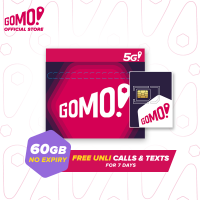
GOMO Prepaid SIM with 60GB No Expiry Data + UNLI Calls & Texts 7 Days
₱749.00
Buy on Lazada
GOMO Prepaid SIM with 7GB No Expiry Data + UNLI Calls & Texts 7 Days
₱149.00
Buy on Lazada
GOMO Prepaid SIM with 30GB No Expiry Data + UNLI Calls & Texts 7 Days
₱449.00
Buy on Lazada
GOMO Prepaid SIM with 15GB No Expiry Data + UNLI Calls & Texts 7 Days
₱249.00
Buy on Lazada
GOMO Prepaid SIM with UNLI Data + Calls & Texts 30 Days
₱999.00
Buy on Lazada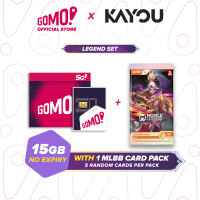
GOMO Prepaid SIM with 15GB No Expiry Data + UNLI Calls & Texts 7 Days with 1 pack of ML x KAYOU Photocard
₱299.00
Buy on LazadaAbout GOMO
Overview
GOMO (stylized in all caps) is a digital-first mobile telecommunications brand that provides prepaid services through a fully online experience. Originally launched by Singtel in Singapore in 2019, the concept has since expanded to several markets, including the Philippines, Thailand, Ireland, Switzerland, and Cyprus. While these services share the GoMo/GOMO name and a digital-only operational model, they are independently operated by different parent telecommunications companies in each respective country.1
GOMO was established to serve digitally connected consumers who prefer managing their mobile services entirely via a mobile app or website, eliminating the need for physical store visits or long-term contracts. The brand prioritizes simplicity, flexibility, and value, distinguishing itself from traditional operators by functioning as a digital-only sub-brand. It leverages the infrastructure of an established mobile network while maintaining distinct branding, pricing structures, and customer experiences.2
History
The inaugural GOMO service was introduced by Singtel in Singapore in March 2019 as an online-only SIM plan designed for younger, tech-savvy demographics. Its market success prompted similar digital brands under various telecommunications groups globally.
Currently, the GOMO name is utilized independently across multiple territories:
- Singapore – operated by Singtel
- Philippines – operated by Globe Telecom
- Thailand – operated by AIS (under Singtel’s regional partnership)
- Ireland – operated by Eir
- Switzerland – operated by Salt
- Cyprus – operated by Epic
Despite sharing common branding and a digital-first philosophy, these entities are not managed as a single global corporation.3
GOMO Philippines
In the Philippines, GOMO PH was officially launched in 2020 as the all-digital mobile brand of Globe Telecom. It operates on Globe’s nationwide mobile network while retaining its own unique identity and application ecosystem.
GOMO Philippines is distinguished by several key features:
- No Expiry Data: Allows users to retain unused mobile data indefinitely without expiration.
- ‘Mo Creds: A rewards system enabling customers to convert unused data into calls, texts, vouchers, and other digital services.
- eSIM Support: Full compatibility with eSIM technology alongside online account management.
- Digital Customer Support: Service assistance provided exclusively through the GOMO app and website.
- GOMO Fiber: An expansion into fixed broadband services, complementing its mobile offerings.45
The brand uses the slogan “We Don’t Stop. We GOMO!” in the Philippine market, promoting the concept of a “borderless” digital lifestyle.7
Business Model
GOMO employs a digital telecommunications model that minimizes physical retail overhead by relying on:
- Mobile applications
- Online sales channels
- Electronic payments
- Self-service account management
- Cloud-based customer support
This strategy reduces operational costs and enables customers to activate services, purchase data packages, monitor usage, and manage accounts entirely online.5
Products and Services
Service offerings vary between countries as each GOMO brand operates independently. Depending on the specific market, GOMO may offer:6
- Prepaid SIM cards
- eSIM activation
- Mobile voice and SMS
- High-speed mobile data
- Data roaming
- Unlimited or promotional data plans
- Rewards and loyalty programs
- Fixed broadband (selected markets)
Technology
GOMO does not typically construct its own mobile network infrastructure. Instead, it utilizes the existing network of its parent telecommunications company. In the Philippines, this is the Globe network. Other markets utilize their respective parent networks, such as Singtel in Singapore, Eir in Ireland, Salt in Switzerland, and Epic in Cyprus. This arrangement ensures GOMO customers access the same coverage and network technologies, including 4G LTE and 5G where available, as the parent operator’s postpaid subscribers.8
Target Market
GOMO primarily caters to users comfortable with purchasing and managing telecommunications services online. Its target demographic includes:9
- Young adults and students
- Digital natives
- Heavy mobile data users
- Freelancers and remote workers
- Customers seeking flexible, contract-free mobile plans