Shop on Lazada
Homecore products

Homecore | Green Sleeveless Summer New Style Trendy Slimming Dress
₱1,064.42₱1,619.83
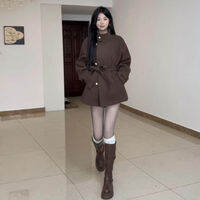
Homecore | Hepburn Style Vintage Brown Short Trench Coat
₱2,097.43₱3,269.73
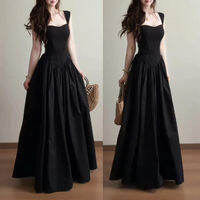
Homecore | French Elegant Black Fitted Waist Dress for Vacation Summer
₱1,459.34₱2,205.49
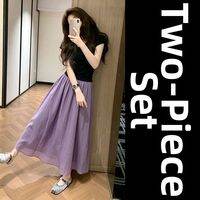
Homecore | Elegant Purple Slimming Summer Dress
₱1,906.40₱2,919.20

Homecore | Elegant Grey Waist Slimming Summer Dress
₱1,429.43₱2,468.27

Homecore | Elegant Slimming White Cake Dress Spring 1pc
₱1,313.40₱1,955.93

Homecore | Blue Puff Sleeves Floral Summer Vacation Style Long Dress
₱746.38₱1,010.11
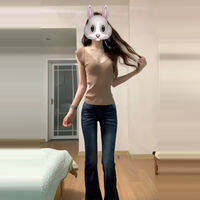
Homecore | Slim Fitting Waist Accentuating Unique Stylish T-Shirt
₱455.62₱621.86
About Homecore
Homecore is an independent French fashion label established in Paris in 1992 by Alexandre Guarneri. Originating within the nascent French hip-hop and streetwear scene, the company describes itself as France’s first hip-hop brand. Over three decades, Homecore has transitioned from a pioneering streetwear label to a contemporary clothing brand emphasizing understated design, comfort, craftsmanship, spirituality, and what it terms inner alignment.1
Basic information
| Brand | Homecore |
| Founded | 1992 |
| Founder / Creative figure | Alexandre Guarneri |
| Origin | Paris, France |
| Industry | Fashion / clothing |
| Original category | French hip-hop / streetwear |
| Current positioning | Contemporary, timeless, conscious fashion |
| Core influences | Hip-hop, tailoring, nature, spirituality, movement |
| Manufacturing | Primarily European, notably Portugal and Italy |
| Key philosophy | Peace, Love, Unity and Having Fun |
| Signature detail | Red line running along the back/spine of garments |
Origins
Homecore was founded in Paris in 1992, during a period when hip-hop culture was becoming integral to French youth identity. Rather than emerging as a conventional luxury or prêt-à-porter label, Homecore developed directly from the street and hip-hop movement.2 Its founding philosophy drew significant influence from Afrika Bambaataa and the Zulu Nation, specifically adhering to four principles: Peace, Love, Unity, and Having Fun. These concepts formed the brand’s conceptual foundation, with clothing initially conceived as a form of identity and communication connected to music, community, and street culture rather than mere fashion.3 This origin places Homecore within the early generation of French streetwear, predating the category’s eventual global dominance.
Alexandre Guarneri
Alexandre Guarneri serves as the founder and continuing creative force behind Homecore. His vision gradually expanded beyond conventional streetwear boundaries. As hip-hop became increasingly commercialized and its visual codes more stereotypical, Guarneri sought to create clothing that retained the freedom of street culture without being confined by streetwear conventions.4 This pursuit led to a significant transformation for the brand, moving from streetwear to refined everyday clothing, and ultimately to clothing as a philosophy of living. Guarneri’s approach incorporates concepts of body awareness, breathing, movement, balance, and meditation. He also developed a practice called Gumjo, which combines stretching, breathing, and meditation, reflecting the connection he draws between the body and the garments worn.5 Consequently, Homecore’s later identity is closely associated with Guarneri’s personal philosophy rather than seasonal fashion trends.
Evolution of Homecore
The development of Homecore can be understood through three distinct stages.
Early period: hip-hop streetwear
During the 1990s, Homecore was closely linked to the emerging French hip-hop scene. Its clothing functioned as part of a cultural movement, with brand values emphasizing community, positivity, and individual expression.6
Transitional period: moving beyond streetwear
As hip-hop and streetwear became increasingly commercial, Guarneri deliberately shifted Homecore away from stereotypical aesthetics. Instead of oversized, logo-heavy, or aggressively urban clothing, the brand explored a combination of streetwear practicality, traditional tailoring, comfortable silhouettes, understated colors, high-quality fabrics, functional details, and relaxed elegance. The objective was to occupy a space between streetwear and classic tailoring, avoiding both excessive trendiness and excessive formality.7
Contemporary period: inner alignment
In its current iteration, Homecore describes its philosophy in introspective terms. The brand presents clothing as something that should support the wearer rather than disguise them. Its contemporary identity centers on concepts such as balance, grounding, presence, freedom, and connection with nature,8 marking a significant departure from its original streetwear image.
Design philosophy
Homecore’s aesthetic is best understood as relaxed French tailoring with a streetwear origin and a philosophical dimension. The company avoids positioning itself at either extreme of traditional formalwear or conventional streetwear, describing its approach as a continual search for balance that is “neither too hype nor too classic.”9 Typical characteristics include relaxed but carefully constructed silhouettes, practical everyday clothing, subtle detailing, natural and muted colors alongside occasional strong accents, comfortable fabrics, understated branding, tailoring-inspired construction, layering, reversible garments, versatile trousers and jackets, and minimalist accessories. The resulting clothing can be worn casually while retaining structure and sophistication.
The red line
One of Homecore’s most recognizable design symbols is a red line running vertically along the back of certain garments. This element is not merely decorative branding; according to the company, it represents the spine or “column of energy” connecting heaven and earth, expressing the brand’s concept of grounding and physical awareness.10 This symbol reflects the brand’s evolution from external identity signaling common in streetwear to a focus on the body and inner awareness. Other symbolic details, such as leather cords positioned around the body’s center of gravity, similarly reflect Guarneri’s interest in the relationship between clothing and the body.11
Product range
Homecore currently operates as a lifestyle-oriented fashion label rather than a narrowly defined streetwear company. Its collections encompass men’s and women’s clothing, accessories, and lifestyle products.12
Men’s clothing
The men’s collection includes jackets and coats, reversible pieces, shirts, T-shirts, sweatshirts, trousers, shorts, denim, and underwear.
Women’s clothing
The women’s collection features jackets and coats, reversible pieces, shirts, T-shirts, tops, sweatshirts, trousers, skirts, and dresses.
Accessories and lifestyle
Homecore produces caps, socks, bandanas, sandals, underwear, leather goods, card holders, tote bags, and shoulder bags. The brand also sells lifestyle products such as olive oil and a Homecore book, reinforcing its positioning as a lifestyle brand rather than purely an apparel company.13
Materials and manufacturing
Manufacturing is central to Homecore’s contemporary identity. The company states it has worked with the same workshops in Portugal for over 25 years, prioritizing long-term relationships over constantly changing suppliers. Its production philosophy is summarized as “Do less, but do it better.” Homecore favors smaller, often family-run European workshops, particularly in Portugal and Italy, with an emphasis on craftsmanship and responsible production.14 The brand’s sustainability positioning relies on durability, smaller production runs, European manufacturing, and maintaining supplier relationships, embodying a philosophy of buying fewer items, making them better, and keeping them longer.
Sustainability and ethics
Homecore frames sustainability primarily as a matter of quality and responsible production. Rather than promoting a fast-fashion model based on rapid turnover and high volumes, it emphasizes longevity, quality over quantity, European production, smaller workshops, long-term supplier relationships, responsible material selection, and the reuse of existing fabrics where possible. The brand has explored deadstock and upcycled fabrics in collaborations; for example, its 2019 Studiocromie collaboration utilized dormant fabrics and incorporated hand-screen-printing in Italy.15 Consequently, Homecore is characterized as a slow or conscious fashion brand rather than a conventional streetwear company.
Relationship with French culture
Homecore’s cultural significance stems partly from its unique trajectory. Beginning in French hip-hop, it absorbed various aspects of French culture without remaining frozen in 1990s street aesthetics. Its evolution progressed from Parisian street culture to French hip-hop, then to tailoring and craftsmanship, contemporary minimalism, and finally nature, spirituality, and introspection. This path gives Homecore a distinctive position in French fashion, built around the intersection of street culture and French refinement rather than imitating American streetwear or traditional Parisian luxury.
Collaborations
Homecore has collaborated with artists, designers, and creative communities over the years. Examples include Philippe Baudelocque for a limited-edition capsule focused on creativity and harmony; Amaury Cagniard for contemporary eyewear made in France; Studiocromie and Angelo Milano for a project centered on deadstock and upcycled materials; Kourtrajmé, the French audiovisual collective with which Alexandre Guarneri has a longstanding relationship; and VEJA alongside other contemporary partners.16 These collaborations generally align with Homecore’s broader approach of art, craftsmanship, community, and independent creative culture rather than hype-driven partnerships.
Current aesthetic
Homecore’s current aesthetic is quiet, relaxed, tactile, and slightly spiritual. The brand avoids loud logos and overt status signaling, focusing instead on cut, fabric, color, movement, and small details. Recent collections feature relaxed trousers, shirts, jackets, knitwear, sweatshirts, and dresses in earthy, muted, and natural palettes, occasionally accented by brighter colors.17 The Fall/Winter 2025 collection, titled “Soul Odyssey,” explicitly connected the clothing to childhood, nature, simplicity, autonomy, openness, and a slower pace of life.18
Distinctive identity
Homecore occupies an unusual position in fashion because its identity has evolved without completely abandoning its original philosophy. While the original principles were Peace, Love, Unity, and Having Fun, the contemporary interpretation focuses on Balance, Presence, Connection, and Grounding. Although the vocabulary has shifted, the underlying idea remains that clothing should connect people rather than simply signal status.
Comparison with fashion categories
| Category | Homecore’s relationship |
|---|---|
| Streetwear | Its historical foundation |
| French fashion | Its cultural and aesthetic context |
| Tailoring | Influences construction and silhouettes |
| Minimalism | Influences its understated aesthetic |
| Workwear | Influences practicality and durability |
| Slow fashion | Reflected in its production philosophy |
| Luxury | Shares an emphasis on materials/craft, but avoids traditional luxury signaling |
| Lifestyle fashion | Increasingly central to its identity |
Describing Homecore simply as a streetwear brand is historically accurate but incomplete. A more comprehensive description identifies it as a Paris-born contemporary French fashion label that evolved from early hip-hop streetwear into a refined, understated wardrobe centered on comfort, craftsmanship, balance, and personal expression.
Brand philosophy
The core Homecore philosophy posits that clothing should help individuals feel more like themselves rather than transforming them into someone else. This explains the brand’s emphasis on presence, grounding, and inner alignment. Its current philosophy explicitly rejects fashion as a “social disguise,” presenting clothing instead as an extension of the individual.19
Place in fashion history
From a historical perspective, Homecore represents an early chapter of French streetwear history. Founded in 1992, it predates the massive global expansion of streetwear in the 2000s and 2010s. Its roots lie in hip-hop culture and the streets of Paris rather than luxury collaborations or internet-driven hype.20 Its subsequent evolution illustrates how a streetwear brand can mature without becoming a luxury label, choosing instead a path from street culture to adulthood, refinement, and philosophy.
Current identity
As of 2026, Homecore presents itself as an established independent French label with a history spanning more than three decades. Its website offers men’s and women’s collections, accessories, lifestyle products, editorial content, guides, and collaborations, while continuing to place Alexandre Guarneri and the brand’s original philosophy at the center of its identity.21 Its current message emphasizes avoiding trends, making good clothes, staying connected to the body, respecting makers, and remaining grounded. This combination of 1990s French hip-hop heritage, contemporary tailoring, conscious production, and spirituality distinguishes Homecore in the modern fashion landscape.
References
- HOMECORE – NOTRE HISTOIRE
- ALEXANDRE GUARNERI – HOMECORE
- HOMECORE
- Collections
- Production éthique & responsable | Homecore
- Our Friends
- Homecore Official Website
- LOOKBOOKSS26
- LOOKBOOK FALL WINTER 25
- Homecore Official Website
- Journal – Welcome to Homecore – c r i s
- Plongée Dans Les Débuts Du Streetwear En France Avec Le Fondateur De Sa Toute Première Marque, Homecore | Hypebeast
- HOMECORE – NOTRE HISTOIRE
- ALEXANDRE GUARNERI – HOMECORE
- Homecore Official Website
- Homecore Site Officiel
- Collections
- LOOKBOOK SS25
- Collections
- Hug
- ホームコア : HOMECORE – ファッションプレス