Shop on Lazada
Huy Fong Foods products
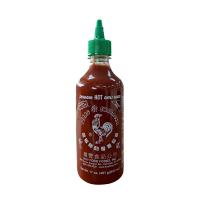
Huy Fong Sriracha Hot Chili Sauce 17oz (481g)
₱337.50₱375.00
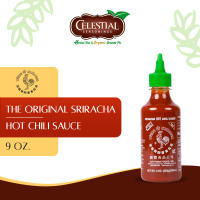
HUY FONG Sriracha Hot Chili Sauce 9oz
₱256.00
Buy on Lazada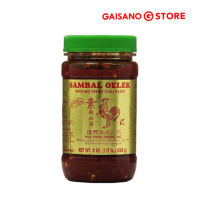
SAMBAL OELEK Ground Fresh Chili Paste 226g
₱170.00
Buy on Lazada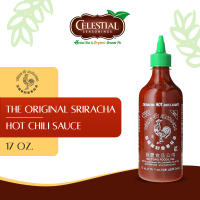
HUY FONG Sriracha Hot Chili Sauce 17oz
₱432.00
Buy on Lazada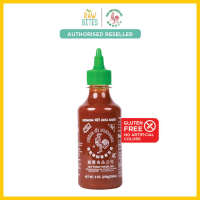
Huy Fong Sriracha Hot Chili Sauce 9oz / 229ml (No Artificial Colors Gluten Free)
₱319.00
Buy on Lazada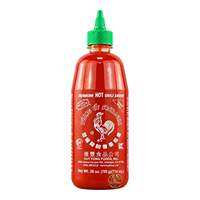
Huy Fong Tuong Ot Sriracha Hot Chili Sauce 714mL/433ml
₱599.00
Buy on Lazada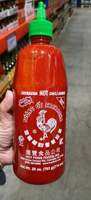
Huy Fong Sriracha Hot Chili Sauce 28oz
₱559.00
Buy on Lazada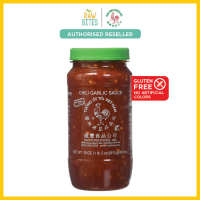
Huy Fong Chili Garlic Sauce 18oz / 460ml (No Artificial Colors Gluten Free)
₱619.00
Buy on LazadaAbout Huy Fong Foods
Huy Fong Foods, Inc. is an American food manufacturer best known for producing Sriracha Hot Chili Sauce, a bright-red chilli sauce sold in a clear bottle with a green cap and a white rooster on the label. The company was founded in 1980 by David Tran, a Vietnamese refugee and entrepreneur, in Los Angeles, California.1 Although it remains a relatively small, privately held firm compared to major multinational food conglomerates, its Sriracha brand has become one of the most recognisable hot-sauce products in the United States and has developed a substantial international following.2
Quick facts
| Category | Information |
|---|---|
| Company | Huy Fong Foods, Inc. |
| Founded | 1980 |
| Founder | David Tran |
| Headquarters / Major Facility | Irwindale, California, United States |
| Industry | Food & beverages / condiments |
| Best-known Product | Sriracha Hot Chili Sauce |
| Other Major Products | Chili Garlic Sauce, Sambal Oelek |
| Famous Logo | Rooster |
| Ownership | Privately held; founded and owned by the Tran family |
| Founder’s Nationality/Background | Vietnamese immigrant to the United States |
| Major Brand Nickname | “Rooster Sauce” |
| Official Website | huyfong.com |
Origins
The history of Huy Fong Foods begins with David Tran, who was born in Vietnam in 1945. Before emigrating to the United States, Tran had already cultivated an interest in making chilli sauces. In the mid-1970s, he began producing and selling his own chilli sauce in Vietnam. This early operation was modest; peppers were processed on a small scale, and the sauce was packaged in reused glass baby-food jars.
Following the Vietnam War, Tran and his family left the country. In 1979, he travelled by freighter to Hong Kong and subsequently immigrated to the United States. The vessel that carried him was named Huy Fong, which later provided the name for his company.
Founding in Los Angeles
Upon arriving in Southern California, Tran observed a large Vietnamese and broader Asian immigrant population but believed there was a shortage of affordable hot sauces suited to their cuisine. He established Huy Fong Foods in February 1980 in Los Angeles’s Chinatown.5 Initially, the enterprise was tiny; Tran reportedly produced the sauce himself and sold it directly to Asian restaurants and markets, often making deliveries personally from a van.2 The company’s first facility occupied only a few thousand square feet, and early growth occurred largely through word of mouth rather than conventional advertising.
The Sriracha story
Huy Fong’s defining product is its Sriracha Hot Chili Sauce. While the term sriracha derives from Si Racha, a coastal city in Thailand, and the broader style of sauce has Thai origins, Huy Fong’s version is a distinct American-made interpretation.
Tran’s formulation uses a relatively simple ingredient profile consisting of:
- Red chilli peppers
- Sugar
- Salt
- Garlic
- Distilled vinegar
This basic recipe has remained remarkably consistent over the decades.2 The resulting sauce differs from many traditional Thai sriracha varieties; Huy Fong’s version is relatively thick, sweet, garlicky, and moderately hot, rather than extremely fiery. Its distinctive flavour and texture eventually made it popular far beyond the Vietnamese-American community for which it was originally intended.
Why is it called “Rooster Sauce”?
One of the most recognisable aspects of Huy Fong Sriracha is the white rooster printed on the bottle. The choice of emblem is personal: David Tran was born in 1945, the Year of the Rooster in the Chinese zodiac. Consequently, the rooster became the company’s symbol.3 This led to one of the sauce’s most famous unofficial names, “Rooster Sauce,” and the image has become as recognisable as the word Sriracha itself.
The green cap
The bottle’s green cap is another integral part of its visual identity. Tran has explained that the colour represents the stem of a fresh chilli pepper.3 Together, the green cap, clear bottle, red sauce, and white rooster create a highly distinctive package.
Growth of the company
Huy Fong Foods expanded gradually rather than pursuing the rapid acquisition strategy common among large food corporations. The company moved from its original Chinatown operation to Rosemead, California, in 1987, eventually operating from substantially larger facilities.4 By the 2000s, demand for Sriracha had grown enormously.
In 2010, Huy Fong began construction of a major new facility in Irwindale, California. The factory was reported to be approximately 650,000–655,000 square feet, representing a dramatic expansion of the company’s manufacturing capacity. The Irwindale facility subsequently became the symbolic home of the Sriracha brand.
Business philosophy
Huy Fong developed an unusual business philosophy for a modern food company, characterised by several key tenets.
Minimal traditional advertising
The company achieved fame without relying on the massive advertising campaigns typically associated with major consumer-food brands. David Tran has historically emphasised making the product available at a reasonable price rather than spending heavily on marketing.5 This approach helped give Sriracha an almost cult-brand reputation.
Deliberately limited product portfolio
Rather than transforming Huy Fong into a vast condiment conglomerate, Tran concentrated on a small number of chilli products. The company’s major offerings include:
- Sriracha Hot Chili Sauce
- Chili Garlic Sauce
- Sambal Oelek
This focus has been central to the company’s identity.
Consistency
For decades, Huy Fong’s Sriracha has maintained a highly recognisable flavour profile. Consumers generally expect a specific combination of garlic, sweetness, acidity, moderate heat, and thick texture. This consistency is one reason the sauce functions effectively as both a traditional Asian condiment and a general-purpose American hot sauce.
The three famous sauces
Sriracha Hot Chili Sauce
This is Huy Fong’s flagship product. It is the famous red sauce featuring the rooster logo and green cap. It serves various culinary purposes, including use as a dipping sauce, cooking ingredient, sandwich condiment, noodle topping, or component in other sauces. It is often referred to specifically as “Huy Fong Sriracha” to distinguish it from other sauces sold under the generic Sriracha name.
Chili Garlic Sauce
Huy Fong’s Chili Garlic Sauce is thicker and more textured than its Sriracha. It contains visible pieces of chilli and garlic and is popular as both a condiment and a cooking ingredient.
Sambal Oelek
Sambal Oelek is a chilli paste rather than a smooth, sweet-and-garlicky sauce. It is particularly useful in cooking because it provides chilli flavour and heat without dramatically altering the character of a dish.
Manufacturing and supply chain
A critical aspect of Huy Fong’s manufacturing process is its use of fresh red jalapeño peppers. Historically, the company maintained an unusually close relationship with its pepper supplier. Factory materials have described the use of fresh red jalapeño hybrid peppers, with large quantities received during a relatively short annual processing season.4
For many years, the company worked closely with Underwood Ranches, a California grower that supplied its peppers. However, this relationship eventually became the subject of significant controversy.
The Underwood Ranches dispute
Huy Fong Foods and Underwood Ranches had a long-standing supplier relationship that broke down in the mid-2010s. The two companies became embroiled in a major legal dispute concerning their business arrangement and pepper supply. In 2019, a California jury largely sided with Underwood Ranches, finding Huy Fong liable on claims including breach of contract and fraud. Underwood was awarded approximately $23.3 million in damages.1 This dispute forced Huy Fong to develop new sources for the peppers required for its sauces.
Sriracha shortages
Perhaps the most significant challenge Huy Fong has faced in the 2020s has been pepper supply. The company temporarily halted Sriracha production in 2022, citing a severe shortage and poor quality of chilli peppers associated with drought conditions in Mexico. Although production later resumed, the company reported another major inventory shortage in 2023.1 These shortages resulted in Sriracha becoming difficult to find, with bottles sometimes resold at dramatically inflated prices.
In 2024, Huy Fong again announced a production suspension related to chilli sourcing, with production not expected to resume until at least September of that year.1 This situation highlighted a key feature of Huy Fong’s business model: because its signature flavour depends heavily on a particular type and quality of fresh pepper, replacing the supply is not as simple as purchasing generic chilli puree from an alternative vendor.
The Irwindale factory controversy
Huy Fong’s enormous factory in Irwindale also became a source of controversy. During the chilli-processing season, grinding and processing large quantities of fresh peppers produced a powerful odour. Nearby residents complained about the smell and associated irritation.
In 2013–2014, the City of Irwindale took legal action against Huy Fong, characterising the factory as a public nuisance. The controversy attracted national media attention due to the humorous contrast between an extremely popular hot sauce and a town attempting to manage its smell.3 The dispute was eventually resolved without the factory being permanently shut down, though the incident helped turn the Sriracha factory into a cultural curiosity.
Brand identity
Huy Fong’s branding is notably simple. The classic Sriracha bottle features:
- A clear plastic bottle
- Bright-red sauce
- A green cap
- A white rooster
- Red and green typography
- Text in multiple languages
The packaging has changed relatively little over the decades, contributing to its instant recognisability. Indeed, the packaging has become so iconic that consumers can often identify the product without seeing the words “Huy Fong Foods.”
Cultural impact and market influence
Huy Fong played a major role in transforming Sriracha from a niche Asian condiment into a mainstream American ingredient. By the 2010s, Sriracha was appearing in burgers, fries, pizza, sushi, noodles, eggs, cocktails, mayonnaise, potato chips, fast-food products, packaged snacks, and restaurant sauces. The term “Sriracha” itself entered the mainstream American food vocabulary.
Importantly, Huy Fong did not invent Sriracha as a culinary concept. Rather, Tran created a distinctive version of the sauce and helped popularise that style on an enormous scale in the United States.2 The product’s trajectory—from Vietnam to a Thai-inspired sauce, to Los Angeles immigrant entrepreneurship, to American food culture, and finally to global condiment—exemplifies Asian-American food culture influencing mainstream cuisine.
It should be noted that Huy Fong does not own the word “Sriracha.” The term refers to a broader style of chilli sauce historically associated with Si Racha, Thailand, and many companies produce sriracha sauces. However, in popular culture, the words “Sriracha” and “Huy Fong” became strongly associated because Huy Fong’s version achieved such market dominance.
Ownership and corporate structure
Huy Fong has remained a privately held, family-oriented business rather than becoming a publicly traded corporation or being acquired by a multinational food giant. David Tran has reportedly rejected offers to sell the company or accept outside investment, maintaining a philosophy that emphasises control over the product and business.5 His children, William and Yassie Tran, have worked within the company and have been identified as potential successors to the family business.2
This ownership structure makes Huy Fong unusual in the modern packaged-food industry: one of America’s best-known condiment brands grew into a major business while retaining its founder’s family ownership. Detailed financial information is not publicly disclosed, but Forbes described David Tran and his family as billionaires in 2023 based on the estimated value of their ownership of Huy Fong Foods.2
Timeline
- 1945 — David Tran is born in Vietnam, in the Year of the Rooster.
- 1975 — Tran begins making chilli sauce in Vietnam.
- 1978–1979 — Tran and his family leave Vietnam; Tran eventually reaches the United States.
- 1980 — Tran establishes Huy Fong Foods in Los Angeles.5
- 1987 — Huy Fong moves to a larger facility in Rosemead.4
- 1990s–2000s — Sriracha grows from an Asian-American specialty product into a broader American condiment.
- 2010 — Huy Fong begins construction of its major Irwindale factory.
- 2013–2014 — The Irwindale factory becomes the centre of an odour/public-nuisance controversy.3
- 2016 — The long-term relationship with Underwood Ranches ends.
- 2019 — A jury largely rules in favour of Underwood Ranches in the resulting legal dispute.1
- 2022 — Huy Fong temporarily stops Sriracha production amid a major chilli shortage.1
- 2023 — The company reports another serious inventory shortage.1
- 2024 — Another production suspension is announced amid continuing chilli-sourcing problems.1
- 2026 — Huy Fong remains a privately held, family-controlled condiment company best known worldwide for its Sriracha.