Shop on Lazada
Jeans Fritz products
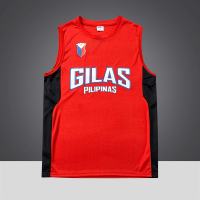
Jeans Fritz Gilas Pilipinas Basketball Jersey Philippines National Team Sleeveless Vest Breathable Sports & Casual Tank Top
₱459.00₱520.00
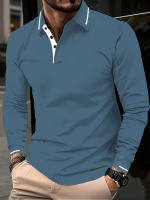
Jeans Fritz Brown Beige Contrast Trim Long Sleeve Polo Shirt For Men Regular Fit Breathable Casual Autumn Top COD Fast Delivery
₱489.00₱638.00
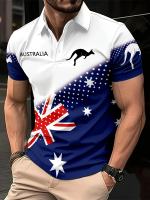
Jeans Fritz Australia Flag Kangaroo Printed Polo Shirt For Men Short Sleeve Regular Fit Breathable Casual Summer Top COD Fast Delivery
₱489.00₱638.00
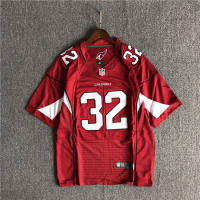
Jeans Fritz Arizona Cardinals #32 NFL Football Jersey Dri Fit Breathable Sports T-Shirt for Men
₱459.00₱520.00
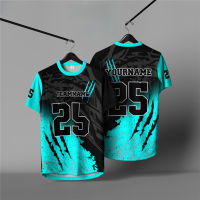
Jeans Fritz Charlotte Hornets #1 Basketball Jersey Orange & Yellow Gradient Sleeveless Vest Sports & Streetwear Tank Top
₱459.00₱520.00
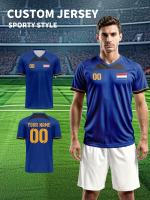
Jeans Fritz Custom 3D Print Orange Netherlands Flag Soccer Jersey Sporty Style Football Shirt for Men Women Training Match with Fast Delivery Cod Free Shipping High Quality Breathable Eco Friendly Soft Touch
₱459.00₱520.00
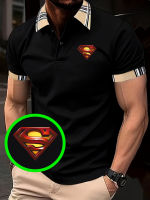
Jeans Fritz Superman Embroidered Contrast Cuff Polo Shirt For Men Short Sleeve Regular Fit Breathable Casual Superhero Top COD Fast Delivery
₱489.00₱638.00
Jeans Fritz Boston Celtics #0 Basketball Jersey 3D Printed Green Crystal & Splash Graphic Sleeveless Vest Sports & Streetwear Tank Top
₱459.00₱520.00
About Jeans Fritz
Overview
Jeans Fritz, legally registered as JEANS FRITZ Handelsgesellschaft für Mode mbH, is a German fashion retail company specializing in jeans, denim, and casualwear. Headquartered in Hüllhorst, North Rhine-Westphalia, the company operates primarily through physical stores supplemented by an online shop. Jeans Fritz positions itself in the mid-price segment, emphasizing accessible fashion, a wide range of fits and sizes, and personalized customer service.1
| Category | Information |
|---|---|
| Company name | JEANS FRITZ Handelsgesellschaft für Mode mbH |
| Brand | JEANS FRITZ |
| Industry | Fashion / apparel retail |
| Core products | Jeans, denim, casualwear, accessories |
| Founded | 1971 (original business); present company established after 1996/97 restructuring |
| Headquarters | Hüllhorst, North Rhine-Westphalia, Germany |
| Market positioning | Mid-price / value-oriented |
| Main markets | Germany and Switzerland |
| Stores | More than 350; corporate materials describe nearly 400 locations across Germany and Switzerland |
| Employees | More than 1,800 |
| Online retail | Yes |
| Own labels | Multiblu, Tom Tompson, TOM |
| Current managing directors | Ernst Schäfer, Thorsten Fritze, Thorsten Heinrichsmeier |
Corporate communications describe the network as comprising nearly 400 stores in Germany and Switzerland, while other current company pages cite a more conservative figure of over 360. This discrepancy reflects different update cycles for corporate materials rather than distinct business entities.1
History
Origins: 1971
The history of Jeans Fritz dates to 1971, when Viktor Fritz opened a clothing store in Bielefeld. The business developed as a family-run retailer and became particularly associated with affordable denim aimed at younger consumers during the 1970s.2 During this period, the company expanded considerably and established itself as a significant German retailer of jeans and denim fashion.
Expansion during the 1970s and 1980s
Jeans Fritz grew from a relatively small jeans retailer into a sizeable chain. Its historical identity was strongly connected with affordable jeans, making denim fashion accessible to a broad consumer base. The chain subsequently expanded its physical store network across Germany. Historical references indicate that some locations operated under names such as Jeans-Center Fritz.3
Financial crisis and restructuring: 1996–1997
A major turning point occurred in 1996 when the companies comprising the Jeans-Fritz group filed for insolvency. At that time, the group reportedly operated approximately 260 stores and employed around 1,200 people.2 Following negotiations with potential buyers, the business was reorganized through a management buyout led by Ernst Schäfer and Hans-Joachim Kühn in 1997. The current JEANS FRITZ Handelsgesellschaft für Mode mbH dates from this restructuring period.2 Consequently, 1971 marks the historical origin of the retail business, whereas 1997 marks the beginning of the present corporate structure.
Repositioning in the late 1990s and 2000s
Following restructuring, Jeans Fritz shifted toward a broader mid-market casual-fashion concept rather than concentrating almost exclusively on inexpensive jeans. By 1999, the reorganized company operated approximately 200 stores and generated around DM 170 million in sales. In 2001, headquarters moved to Tengern in Hüllhorst, where the company remains based today.2
The strategy combined jeans and denim as the core category with everyday casual clothing, fashion basics, seasonal trends, accessories, and affordable prices. This combination became the foundation of the modern Jeans Fritz concept.
Expansion and digital retail
By 2009, the company had grown to more than 250 stores and approximately 1,200 employees, demonstrating a significant recovery from the insolvency period.2 Jeans Fritz subsequently expanded into e-commerce, launching its own online shop in 2011.2 The company now operates a combination of physical retail and online shopping, allowing customers to move between channels. Its website promotes services such as delivery to stores, where customers can try products on before completing a purchase.4
Business model
Jeans Fritz is primarily a specialist fashion retailer rather than a luxury fashion house or pure denim manufacturer. Its business model revolves around selling clothing directly to consumers through its own stores and online channels. The company’s positioning is defined as affordable, fashionable everyday clothing with jeans at the center.1
Target customers are broadly women and men interested in fashion and appearance who value personal service and a reasonable price-to-performance ratio. Unlike premium denim brands that emphasize heritage, craftsmanship, or designer status, Jeans Fritz competes on accessibility, price, variety, convenience, store coverage, frequent product updates, and customer service.
Product range
Although the name emphasizes jeans, Jeans Fritz is not exclusively a jeans retailer. The current assortment includes both women’s and men’s clothing, with denim remaining the central category. The company states that its collections are updated weekly.4
Women’s fashion
Women’s products include:
- Jeans
- Trousers
- Dresses
- Skirts
- Shirts
- Blouses
- Knitwear
- Jackets
- Coats
- Denim jackets
- Blazers
- Sweatshirts
- Seasonal fashion
Men’s fashion
The men’s assortment centers around:
- Jeans
- Trousers
- Shirts
- T-shirts
- Sweatshirts
- Knitwear
- Jackets
- Coats
- Casualwear
Accessories
The assortment is supplemented by accessories such as:
- Belts
- Bags
- Scarves
- Hats and caps
- Socks
- Other seasonal accessories
The online store currently divides jeans into styles including bootcut, ankle, straight, and slim, illustrating an emphasis on multiple fits rather than a single denim silhouette.4
Private labels
A significant part of the Jeans Fritz business is its own-brand merchandise. Current corporate materials identify three principal labels:1
Multiblu
Multiblu is primarily associated with the women’s assortment. Jeans and everyday women’s fashion are central to the label.1
Tom Tompson
Tom Tompson is positioned within the men’s range, with jeans and casual fashion forming its core.
TOM
TOM is another men’s-oriented own label used by Jeans Fritz.
The company emphasizes that these labels combine quality standards with affordable pricing.1 Older sources also mention a fourth label, For Friends. However, current corporate information highlights Multiblu, Tom Tompson, and TOM, suggesting For Friends is part of the historical rather than current core-label lineup.2
Brand positioning
Jeans Fritz occupies a distinctive position in the German clothing market. It is neither a luxury brand like HUGO BOSS nor primarily a sportswear brand, but rather sits within the mass-market and mid-price casual-fashion sector. Its competitive proposition is based on the combination of denim expertise, casual fashion, affordable prices, and extensive physical retail. The company describes itself as a firmly established player in the mid-price segment after more than five decades in the clothing business.1
Retail network
One of the most important assets of Jeans Fritz is its large physical store network. The company currently states it has nearly 400 company-owned stores in Germany and Switzerland, although another current page cites more than 360.1
In Germany, stores operate under the JEANS FRITZ name. In Switzerland, the company operates under a separate retail concept called BLACKOUT. Thus, Jeans Fritz is part of a wider retail organization with two consumer-facing concepts:1
- JEANS FRITZ — Germany
- BLACKOUT — Switzerland
The company seeks locations in city centers, shopping centers, and retail parks, reflecting a strategy focused on broad physical accessibility.1
Store concept
The modern Jeans Fritz store is designed around straightforward, accessible shopping rather than an exclusive boutique experience. The company emphasizes spacious sales areas, large fitting rooms, clear product presentation, easy navigation, modern interiors, and personalized customer assistance. This corresponds to its target demographic of shoppers looking for practical everyday fashion alongside current styles and personal service.1
Customer service
Customer service is a central part of the brand’s identity. Jeans Fritz employs more than 1,800 people, including trained retail staff who provide individual advice. The company also operates a system allowing customers to order items when a desired product is unavailable in a specific store.1 This service focus distinguishes Jeans Fritz from increasingly digital fashion retailers, using stores as part of the overall shopping and service experience rather than merely as product display spaces.
E-commerce and omnichannel retail
Jeans Fritz has operated its own online shop since 2011.2 Today, the company combines online and offline channels, allowing customers to shop online while utilizing store-based services. The website offers women’s and men’s fashion, denim, accessories, sales categories, and seasonal collections.4
This creates an omnichannel model linking physical stores, the online shop, store delivery, and in-store fitting. This approach is particularly relevant for jeans, as fit, size, and wash can be difficult to judge online.
Sustainability
Sustainability has become increasingly important in the corporate positioning of Jeans Fritz. The company states that sustainability is becoming more relevant in collection development and that it is working toward more responsible resource use across the organization.1 However, it is necessary to distinguish between sustainability as a stated corporate priority and independently verified performance. While public materials establish sustainability as part of the strategy, they do not automatically indicate that Jeans Fritz is among the industry’s leading sustainable-fashion companies.
Corporate structure and management
The legal entity is JEANS FRITZ Handelsgesellschaft für Mode mbH. Its registered headquarters are located at Tengerner Straße 143, 32609 Hüllhorst, Germany.4
The current managing directors listed in the company’s legal notice are:4
- Ernst Schäfer
- Thorsten Fritze
- Thorsten Heinrichsmeier
According to the corporate profile, Schäfer has been part of the management since the post-insolvency restructuring in 1997, while Fritze and Heinrichsmeier joined the three-person management team on January 1, 2022.1
Employees and scale
Jeans Fritz describes itself as a substantial German fashion retailer. Current corporate information reports:1
- More than 1,800 employees
- More than 350 stores, with other materials describing nearly 400 locations across Germany and Switzerland
- More than 70 trainees/apprentices in one current presentation
- Headquarters and logistics/administrative operations in Hüllhorst
Variations in store and employee figures between company pages appear to result from updates made at different times.
Geographic presence
The primary market for Jeans Fritz is Germany, where the brand maintains a nationwide store network. The organization also has a significant presence in Switzerland, operating under the BLACKOUT brand rather than Jeans Fritz.1 Consequently, Jeans Fritz is primarily a German-speaking European retail business rather than a globally distributed fashion label.
Brand identity
The essence of Jeans Fritz can be described as democratic casual fashion. The brand does not primarily sell exclusivity or status but aims to make current clothing styles accessible to ordinary consumers at moderate prices. Its identity rests on several themes:1
- Jeans as the core product — Denim remains the brand’s strongest area.
- Everyday fashion — Products are intended for regular, practical wear.
- Affordable pricing — The company explicitly operates in the mid-price segment.
- Frequent assortment changes — Collections are updated weekly.
- Personal service — Store employees play an important role.
- Large physical network — Stores provide strong local visibility.
- Private labels — Much of the assortment is developed around own brands.
Historical significance
The most notable aspect of the Jeans Fritz history is its recovery from insolvency. The company has effectively gone through two major phases:2
- 1971–1996: A rapidly expanding family-associated German jeans retailer that built its reputation around affordable denim.
- 1997–present: A reorganized fashion retailer that retained the Jeans Fritz identity while broadening its proposition into mid-priced denim and casualwear.
The post-1997 company therefore represents both a continuation of a historic German retail name and a restructured business model.