Shop on Lazada
Johnson & Johnson products
CGM Johnson & Johnson Curl Defining Shampoo and Conditioner for Curly Kids
₱958.00
Buy on Lazada
Combantrin Tablets 125mg : for deworming
₱5,846.00₱6,153.00

Johnson’s Blossoms Baby Powder 500g
₱349.00
Buy on Lazada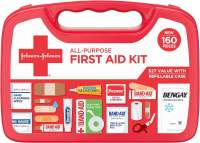
Johnson & Johnson All-Purpose First Aid Kit 160 Pieces
₱2,875.00
Buy on Lazada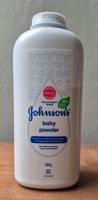
JOHNSONS BABY POWDER CLASSIC WHITE (20010050G)
₱440.00₱441.00

BAND-AID ADHESIVE BANDAGE (SOLD PER BOX)
₱99.00
Buy on Lazada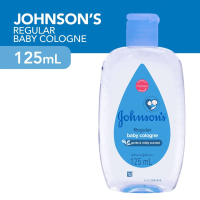
JOHNSONS N JOHNSONS Baby Cologne 125ml
₱158.00₱200.00
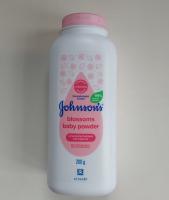
Johnsons Blossom Scented Baby Powder – Soft & Gentle on Delicate Skin | 25g / 50g / 100g / 200g
₱219.00₱220.00
About Johnson & Johnson
Johnson & Johnson (J&J) is an American multinational healthcare corporation headquartered in New Brunswick, New Jersey. Established in 1886 by brothers Robert Wood Johnson, James Wood Johnson, and Edward Mead Johnson, the firm originally manufactured sterile surgical dressings and has since evolved into one of the largest healthcare enterprises globally.1 Today, Johnson & Johnson operates primarily as a pharmaceutical and medical-technology company structured around two main business segments: Innovative Medicine and MedTech. Its former consumer-health division was spun off into the independent publicly traded company Kenvue in 2023.2 The 2025 annual report indicates that J&J employed approximately 138,200 people worldwide and achieved segment sales of $94.193 billion, comprising $60.401 billion from Innovative Medicine and $33.792 billion from MedTech.3
Quick facts
| Category | Information |
|---|---|
| Full name | Johnson & Johnson |
| Common abbreviation | J&J / JNJ |
| Founded | 1886 |
| Founders | Robert Wood Johnson, James Wood Johnson, Edward Mead Johnson |
| Headquarters | New Brunswick, New Jersey, United States |
| Industry | Healthcare, pharmaceuticals, medical technology |
| Stock ticker | JNJ |
| Exchange | New York Stock Exchange |
| Current CEO & Chairman | Joaquin Duato |
| Employees | Approximately 138,200 worldwide in 2025 |
| Current major segments | Innovative Medicine; MedTech |
| 2025 sales | Approximately $94.2 billion |
| 2026 position | Targeting more than $100 billion in annual revenue |
History
Founding in 1886
Johnson & Johnson was established in 1886 in New Brunswick, New Jersey, by three brothers:
- Robert Wood Johnson
- James Wood Johnson
- Edward Mead Johnson
The founders had previously worked at Seabury & Johnson, a medical products firm. They sought to establish a company dedicated to producing mass-produced sterile surgical supplies in response to the increasing acceptance of antiseptic surgery.4 The company’s first factory commenced operations with just 14 employees — eight women and six men.5 The division of responsibilities among the brothers was critical to early development: Robert served as the principal business leader, James managed engineering and manufacturing, and Edward oversaw sales and marketing.6
Early medical innovation
A significant early achievement for J&J was the production of sterile, absorbent cotton for medical use. At the time, raw cotton often contained dirt, plant material, and natural oils that rendered it unsuitable for clean surgical dressings. J&J developed processing methods to transform cotton into an appropriate medical material. In 1888, the company published Modern Methods of Antiseptic Wound Treatment, which helped disseminate knowledge regarding antiseptic surgical practices. During this same period, J&J introduced some of the first commercially produced first-aid kits, initially targeting railroad workers. These early initiatives established a longstanding corporate pattern of combining medical science, manufacturing, and consumer education.
Expansion into a global healthcare company
Throughout the late 19th and 20th centuries, Johnson & Johnson expanded significantly beyond its original surgical-dressing business. The company entered diverse sectors including:
- Pharmaceuticals
- Surgical products
- Orthopaedics
- Medical devices
- Wound care
- Consumer healthcare
- Diagnostics
- Biotechnology
Growth through acquisitions played a pivotal role in this expansion. For instance, DePuy, an orthopaedic company founded in 1895, became part of Johnson & Johnson in 1998, substantially strengthening its orthopaedic-medical-device portfolio.7 Over time, J&J developed a comprehensive portfolio spanning both professional healthcare and consumer products.
The consumer-health era and separation
For much of the 20th and early 21st centuries, Johnson & Johnson was widely recognised by consumers through brands such as Johnson’s Baby, TYLENOL, BAND-AID Brand, NEUTROGENA, AVEENO, LISTERINE, MOTRIN, ZYRTEC, ROGAINE, and NEOSPORIN. However, these brands are no longer part of Johnson & Johnson’s corporate structure. The company separated its Consumer Health business into Kenvue, which became an independent publicly traded entity in 2023.8 This separation allows Johnson & Johnson to focus exclusively on two areas: Innovative Medicine (prescription medicines and pharmaceutical research) and MedTech (medical devices and technologies for healthcare professionals). J&J explicitly states that it does not sell consumer products or over-the-counter medicines anymore; those businesses now belong to Kenvue.9 Consequently, the modern Johnson & Johnson differs substantially from the consumer-facing company remembered from previous decades.
Business structure today
Innovative Medicine
Innovative Medicine serves as J&J’s pharmaceutical arm, researching, developing, and commercialising prescription medicines across major therapeutic areas including:
- Oncology
- Immunology
- Neuroscience
- Cardiovascular disease
- Pulmonary hypertension
- Infectious diseases
- Metabolic disease
The company distributes medicines through healthcare professionals, hospitals, wholesalers, distributors, and other healthcare channels.10 Key modern pharmaceutical products include:
- DARZALEX — oncology
- ERLEADA — oncology
- CARVYKTI — cancer cell therapy
- TREMFYA — immunology
- STELARA — immunology
- SPRAVATO — neuroscience
Innovative Medicine generated $60.4 billion in 2025 sales, exceeding $60 billion for the first time.
MedTech
The second major division, MedTech, develops physical medical technologies and devices used by healthcare professionals. Its principal areas include:
- Surgery: Products and technologies used during surgical procedures.
- Orthopaedics: Products for joint replacement, trauma, and musculoskeletal procedures.
- Cardiovascular: Technologies for treating cardiovascular and circulatory conditions.
- Vision: Products and technologies for eye care and ophthalmic procedures.
The MedTech portfolio encompasses technologies associated with DePuy Synthes, Ethicon, Biosense Webster, Abiomed, and Shockwave Medical.11 In 2025, MedTech generated approximately $33.8 billion in sales.12
Major brands and businesses
It is necessary to distinguish between current Johnson & Johnson corporate businesses and brands that merely carry the Johnson name or were historically associated with J&J.
Major current J&J healthcare franchises
| Area | Examples |
|---|---|
| Oncology | DARZALEX, ERLEADA, CARVYKTI |
| Immunology | TREMFYA, STELARA |
| Neuroscience | SPRAVATO |
| Cardiovascular | Abiomed, Shockwave |
| Surgery | Ethicon |
| Orthopaedics | DePuy Synthes |
| Electrophysiology | Biosense Webster |
| Vision | J&J Vision |
J&J reported that DARZALEX became its first brand to exceed $3 billion in quarterly sales, identifying DARZALEX, SPRAVATO, ERLEADA, CARVYKTI, and TREMFYA as major growth drivers.13
Financial scale
Johnson & Johnson remains one of the world’s largest healthcare companies. For 2025, the company reported:
- Innovative Medicine sales: $60.401 billion
- MedTech sales: $33.792 billion
- Combined segment sales: $94.193 billion
- Worldwide income before tax: $32.581 billion
- Employees: approximately 138,20014
In Q2 2026, J&J reported quarterly sales of $25.31 billion, representing a 6.6% increase from the comparable quarter of 2025. The company raised its 2026 outlook, stating it was on track to exceed $100 billion in annual revenue for the first time.15
Leadership
The current Chairman and CEO is Joaquin Duato. Duato assumed the role of CEO in January 2022 and Chairman in January 2023. Having spent nearly four decades with Johnson & Johnson, he has worked across various geographical regions and business areas.16 His strategy has increasingly concentrated J&J on six major growth areas:
- Oncology
- Immunology
- Neuroscience
- Cardiovascular
- Surgery
- Vision17
Corporate philosophy — “Our Credo”
One of Johnson & Johnson’s most defining corporate features is Our Credo. Written in 1943 by Robert Wood Johnson, decades after the company’s founding, the document outlines responsibilities toward:
- Patients and consumers
- Doctors and healthcare professionals
- Employees
- Communities
- Shareholders
The central tenet is that the company holds responsibilities beyond profit generation. J&J describes Our Credo as its moral compass, guiding corporate governance since 1943.18 This philosophy remains integral to the Johnson & Johnson corporate identity.
Brand identity
The name Johnson & Johnson has historically been associated with healthcare, family, medical trust, scientific research, safety, hospitals, baby and childcare, pharmaceuticals, and medical technology. The distinctive J&J script logo maintains a historical connection to the handwriting of James Wood Johnson.19 Historically, the consumer-facing perception of the company was broader than its actual business scope; for decades, consumers encountered J&J through baby shampoo, adhesive bandages, painkillers, or skincare products without realising the underlying company was also a leading pharmaceutical and medical-device manufacturer. The 2023 Kenvue separation significantly altered this relationship.
Major acquisitions
Acquisitions have been instrumental in J&J’s growth. Notable transactions include businesses involving:
- DePuy — orthopaedics
- Synthes — medical devices/orthopaedics
- Actelion — pharmaceuticals
- Abiomed — cardiovascular technology
- Shockwave Medical — cardiovascular technology
- Intra-Cellular Therapies — neuroscience
The company utilises acquisitions to expand technological capabilities and enter or strengthen strategically important therapeutic areas. Specifically, the acquisitions of Abiomed and Shockwave Medical strengthened the cardiovascular technology portfolio, while Intra-Cellular Therapies expanded neuroscience capabilities. J&J’s 2025 filings reflect these businesses within its modern portfolio.20
Research and innovation
Research and development is central to the modern J&J business. Unlike a traditional consumer-products company, today’s J&J relies heavily on developing new medicines, obtaining regulatory approvals, conducting clinical trials, and creating new medical technologies. In 2025, J&J reported:
- 51 approvals across major markets
- 32 submissions
- Positive results from 17 key studies
- 11 new Phase 3 programs21
Pharmaceutical and medical-device innovation constitutes one of the company’s defining characteristics.
Controversies and legal issues
Johnson & Johnson has faced significant controversies and litigation throughout its history.
Talc litigation
The most prominent issue concerns talc-containing body powders, particularly historically marketed products such as JOHNSON’S Baby Powder. Thousands of lawsuits have alleged that exposure to talc-containing products caused cancer. J&J has consistently disputed these allegations, maintaining that its talc products were safe. Litigation has produced both defence victories and verdicts against the company, some of which were subsequently reversed or modified.22 In 2021, J&J utilised a corporate restructuring involving LTL Management to attempt resolving talc liabilities through bankruptcy proceedings. This strategy encountered major legal obstacles, and a Texas bankruptcy case was dismissed in March 2025. J&J subsequently returned to defending claims in the ordinary tort system.23 As of the end of 2025, J&J’s annual report listed approximately 74,360 U.S. plaintiffs with direct pending claims relating to body powders containing talc, primarily JOHNSON’S Baby Powder. This number fluctuates as cases are filed, dismissed, or resolved.24 The existence of these lawsuits does not constitute proof that every allegation has been established in court; the litigation remains contested.
Other major legal and product issues
J&J has also faced litigation involving certain medical devices and pharmaceutical products. Examples appearing in its filings include:
- DePuy ASR hip implants
- Pinnacle hip systems
- Pelvic mesh
- Ethicon Physiomesh
- ELMIRON
- Talc-containing body powders
For example, DePuy announced a worldwide voluntary recall of its ASR XL Acetabular System and ASR Hip Resurfacing System in 2010.25 These controversies illustrate the regulatory, medical, and legal risks associated with operating on a large scale in the healthcare sector.
Strategic significance
Johnson & Johnson is historically significant due to its broad influence across different healthcare sectors. Its evolution can be summarised as follows:
- 1886: Sterile surgical products
- Early 1900s: Wound care, surgical supplies, and healthcare products
- 20th century: Pharmaceuticals + medical devices + consumer healthcare
- Late 20th/early 21st century: Global healthcare conglomerate
- 2023: Consumer Health separated into Kenvue
- 2026: Focused healthcare company centred on Innovative Medicine + MedTech
This transformation indicates that modern J&J is less of a consumer brand and more of a high-end healthcare technology and pharmaceutical company.
Johnson & Johnson vs. Kenvue
The distinction between Johnson & Johnson and Kenvue is critical for understanding the current corporate structure.
| Johnson & Johnson | Kenvue |
|---|---|
| Pharmaceuticals | Consumer healthcare |
| Medical devices | OTC healthcare |
| Prescription medicines | Personal care |
| Oncology | Baby care |
| Immunology | Skincare |
| Neuroscience | Oral care |
| Cardiovascular technology | Consumer pain relief |
| Surgery | Consumer brands |
| Vision | TYLENOL |
| MedTech | BAND-AID |
| Innovative Medicine | JOHNSON’S |
Kenvue is independent from Johnson & Johnson. The separation was completed in 2023.26 Despite the name JOHNSON’S still appearing on consumer products, those products are not currently part of Johnson & Johnson’s corporate business.
Current position in 2026
As of August 2026, Johnson & Johnson positions itself as a large-scale innovative healthcare company rather than a diversified consumer-products conglomerate. Its strategic focus is concentrated around:
- Pharmaceutical innovation: Cancer, immunology, neuroscience, cardiovascular, and other serious diseases.
- Medical technology: Surgery, cardiovascular care, orthopaedics, and vision.
- Research and development: New medicines, cell therapies, devices, and technologies.
- Global scale: Operations and products serving healthcare systems worldwide.
J&J’s Q2 2026 results demonstrate continued growth, with quarterly revenue above $25 billion and management targeting more than $100 billion in annual revenue for 2026.27
References
- Johnson & Johnson’s Origin: Pioneering Healthcare Since 1886
- Meet the Innovative Brothers Who Founded Johnson & Johnson in 1886
- jnj-20251228
- Johnson & Johnson Announces Final Results of Exchange Offer and Finalizes Separation of Kenvue Inc.
- How a train ride sparked the founding of Johnson & Johnson
- Key milestones in the history of Johnson & Johnson
- Johnson & Johnson Announces Kenvue as the Name for Planned New Consumer Health Company
- 2025Annual Report
- Form 10-K 2024 122924
- Johnson & Johnson reports Q2 2026 results, raises 2026 outlook
- Corporate governance | Johnson & Johnson board, policies & investor resources
- jnj-20250629
- jnj-20250928
- Financial press releases | Johnson & Johnson
- Johnson and Johnson Earnings Report | 2026 Q2 Infographic
- Johnson & Johnson reports Q2 2026 results, raises 2026 outlook | Johnson & Johnson
- Johnson & Johnson makes WSJ 2026 Best Companies for the Future list
- Johnson & Johnson to Host Investor Conference Call on Second-Quarter Results
- Governance – 2026 Annual Meeting of Shareholders | Johnson & Johnson
- jnj-20260329
- Johnson and Johnson Earnings Report | 2026 Q1 Infographic
- Johnson & Johnson reports Q1 2026 results, raises 2026 outlook
- kvue-20251228
- Johnson & Johnson reports Q4 and Full-Year 2025 results
- sec.gov
- sec.gov
- sec.gov