Shop on Lazada
K-BIRD products
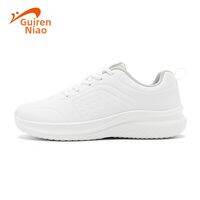
K-BIRD | Water-resistant Lightweight Shock-absorbing Sports Shoes
₱1,437.00₱3,141.00
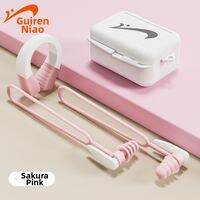
K-BIRD | Anti-Choking Non-slip Swimming Nose Clip
₱316.96₱586.66
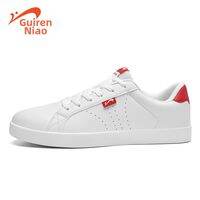
K-BIRD | Summer Light Weight Unisex Casual Shoes
₱1,518.53₱2,978.45
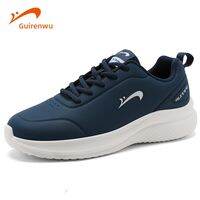
K-BIRD | Breathable Lightweight Mens Running Shoes
₱1,431.72₱2,267.69
K-BIRD | Professional Swim Training Silicone Fins
₱957.72₱1,178.04
About K-BIRD
K-BIRD (Chinese: 贵人鸟, Guìrénniǎo) is a Chinese sportswear and sporting-goods brand originally known for footwear, athletic apparel, and its former parent company, Guirenniao Co., Ltd. The brand originated in Jinjiang, Fujian, a major footwear-manufacturing hub in China, and rose to prominence as a leading domestic sports label during the 2000s and early 2010s.1 K-BIRD is noted for its rapid expansion from a regional footwear business into a nationwide sportswear brand, its 2014 listing on the Shanghai Stock Exchange, and its subsequent financial restructuring that led to its withdrawal from the listed sportswear sector.
Note on the name: “K-BIRD” is the English trademark associated with 贵人鸟 (Guirenniao). It should not be confused with unrelated American radio stations or other entities that also use “K-Bird” as a branding name.
Basic information
| Field | Information |
|---|---|
| Brand name | K-BIRD |
| Chinese name | 贵人鸟 |
| Pinyin | Guìrénniǎo |
| Industry | Sportswear / sporting goods |
| Main products | Athletic shoes, sportswear, accessories |
| Origin | Jinjiang / Quanzhou, Fujian, China |
| Founded | 1980s; business establishment traced to 1987 |
| Founder associated with brand | Lin Tianfu (林天福) |
| Former listed company | Guirenniao Co., Ltd. (贵人鸟股份有限公司) |
| Stock | Shanghai Stock Exchange: 603555 |
| IPO | 2014 |
| Former business model | Sports footwear, apparel, and retail |
| Major expansion | 2000s–mid-2010s |
| Major restructuring | 2020–2021 |
| Stock-market delisting | 2024 |
| Current status | Original listed operation exited sportswear; brand rights are distinct from the former public company |
Historical corporate materials describe K-BIRD as having been established in 1987, specializing in the R&D, production, and sales of sports shoes and apparel, supported by a nationwide distribution network and manufacturing capacity.2
History
Origins
K-BIRD emerged from Jinjiang, Fujian, an area that developed into one of China’s most significant footwear-production clusters. The broader business was initially tied to footwear manufacturing and OEM processing. Like several other prominent Fujian sports brands, it eventually transitioned toward creating and marketing its own consumer-facing brand rather than remaining solely a manufacturer.
Contemporary accounts place the creation of the independent 贵人鸟 brand around 2002, when founder Lin Tianfu began developing the business as a branded sportswear company. This positioned K-BIRD in the same generation of Chinese sports brands as Anta, Xtep, 361°, Erke, and Li-Ning, although each company pursued distinct strategic paths.7
Expansion in the 2000s
The 2000s marked the primary growth period for K-BIRD. The company focused heavily on China’s second-, third-, and fourth-tier cities, where domestic sportswear brands could compete effectively on price and distribution against international giants like Nike and Adidas. Industry analyses from the era identify K-BIRD as a brand that initially prioritized wholesale distribution in these lower-tier markets.
Its retail network expanded rapidly:
- Approximately 1,800+ stores were reported by 2009.
- The network subsequently grew to exceed 5,000 stores.
- The brand achieved significant visibility in China’s inland and lower-tier markets.
This expansion was central to K-BIRD’s positioning; rather than competing exclusively as a premium technical sports brand, it sought to combine affordable sports products, mass distribution, and recognizable branding.
Product range
K-BIRD’s product portfolio historically covered a broad spectrum of sporting and casual goods. Products bearing the K-BIRD name, including sneakers, skates, goggles, jeans, shorts, and hoodies, have been available on Philippine e-commerce platforms such as Lazada.891011121314
Footwear
Footwear categories included:
- Running shoes
- Training shoes
- Basketball shoes
- Tennis shoes
- Football/soccer footwear
- Outdoor footwear
- Casual sneakers
Apparel
The brand also produced:
- T-shirts
- Tracksuits
- Training clothing
- Running apparel
- Basketball apparel
- Casual sportswear
- Jackets and outerwear
Accessories
Other products included:
- Hats
- Socks
- Bags
- Sports accessories
Company descriptions in international business materials stated that the firm operated 20 assembly lines, with a claimed annual capacity of approximately 15 million pairs of shoes and 30 million pieces of apparel. These figures are company-reported historical claims rather than independently audited data.2
Brand positioning
K-BIRD’s historical positioning is best described as mass-market Chinese sportswear. Its strategy emphasized three core elements:
Accessibility
K-BIRD targeted consumers outside China’s most affluent metropolitan areas, enabling it to build a large physical distribution network relatively quickly.
Sports and lifestyle
Products were not restricted to professional athletes. Performance gear for running, training, and basketball was sold alongside casual athletic clothing.
Domestic-brand identity
During the 2000s, Chinese consumers became increasingly familiar with domestic sports brands. K-BIRD benefited from the growth of the Chinese mass-market sportswear sector and the massive expansion of organized retail.
Research and development
K-BIRD attempted to position itself as more than a simple footwear manufacturer. Its corporate profile described a substantial design and R&D organization comprising hundreds of designers and specialists. It claimed to operate its own testing center and biomechanical laboratory, with the latter described as being approved by CNAS.2
Historically, the company emphasized independent product development and design, particularly in sports footwear. This was significant as the Chinese sportswear industry gradually shifted from inexpensive manufacturing toward branded products featuring proprietary designs, technology, and marketing.
Marketing and sponsorship
K-BIRD invested heavily in sports-related marketing. A notable historical milestone was its relationship with the International Association of Athletics Federations (IAAF). According to historical brand information, K-BIRD became a strategic partner and designated sporting-equipment manufacturer/sponsor in East Asia in 2005.2
The brand also utilized basketball events, athletics, running, television advertising, sports programming, online video, and group running events to build consumer awareness. In 2008, K-BIRD was associated with CCTV-5’s sports programming, while later campaigns increasingly incorporated China’s developing online-video ecosystem.
2014: Going public
A pivotal moment in K-BIRD’s history occurred in January 2014, when Guirenniao Co., Ltd. completed its Shanghai Stock Exchange IPO under stock code 603555. The company presented itself as a sports-shoe and sports-apparel enterprise engaged in the R&D, design, production, and sale of products under the 贵人鸟 brand.1
The listing was highly significant as K-BIRD became one of China’s most prominent publicly traded domestic sportswear companies. It was frequently described in Chinese media as the “A-share sports brand first stock” or “A股运动品牌第一股.”
Peak period
Following its IPO, K-BIRD pursued an ambitious expansion strategy, moving beyond traditional footwear and apparel into a broader sports-industry group concept. Investments and activities eventually extended into sports investment, football, athlete management, fitness, sports insurance, event management, sports media, e-commerce, and sports-related investment funds.6
At its height, the company’s market capitalization reportedly exceeded RMB 40 billion, and contemporary accounts described it as one of China’s most valuable domestic sportswear companies.3
The diversification problem
Aggressive expansion eventually became one of K-BIRD’s biggest weaknesses. Instead of concentrating primarily on footwear and apparel, the company committed substantial capital to unrelated or adjacent businesses. This created several problems:
- Higher financial costs
- Complex corporate structure
- Lower returns from investments
- Falling profitability in the core sportswear business
- Increasing competition from stronger brands
- Excessive inventory and retail pressure
According to Chinese financial reporting, the company’s net profit fell sharply after its 2015 peak, eventually reaching substantial losses. This reflected a broader issue faced by many Chinese sportswear companies during the period: rapidly expanding store networks became liabilities as consumer behavior shifted toward e-commerce and competition intensified.
Bankruptcy restructuring
By 2020, the financial situation had deteriorated severely. The Quanzhou Intermediate People’s Court accepted the company’s restructuring case in December 2020. A restructuring plan was subsequently approved in April 2021, and the court confirmed completion of the restructuring in July 2021.4
The restructuring fundamentally changed the company’s direction. Rather than returning to aggressive sportswear expansion, the company began reducing its exposure to the footwear and apparel business. Its production model also shifted from primarily self-operated manufacturing toward outsourced production and procurement to reduce fixed costs.5
Decline of the original K-BIRD sportswear business
Following restructuring, the company’s sportswear operation became progressively smaller. The company eventually concluded that its footwear and apparel business was generating continuing losses amid intense market competition.
In September 2023, the company announced plans to progressively withdraw from the sportswear business and make grain-related business its principal direction. This effectively marked the end of K-BIRD/贵人鸟 as the major integrated sportswear corporation it had once been.
Brand licensing
An important distinction exists between the company and the brand. In October 2023, the company announced that it would grant Quanzhou Rongshun Footwear Co., Ltd. an exclusive paid license to use the 贵人鸟 brand.
The reported arrangement was:
- Term: 10 years
- Start: November 1, 2023
- End: October 31, 2033
- Annual licensing fee: RMB 1 million
This arrangement allowed the brand to continue appearing on sports footwear and apparel even as the former listed company withdrew from the sector.5 Consequently, a K-BIRD/贵人鸟 product sold after the restructuring does not necessarily indicate that it is manufactured or operated directly by the former listed company.
Delisting
K-BIRD’s corporate history concluded a significant chapter in 2024. The company’s shares traded below RMB 1 for 20 consecutive trading days between February 1 and March 7, 2024, triggering the Shanghai Stock Exchange’s mandatory delisting rules.
The shares were subsequently removed from the Shanghai Stock Exchange on March 29, 2024, ending approximately ten years as a publicly listed company. However, delisting did not mean the K-BIRD/贵人鸟 brand name instantly disappeared from the market; brand licensing and separate commercial operations allowed products carrying the brand to continue being sold.
Corporate identity vs. brand identity
Understanding K-BIRD requires distinguishing between its various identities:
K-BIRD as a brand
K-BIRD / 贵人鸟 is the consumer-facing sportswear brand historically associated with Chinese athletic footwear and apparel.
Guirenniao Co., Ltd.
贵人鸟股份有限公司 was the corporate entity that operated the brand and became a publicly listed company.
After 2021
The corporate entity underwent restructuring and moved increasingly away from sportswear.
After 2023–2024
The former listed company progressively exited the sportswear business, while brand rights continued through licensing arrangements.6
Describing K-BIRD simply as “a currently operating major Chinese sportswear corporation” would be misleading. A more accurate description is:
K-BIRD (贵人鸟) is a historically prominent Chinese sportswear brand originating in Jinjiang, Fujian. Its former operating company became a major A-share sportswear company in the 2010s, subsequently underwent financial restructuring, exited most of its sportswear operations, and was delisted in 2024, while the brand itself continued under licensing arrangements.
K-BIRD’s place in Chinese sportswear history
K-BIRD’s trajectory reflects the development and later difficulties of China’s domestic sportswear industry. Its story broadly follows this pattern:
OEM/manufacturing → own brand → rapid retail expansion → IPO → diversification → financial distress → restructuring → sportswear withdrawal
This makes K-BIRD distinct from companies such as Anta or Li-Ning, which maintained sportswear as their central business and developed into major international sporting-goods groups. K-BIRD instead serves as an example of how rapid expansion and diversification could undermine an initially successful Chinese consumer brand.
Major milestones
| Year | Event |
|---|---|
| 1987 | K-BIRD’s business is reported as being established in Fujian |
| Early 2000s | Development of the independent 贵人鸟 consumer brand |
| 2002 | Lin Tianfu begins developing the branded business |
| 2005 | Major athletics sponsorship/partnership activities |
| 2008 | Expansion of sports-media and television marketing |
| 2009 | Brand reportedly exceeds RMB 2.7 billion in brand value |
| 2011 | Retail network reported at more than 5,000 stores |
| 2014 | Guirenniao becomes publicly listed on the Shanghai Stock Exchange |
| 2015 | Major expansion into the broader sports industry |
| 2016 | Further sports-industry diversification |
| 2020 | Court accepts restructuring case |
| 2021 | Restructuring plan approved and completed |
| 2023 | Company announces gradual exit from sportswear |
| 2023 | 贵人鸟 brand licensed to Quanzhou Rongshun Footwear |
| March 2024 | Shares delisted from Shanghai Stock Exchange |
| 2024 onward | K-BIRD/贵人鸟 exists primarily as a brand/business identity rather than the former listed sportswear corporation |
Historical dates and milestones above are drawn from company filings, contemporary reporting, and industry sources. Some early “founded” dates differ between company profiles, so 1987 is best treated as the commonly cited establishment date rather than an uncontested incorporation date.2
Legacy
K-BIRD’s legacy extends beyond its current corporate footprint. At its peak, it possessed:
- Thousands of physical stores
- A recognizable national Chinese sportswear brand
- Major sports sponsorships
- A Shanghai Stock Exchange listing
- A large footwear and apparel production network
- Significant influence in China’s lower-tier sportswear market
Its rise illustrates the extraordinary growth of the Jinjiang footwear cluster, which produced numerous major Chinese sports brands. Simultaneously, its later collapse highlights the risks of over-expansion, excessive diversification, and high financial leverage in China’s highly competitive sportswear market.7
References
- K-Bird Sports Goods Stock Share Co.,Ltd | LinkedIn
- K-Bird – Popular Brands – Ship For Me – Yoybuy
- K-Bird | Chartmetric
- K-Bird Spec Project :: Behance
- Top Bird Brand Logo Clothing for 2024: Elevate Your Style
- Guirenniao Portfolio Investments, Guirenniao Funds, Guirenniao Exits
- Sales Soar At Ailing Chinese Brand Erke After Good Deed Goes Viral
- Buy K-BIRD Kids Skates for sale online | Lazada Philippines
- K-BIRD Men’s Sneakers in Philippines – K-BIRD Men’s Sneakers for sale – prices & reviews | Lazada
- Buy K-BIRD Goggles for sale online | Lazada Philippines
- Buy K-BIRD Jeans for sale online | Lazada Philippines
- K-BIRD Women’s Sneakers in Philippines – K-BIRD Women’s Sneakers for sale – prices & reviews | Lazada
- K-BIRD Men’s Shorts in Philippines – K-BIRD Men’s Shorts for sale – prices & reviews | Lazada
- K-BIRD Girls’ Hoodies in Philippines – K-BIRD Girls’ Hoodies for sale – prices & reviews | Lazada