Shop on Lazada
Keeway products

Vendix For Keeway Kblade125 And Sip125
₱399.00₱550.00

Keeway Sip 125 / K BLADE kick shaft gear starter pamaypay
₱640.00
Buy on Lazada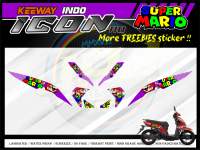
Icon 110 Super Mario Decals - High Quality Sticker
₱260.00
Buy on Lazada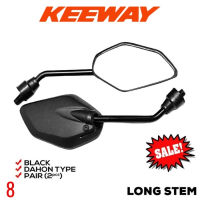
Keeway CS 110 | LONG STEM SIDE MIRROR BLACK DAHON TYPE UNIVERSAL 052
₱109.00
Buy on Lazada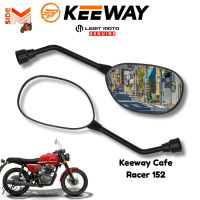
Keeway Cafe Racer 152 SIDE MIRROR UNIVERSAL LEGITMOTO ADJUSTABLE (WALANG GRADO) BLACK STEM 3247
₱237.00
Buy on Lazada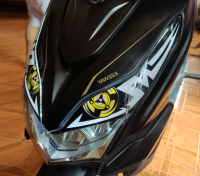
Winker Decal Sticker For Keeway Icon 110 Yellow Sharingan Eyes
₱200.00
Buy on Lazada
KEEWAY CS 110 - Motorcycle Brake Lever And Clutch Lever left and Right (1 set)
₱220.00
Buy on Lazada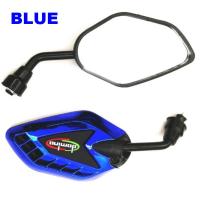
KEEWAY SIP 125 | DOMINO SIDE MIRROR Black Stem ( Short Steam ) Motorcycle Dahon Type High Quality Accessories | COD
₱168.00
Buy on LazadaAbout Keeway
Keeway is an international motorcycle and scooter brand founded in Hungary in 1999. The company originally built its identity around affordable, accessible motorcycles and scooters, particularly in the small- and medium-displacement categories. Over more than two decades, Keeway developed from a European-oriented marque into a global brand with a presence in more than 73 countries 1.
Its history is closely connected with Benelli, the historic Italian motorcycle manufacturer, and later with the broader Keeway Group. Today, Keeway’s product philosophy emphasizes a combination of design, practicality, affordability, and accessible performance, with models ranging from urban scooters to street motorcycles, cruisers, and other small- to mid-displacement machines 1.
Quick facts
| Category | Information |
|---|---|
| Brand | Keeway |
| Industry | Motorcycle and scooter manufacturing |
| Founded | 1999 |
| Origin | Hungary |
| Historical European base | Budapest, Hungary; significant operations/design relationship with Pesaro, Italy |
| Main products | Motorcycles, scooters and related two-wheel products |
| Typical displacement focus | Small to mid-sized motorcycles and scooters |
| Global reach | 73+ countries claimed by Keeway |
| Major historical relationship | Benelli |
| Current group | Keeway Group |
| Brand positioning | Accessible, stylish, practical motorcycles and scooters |
| Notable models | Superlight, K-Light, RKF and others |
Origins
Keeway was established in Hungary in 1999. The brand states that the name Keeway represents two concepts: “Key”, symbolizing the potential or possibilities available to the rider, and “Way”, representing the road or journey ahead.
From its inception, Keeway’s basic proposition was relatively straightforward: produce motorcycles and scooters that offered a combination of reasonable pricing, attractive styling, usable performance, and practical ownership. This positioning helped Keeway target riders who wanted the experience and appearance of motorcycling without necessarily moving into expensive, high-displacement motorcycles.
During its first 25 years, the company concentrated particularly on the scooter and small- to medium-displacement motorcycle markets.
The Keeway–Benelli connection
One of the most significant events in Keeway’s history occurred in 2005, when Keeway became a shareholder in Benelli 1.
Keeway took responsibility for important areas including administration, design, and marketing from Benelli’s headquarters in Pesaro, Italy. At the same time, the two brands shared certain design, chassis, and engine platforms 1. This relationship provided Keeway with stronger access to European motorcycle design and engineering expertise and explains why some older Keeway motorcycles share design characteristics with contemporary Benelli products.
Why Benelli mattered
Benelli had a long-established Italian motorcycle heritage dating back to 1911. Its relationship with Keeway and Qianjiang during the 2000s created a combination of Italian motorcycle design heritage, European market knowledge, Asian manufacturing capabilities, shared engineering and component platforms, and international distribution. This synergy helped both brands expand internationally.
Expansion into Europe
Between approximately 2008 and 2013, Keeway significantly expanded its European presence. The company describes this period as one in which it adopted a stronger Benelli-influenced design identity and expanded rapidly in scooters and small- to mid-sized motorcycles. Keeway states that in less than five years it expanded into more than 50 countries and became a leading scooter brand in several markets.
This period was pivotal as the brand transitioned from being perceived as a local or regional manufacturer to an increasingly international motorcycle name.
Globalization (2014–2023)
During the following decade, Keeway continued expanding its international distribution. The company introduced a refreshed brand identity and continued producing motorcycles designed with input from the broader design ecosystem associated with Benelli. By this period, Keeway stated it had expanded into more than 70 countries 1.
Keeway also became a recurring participant at EICMA, the major international motorcycle exhibition held in Milan, Italy. This provided the brand with a platform to introduce new models and maintain visibility within the European motorcycle industry.
Major motorcycle families
Keeway has produced a broad range of motorcycles over its history, but several families have become particularly associated with the brand.
Superlight
The Superlight became one of Keeway’s best-known motorcycle platforms. It was designed around a classic/custom motorcycle appearance while remaining relatively accessible to new and budget-conscious riders. The platform subsequently evolved into the K-Light family.
K-Light
The K-Light is one of Keeway’s most recognizable models. Keeway describes it as an evolution of the original Superlight platform, moving toward a lighter, more contemporary street-oriented interpretation while retaining a custom/cruiser character. The company positions it as suitable for both normal road riding and lighter gravel-road use.
RKF
The RKF represents another aspect of Keeway’s product strategy: a lightweight, sporty naked/street motorcycle. Models such as the RKF helped Keeway build an identity among younger riders looking for a motorcycle with a more aggressive appearance without entering the large-displacement segment. Keeway identifies the Superlight and RKF among the models that helped establish its reputation internationally.
Scooters
Scooters have always been an important part of Keeway’s business. The company historically focused heavily on urban mobility, offering scooters intended for commuting and everyday transportation. This remains consistent with Keeway’s emphasis on agility, practicality, manageable size, and urban usability.
The Benda collaboration
Keeway later expanded beyond its traditional product-development relationships. In 2021, Keeway introduced the Benda V302C, its first model resulting from a collaboration with Benda Motorcycle. The motorcycle used a V-twin engine and represented an effort to move the Keeway brand further into the mid-displacement custom/cruiser market.
The model was significant because it demonstrated that Keeway was willing to collaborate with other motorcycle manufacturers rather than relying exclusively on its historical Benelli relationship.
The Keeway Group
A major organizational change occurred in the 2020s. According to Keeway, beginning in 2022, Keeway Motorcycles became one of several brands operating under the Keeway Group. The group includes brands such as:
- Keeway
- Benelli
- Morbidelli
- EZI Electric
The group’s international activities have also included cooperation involving Benda. It is an important distinction that Keeway the motorcycle brand is not the same entity as the Keeway Group corporate organization; the group operates multiple motorcycle brands, while Keeway itself remains one of those individual marques.
Manufacturing and engineering
Keeway’s history illustrates a model increasingly common in the modern motorcycle industry: international product development combined with large-scale Asian manufacturing. For example, Keeway’s American operation describes the group’s structure as having R&D centers in Pesaro, Italy, and Barcelona, Spain, with manufacturing in China 2.
Consequently, it would be misleading to describe modern Keeway simply as either a “Hungarian motorcycle company” or an “Italian motorcycle company.” A more accurate description is that Keeway is a globally operated motorcycle brand with Hungarian origins, strong historical Italian/European design and business connections, and manufacturing associated with China. Its corporate structure and manufacturing arrangements have evolved considerably since the brand’s creation.
Design philosophy
Keeway has generally positioned itself between functionality and lifestyle-oriented motorcycle design. Rather than specializing exclusively in one category, its portfolio has included scooters, naked/street motorcycles, custom/cruiser motorcycles, lightweight commuter motorcycles, small- and medium-displacement motorcycles, and electric/urban mobility products in some markets.
Keeway describes its urban design philosophy as centering on motorcycles that are easy to maneuver, practical, relatively compact, and visually distinctive. This gives the brand a somewhat different identity from manufacturers whose primary emphasis is high-performance motorcycles.
Target market
Keeway has traditionally been aimed at riders who value accessibility. Its typical customer profile includes:
- First-time motorcycle owners
- Young riders
- Urban commuters
- Riders looking for affordable transportation
- Riders interested in retro/custom styling
- Customers who prefer smaller-displacement motorcycles
- Riders who want a visually distinctive motorcycle without moving to a premium brand
The brand’s strategy has therefore been less about competing directly with flagship superbikes and more about making motorcycle ownership accessible to a broader population.
Brand strengths
From a brand-positioning perspective, Keeway’s major strengths include:
Affordability
The company has historically competed in segments where purchase price and operating costs are important considerations.
Styling
Keeway has invested heavily in styling, particularly in the custom, retro, and urban categories. The historical Benelli relationship also contributed to the brand’s European design influence.
Model variety
The company has not restricted itself to one type of motorcycle. Its portfolio has included scooters, street bikes, and cruisers.
International distribution
Keeway states that it has expanded into 73+ countries, giving it a substantially broader international footprint than many smaller motorcycle manufacturers.
Beginner accessibility
Many Keeway motorcycles occupy displacement and performance categories that are approachable for newer riders.
Ownership considerations
Like any motorcycle manufacturer, Keeway should not be evaluated solely by the badge on the fuel tank. Actual ownership experience can depend heavily on the specific model, model year, local distributor, availability of spare parts, dealer quality, warranty support, local pricing, maintenance requirements, and resale demand.
This is particularly relevant because Keeway operates across many countries through different distribution networks. A Keeway motorcycle in one country may have a noticeably different ownership experience from the same model in another country, particularly regarding parts and after-sales support.
Modern era and future strategy
In 2024, Keeway announced a refreshed brand strategy extending toward 2030. The company stated its priorities include expanding its product range, providing more affordable options, and increasing the brand’s global presence. The company also celebrated its 25th anniversary, marking 25 years since the brand’s establishment in 1999.
Modern Keeway attempts to preserve its original accessible-motorcycle identity while expanding into additional categories and markets.
Comparison with Benelli
Because of their shared history, Keeway and Benelli are sometimes confused. While they have shared technology, design, and corporate history, they are separate motorcycle marques with different identities 1.
| Feature | Keeway | Benelli |
|---|---|---|
| Origin | Hungary | Italy |
| Founded | 1999 | 1911 |
| Brand character | Accessible/global | Italian heritage/performance-oriented |
| Main historical focus | Scooters & small/mid motorcycles | Motorcycles across a broader range |
| Relationship | Shareholder/strategic relationship with Benelli | Historically associated with Keeway/Qianjiang |
| Design influence | Strong European/Italian influence | Strong Italian heritage |
| Modern corporate context | Keeway Group | Keeway Group |
| Typical positioning | Value & accessibility | Heritage, styling & performance |
Timeline
- 1999 — Keeway brand established in Hungary.
- 2005 — Keeway becomes a shareholder in Benelli and takes important administrative, design, and marketing responsibilities from Pesaro 1.
- 2008–2013 — Major European expansion; Keeway reaches more than 50 countries.
- 2014–2023 — Brand refresh and expansion beyond 70 countries; increasing presence at EICMA.
- 2021 — Keeway launches the Benda V302C collaboration.
- 2022 — Keeway Motorcycles becomes part of the broader Keeway Group structure alongside other brands.
- 2024 — Keeway celebrates 25 years and announces a new strategic direction toward 2030.
- 2025–2026 — The wider group continues developing its international distribution and multi-brand strategy 2.