Shop on Lazada
Khong Guan products
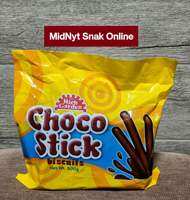
Khong Guan Choco/Finger stick 500g.
₱115.00
Buy on Lazada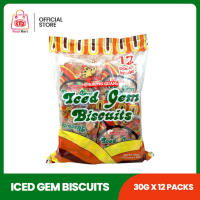
BEST SELLER Khong Guan Iced Gem Biscuits (12 packs)
₱90.00
Buy on Lazada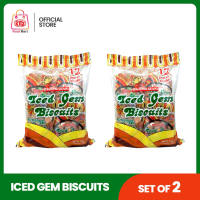
Khong Guan Iced Gem Biscuits - Set of 2 (24 packs)
₱180.00
Buy on Lazada
Khong Guan Butter Stick biscuits 500g.
₱100.00
Buy on Lazada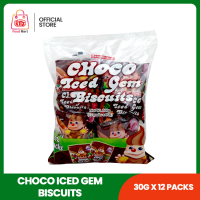
Khong Guan Choco Iced Gem Biscuits (12 packs)
₱90.00
Buy on Lazada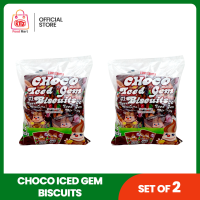
Khong Guan Choco Iced Gem Biscuits - Set of 2 (24 packs)
₱180.00
Buy on Lazada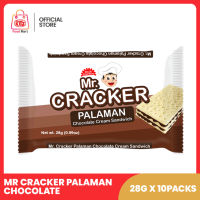
Mr Cracker Palaman - Chocolate Cream Sandwich 28g
₱58.00
Buy on Lazada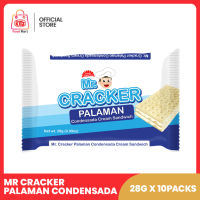
Mr Cracker Palaman - Condensada Cream Sandwich 28g
₱58.00
Buy on LazadaAbout Khong Guan
Khong Guan is a biscuit and snack brand with origins in Singapore, best known for its assorted biscuits, crackers, cookies, wafers, and other baked snacks. The brand traces its history to 1947, when brothers Chew Choo Keng and Chew Choo Han established Khong Guan Biscuit Factory in Singapore.1 From its original Singapore factory, the business expanded into Malaysia and other Southeast Asian markets before developing an international distribution network. According to the company’s Singapore operation, Khong Guan products are now exported to more than 40 countries.1
History
Origins
The story of Khong Guan began with brothers Chew Choo Keng and Chew Choo Han, who came from Fujian, China, to Singapore in the 1930s. They initially worked in a local biscuit factory, where they gained experience in biscuit production.
During the Japanese occupation of Singapore in the early 1940s, the brothers moved to Perak, Malaya (now Malaysia). They survived by producing biscuits by hand and later making salt and soap when ingredients and other necessities became difficult to obtain. After the Japanese surrender, they returned to Singapore and resumed biscuit production.1
A major turning point came when Chew Choo Han acquired discarded biscuit-making machinery from the factory where the brothers had previously worked. He adapted the equipment into a semi-automated production system, reportedly using bicycle chains to move biscuits through an improvised brick oven. This increased their production capacity and enabled the business to grow beyond small-scale manual production.1
In 1947, the brothers formally established Khong Guan Biscuit Factory (Singapore) Limited, with its first factory at 18 Howard Road, Singapore.1
Expansion
During the 1950s and 1960s, Khong Guan expanded beyond Singapore, establishing factories in Malaysia and developing markets throughout Southeast Asia.4 Its growth eventually led to distribution in areas including Hong Kong and the Middle East.1
During the 1970s, the company’s Singapore factory moved to a larger facility in Jurong to accommodate increasing production. Khong Guan continued establishing production facilities in Southeast Asia while extending its export markets.4
By the 1980s, Khong Guan had entered markets such as Japan and the United States. The company states that its products subsequently reached more than 40 countries worldwide. It also received international product-quality awards, including recognition from Monde Selection.4
Khong Guan in Indonesia
Indonesia became one of Khong Guan’s most important markets and developed its own long-standing manufacturing operation.
The Indonesian history of the brand dates to around 1970. The Indonesian company’s own website describes Khong Guan as having been present in Indonesia since 1970 and identifies its first Indonesian factory as PT Khong Guan Biscuit Factory Indonesia in Ciracas, East Jakarta.2
Historical accounts reported by Kompas describe an earlier Indonesian business called NV Giok San Kongsie, which initially imported biscuits from Singapore before beginning local production in Surabaya in 1971. The company was subsequently renamed PT Khong Guan Biscuit Factory Indonesia in June 1972.3
Over subsequent decades, Khong Guan became a highly recognizable biscuit brand in Indonesia. The Indonesian operation now produces products in categories including assorted biscuits, cookies, crackers, Marie biscuits, pies, sticks, and wafers. The company describes its Indonesian business as a leading biscuit manufacturer with products distributed internationally.2
Products
Khong Guan’s product portfolio has expanded considerably beyond its original assortment of biscuits. Depending on the market, its products include:
- Assorted biscuits
- Crackers
- Cookies
- Marie biscuits
- Cream-filled biscuits
- Wafers
- Stick biscuits
- Pie-style biscuits
- Sweet and savory snack biscuits
- Other baked snack products
The company’s Malaysian operation similarly describes a range that includes wafers, crackers, cream-filled sandwich biscuits, lightly salted biscuits, sugar-sprinkled biscuits, and products aimed at different consumer preferences.4
The iconic red biscuit tin
One of the most recognizable elements associated with Khong Guan in Indonesia is its red biscuit tin, particularly the classic assorted-biscuit packaging.
The packaging is famous for an illustration showing a mother and two children eating biscuits at a table, with the family apparently looking toward something outside the frame. The image became deeply associated with the brand in Indonesia and is now part of its visual identity and popular culture.
The illustration was created by Indonesian artist Bernardus Prasodjo in the 1970s. Interestingly, the picture does not show a father. Prasodjo has said that he did not know the precise reason for the father’s absence, although various explanations and interpretations have circulated over the years.3
Consequently, the “missing father” in the Khong Guan illustration has become a recurring subject of Indonesian internet culture, jokes, memes, and nostalgic discussion.
Name and meaning
The name Khong Guan is associated with the Chinese characters 康元 (Kāng Yuán). Khong Guan’s Indonesian operation explains the name as conveying the idea of a source of health and prosperity. The company connects this meaning with its broader brand message of family, well-being, and togetherness.2
Brand identity
Khong Guan’s brand identity has traditionally centered on family, familiarity, affordability, and everyday consumption. Rather than positioning itself solely as a premium biscuit brand, Khong Guan has built much of its recognition through products intended to be shared at home, served to guests, or eaten alongside tea, coffee, or other drinks.
In Indonesia in particular, the brand has acquired a strong nostalgic association. The traditional red tin is familiar to multiple generations and is particularly prominent during Lebaran and other family gatherings, when assorted biscuits are commonly served to visitors.
The Indonesian company itself emphasizes the concepts of togetherness, warmth, memories, and family moments, describing the biscuit tin as more than simply a container of snacks.2
International presence
Although Khong Guan is strongly associated with Indonesia today, its historical origin is Singapore. The Singaporean business expanded first through neighboring Southeast Asian markets and later into international markets including Japan, the United States, the Middle East, Hong Kong, and other regions.1
For the North American market, Khong Guan Corporation (KGC) was established in the United States in 1982 by the owners of Khong Guan Biscuits of Singapore. KGC focuses on product development, marketing, importing, and distribution, and has built a distribution network serving Asian and mainstream food markets in North America.5
Corporate development
Khong Guan’s development can be viewed as a progression from a small Singaporean biscuit factory into a multinational food business:
- 1947 — Singapore: Khong Guan Biscuit Factory established by Chew Choo Keng and Chew Choo Han.4
- 1950s–1960s — Southeast Asia: Expansion into Malaysia and neighboring markets.4
- 1970s — Indonesia and regional expansion: Local Indonesian production begins, while the Singapore business expands its manufacturing capacity and overseas distribution.3
- 1980s — Global expansion: Khong Guan develops markets in Japan, the United States, and other international destinations.4
- 1982 — United States: Khong Guan Corporation established to develop and market the brand in the American market.5
- 2000s–present: The company continues expanding its product range and updating packaging and production while retaining its traditional biscuit products and brand identity.4
Cultural significance in Indonesia
Khong Guan occupies a somewhat unusual position in Indonesian popular culture. It is not simply remembered as a manufacturer of biscuits; the brand has become a symbol of childhood, family gatherings, hospitality, and nostalgia.
The classic red tin is particularly recognizable because it has remained visually familiar for decades. Its presence at family tables, especially during festive occasions, has made the brand part of everyday Indonesian cultural memory. The combination of the red tin, assorted biscuits, and the mother-and-two-children illustration has given Khong Guan an identity that extends beyond its products.
This cultural familiarity also explains why Khong Guan is frequently discussed online in connection with childhood memories and the famous question of “where is the father?” in its packaging illustration.
Legacy
Khong Guan’s legacy is rooted in the combination of Chinese immigrant entrepreneurship, Singaporean manufacturing history, Southeast Asian expansion, and Indonesian popular culture.
Founded in Singapore in 1947 by two brothers who began with limited resources, the company developed from a small biscuit operation into an international business. In Indonesia, its products became particularly entrenched in household and festive culture, making the Khong Guan tin one of the more recognizable pieces of Southeast Asian food-brand imagery.
Today, the brand continues to sell biscuits and other snack products across multiple markets while deliberately maintaining its association with tradition, quality, family, and togetherness.1