Shop on Lazada
General Mills products
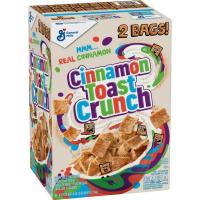
General Mills Cinnamon Toast Crunch Cereal Pack of 2 49.5oz each
₱949.00₱999.00
General Mills Honey Nut Cheerios Sweetened Whole Grain Oat Cereal 2 x 779g {USA}
₱1,099.00₱1,159.00
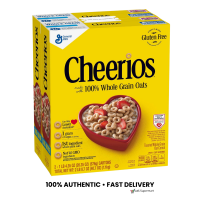
General Mills Cheerios Gluten Free Cereal 576g – Toasted Whole Grain Oats
₱789.00₱977.00
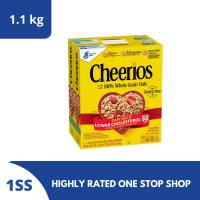
Cheerios Gluten Free 1.1Kg
₱1,095.00₱1,099.00
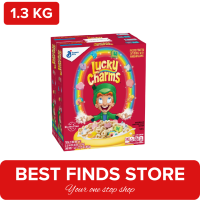
General Mills Lucky Charms Frosted Toasted Oat Cereals with Marshmallows 46 oz. / 1.3KG
₱1,299.00
Buy on Lazada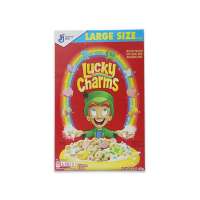
General Mills Cereal Lucky Charms 14.9oz
₱499.00
Buy on Lazada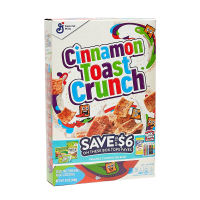
General Mills Cinnamon Toast Crunch Cereal 340g
₱660.00₱750.00
About General Mills
Overview
General Mills is a major American multinational food corporation headquartered in Minneapolis, Minnesota. Recognised globally as one of the leading packaged-food companies, its extensive portfolio encompasses breakfast cereals, snacks, meals, baking products, refrigerated and frozen dough, premium ice cream, and pet food. The company’s products are distributed in more than 100 countries, and it reports that its brands reach approximately 90% of households in the United States.1
In the Philippines, General Mills maintains a dedicated consumer-facing presence. Its local platform highlights key brands such as Betty Crocker, Gold Medal, and Old El Paso, providing product information and resources tailored specifically for Filipino consumers.5
| Field | Details |
|---|---|
| Company name | General Mills, Inc. |
| Founded | 1866 (company roots); 1928 under the General Mills name |
| Founder / early founder | Cadwallader C. Washburn |
| Headquarters | Minneapolis, Minnesota, United States |
| Industry | Food & beverage / consumer packaged goods |
| Stock ticker | GIS |
| Stock exchange | New York Stock Exchange |
| CEO & Chairman | Jeff Harmening |
| Employees | 30,000+ |
| Brands | 100+ |
| Global reach | 100+ countries |
| FY2025 net sales | Approximately US$19.5 billion |
| Main businesses | Cereal, snacks, meals, baking, ice cream and pet food |
| Official purpose | “Making food the world loves” |
General Mills is publicly traded on the New York Stock Exchange under the ticker symbol GIS. Its principal executive offices are located at Number One General Mills Boulevard, Minneapolis, Minnesota.2
History
Origins: 1866
The history of General Mills dates back to 1866, when Cadwallader C. Washburn established a flour mill on the Mississippi River in Minneapolis. This enterprise eventually became known as the Washburn-Crosby Company.
The site was chosen for its strategic advantage, as St. Anthony Falls provided the water power necessary for large-scale milling operations. Initially, the business focused exclusively on processing wheat into flour, rather than producing the diverse range of consumer foods associated with the modern corporation.
Gold Medal Flour emerged as one of the company’s most significant early products. After gaining international acclaim in the late 19th century, it became an enduring brand and remains part of the General Mills portfolio today.
The 1878 mill explosion
A pivotal moment occurred in 1878 when an explosion destroyed the Washburn mill, resulting in 18 fatalities. Rather than simply reconstructing the facility, the company implemented advanced safety systems and dust-ventilation technology. These innovations subsequently influenced safety standards across the flour-milling industry.
Creation of General Mills: 1928
The modern corporation was formed in 1928 through the merger of the Washburn-Crosby Company with several regional milling firms to create General Mills. This consolidation marked a significant transition, as the company began evolving from a primary flour producer into a diversified manufacturer of branded consumer foods.
Building famous consumer brands
Throughout the 20th century, General Mills shifted its focus towards branded products that consumers could identify by name, moving beyond commodity ingredients.
Betty Crocker
Betty Crocker originated in the 1920s as a fictional persona designed to facilitate communication with consumers. Over subsequent decades, the character evolved into one of America’s most recognised food personalities and a cornerstone brand for General Mills, synonymous with baking, recipes, and home cooking.
Bisquick
Introduced in 1931, Bisquick was developed to simplify baking and cooking by offering a convenient, ready-to-use mix.
Cheerios
In 1941, General Mills launched CheeriOats, which was later renamed Cheerios. It became one of the company’s signature products and remains among the most recognisable breakfast cereals worldwide.
Expansion beyond flour and cereal
During the second half of the 20th century, General Mills expanded significantly beyond its traditional packaged food business. The company experimented with various sectors, including:
- Toys and games
- Restaurants
- Consumer products
- Foodservice
- Scientific and engineering projects
Its historical portfolio included entities and brands such as Parker Brothers, Kenner, the Easy-Bake Oven, and Spirograph. Additionally, General Mills entered the restaurant industry with businesses associated with Red Lobster and Olive Garden. Most of these non-food ventures were eventually divested, allowing the company to refocus on its core food business.
Major acquisitions
Strategic acquisitions have been central to the transformation of General Mills.
Pillsbury — 2001
The 2001 acquisition of Pillsbury substantially broadened the company’s footprint in baking, refrigerated foods, and meals, establishing Pillsbury as a major consumer brand within the portfolio.
Cascadian Farm — 1999
In 1999, General Mills acquired Cascadian Farm, strengthening its position in the natural and organic foods sector.
Blue Buffalo — 2018
One of the most strategically significant recent transactions was the acquisition of Blue Buffalo in 2018. This move established General Mills in the pet food market, securing a major presence in premium and natural-oriented pet nutrition.
Major brands
General Mills owns or operates a vast portfolio of food brands. Key labels include:
Breakfast and cereal
- Cheerios
- Chex
- Lucky Charms
- Trix
- Wheaties
- Total
- Cinnamon Toast Crunch
Snacks
- Nature Valley
- Annie’s
- Larabar
- Chex Mix
- Gardetto’s
Baking and cooking
- Betty Crocker
- Pillsbury
- Gold Medal
- Bisquick
Meals and international foods
- Old El Paso
- Progresso
- Totino’s
Ice cream
- Häagen-Dazs
Pet food
- Blue Buffalo
The company currently states that its global portfolio comprises more than 100 brands.1
Product categories
General Mills functions as a portfolio company rather than a single-product manufacturer. Its offerings span several broad categories:
- Breakfast — Particularly cereals such as Cheerios and Lucky Charms.
- Snacks — Including granola bars, snack mixes, and other packaged snacks.
- Meals — Soups, Mexican-style foods, pizza snacks, and other convenience meals.
- Baking — Flour, cake mixes, baking mixes, and refrigerated dough.
- Ice cream — Including Häagen-Dazs in various international markets.
- Pet food — Primarily through Blue Buffalo.1
This diversification enables General Mills to participate in numerous eating occasions rather than relying on a single category.
Business model
General Mills operates primarily as a consumer packaged goods (CPG) company. Its fundamental business model follows this progression:
Agricultural ingredients → manufacturing → branded packaged food → retailers/distributors → consumers
The company collaborates with farmers, suppliers, and partners to source ingredients, manufactures products in its own facilities, builds demand through branding and marketing, and distributes through retail and other channels.
Brand recognition is critical to this model; consumers frequently select products based on familiar names like Cheerios, Betty Crocker, Pillsbury, Nature Valley, or Blue Buffalo rather than viewing them as interchangeable commodities.
General Mills states that its products are manufactured in 10 countries, while its brands are marketed in over 100 nations. Fiscal 2025 disclosures reported approximately 33,000 employees and 42 food-production facilities.
Financial scale
General Mills is a substantial publicly traded entity. For fiscal 2025, the company reported net sales of approximately US$19.5 billion. Its 2026 corporate responsibility report notes operations in more than 100 global markets, a workforce exceeding 30,000, and eight brands generating over US$1 billion in annual retail sales.
The company’s financial year concludes around the end of May. Its fiscal 2026 annual report was filed with the U.S. Securities and Exchange Commission in 2026.2
Leadership
Jeff Harmening serves as Chairman of the Board and Chief Executive Officer. Under his leadership, the company focuses on brand investment, innovation, portfolio management, digital transformation, and long-term financial performance.
Corporate strategy
General Mills describes its current strategy as “Accelerate.” This framework aims to deliver sustainable, profitable growth while strengthening the portfolio and generating shareholder returns. Strategic priorities include:
- Building strong brands
- Innovation
- Leveraging global scale
- Portfolio reshaping
- Improving operational efficiency
- Digital transformation
- Capital discipline
According to 2026 proxy materials, the company made progress on its strategic transformation during fiscal 2026, including completing the divestiture of its U.S. yogurt business and announcing plans regarding its Brazil operations and Häagen-Dazs shops in mainland China.2
Sustainability and social responsibility
General Mills places increasing emphasis on the environmental and social impacts of its supply chain. Current responsibility initiatives include:
- Regenerative agriculture
- Climate action
- Reducing greenhouse gas emissions
- Improving packaging
- Food security and hunger relief
- Community investment
- Employee belonging and inclusion
- Support for farmers and agricultural communities
The company highlights agriculture as particularly vital given its dependence on natural resources and agricultural systems.3
Box Tops for Education
Launched in 1996, Box Tops for Education allows consumers to support participating schools through purchases of eligible products. General Mills states that the programme has generated nearly US$1 billion for schools since its inception.
Artificial colours
Responding to shifting consumer preferences, General Mills has moved away from artificial colours. In 2026, the company announced the removal of artificial colours from its U.S. cereal portfolio, including Lucky Charms and Trix. Approximately 90% of its U.S. retail products are now free of artificial dyes, with remaining products scheduled for future transition.4
This initiative reflects a broader trend of adapting established brands to meet evolving expectations regarding ingredients, nutrition, and labelling.
General Mills in the Philippines
General Mills maintains a specific presence for the Philippine market. Its local website features brands such as Betty Crocker, Gold Medal, and Old El Paso, offering information tailored to Filipino consumers.5
Headquarters
The global headquarters of General Mills are located at:
General Mills, Inc.
Number One General Mills Boulevard
Minneapolis, Minnesota 55426
United States2
Minneapolis holds particular significance for the company’s identity, as its history originated with flour milling along the Mississippi River in this region.
Corporate identity
The stated purpose of General Mills is: “Making food the world loves.”
This mission extends beyond selling packaged food; the company positions itself as serving everyday eating occasions for both people and pets, emphasising taste, convenience, value, and quality.
Significance
General Mills exemplifies the evolution of the American food industry from commodity milling to modern branded consumer food. Its development can be categorised into four stages:
- 1866–1928 — Milling: Growth from a Minneapolis flour-milling business.
- 1928–1960s — Branded packaged food: Expansion into consumer products and establishment of brands like Betty Crocker, Bisquick, and Cheerios.
- 1960s–1990s — Diversification: Experimentation with toys, restaurants, and other businesses before refocusing.
- 1990s–present — Global food portfolio: Concentration on branded food, international expansion, acquisitions such as Pillsbury and Blue Buffalo, and development of a portfolio spanning cereal, snacks, meals, baking, ice cream, and pet food.