Shop on Lazada
KitKat products
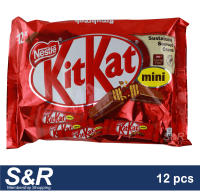
KitKat Original Mini Milk Chocolate Wafers (16.7g x 12pcs)
₱207.00
Buy on Lazada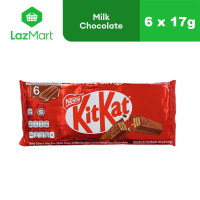
Kit Kat Milk Chocolate 17g x 6
₱98.80₱104.00
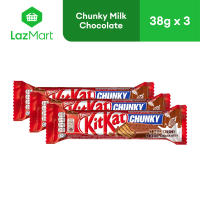
Kit Kat Chunky 38g - Pack of 3
₱128.70₱143.00
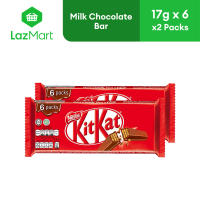
Kit Kat 2 Finger Milk Chocolate Bar Flowrap (17g x 6) - Pack of 2
₱219.90
Buy on Lazada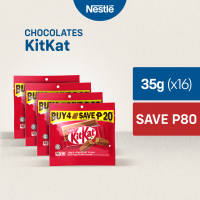
KITKAT Milk Chocolate 4-Finger 35g 4pcs Save P20 Pack of 4
₱545.00₱625.00
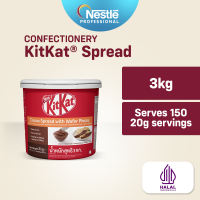
KitKat Spread 3kg
₱2,280.00
Buy on Lazada![[NEW] KitKat Cereal 330g](https://ph-live.slatic.net/p/7386e14cffc3ff3ceaa1e6baf12d70c4.jpg_200x200q80.jpg)
[NEW] KitKat Cereal 330g
₱430.00
Buy on Lazada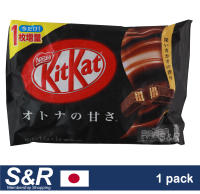
KitKat Mini Sweetness Dark Chocolate 1 pack
₱229.00
Buy on LazadaAbout KitKat
KitKat is a globally recognized chocolate-and-wafer confectionery brand owned by Nestlé. It is best known for its distinctive four-finger wafer bar covered in chocolate and for the advertising slogan “Have a break, have a KitKat.” Originating in York, England, in 1935, KitKat has developed from a British snack into one of the world’s most widely distributed confectionery brands. As of 2025, Nestlé reported that KitKat was sold in more than 85 countries, with more than 5 billion bars sold annually and more than 300 flavors offered worldwide.1
Overview
| Category | Information |
|---|---|
| Brand | KitKat |
| Original manufacturer | Rowntree’s |
| Current owner | Nestlé |
| Country of origin | United Kingdom |
| Place of origin | York, England |
| First launched | 1935 |
| Original name | Rowntree’s Chocolate Crisp |
| Product type | Chocolate-covered wafer |
| Iconic format | Four-finger bar |
| Famous slogan | “Have a break, have a KitKat” |
| Parent company | Nestlé |
| Global availability | 85+ countries |
| Major brand colors | Red and white |
| Major competitors | Twix, Kinder Bueno, Cadbury products, Hershey’s wafer/chocolate products |
History
Origins
KitKat was created by the British confectionery company Rowntree’s at its factory in York. The idea was to create a chocolate snack that could conveniently be carried to work in a packed lunch. The resulting product consisted of layers of crisp wafer covered with chocolate.2
The product was introduced in 1935 under the name “Rowntree’s Chocolate Crisp.” It was designed in the now-familiar four-finger configuration, allowing consumers to break off individual pieces.3
The KitKat name
In 1937, Rowntree’s introduced the KitKat name and logo to the packaging, transforming “Chocolate Crisp” into KitKat Chocolate Crisp. The name has historical roots: “Kit-Cat” was associated with an eighteenth-century London club and with pastry cook Christopher Catling, whose name was shortened to “Kit Cat.” Rowntree’s had actually registered the names Kit-Cat and KitKat as early as 1911.4
World War II
During World War II, shortages of milk and other ingredients forced Rowntree’s to alter the recipe. Because the product no longer had its normal milk-chocolate formulation, the packaging was changed from the familiar red to blue. The product was marketed simply as KitKat during this period.5
After the war, the familiar red packaging returned, eventually becoming one of the brand’s most recognizable visual characteristics.6
“Have a break, have a KitKat”
One of the most important developments in KitKat’s history occurred in the 1950s.
The advertising phrase “Have a break, have a KitKat” was introduced in 1958 and connected the product with the idea of taking a short pause from work or everyday life. Rather than advertising KitKat merely as chocolate, the campaign gave the brand a broader emotional meaning: KitKat became associated with taking a break.7
This concept became one of the longest-lasting elements of KitKat’s brand identity. Even as packaging, flavors and product formats changed, the idea of a “break” remained central.
Acquisition by Nestlé
A major turning point came in 1988, when Swiss food and beverage company Nestlé acquired Rowntree Mackintosh. The acquisition brought KitKat, along with brands such as Smarties and After Eight, into Nestlé’s portfolio.8
Nestlé subsequently expanded KitKat internationally, making it one of its flagship confectionery brands.
In the United States, however, KitKat is produced and marketed under a licensing arrangement by The Hershey Company, which has sold KitKat products in the U.S. since 1970.9
Product design
The classic KitKat consists of layers of crisp wafer surrounded and covered by chocolate. Its most recognizable traditional format contains four connected wafer “fingers.”
The finger design is important to the brand because it makes the product naturally breakable and shareable. Consumers can snap off individual fingers rather than eating the entire bar at once.
Over the years, KitKat has expanded beyond the original four-finger format to include:
- 2-Finger KitKat
- 4-Finger KitKat
- KitKat Chunky
- KitKat Minis
- KitKat Bites
- Dark chocolate varieties
- Seasonal and limited-edition products
- Large tablet-style products
- Numerous regional flavors
Nestlé says the brand has developed more than 300 flavors worldwide, reflecting its strategy of adapting KitKat to local tastes.10
Global flavors
One of KitKat’s most distinctive characteristics is its extensive range of regional flavors.
Japan is particularly famous for its unusual and frequently changing KitKat varieties. Examples have included flavors such as:
- Matcha
- Wasabi
- Sake
- Regional Japanese ingredients
- Seasonal flavors
- Specialty Chocolatory creations
Nestlé describes Japan as a particularly innovative KitKat market, where consumers can even create customized KitKat products through the KitKat Chocolatory.11
This localization strategy allows KitKat to maintain its recognizable basic identity while giving different countries products that reflect local tastes and culture.
Branding and visual identity
KitKat’s visual identity is extremely recognizable.
Logo
The classic logo features the word KITKAT in bold lettering inside a distinctive red shape. The design has evolved over the decades, but the fundamental red-and-white identity has remained strongly associated with the brand.
Red packaging
The red wrapper is one of KitKat’s most important brand assets. The temporary blue packaging during World War II makes the historical importance of the red color particularly clear.
The “break” concept
Perhaps more important than the logo itself is KitKat’s association with the word “break.”
The brand does not simply communicate:
chocolate + wafer = snack
Instead, its central proposition is essentially:
You deserve a break → have a KitKat.
That positioning has allowed KitKat to advertise itself around work, studying, commuting, travel, entertainment and other situations where people naturally take short breaks.
Marketing
KitKat’s marketing strategy has historically relied heavily on the idea of breaks.
The slogan “Have a break, have a KitKat” was introduced in the late 1950s and became a core part of the global brand identity.12
The concept is unusually durable because it can be applied to almost any situation. Someone finishing work, studying for an exam, traveling, watching television or simply feeling tired can all be presented as having a reason to “take a break.”
In different markets, Nestlé has also used local celebrities, entertainment partnerships, sports, music, digital campaigns and culturally specific products to keep the basic brand idea relevant.
KitKat in Japan
Japan has become one of the most culturally distinctive markets for KitKat.
The brand has developed hundreds of unusual flavors and limited editions, and KitKat has acquired a special cultural association with students. The Japanese pronunciation of KitKat, “kitto katsu,” resembles a phrase meaning “surely win,” helping make KitKat a popular good-luck gift for students taking examinations. Nestlé specifically notes this association in its global brand description.
Japan therefore demonstrates one of KitKat’s most important international strategies: keeping the global brand recognizable while adapting the product to local culture.
KitKat in the Philippines
In the Philippines, KitKat is part of the Nestlé Philippines confectionery portfolio.
The Philippine range includes products such as:
- KIT KAT 4-Finger Milk Chocolate
- KIT KAT Chunky
- KIT KAT Dark
- KIT KAT Bites
- KIT KAT Minis
- Various 2-finger formats
Nestlé Philippines describes KitKat around its characteristic combination of crispy wafer and chocolate, while maintaining the global “Have a break, Have a KitKat” positioning.13
Sustainability
KitKat has also become associated with Nestlé’s sustainability efforts.
Nestlé states that KitKat became the first global chocolate brand to source 100% of its cocoa through the Nestlé Cocoa Plan. The company says its cocoa sourcing includes certification through the Rainforest Alliance or verification through the Nestlé Cocoa Plan, depending on the region.
This represents an attempt to connect the brand’s global scale with more responsible cocoa sourcing.
Production
York remains an important center of KitKat production and development. Nestlé describes York as the home of KitKat, with its research, development and manufacturing operations continuing there. In 2025, Nestlé said its York facility could produce up to around four million KitKat bars per day.
KitKat products are also manufactured in other countries to serve regional markets.
Major milestones
| Year | Event |
|---|---|
| 1911 | Rowntree’s registered the names Kit-Cat and KitKat. |
| 1935 | Rowntree’s launched Rowntree’s Chocolate Crisp in the UK. |
| 1937 | The KitKat name and logo appeared on the product. |
| 1940s | Wartime ingredient shortages led to a dark-chocolate recipe and blue packaging. |
| 1958 | “Have a break, have a KitKat” was introduced. |
| 1960s | The two-finger format was added to the range. |
| 1988 | Nestlé acquired Rowntree Mackintosh and KitKat became part of its portfolio. |
| 1999 | KitKat Chunky was introduced. |
| 2016 | KitKat became the first global chocolate brand to use 100% sustainably sourced cocoa through the Nestlé Cocoa Plan. |
| 2025 | KitKat celebrated its 90th anniversary, with more than 85 countries and 300+ flavors reported by Nestlé.1 |
Brand significance
KitKat is significant not simply because it is a successful chocolate bar, but because it is an example of long-term brand building.
Its success comes from combining several consistent elements:
- A distinctive product — chocolate-covered wafer.
- A distinctive physical format — breakable fingers.
- Strong visual branding — especially the red-and-white packaging.
- A memorable slogan — “Have a break, have a KitKat.”
- A flexible global strategy — consistent core identity with local flavors.
- Continuous innovation — new formats, flavors and limited editions.
- A simple emotional proposition — taking time to pause and enjoy a break.
Current position
Today, KitKat is one of Nestlé’s most important confectionery brands. Nestlé reported in 2025 that KitKat was available in more than 85 countries, sold more than 5 billion bars annually, and had developed over 300 flavors around the world.1
The brand has therefore evolved considerably from its original 1935 product while retaining the same fundamental idea: a chocolate-covered wafer designed to be broken and enjoyed during a short break.
References
- Celebrating 90 years of KitKat breaks | Nestlé Global
- Happy Birthday KitKat: 90 Years of Better Breaks | Nestlé UK & Ireland
- KitKat History – Our Story | KitKat®
- KitKat – Our Story | Nestle International Travel Retail
- KitKat chocolate brand | Nestlé Global
- Contact Us – Customer Help | KitKat®
- KitKat® turns 80 | Nestlé UK & Ireland
- キットカット キットカット・ヒストリー | KitKat(キットカット)公式サイト
- KIT KAT® Bars | Hersheyland
- Kitkat | Nestlé Philippines
- KitKat | Confectionery & Chocolate | Nestlé UK
- HAPPY 80TH BIRTHDAY KITKAT! | Nestlé UK & Ireland
- Confectionery | Nestlé Pakistan| KitKat