Shop on Lazada
KOKUYO products
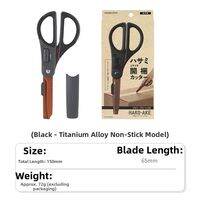
KOKUYO | Multi-functional Titanium-coated Durable Scissors
₱1,040.28
Buy on Lazada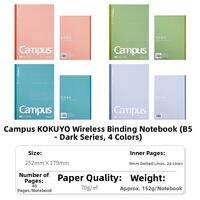
KOKUYO | Colorful Hardcover Notebook Easy-on-Hands Dot-Grid Style For Junior & Senior High School Students
₱544.04
Buy on Lazada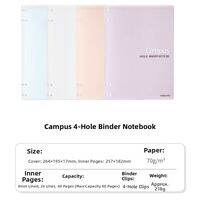
KOKUYO | Detachable Large Capacity Ring Binder B5
₱1,355.05
Buy on Lazada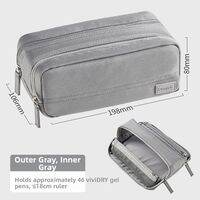
KOKUYO | High Capacity Easy Access Pencil Case
₱631.77
Buy on Lazada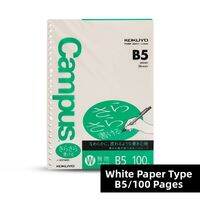
KOKUYO | Campus Replaceable Paper Notebook Inner Core B5
₱434.67
Buy on Lazada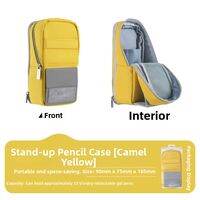
KOKUYO | Standing Multi-functional Pencil Case
₱581.06₱582.20
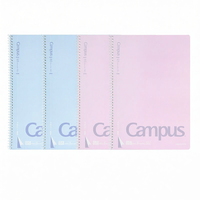
KOKUYO | Student Friendly Campus Notebook
₱782.14
Buy on Lazada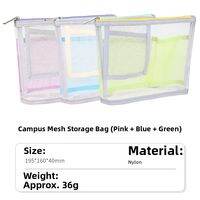
KOKUYO | Multifunctional Large Capacity Multi-Layer Transparent Storage Bag
₱993.26
Buy on LazadaAbout KOKUYO
Overview
KOKUYO Co., Ltd. (コクヨ株式会社, Kokuyo Kabushiki-gaisha) is a Japanese corporation recognized internationally for its stationery, notebooks, office supplies, furniture, and workplace/space-design solutions. Established in Osaka in 1905, KOKUYO has grown from a small manufacturer of Japanese ledger covers into a diversified enterprise with operations spanning stationery, office furniture, workspace design, e-commerce, and lifestyle products.1
The company’s most globally identifiable product line is the Campus notebook series. Other innovations, such as Harinacs stapleless staplers, Dotliner adhesive products, and various filing systems, reflect KOKUYO’s commitment to practical, user-centred design.2
Basic Information
| Item | Information |
|---|---|
| Official name | KOKUYO CO., LTD. |
| Japanese | コクヨ株式会社 |
| Romanization | Kokuyo Kabushiki-gaisha |
| Founded | October 1905 |
| Founder | Zentaro Kuroda (黒田善太郎) |
| Origin | Osaka, Japan |
| Headquarters | Osaka, Japan |
| Main fields | Stationery, office furniture, space design, consultation, e-commerce |
| Major brand | Campus |
| Stock exchange | Tokyo Stock Exchange, Prime Market |
| Employees | 8,079 consolidated; 2,346 parent company, as of December 2025 |
| 2025 consolidated sales | ¥359.8 billion |
| Current President & CEO | Hidekuni Kuroda |
Data sourced from KOKUYO’s corporate overview.3
Corporate Name and Identity
The name KOKUYO derives from the Japanese trademark adopted by the company in 1917. While the contemporary Japanese corporate identity is written as コクヨ, the historical trademark utilized the kanji characters 国誉.4 The English spelling KOKUYO now serves as the global brand identity.
Although frequently associated with notebooks, KOKUYO operates across four primary domains:
- Stationery
- Furniture
- Space solutions
- E-commerce
The company characterises its evolution as a progression from stationery to furniture, then to space solutions, and ultimately to broader human-centred experiences.5
History
Foundation and Early Years
KOKUYO was established in 1905 when 26-year-old Zentaro Kuroda opened the Kuroda Ledger Cover Shop in Osaka. Initially producing covers for traditional Japanese account books, Kuroda prioritised improving product quality and utility over rapid expansion.6
Key milestones in the company’s early development include:
- 1905: Establishment of Kuroda Ledger Cover Shop
- 1908: Commencement of Japanese-style account book manufacturing
- 1913: Introduction of Western-style account books
- 1914: Expansion into vouchers, invoices, writing paper, and duplicate-copy books
- 1917: Adoption of KOKUYO as the official trademark7
This foundational period established a philosophy that remains central to the company: understanding user needs and enhancing the overall experience rather than merely manufacturing objects.
Founding Philosophy
KOKUYO’s historical philosophy rests on three core tenets:
“Enrich the world through our products”
The company views products as solutions to specific problems rather than ends in themselves.8
“Create from the customer’s perspective”
Product development historically emphasises adopting the user’s viewpoint during the design process.
“Failure is a stepping stone to success”
Experimentation is integral to the corporate culture. KOKUYO describes its contemporary approach as “try first, fail first”, prioritising iterative testing and learning over waiting for perfect solutions.9
These principles are currently articulated through three concepts: Co-creation with empathy → Experience design → Culture of experimentation.
Expansion into Office Products
For its first several decades, KOKUYO was primarily a paper products and stationery manufacturer. However, Japan’s post-war economic growth generated significant volumes of corporate paperwork, prompting KOKUYO to expand into document storage and office organisation.
In 1960, the company entered the steel-product business with filing cabinets, laying the groundwork for its future office-furniture division.10 By the early 1970s, product categories encompassed paper products, stationery, furniture, and office equipment, marking KOKUYO’s transition from a stationery manufacturer to a comprehensive office-solutions provider.11
Development of Office Furniture
The company officially adopted the name KOKUYO Co., Ltd. in 1961. Furniture development accelerated throughout the decade:
- 1960: Filing cabinets
- 1965: Steel desks
- 1966: Office swivel chairs
- 1969: New Osaka headquarters and experimental “Live Office” concept12
The Live Office initiative was particularly significant. Rather than a conventional showroom, KOKUYO created a functional office where employees worked daily, allowing customers to observe products in an authentic working environment. This embodied the belief that effective workplace design requires observing actual usage patterns.13
Key Products
Campus Notebook
Launched in 1975, the Campus notebook is arguably KOKUYO’s most iconic product.14 Strongly associated with Japanese education, Campus was positioned not merely as a writing surface but as a tool to make learning easier, more enjoyable, and more effective.15
The ecosystem has since expanded to include diverse formats, paper types, layouts, and accessories, earning KOKUYO a strong reputation among students, artists, journalers, designers, office workers, and stationery enthusiasts. Internationally, Campus remains the company’s most recognisable consumer brand.
Notable Product Lines
KOKUYO produces an extensive range of stationery and office products. Significant examples include:
Campus
Introduced in 1975, this notebook brand is deeply embedded in study and education culture.16
Harinacs
A stapleless stapler that fastens paper without metal staples. Harinacs represents an alternative to traditional stapling, combining functionality with reduced metal consumption.17
Dotliner
An adhesive tape and glue system designed for cleaner application. It emerged as one of KOKUYO’s notable stationery innovations during the 2000s.18
Kadokeshi
An eraser featuring multiple corners for precise erasing, launched in 2003.19
GLOO
An adhesive-products brand introduced in 2018, characterised by clean, minimalist design.20
Ing
The 360° Gliding Chair “ing”, released in 2017, exemplifies KOKUYO’s shift from conventional office furniture toward designs centred on human movement and behaviour.21
Design Philosophy
KOKUYO’s design approach extends beyond aesthetics to address functional questions such as how users actually interact with objects. For instance, filing cabinets were historically conceived not merely as containers but as components of a document-management experience.22
Similarly, furniture is evaluated based on how it influences:
- Movement
- Collaboration
- Concentration
- Learning
- Communication
- Behavioural patterns within spaces
This perspective drove KOKUYO’s expansion from products to spaces.
Space Solutions
Modern KOKUYO operations extend significantly beyond stationery. Space-related activities encompass:
- Office planning
- Workplace design
- Furniture provision
- Interior environments
- Consultation services
- Educational spaces
- Public and commercial spaces
- Experimental workplaces
The company frames this evolution as Stationery → Furniture → Space Solutions, recognising that individual products are merely components of a broader human experience.23
THE CAMPUS
Opened in 2021 in Shinagawa, Tokyo, THE CAMPUS transformed part of KOKUYO’s office into an open environment integrating work, learning, community, and lifestyle experiences.24 Features include workplace environments, community areas, park-like settings, retail shops, coffee facilities, and interaction spaces.
Rather than presenting KOKUYO solely as a furniture manufacturer, THE CAMPUS demonstrates the company’s broader vision of designing “Work & Life” experiences.25
International Expansion
Although founded in Osaka, KOKUYO has developed a substantial international presence. Key milestones include:
- 1996: Establishment of KOKUYO-IK (Thailand)
- 1996: Establishment of KOKUYO International Hong Kong
- 1996: Establishment of KOKUYO (Malaysia)
- 2003: Commencement of full-scale operations in China
- 2005: Establishment of KOKUYO Vietnam
- 2011: Acquisition of shares in India’s Camlin Limited
- 2012: Expansion of Shanghai manufacturing operations
- 2019: Establishment of PT. KOKUYO Furniture Indonesia26
The company’s Asian footprint has been instrumental in increasing product visibility outside Japan.
Presence in Malaysia
Malaysia holds particular significance in KOKUYO’s regional history:
- 1996: KOKUYO (Malaysia) Sdn. Bhd. established
- 1997: Opening of KOKUYO’s first manufacturing plant outside Japan
- 2000: Founding of KOKUYO International (Malaysia) Sdn. Bhd.
- 2018: Opening of ASEAN flagship showroom27
More recently, KOKUYO expanded its Campus retail presence with the opening of the first Campus STYLE Malaysia stationery store in 2024.28 Malaysia thus remains a cornerstone of KOKUYO’s Southeast Asian development.
Sustainability Initiatives
Environmental considerations increasingly influence product development. Harinacs, for example, eliminates metal staples entirely. KOKUYO’s historical records indicate an interest in creating value beyond simply making products “green”.29
The company has also integrated environmental criteria into product cataloguing, introducing an “Eco-batsu Mark” initiative to identify products requiring improved environmental consideration and encourage enhancement.30
KOKUYO Design Award
Established in 2002, the KOKUYO DESIGN AWARD reflects the company’s commitment to sourcing ideas from external designers and creators alongside internal teams.31 The competition reinforces KOKUYO’s reputation for interest in industrial design, everyday objects, usability, human behaviour, and design experimentation, positioning it as a design-driven Japanese company rather than merely a traditional stationery manufacturer.
Corporate Transformation Stages
KOKUYO’s development can be categorised into five distinct phases:
Stage 1: Paper and Ledgers (1905–1950s)
Evolution from ledger covers to paper products, forms, notebooks, and related stationery.
Stage 2: Office Organisation (1960s)
Entry into steel products, filing systems, and office furniture.
Stage 3: Workplace Design (1969–1990s)
Conceptualisation of offices as complete environments, including the Live Office concept and office research.
Stage 4: Convenience and E-commerce (2000s)
Expansion into mail-order office supplies and digital commerce through businesses such as Kaunet.
Stage 5: Work & Life Experiences (2010s–present)
Integration of stationery, furniture, architecture, workplace design, lifestyle, and community spaces.
This trajectory—Paper → Products → Furniture → Offices → Spaces → Experiences—defines the modern corporation.
Current Business Structure
KOKUYO’s contemporary operations span four primary areas:
Stationery
Encompasses notebooks, paper products, files, folders, writing instruments, adhesives, organisation products, and school/learning stationery. This remains one of the company’s most visible divisions.
Furniture
Includes office desks, chairs, storage systems, educational furniture, collaborative furniture, and workplace products.
Space Solutions
Focuses on the design and planning of holistic environments rather than individual furniture supply.
E-commerce
Operates businesses connected with office-supply commerce and procurement, including Kaunet.
Brand Character
As a brand, KOKUYO is characterised as Japanese, practical, thoughtful, minimalist, innovative, and user-centred. Innovation is pursued not for technological spectacle but to improve ordinary everyday experiences. Consequently, many products appear deceptively simple; the focus lies in reconsidering how people actually interact with familiar objects.
Significance in Japanese Design
KOKUYO occupies a unique intersection of multiple industries: Stationery × Industrial Design × Architecture × Furniture × Education × Workplace Design. Unlike specialists in single categories, KOKUYO has spent over a century expanding across domains.
Its history mirrors broader shifts in Japanese working and learning culture: ledger → paperwork → filing → office → computer-era workplace → flexible workplace → work/life environment. The company has repeatedly adapted its products and business model to align with these transformations.
Timeline
| Year | Event |
|---|---|
| 1905 | Zentaro Kuroda establishes the Kuroda Ledger Cover Shop |
| 1908 | Japanese-style ledger production begins |
| 1913 | Western-style ledger production begins |
| 1917 | KOKUYO trademark adopted |
| 1956 | Flatfile introduced |
| 1959 | Survey Field Notebook introduced |
| 1960 | Enters steel products with filing cabinets |
| 1961 | Company renamed KOKUYO Co., Ltd. |
| 1965 | Steel desks introduced |
| 1966 | Office swivel chairs introduced |
| 1969 | Live Office concept launched |
| 1975 | Campus Notebooks introduced |
| 1986 | Office research centre established |
| 1996 | KOKUYO Malaysia and other Asian operations established |
| 1998 | Universal Design initiatives begin |
| 2001 | Kaunet office-supply mail-order business begins |
| 2002 | KOKUYO DESIGN AWARD established |
| 2003 | KOKUYO expands full-scale operations in China |
| 2005 | DOTLINER launched; Vietnam operations established |
| 2009 | Harinacs stapleless stapler launched |
| 2011 | Camlin acquisition in India |
| 2017 | ing 360° Gliding Chair introduced |
| 2018 | GLOO launched |
| 2019 | UPTIS desk introduced; Indonesia furniture company established |
| 2021 | THE CAMPUS opens in Shinagawa |
| 2022 | Campus STYLE Shanghai opens |
| 2023 | KOKUYODOORS opens at Haneda Airport Garden |
| 2024 | Campus STYLE Malaysia opens; HibiFull lifestyle brand launched |
| 2025 | KOKUYO reports ¥359.8 billion consolidated sales and 8,079 consolidated employees |
Distinction from Traditional Stationery Brands
While a typical stationery company defines itself by manufacturing notebooks, pens, and office supplies, KOKUYO positions itself as designing experiences surrounding learning, working, and living. This distinction is fundamental. Although consumers may first encounter KOKUYO through a Campus notebook, the corporation functions closer to a design and workplace-experience company with a major stationery business.
Contemporary Status
As of 2026, KOKUYO is a Japanese corporation with over 120 years of history, headquartered in Osaka. Its modern business integrates traditional stationery expertise with furniture, workplace design, space solutions, and commerce. The company summarises its current direction as creating experiences for work, learning, and life, rather than limiting itself to physical products.
References
- Kokuyo
- Company Overview | About KOKUYO | KOKUYO
- Expanding in Stationery | About KOKUYO | KOKUYO
- Kokuyo
- 価値観と歴史|コクヨを知る|コクヨ
- About KOKUYO | KOKUYO
- Values and History | About KOKUYO | KOKUYO
- Kokuyo
- Milestone & History – KOKUYO Malaysia
- kokuyo.com
- Founding Spirit | Diverary [KOKUYO Furniture]
- kokuyo.com
- Corporate Report | IR Library | Investor Relations | KOKUYO
- Investor Relations | KOKUYO
- IR Library | Investor Relations | KOKUYO
- PDFs of the Integrated Report and Sustainability Website Content|ESG data|Sustainability|KOKUYO
- Investor Relations Sitemap | Investor Relations | KOKUYO
- Sustainability | KOKUYO
- 株主・投資家情報|コクヨ
- KOKUYODOORS – ABOUT US
- PRODUCTS | KOKUYODOORS | KOKUYO
- KOKUYODOORS Harinacs compact α | KOKUYODOORS | KOKUYO
- ABOUT US|KOKUYODOORS|コクヨ
- Stapleless stapler capable of binding 10 sheets | KOKUYODOORS | KOKUYO
- PRODUCTS記事一覧|KOKUYODOORS|コクヨ
- 業績・財務|株主・投資家情報|コクヨ
- 百年历史 | 国誉办公家具
- KOKUYO | Official Global Online Store| About us
- キャンパスノートの歴史|キャンパスノート|コクヨステーショナリー
- Annual Reports – Investor Information | Kokuyo Camlin
- Company Introduction – Kokuyo