Shop on Lazada
Lamzu products
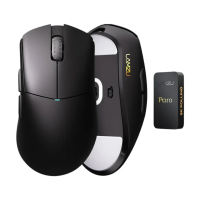
Lamzu Paro Aurora SuperLight Wireless Gaming Mouse + Paro Aurora 8K Dongle
₱5,250.00₱7,085.00
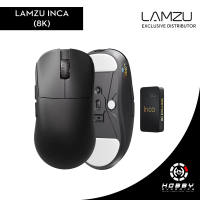
Lamzu Inca Wireless Gaming Mouse
₱5,500.00
Buy on Lazada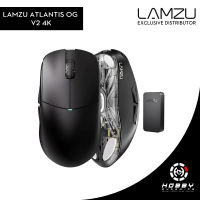
Lamzu Atlantis OG V2 4K Wireless Superlight Charcoal Black
₱5,500.00
Buy on Lazada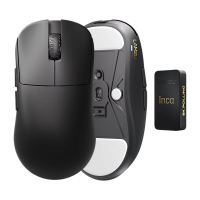
Lamzu INCA Superlight 40g Dual Mode 8K Polling Rate Wireless Gaming Mouse
₱5,390.00₱7,275.00
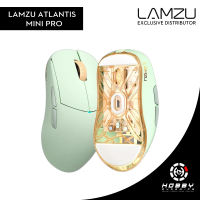
Lamzu Atlantis Mini Pro (4K Compatible)
₱5,300.00
Buy on Lazada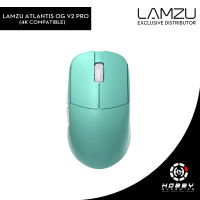
Lamzu Atlantis OG V2 PRO (4K Compatible)
₱5,300.00
Buy on Lazada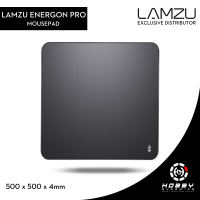
Lamzu Energon PRO Mousepad
₱2,900.00
Buy on Lazada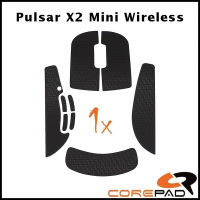
Corepad Soft Grips Pulsar X2 Mini Wireless
₱500.00
Buy on LazadaAbout Lamzu
Overview
Lamzu is a Chinese gaming peripheral brand best known for ultralight wireless gaming mice designed specifically for competitive first-person shooter (FPS) players. Rather than competing as a mass-market peripheral manufacturer, the company positions itself around enthusiast-level design, low weight, distinctive shapes, and high-performance wireless technology.1
Lamzu does not publish a conventional corporate history detailing its founders, ownership structure, or exact founding date. Consequently, unverified community speculation regarding these details is excluded from this profile.
Basic Information
| Category | Information |
|---|---|
| Brand | Lamzu |
| Industry | Computer peripherals / gaming hardware |
| Best known for | Lightweight wireless gaming mice |
| Primary audience | Competitive FPS players, esports enthusiasts, PC gamers |
| Headquarters / origin | China |
| Main product | Gaming mice |
| Other products | Mousepads, mouse feet, grips, wireless dongles, cables, keyboards |
| Major mouse families | Atlantis, Thorn, Maya, Paro, Inca |
| Notable technology | 1K/4K/8K wireless polling depending on model/dongle |
| Official website | lamzu.com |
According to the company, the Lamzu team comprises FPS gamers, designers, supply-chain professionals, structural engineers, and DIY enthusiasts. This collective experience informs the brand’s approach to mouse shapes, materials, and performance standards.1
Brand Philosophy
Lamzu operates primarily as an enthusiast gaming mouse company. Unlike broader peripheral manufacturers such as Logitech, Razer, or SteelSeries, Lamzu built its identity around a specific question: what constitutes an optimal competitive gaming mouse? This focus distinguishes the brand within the wider market.
The company’s philosophy acknowledges that mouse design is inherently subjective. Factors including shape, grip style, click feel, button feedback, weight, sound, surface texture, and aesthetics can make a device excellent for one user but unsuitable for another. Instead of attempting to create a universal mouse, Lamzu develops multiple distinct shapes to accommodate varying preferences.1
Product History and Development
The Atlantis Series
Lamzu’s breakthrough product was the Atlantis Wireless Superlight. The company entered the crowded gaming mouse market because its team believed it possessed unique ideas regarding design and construction. The Atlantis realized this vision and remains the product family most strongly associated with the brand.
The core concept combined high-end competitive FPS performance with very low weight and an enthusiast-oriented shape. While this placed Lamzu in the same category as other modern lightweight mice, the Atlantis established a recognizable design language. Crucially, the product emphasized shape engineering over mere specification matching. For competitive players, physical ergonomics—including hump placement, side curvature, front height, and overall dimensions—are often as critical as sensor accuracy. Lamzu treats shape as a central engineering decision rather than an afterthought, explicitly identifying grip feeling, click sensation, acoustic profile, tactile response, and geometry as key subjective design elements.1
The Atlantis family has since evolved into multiple versions:
- Atlantis OG
- Atlantis OG V2
- Atlantis OG V2 Pro
- Atlantis OG V2 4K
- Atlantis Mini
- Atlantis Mini Pro
- Atlantis Mini 4K
- Atlantis Mini Champion Edition
The OG represents the larger original form factor, while the Mini provides a compact alternative for users preferring smaller dimensions. This multi-size strategy reflects the brand’s refusal to assume a single physical size suits all players.1
Thorn Series
The Thorn represents a departure from the symmetrical Atlantis design, utilizing an ergonomic right-handed form factor. Current models include:
- Thorn
- Thorn 4K
- Thorn V2
- Lamzu × FNATIC Thorn 4K
This series targets players who prefer ergonomic shapes but still require the low-weight competitive philosophy associated with the brand.1
Maya Series
The Maya family focuses on compact, lightweight design within a different shape category than the Atlantis or Thorn. It demonstrated that Lamzu could develop fundamentally different shapes while maintaining consistent performance standards. Current variants include:
- Maya
- Maya 4K
- Maya Champion Edition
- Maya Doodle
- Maya X
- Maya X + AIMLABS
- Various special and collaboration editions1
Paro and Inca Families
Lamzu later expanded beyond its original trio with the Paro and Inca families. The Paro lineup includes the standard Paro, Paro Aurora, Paro Aurora SE, and a Lamzu × REJECT special edition. The Inca is listed as a newer wireless gaming mouse, evidencing continued expansion into additional shape categories rather than simple refreshes of existing lines.1
Technology and Performance
Polling Rates
Modern Lamzu mice support increasingly high wireless polling rates depending on the specific model and receiver combination. Supported rates include 1 kHz, 4 kHz, and 8 kHz. Documentation for the Crystal Wireless software confirms support across these tiers, though compatibility varies by hardware generation.1
Polling rate determines how frequently a mouse reports its position to the computer:
| Polling rate | Report interval |
|---|---|
| 1,000 Hz | 1 ms |
| 2,000 Hz | 0.5 ms |
| 4,000 Hz | 0.25 ms |
| 8,000 Hz | 0.125 ms |
Higher polling rates reduce input-reporting intervals, although practical benefits depend on game engine, system specifications, monitor refresh rate, and CPU load. Consequently, higher numerical values do not automatically translate to proportionally better performance for every user.
Wireless Hardware
Wireless performance is a primary selling point. Lamzu utilizes dedicated wireless receivers, with different generations supporting varying polling rates. Available dongles include 1K, 4K, 8K, and newer 8K II variants. Users should note that a mouse advertised as “4K compatible” does not necessarily include a 4K receiver in the standard package; separate purchase may be required.1
Software and Firmware
Lamzu provides proprietary software and firmware tools for DPI adjustment, polling rate configuration, macro programming, receiver pairing, and firmware updates. Due to the introduction of multiple hardware generations, the ecosystem has become complex. Users may encounter different firmware versions, receivers, drivers, wireless standards, and MCU platforms depending on their specific device. The company maintains separate tools for various generations to address this fragmentation.1
Expanded Product Ecosystem
While mice remain the core identity, Lamzu has expanded into other peripherals. As of September 2026, the official catalog includes:
Mousepads
- Energon
- Energon Pro
- Maya cloth mousepad
- Maya glass mousepad
Accessories
- Mouse grips
- PTFE skates
- Glass skates
- Sapphire skates
- USB-C cables
- Wireless dongles
- Dustproof seals
Keyboards
- Atlantis Pro Keyboard
- Jet75 Magnetic Gaming Keyboard
This expansion marks an evolution from an exclusive mouse manufacturer to a broader gaming peripherals brand.1
Esports Collaborations
Lamzu leverages collaborations to strengthen its presence in competitive gaming. Notable partnerships include:
- FNATIC (e.g., Lamzu × FNATIC Thorn 4K)
- AIMLABS
- REJECT
These collaborations align with the brand’s primary customer base within the competitive FPS community.1
Market Positioning
Lamzu occupies a distinct position between mainstream gaming companies and boutique enthusiast manufacturers.
| Brand | General identity |
|---|---|
| Logitech G | Large mainstream/performance gaming ecosystem |
| Razer | Mainstream gaming + esports + broad peripherals |
| SteelSeries | Broad gaming-peripheral ecosystem |
| Zowie | Competitive FPS-focused hardware and simplicity |
| Lamzu | Enthusiast-focused lightweight mice and performance peripherals |
| Pulsar | Enthusiast/competitive lightweight gaming peripherals |
| Endgame Gear | Performance-focused enthusiast mice |
| Finalmouse | Boutique/high-end enthusiast gaming mice |
Historically, the gaming mouse market was dominated by major companies producing relatively heavy wired or wireless devices. The enthusiast segment subsequently demanded lighter, faster, better-shaped, wireless, and higher-polling options. Lamzu positioned itself directly within this movement, treating the mouse as a performance instrument for competitive players rather than a generic PC accessory. This drives attention to details often overlooked by mainstream consumers, including shell geometry, grip width, hump position, click implementation, wireless latency, skate material, and firmware tuning.1
Reception and Limitations
Enthusiast Appeal
Lamzu gained popularity among enthusiasts for several reasons:
- Shape variety: Offering distinct shapes acknowledges that fit is subjective.
- Weight: Early adoption of lightweight construction as a defining characteristic.
- Wireless performance: High-speed operation including 4K and 8K options.
- FPS orientation: Product philosophy driven by hardcore players.
- Portfolio diversity: Development of multiple major families rather than reliance on a single product.1
Criticisms
- Software complexity: Multiple hardware generations have created potential confusion regarding firmware and receiver compatibility.
- Polling rate utility: 4K and 8K benefits are highly dependent on the rest of the PC setup and are not universally transformative.
- Subjective ergonomics: A shape beloved by one player may be unsuitable for another.
- Availability: Certain models and accessories periodically appear out of stock on the official store.1
Timeline Summary
As Lamzu does not provide a detailed public corporate chronology, development is tracked via documented product releases:
- Early Lamzu: Enthusiast team focuses on mouse design; development of Atlantis Wireless Superlight.
- Atlantis era: Atlantis becomes the defining product; OG and Mini variants emerge; V2 and high-polling versions follow.
- Expansion: Thorn introduces ergonomic philosophy; Maya establishes alternative lightweight shape.
- Ecosystem development: 4K wireless receivers, additional firmware infrastructure, mousepads, skates, and grips introduced.
- Collaboration era: Special editions with FNATIC, AIMLABS, and REJECT released.
- Broader hardware era: Maya X, Paro, Inca, Tachi, Orcus, keyboards, and expanded accessories added to portfolio.1
Defining Characteristics
Lamzu is best understood through five core attributes:
- Lightweight mice
- Shape-first design
- Competitive FPS orientation
- High-performance wireless technology
- Enthusiast and community-driven development
The brand successfully combined trends in ultralight construction, enthusiast-oriented shapes, wireless performance, and high polling rates into products aimed at serious PC gamers. From its origins as a focused mouse maker, it has grown into a comprehensive gaming hardware ecosystem encompassing mice, receivers, skates, grips, mousepads, and keyboards.1