Shop on Lazada
Langnese products
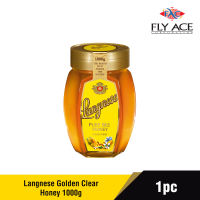
Langnese Golden Clear Honey 1000g
₱944.00
Buy on Lazada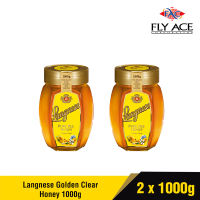
Langnese Golden Clear Honey 1000g x 2
₱1,888.00
Buy on Lazada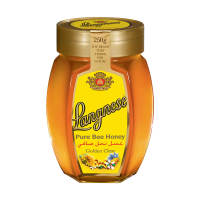
Langnese Golden Clear Honey 250g
₱293.28₱312.00
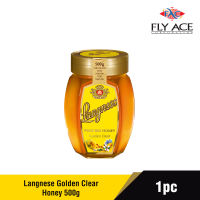
Langnese Golden Clear Honey 500g
₱518.00
Buy on Lazada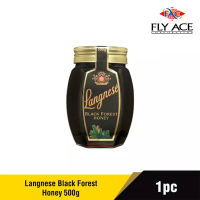
Langnese Black Forest Honey 500g
₱671.00
Buy on Lazada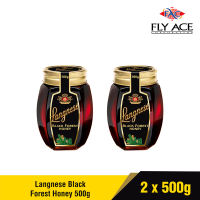
Langnese Black Forest Honey 500g x 2
₱1,342.00
Buy on Lazada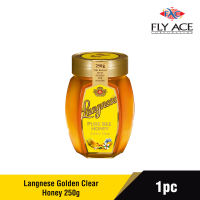
Langnese Golden Clear Honey 250g
₱312.00
Buy on Lazada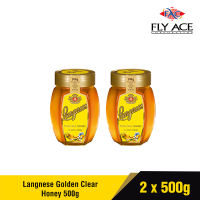
Langnese Golden Clear Honey 500g x 2
₱1,036.00
Buy on LazadaAbout Langnese
Langnese is a long-established German food brand best known for ice cream and, separately, honey. The name has roots in Hamburg and has been used commercially since the 1920s. Today, “Langnese” refers to two closely associated but distinct brand businesses: Langnese ice cream, historically associated with Unilever and now part of the Magnum Ice Cream Company, and Langnese Honey, a German honey business headquartered in Bargteheide near Hamburg.
Overview
| Category | Information |
|---|---|
| Brand name | Langnese |
| Country of origin | Germany |
| Historical roots | Hamburg |
| Ice-cream business | Langnese |
| Honey business | Langnese Honig |
| Ice-cream origins | 1935–1936 |
| Honey brand origins | 1927 |
| Founder associated with the brand | Karl Rolf Seyferth |
| Major products | Ice cream, ice lollies, cones, frozen desserts; honey |
| Major ice-cream brands/products | Cornetto, Nogger, Capri, Calippo, Viennetta, Flutschfinger, Mini Milk and others |
| Honey headquarters | Bargteheide, Schleswig-Holstein, Germany |
| Honey distribution | More than 50 countries |
Note: The historical connection between Langnese ice cream and Langnese Honey is real, but they should not simply be treated as one current company. The ice-cream and honey businesses developed along different corporate paths.2
Name and early history
The story begins with Karl Rolf Seyferth, a Hamburg businessman and importer. In 1925, Seyferth purchased approximately 5,000 kg of Californian honey at the Hamburg Stock Exchange and began developing a honey business. As demand increased, he looked for an established name that could serve as a brand.2
He eventually acquired the name Langnese from businessman Viktor Emil Heinrich Langnese. The Langnese name was already associated with a Hamburg biscuit factory with a reputation for quality. According to Langnese’s own historical account, Seyferth acquired the V.E.H. Langnese company in 1927, establishing the Langnese Honey brand.2
This is an important part of Langnese’s history: the Langnese name originally became associated with honey before becoming famous for ice cream.
Langnese Honey
Langnese Honey has been marketed since 1927 and became one of Germany’s best-known honey brands. The company describes itself as a market leader in quality honey in Germany.2
A defining feature of the brand is its hexagonal glass jar, introduced in the 1930s. Its shape evokes a honeycomb, while the slanted golden Langnese lettering became an important part of the brand’s visual identity.2
Expansion after World War II
After the war, Langnese focused on making honey into a consistent branded product despite the natural variations that occur between harvests. The company developed quality-control systems and established relationships with beekeepers and honey-producing regions. By 1958, Langnese Honey had become the market leader in Germany, according to the company’s history.2
Langnese introduced specialty honeys in 1985 and launched Flotte Biene in 1997, a squeezable honey dispenser designed to make honey easier and cleaner to use. The company says it was the world’s first honey in a practical top-down squeeze dispenser.2
Since 1965, Langnese honey has been bottled in Bargteheide, near Hamburg. The brand is now sold in more than 50 countries.2
Langnese Ice Cream
The ice-cream side of Langnese developed later.
In 1935, Karl Seyferth imported the first ice cream on a stick from Denmark to Hamburg. In 1936, the business was formally registered as Langnese-Eiskrem GmbH. By the following year, Langnese was reportedly producing around 20 million ice lollies.4
The rapid development of ice cream transformed Langnese from primarily a honey-related name into one of Germany’s major ice-cream brands.
Production was interrupted in 1940 because shortages of raw materials during World War II made ice-cream production impossible. After the war, production resumed and the brand expanded rapidly.4
Growth during the 1950s–1970s
The 1950s were an important period for Langnese. Products such as Riesenhappen, Domino and Capri helped establish the brand in the German ice-cream market, and the company says its sales increased tenfold during the decade.4
During the 1960s, Langnese expanded its portfolio with products including:
- Konfekt
- Nogger
- Cornetto
- Split
Production was moved to Heppenheim, where Langnese operated one of Europe’s largest ice-cream factories at the time.4
The 1970s brought another generation of recognizable products, including:
- Dolomiti
- Grünofant
- Mini Milk
- Brauner Bär
These products helped establish Langnese as a highly recognizable family-oriented ice-cream brand in West Germany.4
The 1980s and iconic advertising
Langnese became particularly prominent in German popular culture during the 1980s.
Its portfolio expanded with products such as:
- Ed von Schleck
- Flutschfinger
- Calippo
- Viennetta
- Nogger Choc
In 1985, Langnese launched the famous advertising campaign “Like Ice in the Sunshine.” The campaign became strongly associated with the brand and the carefree summer imagery of 1980s Germany.4
The 1990s
During the 1990s, Langnese’s advertising identity increasingly focused on summer and leisure.
Its slogan “So schmeckt der Sommer” (“That’s what summer tastes like”) became particularly associated with the brand in Germany. Beach imagery, sunshine and youthful enjoyment became central elements of Langnese’s marketing.4
This helped establish an important aspect of Langnese’s brand positioning: Langnese was not marketed simply as frozen food, but as a symbol of summer, fun and shared enjoyment.
The heart logo
Around the beginning of the 2000s, Langnese introduced its recognizable heart logo as part of its visual identity. The company describes the heart as a symbol intended to be understood by children and adults around the world.4
The heart became particularly important because it provided a common visual identity across a large portfolio of ice-cream products.
Product portfolio
Today, the German Langnese ice-cream portfolio includes numerous products and brands. The official German Langnese site currently lists 44 products, including:4
Capri
Capri is an orange-flavored fruit ice cream and one of Langnese’s long-running products. The brand describes it as having been part of the Langnese portfolio since the 1950s.4
Nogger
Nogger is a classic chocolate-and-vanilla ice-cream bar introduced in 1964. The original combines vanilla ice cream with a chocolate coating and nut/cocoa components.3
Cornetto
Cornetto is one of the most internationally recognizable ice-cream products associated with the Langnese portfolio in Germany. It combines ice cream, a wafer cone and chocolate-related toppings/sauce. The current Langnese portfolio includes varieties such as Cornetto King Cone Vanilla.4
Calippo
Calippo is a frozen ice treat traditionally consumed directly from its tube-shaped package. It has been part of Langnese’s portfolio for decades and is particularly associated with summer consumption.4
Viennetta
Viennetta is a layered frozen dessert characterized by creamy ice cream and crisp chocolate layers. It became part of Langnese’s product history during the 1980s.1
Flutschfinger
Flutschfinger is a colorful ice lolly launched in the 1980s. It became one of the recognizable children’s products in the Langnese range.4
Mini Milk
Mini Milk is a small milk-based ice cream aimed particularly at children and families. Current Langnese products include strawberry, vanilla and chocolate varieties.4
Corporate history
Langnese’s corporate history is somewhat complicated because the ice-cream and honey businesses followed different paths.
The ice-cream business developed into a major German ice-cream operation and became associated with Unilever. In Germany, the Langnese ice-cream brand was historically part of Unilever’s ice-cream business. The ice-cream business has since been separated from Unilever into the Magnum Ice Cream Company, under which Langnese is now positioned.4
Meanwhile, Langnese Honig GmbH & Co. KG operates the honey business from Bargteheide. Its current corporate information lists the company at Hammoorer Weg 25, 22941 Bargteheide, Germany.2
Therefore, it is useful to think of “Langnese” as a historic brand name that exists today in two major food categories rather than assuming every Langnese product comes from the same current company.
Brand identity
Langnese’s identity has several recurring themes.
Summer and happiness
The ice-cream brand has spent decades connecting itself with summer, sunshine, holidays and enjoyment. Campaigns such as “Like Ice in the Sunshine” and “So schmeckt der Sommer” made this positioning especially prominent.4
Family
Many Langnese products are designed for broad family appeal, from children’s ice lollies to larger sharing desserts.
Nostalgia
Products such as Nogger, Capri, Flutschfinger and Viennetta have existed for decades. As a result, Langnese has developed a strong nostalgic value among generations of German consumers.
Recognizable visual symbols
The ice-cream business is strongly associated with its heart logo, while Langnese Honey is strongly associated with its golden lettering and hexagonal honeycomb-inspired jar.1
Langnese Honey’s sourcing and quality
Langnese Honey says its honey comes from selected regions in Europe, North, Central and South America, and New Zealand. The company works with beekeepers and evaluates honey from its origin through to bottling.5
The company says each honey is subjected to multiple quality checks and is bottled in Bargteheide. Its stated philosophy is to maintain the natural characteristics of honey rather than adding or removing ingredients.5
Its portfolio includes products such as:
- Acacia honey
- Acacia honey with honeycomb
- Forest honey
- Black Forest honey
- White honey
- Various blossom and specialty honeys
- Flotte Biene dispenser products2
Cultural significance in Germany
Langnese occupies an interesting position in German consumer culture. Few ice-cream brands have maintained such a long association with summer and childhood memories.
The company’s history stretches from pre-war Germany through the post-war economic boom, the television era of the 1970s and 1980s, reunified Germany, and the modern multinational food industry.
Its products have consequently become more than ordinary frozen desserts for many German consumers. Classic Langnese products are often remembered through childhood, holidays, swimming pools, kiosks, beaches and summer vacations.
This long history is also why products that might appear relatively simple—such as a chocolate-coated ice cream bar or a fruit ice lolly—can have considerable nostalgic and cultural significance.
International presence
Although Langnese is particularly associated with Germany, the company’s products and associated brands have an international footprint.
Langnese Honey states that its products are available in more than 50 countries.2
The ice-cream portfolio is also part of a much broader international ice-cream business, with products such as Cornetto, Calippo and Viennetta appearing in different markets, sometimes under different local brand names.
Timeline
| Year | Event |
|---|---|
| 1925 | Karl Rolf Seyferth purchases 5,000 kg of Californian honey in Hamburg. |
| 1927 | Seyferth acquires the V.E.H. Langnese company/name; Langnese Honey is established. |
| 1930s | The distinctive hexagonal Langnese honey jar is developed. |
| 1935 | Seyferth imports ice cream on sticks from Denmark. |
| 1936 | Langnese-Eiskrem GmbH is registered. |
| 1937 | Production reaches about 20 million ice lollies. |
| 1940 | Ice-cream production stops because of wartime raw-material shortages. |
| 1948 | Ice-cream business resumes after the war. |
| 1950s | Langnese ice cream expands rapidly; Capri and other products become established. |
| 1958 | Langnese Honey becomes German market leader, according to the company. |
| 1960s | Products including Nogger, Cornetto and Split are introduced; production expands in Heppenheim. |
| 1965 | Langnese honey begins being bottled in Bargteheide. |
| 1970s | Dolomiti, Mini Milk, Grünofant and Brauner Bär become part of the portfolio. |
| 1980s | Flutschfinger, Calippo, Viennetta and other major products appear; “Like Ice in the Sunshine” campaign launches. |
| 1985 | Langnese Honey introduces specialty honey products. |
| 1990s | “So schmeckt der Sommer” becomes a major Langnese ice-cream slogan. |
| 1997 | Flotte Biene honey dispenser launches. |
| 2000s | Langnese’s heart logo becomes a major part of its identity. |
| Today | Langnese remains a major German ice-cream brand, while Langnese Honey continues as a major German honey brand.1 |