Shop on Lazada
Kellogg’s products
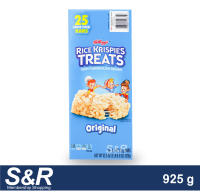
Kelloggs Rice Krispies Treats Original Crispy Marshmallow Squares 25 bars
₱843.00
Buy on Lazada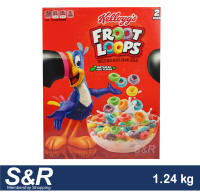
Kelloggs Froot Loops Sweetened Multi-Grain Cereal 1.24kg
₱793.00
Buy on Lazada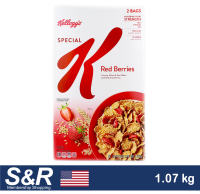
Kelloggs Special K Red Berries Cereal
₱863.00
Buy on Lazada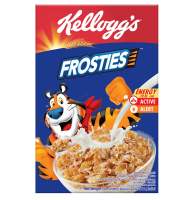
Kelloggs Frosties Corn Cereal 300g
₱189.53₱199.50
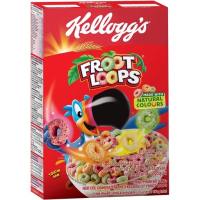
Kelloggs Froot Loops Breakfast Cereal 150g
₱137.28₱144.50
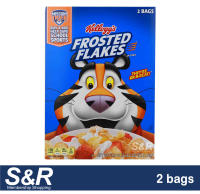
Kelloggs Frosted Flakes of Corn 1.7kg
₱854.00
Buy on Lazada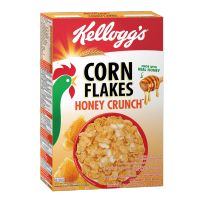
Kelloggs Honey Crunch Corn Flakes 250g
₱170.53₱179.50
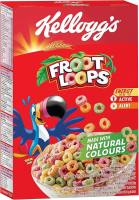
Kelloggs Froot Loops Breakfast Cereal 285g
₱228.00₱240.00
About Kellogg’s
Kellogg’s is one of the world’s most recognised breakfast food brands, historically synonymous with ready-to-eat cereals. Its best-known products include Corn Flakes, Frosted Flakes, Froot Loops, Rice Krispies, Special K, Raisin Bran, All-Bran, and Frosted Mini-Wheats. The brand traces its origins to W.K. Kellogg and the development of toasted corn flakes in Battle Creek, Michigan, United States, in the late 19th century.
The corporate structure behind the Kellogg’s name has undergone significant change in recent years. The former Kellogg Company was separated in 2023 into Kellanova, which retained much of the international cereal and snack business, and WK Kellogg Co, which focused primarily on cereal in North America. In 2026, WK Kellogg Co became a wholly owned subsidiary of Ferrero, while Kellanova was separately acquired by Mars.1
Overview
| Category | Information |
|---|---|
| Brand name | Kellogg’s |
| Industry | Food & beverages |
| Main category | Breakfast cereals and related foods |
| Origin | Battle Creek, Michigan, United States |
| Founder | Will Keith (W.K.) Kellogg |
| Origins | 1890s |
| Company founded | 1906 |
| Original company name | Battle Creek Toasted Corn Flake Company |
| Signature product | Kellogg’s Corn Flakes |
| Famous brands/products | Corn Flakes, Frosted Flakes, Froot Loops, Rice Krispies, Special K, Raisin Bran, All-Bran, Frosted Mini-Wheats |
| Current corporate situation | Kellogg’s-branded businesses are divided between different corporate owners following the 2023 separation |
| Major historical headquarters | Battle Creek, Michigan |
| Founder | W.K. Kellogg |
The brand’s history officially reaches back to 1894, when W.K. Kellogg and his brother, Dr John Harvey Kellogg, experimented with cereal foods. W.K. Kellogg eventually developed toasted corn flakes, which became the foundation of the Kellogg’s brand. The company itself was established in February 1906.2
The beginning of Kellogg’s
The story of Kellogg’s begins in Battle Creek, Michigan, a city that became closely associated with the American cereal industry. W.K. Kellogg worked with his brother John Harvey Kellogg, who was involved in nutrition and health practices at the Battle Creek Sanitarium. During their experiments with grains, they discovered that cooked grain could be processed into thin flakes.
According to Kellogg’s historical account, an early experiment involved accidentally flaking wheat berries. W.K. Kellogg continued experimenting and eventually succeeded in producing corn flakes. The resulting product became Kellogg’s Corn Flakes, one of the most recognisable breakfast cereals in history.
In 1906, W.K. Kellogg founded the Battle Creek Toasted Corn Flake Company and hired its first 44 employees. This marked the formal beginning of the business that would eventually become the Kellogg Company.3
W.K. Kellogg
Will Keith Kellogg (W.K. Kellogg) was the central figure behind the commercial development of Kellogg’s. Rather than treating cereal simply as a food product, Kellogg helped turn it into a modern consumer brand by emphasising quality, nutrition, packaging, advertising, and consistency.
His philosophy was strongly connected with nutrition and wellness. The company later became known for introducing nutritional information and educational initiatives alongside its products. Kellogg also established the W.K. Kellogg Foundation in the 1930s, an independent philanthropic organisation focused on helping children and communities.4
W.K. Kellogg’s legacy extends beyond Corn Flakes; he helped establish breakfast cereal as a major category of packaged food.
Corn Flakes: The product that built the brand
Kellogg’s Corn Flakes is arguably the defining product of the brand. The cereal consists of thin, toasted flakes made primarily from corn. Its golden appearance and simple packaging helped establish the visual identity that consumers came to associate with Kellogg’s.
Kellogg describes Corn Flakes as its original cereal and states that the product has been part of consumers’ breakfasts for more than a century.5 Corn Flakes was important not simply because it was commercially successful, but because it helped popularise the idea of boxed, ready-to-eat cereal as a convenient breakfast food. That basic concept became the foundation of a massive food industry.
Expansion during the 20th century
Following the success of Corn Flakes, Kellogg’s expanded its product range significantly throughout the 20th century.
1915: Bran Flakes
Kellogg introduced Bran Flakes, promoted as a high-fibre cereal. All-Bran followed in 1916.6
1928: Rice Krispies
Kellogg launched Rice Krispies, another product that became one of the company’s signature brands.7
1930s: W.K. Kellogg Foundation
The W.K. Kellogg Foundation was established to support children’s welfare and development.8
1950s: Tony the Tiger
One of Kellogg’s most important marketing characters, Tony the Tiger, was introduced in 1952. He became the mascot of Frosted Flakes and one of the most recognisable cereal mascots in advertising history.9
1970: Frosted Mini-Wheats
Frosted Mini-Wheats was introduced internationally, expanding Kellogg’s presence in the wheat-based cereal category.
Famous brands
Over the decades, Kellogg’s built an enormous portfolio of cereals. Some of its best-known products and brands include:
- Kellogg’s Corn Flakes
- Frosted Flakes
- Froot Loops
- Rice Krispies
- Rice Krispies Treats
- Special K
- Raisin Bran
- All-Bran
- Frosted Mini-Wheats
- Corn Pops
- Crispix
- Apple Jacks
- Honey Smacks
- Krave
- Kashi
- Bear Naked
- Cracklin’ Oat Bran
The current WK Kellogg portfolio lists many of these brands, including Corn Flakes, Frosted Flakes, Froot Loops, Rice Krispies, Special K, Raisin Bran, All-Bran, and Frosted Mini-Wheats.
Not every Kellogg’s-branded product is currently controlled by the same corporate entity due to the company’s 2023 separation and subsequent acquisitions.
Mascots and characters
One of Kellogg’s greatest marketing innovations was the use of memorable characters to give individual cereals their own personalities.
Tony the Tiger
Tony the Tiger is the mascot of Frosted Flakes and is famous for the advertising slogan “They’re Gr-r-reat!”. Tony was introduced in 1952 and became one of the most recognisable characters in food advertising.10
Toucan Sam
Toucan Sam became associated with Froot Loops.
Snap, Crackle and Pop
These three characters became the famous personalities associated with Rice Krispies.
This strategy allowed Kellogg’s to market different cereals not merely as foods, but as distinct experiences and personalities, particularly appealing to children and families.
Branding and packaging
Kellogg’s is particularly notable for its strong visual branding. The classic Kellogg’s logo uses a distinctive red script-style wordmark. The packaging of its cereals generally combines bright colours, large product names, illustrated mascots, photographs of the cereal, nutrition information, serving suggestions, and family-oriented imagery.
The cereal box became an important advertising medium in its own right. Kellogg was also an early company to place nutritional and product information prominently on cereal packaging, reflecting its historical emphasis on nutrition education.
International expansion
Kellogg’s eventually expanded far beyond the United States. Corn Flakes entered Canada in 1914, and the company subsequently expanded its manufacturing and distribution activities into countries including the United Kingdom, Australia, Mexico, Japan, India, and South Africa.11
The brand became particularly successful because breakfast cereals could be adapted to different markets while maintaining recognisable global branding. Today, Kellogg’s products and brands have a presence in numerous countries, although the exact product portfolio differs significantly by market. For example, the cereals sold under the Kellogg’s name in the United States may differ from those sold in the United Kingdom, India, Australia, or the Philippines.
Beyond traditional breakfast cereal
Although cereal remains the heart of Kellogg’s identity, the historical Kellogg Company eventually became a much broader food company. It expanded into categories such as snack foods, cereal bars, frozen foods, crackers, cookies, plant-based foods, and convenience foods.
Some major brands historically associated with Kellogg Company included Pringles, Cheez-It, Pop-Tarts, Eggo, RXBAR, MorningStar Farms, and Nutri-Grain, among others. This expansion ultimately created a company that was much broader than its original cereal business.
The 2023 Kellogg split
One of the most important developments in Kellogg’s modern history occurred in October 2023. The former Kellogg Company separated its operations into two independent companies.
Kellanova
Kellanova became the company focused primarily on global snacking, international cereal and noodles, and North American frozen foods. Its portfolio included brands such as Pringles, Cheez-It, Pop-Tarts, RXBAR, Eggo, and international Kellogg’s cereal products.12
WK Kellogg Co
WK Kellogg Co became focused primarily on North American cereal. It retained major cereal brands including Corn Flakes, Frosted Flakes, Froot Loops, Rice Krispies, Special K, Raisin Bran, Frosted Mini-Wheats, and All-Bran.
The separation was completed on 2 October 2023.13 Consequently, the old concept of “Kellogg Company” and the modern Kellogg’s brand should not be treated as exactly the same thing.
Post-split developments
The corporate story became even more complicated after 2023. In February 2026, Ferrero announced that it had completed its acquisition of WK Kellogg Co, making WK Kellogg Co a wholly owned subsidiary of Ferrero.16
Meanwhile, the other successor company, Kellanova, was acquired separately by Mars. Current Kellogg’s websites direct consumers toward either WK Kellogg Co for cereals or Kellanova for various snacks and foods.14
As a result, there is no longer one single corporation equivalent to the old Kellogg Company.
Current ownership structure
A simplified way of understanding the modern situation is:
- Original Kellogg Company
- ↓
- 2023 separation
- ↙︎ ↘︎
- WK Kellogg Co Kellanova
- ↓ ↓
- Ferrero Mars
Ferrero completed its acquisition of WK Kellogg Co in February 2026.17
The Kellogg’s trademark and individual Kellogg’s products can therefore appear under different corporate arrangements depending on the product and geographic market. Historical agreements between Kellanova and WK Kellogg Co also allocated trademark and licensing rights between the two businesses.15
Nutrition
Nutrition has been part of Kellogg’s identity since its origins. W.K. Kellogg’s early philosophy was strongly influenced by the idea that cereal and grains could contribute to healthier diets. The company later invested in nutrition research, dietary education, and product development.
Over time, however, the brand has also faced broader debates surrounding breakfast cereals, including questions about added sugar, portion sizes, marketing to children, processing, nutritional value, fortification, and dietary fibre. Kellogg’s has responded with products aimed at different consumer needs, including high-fibre cereals, lower-sugar offerings, and products positioned around nutrition and wellness.
Social and cultural influence
Kellogg’s has had an influence far beyond the cereal aisle. The brand helped establish several concepts that became standard in modern consumer marketing:
- The cereal box as advertising: The packaging itself became a communication platform.
- Mascot-based branding: Characters such as Tony the Tiger and Toucan Sam gave products recognisable personalities.
- Children’s marketing: Cereal brands became strongly connected with children’s television, characters, and family breakfast culture.
- Breakfast as a branded occasion: Kellogg’s helped transform breakfast from a simple meal into a packaged-food category dominated by recognisable brands.
- Globalisation of American breakfast culture: Through international expansion, Kellogg’s helped make ready-to-eat cereal familiar in markets around the world.
Brand identity
At its core, Kellogg’s has traditionally positioned itself around several themes:
Breakfast
Breakfast is the central cultural territory of the brand.
Family
Kellogg’s advertising has historically presented cereal as a food shared by families.
Nutrition
The company has long emphasised grains, vitamins, minerals, and fibre.
Convenience
Ready-to-eat cereal offers a quick alternative to preparing a traditional cooked breakfast.
Fun
Products such as Froot Loops and Frosted Flakes use colourful packaging and mascots to create a playful identity.
Nostalgia
For many consumers, Kellogg’s products are associated with childhood, family breakfasts, and familiar advertising characters.
Significance in food history
Kellogg’s is important in food history because it helped transform cereal from a relatively specialised health-food concept into a mass-market consumer product. Its influence can be seen in the way modern cereals are manufactured, packaged, advertised, branded, fortified, distributed, and marketed to different age groups.
The company also helped establish Battle Creek as one of the historic centres of the American cereal industry.
Major historical timeline
| Year | Event |
|---|---|
| 1894 | W.K. Kellogg’s early cereal experiments begin |
| 1890s | Development of toasted cereal flakes |
| 1906 | Battle Creek Toasted Corn Flake Company founded |
| 1914 | Corn Flakes introduced in Canada |
| 1915 | Bran Flakes introduced |
| 1923 | Kellogg expands its nutrition expertise |
| 1928 | Rice Krispies introduced |
| 1930s | W.K. Kellogg Foundation established |
| 1952 | Tony the Tiger introduced |
| 1970 | Frosted Mini-Wheats introduced internationally |
| 2000 | Kellogg acquires Kashi |
| 2006 | Kellogg celebrates its 100th anniversary |
| 2012 | Krave introduced |
| 2022 | Insta-Bowls introduced |
| 2023 | Kellogg Company separates into Kellanova and WK Kellogg Co |
| 2026 | Ferrero completes acquisition of WK Kellogg Co |
The historical timeline is based primarily on Kellogg/WK Kellogg’s own corporate history.
Origin of the name
“Kellogg’s” comes from the surname of W.K. Kellogg, the entrepreneur who established the cereal business in 1906. The apostrophe-s construction became an important part of the brand identity, essentially associating the products with the Kellogg family name. Over more than a century, the name evolved from a small cereal manufacturer in Michigan into a globally recognisable consumer-food brand.
Kellogg’s today
In 2026, Kellogg’s remains one of the most recognisable names in the history of breakfast cereal. Its most famous legacy products—particularly Corn Flakes, Frosted Flakes, Froot Loops, Rice Krispies, Special K, and Raisin Bran—continue to represent the brand’s century-long connection with breakfast.
At the same time, the corporate structure behind the name has changed dramatically. The company that was once simply known as Kellogg Company no longer exists in its former structure. Its businesses were separated in 2023, with WK Kellogg Co becoming the North American cereal company and Kellanova becoming the global snacking and international-food company. WK Kellogg Co was subsequently acquired by Ferrero in 2026, while Kellanova was separately acquired by Mars.16
In historical terms, Kellogg’s is both a brand and a legacy of one of the world’s pioneering cereal companies. In corporate terms, however, the Kellogg’s name now represents a collection of products whose ownership and licensing arrangements depend on the market and product category.
References
- Our History | Kellogg’s
- Unleashing Potential
- Home | Kellogg’s
- Our History | Kellogg’s
- Our Passion for Nutrition | Kellogg’s
- Kellogg’s Corn Flakes® – WK Kellogg Co®
- How It All Started-About Kellogg’s MENAT and SA | Kellogg’s MENAT
- Kellogg’s Heritage | Kellogg’s
- Our History | Kellogg’s South Africa
- The original plant-based food company | Kellogg’s
- klg-20241228
- sec.gov
- Home – WK Kellogg Co®
- Our Foods – WK Kellogg Co®
- Kellanova US | Kellogg’s Brand Page
- FERRERO COMPLETES ACQUISITION OF WK KELLOGG …
- EX-99.1