Shop on Lazada
Lea & Perrins products
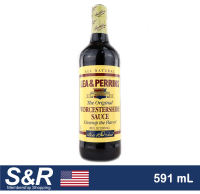
Lea & Perrins The Original Worcestershire Sauce 591 mL
₱299.00
Buy on Lazada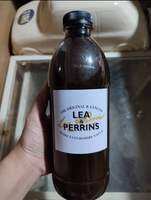
Lea & Perrins Worcestershire Sauce 4 Liters EXP 2027
₱299.00
Buy on Lazada
Lea & Perrins Worcestershire Sauce Bottle 290ml
₱255.00
Buy on Lazada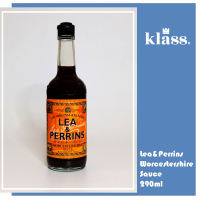
Lea & Perrins Worcestershire Sauce 290ml
₱243.00
Buy on Lazada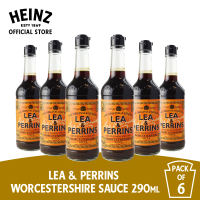
Heinz Lea & Perrins Worcestershire Sauce Bottle 290ML (Pack of 6)
₱1,530.00
Buy on Lazada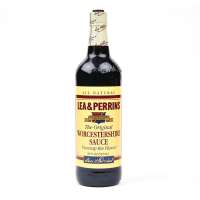
LEA & PERRINS The Original Worcestershire Sauce 591ml 20 FL oz.{UK}
₱659.00₱719.00
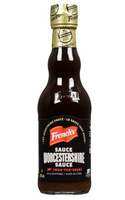
Worcestershire Sauce
₱334.00
Buy on Lazada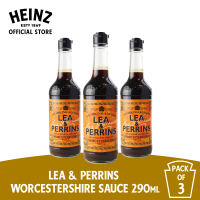
Heinz Lea & Perrins Worcestershire Sauce Bottle 290ML (Pack of 3)
₱765.00
Buy on LazadaAbout Lea & Perrins
Lea & Perrins is a historic British food brand best known for its Worcestershire sauce, a fermented savoury condiment created in Worcester, England, in the 19th century. Founded by chemists John Wheeley Lea and William Henry Perrins, it has become one of the most recognisable names in Worcestershire sauce worldwide. Today, Lea & Perrins is part of Kraft Heinz, and its original sauce remains closely associated with the city of Worcester.1
Quick facts
| Category | Information |
|---|---|
| Brand | Lea & Perrins |
| Industry | Food & condiments |
| Founded | 1837 |
| Founders | John Wheeley Lea; William Henry Perrins |
| Origin | Worcester, Worcestershire, England |
| Best known for | Lea & Perrins Worcestershire Sauce |
| Current parent company | Kraft Heinz |
| Main product category | Worcestershire sauce |
| Original factory | Worcester, England |
| Global presence | Exported to more than 130 countries |
| Signature characteristic | Long-aged, fermented savoury sauce |
| Royal Warrant | Granted in 1904 and still held today |
The brand’s own history states that it began in Worcester in 1837 and that its sauce is now exported to more than 130 countries.1
Origins
Lea & Perrins traces its origins to Worcester, a city in the English county of Worcestershire.
The two men behind the brand were John Wheeley Lea and William Henry Perrins, who worked as chemists and operated a business in Worcester. In the 1830s, they developed the condiment that would eventually become known as Worcestershire Sauce. The commercial launch is generally dated to 1837.1
The early story surrounding the recipe is partly historical fact and partly company legend. The traditional account says that the chemists prepared a sauce based on a recipe associated with a nobleman who had spent time in India. The first mixture was supposedly considered unpleasant and was left to mature. After approximately 18 months, the mixture was rediscovered and tasted again, at which point fermentation and ageing had transformed it into a flavourful sauce.1
The exact origin of the recipe is more complicated than the traditional story suggests. Historians have questioned elements of the popular “Lord Sandys/India” narrative, so it is best regarded as brand lore rather than an entirely established historical fact.2
The creation of Worcestershire sauce
The product created by Lea and Perrins became known as Worcestershire Sauce, taking its name from the county in which it originated.
It is a distinctive type of fermented and aged condiment. Rather than being simply sweet, salty, or acidic, the sauce combines several different flavour dimensions:
- Sourness from vinegar
- Sweetness from ingredients such as molasses and sugar
- Saltiness
- Savoury/umami flavours
- Fruity and acidic notes from tamarind
- Aromatic flavours from onions, garlic, cloves and spices
- A distinctive savoury character from anchovies
The precise formulation varies somewhat by market, but Kraft Heinz’s U.S. product information lists ingredients including vinegar, molasses, sugar, salt, onions, anchovies, garlic, cloves, tamarind extract, natural flavourings and chili-pepper extract.1
The sauce is particularly notable because its flavour develops through extended maturation. Lea & Perrins states that its sauce is aged for approximately 18 months before it reaches its finished character.1
The famous “18-month” process
One of Lea & Perrins’ most important points of differentiation is the maturation period.
Rather than producing the sauce as an immediately finished mixture, the ingredients undergo a lengthy process that allows the flavours to develop and mellow.
The company describes the sauce as taking 18 months to mature. This lengthy ageing process has become an important part of the brand’s identity and marketing, emphasising patience, tradition and craftsmanship.1
This is one reason Lea & Perrins frequently positions itself not simply as another sauce manufacturer but as the original Worcestershire sauce brand.
Rise to international fame
Lea & Perrins did not remain a small local Worcester product for long.
By the latter part of the 19th century, Worcestershire Sauce had become internationally known and was being exported throughout the British Empire.1
The sauce was also introduced to the United States in the 19th century, with historical accounts dating its first American imports to around 1839.2
Its international success was particularly significant because the product was able to travel well and could be used in a wide variety of cuisines. As British trade and cultural influence expanded around the world, Worcestershire sauce became increasingly familiar outside Britain.
The iconic bottle
The bottle is an important part of the Lea & Perrins identity.
The brand’s packaging evolved during the 19th century, and the familiar dark glass bottle with an orange-and-black label became strongly associated with the product.
According to the company’s history, the distinctive orange label was introduced by the end of the 19th century partly to distinguish the genuine product from competing copies. The basic appearance has changed relatively little since then.1
The packaging therefore performs two functions:
- Brand recognition — consumers can identify Lea & Perrins quickly.
- Authenticity — the traditional appearance reinforces the idea of an original, historic product.
The bottle itself has also become part of the visual vocabulary of Worcestershire sauce.
The Worcester factory
Lea & Perrins has a particularly strong connection with its hometown.
The company opened its major Worcester factory in 1897. The factory has remained an important part of the brand’s identity and, according to Kraft Heinz, Lea & Perrins sauce continues to be made in Worcester in essentially the traditional manner.1
The factory has had a turbulent history. During the Second World War, parts of the facility were commandeered by the British Army. Later, in 1964, the factory suffered a major fire. Nevertheless, production continued and the Worcester site remained central to the brand.1
This long connection between the product and its place of origin is a major part of Lea & Perrins’ heritage.
Royal Warrant
Another notable milestone came in 1904, when Lea & Perrins received a Royal Warrant.
A Royal Warrant historically indicates that a company has supplied goods or services to members of the British royal household. Lea & Perrins says that it received its warrant in 1904 and continues to hold it.1
For the brand, this became another symbol of its British heritage and longevity.
Flavour profile
Lea & Perrins Worcestershire Sauce has a flavour profile that is difficult to reduce to a single category. It is generally:
- Savoury
- Tangy
- Slightly sweet
- Salty
- Acidic
- Spicy/aromatic
- Rich in umami
The combination of fermented ingredients, vinegar, tamarind, spices and anchovies produces a relatively concentrated flavour. Consequently, it is normally used in small quantities rather than as a sauce poured over food in large amounts.1
Culinary uses
Lea & Perrins became successful partly because Worcestershire sauce is extraordinarily versatile.
Meat seasoning
It is commonly added to:
- Steak
- Burgers
- Meatloaf
- Meatballs
- Beef stews
- Gravy
- Marinades
Cooking ingredient
It can provide additional depth to:
- Soups
- Sauces
- Rice dishes
- Vegetables
- Egg dishes
- Casseroles
Drinks
One of its most famous uses is in the Bloody Mary, where a small amount of Worcestershire sauce contributes saltiness and savoury complexity. The sauce is also associated with drinks such as the Canadian Caesar.2
Role of anchovies
One of the most interesting aspects of the original-style sauce is that it traditionally contains anchovies.
Anchovies contribute a strong source of savoury/umami character, but in the finished sauce their presence is not necessarily obvious as a conventional “fish flavour”.
Kraft Heinz explicitly lists anchovies in the ingredients of its U.S. Original Worcestershire Sauce and identifies anchovy as an allergen.1
This is also important when comparing Lea & Perrins with vegan Worcestershire-style sauces: the original formulation is not vegetarian or vegan in markets where anchovies are included.
The term “Worcestershire”
An interesting piece of food history is that “Worcestershire sauce” is now a generic product category rather than an exclusive Lea & Perrins name.
Lea & Perrins was the first sauce to be commercialised under the Worcestershire name. However, in the late 19th century, legal developments meant that the geographical term could not be monopolised as a trademark in the way the company might have preferred. Consequently, other manufacturers could produce and sell products called Worcestershire sauce.2
This helped create an entire product category while Lea & Perrins retained its position as the original and most historically prominent brand.
Ownership history
Lea & Perrins has not remained an entirely independent company throughout its history. Its corporate ownership has changed several times. Historical references identify successive ownership through companies including:
- HP Foods
- Imperial
- Danone
- Kraft Heinz
Lea & Perrins became part of Kraft Heinz in the mid-2000s, and Kraft Heinz is the current parent company.2
Despite these changes in corporate ownership, the Lea & Perrins name and the Worcester heritage have remained central to the brand.
Current status
Today, Lea & Perrins remains primarily associated with Worcestershire Sauce.
Kraft Heinz currently markets the brand internationally, with different products and formulations depending on the market. In the United States, for example, the portfolio includes the Original Worcestershire Sauce and a Reduced Sodium version.1
The company says Lea & Perrins products are exported to more than 130 countries, making the brand a global condiment rather than simply a British regional specialty.1
Brand identity
Lea & Perrins’ identity is built around several interconnected ideas:
Heritage
The brand can trace its commercial history back to 1837, giving it nearly two centuries of history.
Authenticity
Lea & Perrins emphasises its status as the original Worcestershire sauce and its continued connection with Worcester.
Craftsmanship
The 18-month maturation process provides a strong foundation for its traditional positioning.
Britishness
The Worcester origin, historic packaging, Royal Warrant and long-standing manufacturing history all contribute to a distinctly British image.
Consistency
The brand’s emphasis on maintaining its traditional recipe and production approach is an important part of its appeal.
Major historical timeline
| Year | Event |
|---|---|
| 1830s | John Wheeley Lea and William Henry Perrins develop the sauce in Worcester |
| 1837 | Lea & Perrins Worcestershire Sauce is commercialised |
| 1839 | Early exports/imports reach the United States |
| Late 19th century | The sauce gains international recognition |
| 1897 | New Worcester factory opens |
| Late 1890s | The iconic orange label becomes established |
| 1904 | Lea & Perrins receives a Royal Warrant |
| World War II | The Worcester factory is commandeered by the British Army |
| 1964 | Factory suffers a major fire |
| 2005–06 | Lea & Perrins becomes part of the Kraft Heinz corporate lineage |
| Today | Brand is sold internationally in more than 130 countries |
Historical dates and milestones are based primarily on Kraft Heinz’s official brand history and supporting historical sources.12
The Lea & Perrins legend
The story of Lea & Perrins is especially interesting because its history combines documented facts with a famous origin legend.
The popular story goes roughly like this:
A nobleman returned from India with a recipe for a distinctive sauce and asked the Worcester chemists Lea and Perrins to reproduce it.
The resulting mixture supposedly tasted terrible. It was placed in storage and forgotten. Months later, the chemists tasted it again and discovered that fermentation and ageing had transformed the mixture into something delicious.
The company itself continues to tell the story in a simplified form, emphasising the 18-month maturation that transformed the original mixture.1
However, historians have found problems with some details of the nobleman/India story. In particular, the historical identification of the supposed “Governor of Bengal” does not stand up well against available historical records. Therefore, the story should be understood as Lea & Perrins folklore rather than established fact in every detail.2
That ambiguity has arguably made the brand even more fascinating: the recipe itself has long been surrounded by an aura of secrecy.
Cultural significance
Lea & Perrins is more than a sauce brand. It has become a recognisable part of British food culture.
“Worcestershire sauce” itself has become a generic term used throughout the world, while Lea & Perrins remains closely associated with the original product.
The sauce has also influenced culinary traditions far beyond Britain. It became particularly important in meat cookery, cocktails and savoury dishes in North America and other regions.
Its continued existence after nearly two centuries is also unusual in the modern food industry, where brands and products frequently undergo substantial changes.
Distinctive characteristics
If the brand were reduced to a few defining characteristics, they would be:
1837 origin + Worcester heritage + 18-month maturation + distinctive recipe + iconic bottle + global distribution.
Its competitive advantage is therefore not simply the flavour of the sauce. It is the combination of history, authenticity, recognisable packaging, manufacturing heritage and accumulated brand equity.
That is why Lea & Perrins can occupy a different position from a generic Worcestershire sauce: consumers are buying not only a condiment but also the story and heritage associated with the original brand.
Current product portfolio
The brand remains heavily concentrated around Worcestershire sauce rather than having a huge portfolio of unrelated food products.
Kraft Heinz’s U.S. portfolio currently identifies:
- Lea & Perrins The Original Worcestershire Sauce
- Lea & Perrins Worcestershire Sauce with Reduced Sodium
The Original product is sold in multiple bottle sizes.1
Different countries can have different formulations, sizes and product offerings, so the exact ingredient list should be checked against the label for the specific market.
Overall assessment
Lea & Perrins is one of the world’s classic heritage condiment brands.
Its importance comes from the fact that it effectively transformed a local 19th-century fermented sauce into a globally recognised food category. Founded in Worcester in 1837 by John Wheeley Lea and William Henry Perrins, the company established Worcestershire sauce as an internationally known condiment. Its distinctive flavour comes from a complex blend of vinegar, tamarind, sweeteners, spices, aromatics and traditionally anchovies, followed by lengthy maturation.1
Nearly two centuries later, the brand continues to leverage the same core assets: Worcester origin, traditional production, iconic packaging, British heritage and the “original Worcestershire sauce” positioning. It is now owned by Kraft Heinz but retains a strong identity of its own.1
In short:
Lea & Perrins is the historic British brand most closely associated with Worcestershire sauce, founded in Worcester in 1837 and built around a distinctive aged, fermented savoury condiment that became a global culinary staple.