Shop on Lazada
LEITZ products
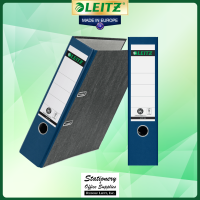
LEITZ 1080 Board Lever Arch File 8cm Spine A4size - Made in Europe
₱380.00
Buy on Lazada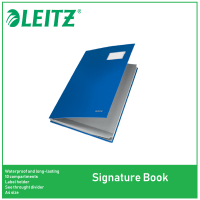
LEITZ 5701 Signature Book 10 Compartments A4 - MADE IN EUROPE
₱1,650.00
Buy on Lazada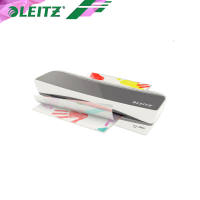
Leitz iLAM Home Laminator Machine A4 2 rollers
₱2,850.00
Buy on Lazada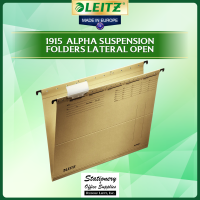
Leitz 1915 Alpha Suspension Folders A4 - Made in Europe
₱80.00
Buy on Lazada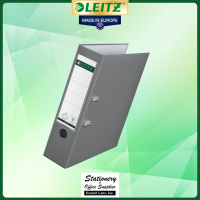
Leitz 1010 Plastic Lever Arch File 80mm Spine A4 - MADE IN EUROPE
₱495.00
Buy on Lazada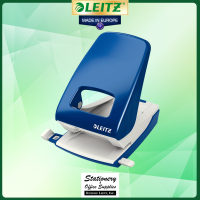
LEITZ 5138 Strong Metal Office Puncher - MADE IN EUROPE
₱1,340.00
Buy on Lazada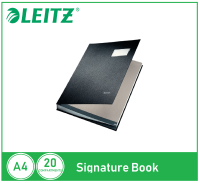
LEITZ 5700 Signature Book 20 Compartments A4 - Made in Europe
₱2,420.00
Buy on Lazada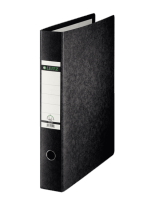
LEITZ 1072 Hard Board Lever Arch File A3 - MADE IN EUROPE
₱930.00
Buy on LazadaAbout LEITZ
Overview
LEITZ is a historic German office-products brand best known for its lever-arch files, folders, filing systems, and workplace-organization products. Its roots go back to 1871, when German mechanic and entrepreneur Louis Leitz established a workshop in Stuttgart. Over more than 150 years, the name became closely associated with organized document storage and, particularly in Germany, the word Leitz-Ordner became almost synonymous with a ring/lever file.1
Today, LEITZ is part of the international office-products group ACCO Brands, following Esselte’s acquisition of Leitz in 1998 and ACCO Brands’ acquisition of Esselte in 2017. The brand continues to focus on filing, organization, workspace, and office-product solutions.1
Important distinction: LEITZ office products are not the same company as the Leitz family of optical companies associated with Leica cameras and microscopes. The office-products company was founded by Louis Leitz in Stuttgart; the optical Leitz company was founded by Ernst Leitz in Wetzlar.1
Quick facts
| Attribute | Information |
|---|---|
| Brand | LEITZ |
| Industry | Office supplies / workplace organization |
| Origin | Germany |
| Founded | 1871 |
| Founder | Louis Leitz |
| Original location | Stuttgart-Feuerbach, Germany |
| Famous for | Lever-arch files and filing systems |
| Current corporate owner | ACCO Brands |
| Current company | LEITZ ACCO Brands GmbH & Co. KG |
| Heritage | More than 150 years |
| Main identity | Filing, organization and workspace products |
The company’s historical headquarters are associated with Stuttgart-Feuerbach, where Louis Leitz developed his business from a small workshop into a major office-products manufacturer.
Origins
The story of LEITZ begins in 1871 in Stuttgart, Germany.
At the age of 25, Louis Leitz (1846–1918) established a mechanical workshop together with Carl Heinrich. The original business produced metal components for office-organizing products and business ledgers. At the time, Germany was rapidly industrializing, and businesses and government organizations were generating increasing quantities of paperwork.1
Leitz recognized that simply producing paper was not enough: businesses also needed a practical way to store, organize, retrieve, and manage documents.
That observation would ultimately define the company’s future.
Louis Leitz and the invention of the modern file
The most important figure in LEITZ’s history is its founder, Louis Leitz.
During the late 19th century, Leitz worked on improving existing filing systems. In 1893, he developed an early Leitz file, and through the following years he refined the mechanism. By the mid-1890s, he had developed an improved lever mechanism that made it easier to open and close the file and insert or remove individual sheets.
This was important because filing systems at the time could be cumbersome. Leitz’s design made it possible to:
- Open and close a file using a lever.
- Add or remove individual sheets without dismantling the entire file.
- Organize large quantities of correspondence and documents.
- Store documents vertically on shelves.
- Retrieve files more easily.
The resulting lever-arch file became the defining product of the company.
The Region Stuttgart organization describes the mechanism as allowing collections of documents to be opened, closed and individual pages inserted at different points, helping establish the modern Leitz file.2
The famous LEITZ file
The Leitz-Ordner became the company’s signature product.
One particularly important development was the decision to put the Leitz name prominently on the spine of the file. In 1901, the company registered the Leitz-Ordner A name as a trademark. The recognizable green-and-black visual identity subsequently became strongly associated with filing and office organization.1
The product became so successful that “Leitz” effectively became a generic reference for a file/binder in German everyday language.
This is an especially interesting example of brand recognition: the company didn’t merely become famous for a product—the brand name itself became associated with the product category.
In modern marketing terminology, this is an exceptionally strong form of brand awareness.
Expansion of the product range
Although filing remains central to LEITZ’s identity, the company gradually expanded beyond binders.
Its products historically and currently cover areas such as:
- Lever-arch files
- Ring binders
- Folders
- Document storage
- Filing accessories
- Dividers and indexes
- Desk organization
- Stapling and punching
- Storage boxes
- Laminating equipment
- Document shredders
- Workspace accessories
- Ergonomic workplace products
The evolution makes sense strategically: rather than simply selling a binder, LEITZ developed into a broader workplace organization brand.
Modern descriptions of the brand include products ranging from folders and hanging files to staplers, storage boxes, laminators and shredders.3
LEITZ’s visual identity
One of the most recognizable aspects of traditional LEITZ products is their green-and-black appearance.
The classic LEITZ binder became visually distinctive through:
- Green-colored covers
- Black spine elements
- A recognizable LEITZ logo
- Spine labels
- Finger holes
- Lever mechanisms
- Standardized filing dimensions
The green color became particularly strongly associated with traditional German office filing.
The company introduced additional functional refinements over time. For example, a finger hole was introduced on the side of the binder around 1911, making it easier to pull a file from a tightly packed shelf.1
These seemingly small details illustrate an important part of LEITZ’s philosophy: office organization should be functional as well as durable.
From German manufacturer to international brand
During the early 20th century, LEITZ expanded its operations beyond Stuttgart.
The company opened a branch office in Vienna in 1905 and established a branch factory in Berlin in 1911. By 1914, shortly before World War I, the company had more than 200 employees.1
The growing demand for filing products was closely connected with the expansion of modern bureaucratic organizations, businesses and administrative systems.
In other words, LEITZ grew alongside the modern office.
As companies accumulated more correspondence, invoices, contracts, reports and administrative records, they needed increasingly systematic methods of filing them.
The LEITZ name and German office culture
LEITZ occupies a somewhat unusual position in German business culture.
Its products became so common that “Leitz-Ordner” became a familiar term for a type of office file, rather than merely a reference to a particular manufacturer.
This is comparable to the way certain brands in other industries have become strongly associated with entire product categories.
The Stuttgart regional authority notes that LEITZ achieved something marketers often aspire to: the brand name became the name people used for the product itself.2
That makes LEITZ more than simply an office-supply manufacturer; it is an example of a deeply embedded industrial brand.
Ownership changes
LEITZ remained a family-owned business for generations.
However, ownership eventually changed.
1998 — Acquisition by Esselte
In 1998, the Leitz company was sold to Esselte, a Swedish office-products group. At the time of the transaction, the company reportedly had approximately 2,500 employees and sales of around €280 million.1
LEITZ subsequently operated within the broader Esselte portfolio.
2017 — ACCO Brands
The next major change occurred when ACCO Brands acquired Esselte.
As a result, LEITZ became part of ACCO Brands’ global portfolio of office and consumer brands. The German company subsequently became LEITZ ACCO Brands GmbH & Co. KG.1
Today, therefore, LEITZ is best understood as an international brand within ACCO Brands, rather than as an independent family-owned company.
LEITZ today
Modern LEITZ has expanded its identity considerably beyond the traditional green file.
The brand continues to offer traditional filing products while also addressing the modern workplace, including:
Document management → filing, folders, binders and storage.
Desk organization → products intended to keep workspaces structured.
Workspace → ergonomic and organizational solutions.
Document finishing → punching, stapling and laminating.
Document security → shredders and related products.
Home office → products designed for people working outside conventional corporate offices.
This reflects the changing nature of work. LEITZ originally solved a problem created by the explosion of paper-based administration. Modern LEITZ products increasingly address a combination of physical organization, productivity, workspace design and document handling.3
Brand philosophy
The central idea behind LEITZ can be summarized as:
Making work more organized, efficient and comfortable.
Historically, this meant creating better ways to file documents.
Today, it encompasses a broader concept of workplace organization and productivity.
The brand’s long-term positioning can therefore be understood through several themes:
Organization
LEITZ is fundamentally an organization brand. Its origins are directly connected to the problem of managing large quantities of information and paperwork.
Functionality
The company’s historical success came from mechanical improvements rather than purely decorative design.
Durability
Traditional LEITZ files were designed for repeated everyday use and long-term document storage.
Professionalism
The classic LEITZ binder became strongly associated with offices, businesses, government organizations and administrative work.
Design
More recent LEITZ products combine traditional functionality with contemporary colors, materials and workplace aesthetics.
Innovation heritage
LEITZ’s history is particularly notable because its most important innovation was mechanical rather than technological in the modern digital sense.
The company’s lever mechanism solved a very practical problem.
The founder’s approach was essentially:
Problem → Improve mechanism → Make filing easier → Standardize product → Build an entire product category around it.
That philosophy remains relevant today.
Even though offices have become increasingly digital, organizations still need to manage physical documents, stationery, equipment and their physical workspace.
Sustainability and modern workplace positioning
The modern LEITZ portfolio also includes products positioned around more responsible material use and workplace practices.
For example, the brand has developed LEITZ Recycle, alongside other products intended to address contemporary sustainability expectations.3
This represents a shift from the company’s original industrial identity toward a more contemporary concept of the sustainable and employee-friendly workplace.
LEITZ vs. Leica/Leitz optics
This distinction is worth emphasizing because the name causes considerable confusion.
There are two historically unrelated German “Leitz” stories.
LEITZ office products
Founded by Louis Leitz in Stuttgart in 1871.
Known for:
- Files
- Binders
- Office organization
- Workplace products
Today associated with ACCO Brands.1
Ernst Leitz / Leica
The optical company was associated with Ernst Leitz in Wetzlar. It became famous for optical instruments and ultimately the Leica camera brand. Its history began in 1869 when Ernst Leitz took over the Optical Institute in Wetzlar.4
So:
LEITZ office supplies ≠ Leica cameras.
They share the surname Leitz, but they represent different German business histories.
Major historical timeline
| Year | Event |
|---|---|
| 1871 | Louis Leitz establishes his workshop in Stuttgart. |
| 1893 | Early Leitz file/binder development begins. |
| 1890s | Lever mechanism is progressively developed and refined. |
| 1901 | Leitz-Ordner A trademark appears; the Leitz name becomes strongly associated with the binder. |
| 1901 | Leitz develops the Phoenix standalone hole punch. |
| 1905 | Branch office established in Vienna. |
| 1911 | Berlin branch factory established; finger hole introduced on files. |
| 1914 | Company has more than 200 employees. |
| 1918 | Louis Leitz dies. |
| 20th century | LEITZ expands into a broad office-products manufacturer and international brand. |
| 1998 | LEITZ is acquired by Esselte. |
| 2017 | Esselte is acquired by ACCO Brands, bringing LEITZ into the ACCO portfolio. |
| Today | LEITZ operates as an international office and workplace-organization brand under ACCO Brands. |
The early milestones are documented in historical accounts of Louis Leitz and the company.1
What makes LEITZ significant?
LEITZ is significant for several reasons.
First, it has an unusually long history. Its roots reach back to 1871, giving the brand more than a century and a half of continuity.
Second, it helped establish the modern lever-arch filing system.
Third, its name became so closely associated with filing that Leitz-Ordner became a familiar generic term in Germany.
Fourth, it successfully transitioned from a traditional filing manufacturer into a broader workspace and productivity brand.
Finally, it demonstrates how a relatively simple mechanical invention can become the foundation of a globally recognized brand.
LEITZ brand identity in one sentence
If LEITZ had to be summarized in a single sentence:
LEITZ is a German office-organization brand founded by Louis Leitz in Stuttgart in 1871, best known for pioneering the modern lever-arch file and evolving into a global provider of filing, organization, document-management and workplace products.
LEITZ at a glance
Origin: 🇩🇪 Germany
Founded: 1871
Founder: Louis Leitz
Original specialty: Filing and document organization
Iconic product: Lever-arch file / Leitz-Ordner
Historic headquarters: Stuttgart, Germany
Current parent: ACCO Brands
Current identity: Office organization + workplace solutions
Key brand associations: German engineering, organization, durability, functionality and professional office culture.
For the official current corporate/brand information, LEITZ is represented through ACCO Brands; the historical material above is cross-checked against historical references and regional Stuttgart documentation.1
Note: There is also a completely separate Leitz company specializing in industrial tooling, founded in 1876 by Albert Leitz. It is unrelated to the office-products LEITZ described above.5