Shop on Lazada
LEOBOG products
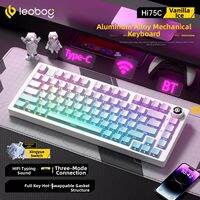
LEOBOG | Customizable Three-mode Mechanical Keyboard Kit for Gaming and Office Hi75C
₱4,099.28₱9,967.37
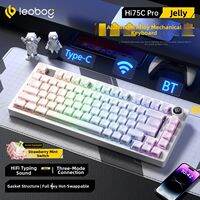
LEOBOG HI75C Aluminum Mechanical Keyboard with Xingya Switch Three-Mode Wireless Connection Full Key Hot-Swappable Gaming and Office Keyboard Compact Design
₱7,740.28₱9,971.59
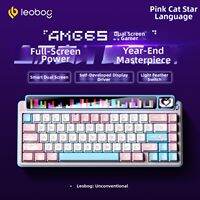
LEOBOG | AMG65 Dual Screen Gaming Keyboard Wireless Bluetooth Tri Mode Hot Swappable Mechanical Keyboard 75 Percent RGB Keyboard for Esports
₱9,367.70₱9,530.94
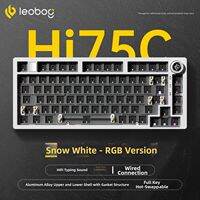
LEOBOG | Hi75 Aluminum 75% Mechanical Keyboard Kit Wired Gasket Structure Hot-Swappable Keys Gaming Keyboard for Esports
₱4,397.09₱15,625.05
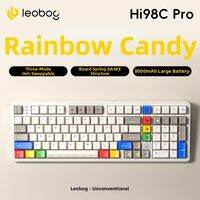
LEOBOG | Hi98C Pro Tri Mode Mechanical Keyboard Wireless Bluetooth 2.4G Wired Aluminum Alloy Hotswappable RGB Gaming Keyboard for PC Laptop Office
₱9,800.68₱10,780.11
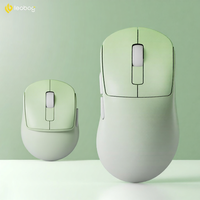
LEOBOG | Lightweight Triple Mode Wireless Mouse
₱1,723.10₱1,992.41
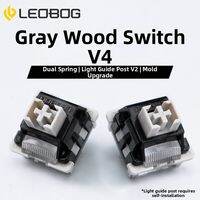
LEOBOG | Gray Wood Axis V4 Hot-Swap Linear Switch
₱881.12₱3,356.33
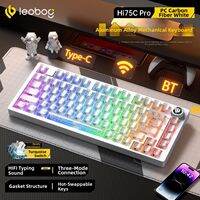
LEOBOG | Customizable 75 Layout Non-Conflict Hot-Swappable Gaming Mechanical Keyboard
₱7,869.91₱8,206.08
About LEOBOG
Overview
LEOBOG (莱奥伯格) is a Chinese computer peripherals manufacturer best known for its mechanical keyboards, keyboard switches, and gaming accessories. The brand has established itself by combining industrial design, acoustic tuning, customisation options, and gaming performance in a single product ecosystem. Its current catalogue includes keyboards, mechanical and magnetic switches, mice, and headphones.1
In Chinese-language materials, the brand is frequently presented as LEOBOG / 莱奥伯格, while its official English-language communications use LEOBOG exclusively.
| Field | Information |
|---|---|
| Brand | LEOBOG |
| Chinese name | 莱奥伯格 |
| Industry | Computer peripherals / gaming hardware |
| Main focus | Mechanical and gaming keyboards |
| Other products | Switches, mice, headphones |
| Origin | China |
| Company history | International materials trace origins to 2002 |
| Primary audience | Mechanical keyboard enthusiasts, gamers, PC users |
| Key characteristics | Customisation, acoustics, gaming performance, competitive pricing |
| Current product families | Hi series, A series, GM series, AMG series, A80 RT |
LEOBOG’s international “About Us” content states that the company’s story began in 2002. Meanwhile, its Chinese corporate profile describes an organisation with over 20 years of R&D and manufacturing experience, a facility exceeding 100,000 m², and more than 1,500 personnel. However, the precise corporate relationship between the various LEOBOG-branded web properties is not detailed publicly. Consequently, these figures should be regarded as company-provided claims rather than independently verified statistics.2
History
According to LEOBOG’s international website, the company’s origins date back to 2002 within the broader computer peripheral industry. The brand describes its development as a gradual evolution centred on engineering, manufacturing, and innovation, rather than a sudden emergence during the recent mechanical keyboard boom.3
The international site also states that LEOBOG employs over 800 staff and maintains an R&D division focused on new technologies and patents. Furthermore, it lists collaborations with companies including HP, Philips, AOC, Lenovo, and Tencent. These assertions originate from LEOBOG itself and should be distinguished from independently documented partnerships.4
The brand subsequently gained significant visibility in the enthusiast mechanical keyboard market through models such as the Hi75, Hi98, Hi86, and A75, followed by magnetic-switch rapid-trigger keyboards. A 2023 announcement, for instance, positioned the Hi75 as a keyboard suitable for both gamers and professional users, highlighting its compact layout, functionality, and typing acoustics.5
Product Portfolio
While primarily associated with mechanical keyboards, LEOBOG has expanded its offerings into several distinct categories.
Keyboards
Keyboards remain LEOBOG’s most recognisable product category. The current catalogue includes models such as:
- Hi75
- Hi75C / Hi75C Pro
- Hi86
- Hi98 / Hi98 Pro
- Hi8 / Hi8 SE
- A75
- Alice 75
- AMG65
- K81
- K21
- A80 RT
- Hi65
- GM-series keyboards
The official support centre lists a comprehensive range of keyboard models and revisions, reflecting the breadth of the lineup.67
Mechanical Switches
Switch development is a core component of LEOBOG’s identity. The brand produces its own linear, tactile, and magnetic switches rather than relying solely on third-party suppliers. Notable examples include:
- Graywood
- Reaper
- Ice Vein
- Ink Crystal
- Kayking
Dedicated switch products are sold alongside keyboards through the international store, underscoring that switch tuning and development are integral to the brand’s enthusiast-oriented strategy.7
Mice
LEOBOG also manufactures gaming mice, primarily under the GM family. The GM2 is marketed with a focus on grip and precision, while the GM3 line forms another key part of the current peripheral range.8
Headphones
Headphones are listed as an official product category, although the brand remains significantly more recognised internationally for its keyboards and switches.9
Positioning in the Keyboard Market
LEOBOG occupies a distinct position between the traditional gaming keyboard market and the custom mechanical keyboard hobby. Traditional gaming keyboards typically prioritise RGB lighting, proprietary software, low latency, macro functionality, and aggressive styling. Conversely, custom keyboard enthusiasts tend to value gasket mounting, plate materials, case construction, stabiliser tuning, switch lubrication, acoustic dampening, and hot-swappable PCBs.
LEOBOG has increasingly integrated these enthusiast priorities into accessible pre-built keyboards. This hybrid approach allows users to obtain characteristics traditionally associated with custom builds without the need to source and assemble individual components, making the brand particularly relevant to those entering the mechanical keyboard hobby.
Design Philosophy
LEOBOG’s product development generally emphasises three key areas.
Acoustics
Modern enthusiast keyboards are frequently evaluated based on their sound profile. LEOBOG marketing often highlights deeper tonal qualities, “thocky” acoustics, multi-layer internal construction, and factory-lubricated switches. This focus on acoustic dampening and tuning is evident across both regional and international product descriptions.10
Typing Feel
The physical sensation of typing is another primary consideration. Depending on the model, this may involve gasket mounting systems, varied plate materials, tuned stabilisers, and PBT keycaps. The objective is to replicate the feel of a high-end custom keyboard in a mass-produced format.
Gaming Performance
The brand has increasingly adopted gaming-oriented technologies. The A80 RT, for example, utilises magnetic switches and is described as being built around a “magnetic victory” concept. Support documentation specifically identifies magnetic-switch keyboards as a distinct product category, placing LEOBOG in competition with brands developing Hall-effect and rapid-trigger solutions.11
Product Families
Hi Series
The Hi family represents the brand’s core enthusiast-oriented mechanical keyboard lineup. Models include the Hi75, Hi75C, Hi75C Pro, Hi86, Hi98, Hi98 Pro, Hi8, Hi8 SE, and Hi65.
A Series
The A series encompasses models such as the A75 and A80 RT. While the A75 follows a conventional enthusiast mechanical keyboard layout, the A80 RT targets the competitive gaming segment with magnetic switch technology. The international store has listed the A75 at US$85.99, though pricing varies by region and promotion.12
GM Series
The GM branding applies to both keyboards and mice. Current materials reference the GM2, GM2 Pro, GM3, and GM3 SE. Marketing for the GM2 emphasises ergonomic grip and precision, signalling a broader push into dedicated gaming peripherals beyond keyboards.13
AMG Series
The AMG65 is a 65% mechanical keyboard featuring an integrated display. It is described as combining a full-screen visual concept with creative functionality, distinguishing it from standard layouts.14
Switch Technology
Mechanical Switches
LEOBOG has developed numerous linear and tactile switches designed to offer specific combinations of smoothness, spring weight, sound, and bottom-out feel. The Graywood family, in particular, has become closely associated with affordable enthusiast builds. The international store currently lists variants such as Graywood V3, Reaper Linear, and Ice Vein.
Magnetic Switches
Magnetic or Hall-effect switches represent a newer technological direction. Unlike traditional metal-contact actuation, these switches measure key position electronically, enabling features such as adjustable actuation points, rapid trigger, and dynamic response customisation. The A80 RT exemplifies this shift toward high-performance gaming hardware.15
Software and Firmware
LEOBOG supports its hardware with a proprietary software ecosystem. The official site provides downloadable drivers, web-based drivers, firmware updates, product manuals, and after-sales support resources.16 Software support is essential for advanced functions including RGB configuration, key remapping, macros, display settings, wireless management, and magnetic switch calibration.
Manufacturing and Corporate Scale
LEOBOG presents itself as a substantial manufacturer with significant R&D and production capabilities. Its Chinese “About Us” page claims facilities exceeding 100,000 m², a workforce of over 1,500 personnel, and more than 20 years of manufacturing experience. In contrast, the international site cites a team of 800+ employees.17
This discrepancy may reflect different counting methodologies, such as total group personnel versus a specific business unit. Regardless, public materials consistently portray LEOBOG as a sizeable Chinese hardware manufacturer rather than a small boutique label.
Locations
LEOBOG’s international website lists Shenzhen, China as its location. A separate Chinese website provides a more specific manufacturing and contact address in Huangjiang Town, Dongguan, Guangdong. This dual-location structure is common among Chinese hardware companies, where corporate and brand operations are often based in Shenzhen while manufacturing facilities are situated in nearby Dongguan.
International Presence
Although originating in China, LEOBOG has expanded globally. Its international store offers worldwide shipping with pricing in U.S. dollars. Within China, the company identifies JD.com, Tmall, Douyin, Xiaohongshu, and Pinduoduo as official sales channels. This distribution strategy places LEOBOG among a generation of Chinese keyboard manufacturers transitioning from domestic distribution to serving a global enthusiast market.
Brand Philosophy
Official Chinese brand descriptions portray LEOBOG as an innovator focused on enhancing gaming experiences through high-quality keyboards, mice, and headphones that balance aesthetics, performance, and user experience. The international site similarly emphasises a passion for technology, innovation, R&D, community engagement, and sustainability, positioning the company as a partner in the enthusiast ecosystem rather than solely a hardware vendor.
Strengths and Considerations
Strengths
- Value Proposition: LEOBOG is widely recognised for offering enthusiast-grade engineering and hardware at competitive price points.
- Specialisation: Unlike general electronics firms, the brand has built a distinct identity around mechanical keyboards.
- Proprietary Switches: In-house switch development allows greater control over typing feel and acoustics.
- Acoustic Tuning: Sound quality is a defining characteristic of modern LEOBOG products.
- Product Breadth: The catalogue now spans conventional mechanical boards, custom-style kits, magnetic gaming keyboards, switches, and mice.
- Development Pace: New product families and technologies have been introduced rapidly.
Considerations
- Software and firmware maturity may lag behind ecosystems from larger gaming brands.
- Frequent product revisions can occasionally make specifications confusing.
- Availability and customer service experiences vary significantly by country and seller.
- Some products are optimised for enthusiast value rather than premium long-term support.
- The extensive number of similarly named models can be challenging for newcomers to navigate.
LEOBOG notes that its after-sales policy differs by country and region, with mainland China policies applying specifically to purchases made through official Chinese sales channels.
Current Status
As of 2026, LEOBOG has evolved beyond a niche enthusiast brand into a comprehensive peripherals manufacturer. Its ecosystem now encompasses mechanical keyboards, custom-style boards, magnetic gaming keyboards, mechanical switches, gaming mice, headphones, and supporting software. The official site currently highlights products such as the GM5 Ultra, AX5, GM2, A80 RT, Alice 75, AMG65, Hi75, and Hi98, demonstrating the significant expansion of its portfolio.
LEOBOG is best understood as a Chinese enthusiast-oriented gaming peripherals manufacturer that specialises in making relatively accessible mechanical keyboards and switches while increasingly moving into high-performance gaming hardware. Its relevance in the modern market stems from its ability to combine custom-keyboard concepts with mass-produced, ready-to-use products at accessible price points. Readers should note that the company’s self-described history and scale claims are stronger than what can be independently established from public sources; a comprehensive corporate history would require verification through Chinese business registration records, trademark databases, and patent filings.
References
- LEOBOG莱奥伯格-新时代外设,客制化键盘研发销售|官网
- 关于我们-莱奥伯格
- About us
- Welcome to LEOBOG: A Journey in Computer Peripherals Innovation
- News
- 服务与支持-莱奥伯格
- 服务与支持-莱奥伯格
- Leobog Gaming Keyboard
- Leobog | Premium Mekanik Klavye ve Mouse — Türkiye
- 产品中心-leobog莱奥伯格官网
- 官方旗舰店-莱奥伯格
- LEOBOG莱奥伯格-新时代外设,客制化键盘研发销售|官网
- LEOBOG莱奥伯格-新时代外设,客制化键盘研发销售|官网
- 键盘系列-leobog莱奥伯格官网
- LEOBOG-快懂百科
- Leobog Mekanik Klavyeler | Gasket Montaj, Alüminyum Gövde | Leobog
- Leobog Store – Shop Gaming Keyboards & Mice at PB Tech – PBTech.com