Shop on Lazada
Pelican products
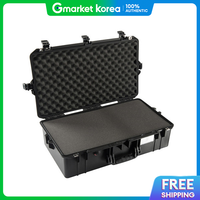
PELICAN | Pelican 1615 Air Carry-On Hard Case (with Foam) Pelican Case
₱35,389.94₱54,125.79
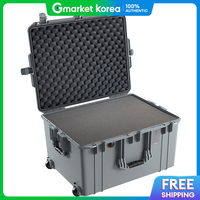
PELICAN | Pelican 1637 Air Hard Case (with Foam) Pelican Case
₱39,929.12₱61,068.07
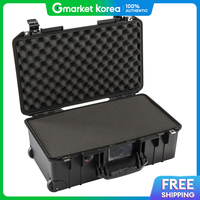
PELICAN | Pelican 1535 Air Carry-On Hard Case (with Foam) Pelican Case
₱25,484.34₱38,976.05
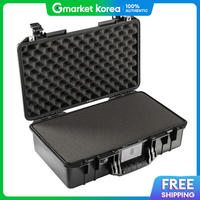
PELICAN | 1525 Air Case with Pick N Pluck Foam Waterproof
₱19,370.24₱29,625.07
PELICAN SOAP Pelican Family Soap Persimmon 80g /CICA Soap 80g /Charcoal 80g Direct from Japan
₱1,319.00₱1,978.00
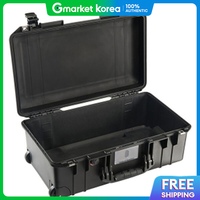
Pelican | 1535 Air Carry-On Hard Case (No Foam) Pelican Case
₱21,825.99₱33,380.94
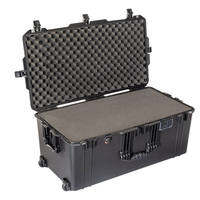
PELICAN | Pelican 1646 Air Wf Hard Case (with Foam) Black Pelican Case
₱36,283.19₱55,491.95
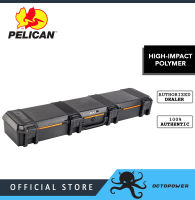
PELICAN V770 Vault Single Rifle Case with Foam Black
₱14,688.00₱16,320.00
About Pelican
Pelican Products, Inc., commonly referred to as Pelican, is an American manufacturer best known for its rugged protective cases. The company’s current product portfolio also encompasses professional lighting, luggage, coolers, drinkware, mobile accessories, and other mission-oriented gear. Founded in 1976 in Torrance, California, by scuba-diving enthusiast David H. “Dave” Parker and his wife Arline, Pelican evolved from a niche diving equipment maker into a global protective-equipment brand serving military, law enforcement, aerospace, industrial, entertainment, outdoor, and consumer markets.1
Overview
| Field | Information |
|---|---|
| Brand name | Pelican |
| Company | Pelican Products, Inc. |
| Founded | 1976 |
| Founder | David H. Parker |
| Headquarters | Torrance, California, USA |
| Industry | Protective equipment, outdoor gear, industrial products |
| Best known for | Rugged protective cases |
| Major products | Protective cases, luggage, coolers, lights, mobile accessories, drinkware |
| Professional markets | Military, law enforcement, fire safety, aerospace, industrial, entertainment, life sciences |
| Current owner | Platinum Equity |
| Current corporate structure | Pelican Products + Peli BioThermal |
| European name | Peli Products |
| Founded as | A scuba/diving-oriented business |
| Brand positioning | High-durability, mission-ready protection |
Platinum Equity acquired Pelican Products in December 2021. The company remains headquartered in Torrance and operates as a global manufacturer of protective products and related solutions.2
History
1976–early years: a diving business
Pelican’s history is closely connected to SCUBA diving. Founder Dave Parker was an enthusiastic diver who found existing equipment-protection solutions inadequate for harsh underwater conditions. In 1976, he and his wife Arline established Pelican in their garage in Torrance, California.3
The company’s earliest products targeted divers specifically. Among Parker’s early inventions was a marker buoy used to identify the location of submerged divers, and the company also developed a first-aid kit designed for diving use.4
A significant turning point occurred when customers began repurposing Pelican’s waterproof cases for applications beyond diving. Parker recognised that the underlying technology—protecting valuable equipment from water, dust, impacts, and harsh environments—held broader commercial potential. This insight ultimately transformed Pelican from a niche diving supplier into a specialist protective-equipment company.5
The Pelican case
The protective case became the defining product of the company. Pelican states that its first Protector Case was introduced in 1978, followed by the SabreLite flashlight in 1981. These launches established two of the company’s major product categories: equipment protection and professional lighting.6
Pelican cases are designed around a core philosophy: to protect valuable equipment from hostile environments. Typical applications include transporting cameras, lenses, drones, computers, electronics, scientific instruments, communications equipment, tools, industrial and military equipment, emergency-response gear, and professional production equipment.
These cases gained particular popularity among photographers, filmmakers, military personnel, engineers, emergency workers, and other professionals requiring reliable transport for expensive equipment under difficult conditions.
Design characteristics
Pelican’s brand identity is strongly associated with durability and environmental protection. The company describes its cases as waterproof, crushproof, and dustproof, although exact specifications vary by model.7
Heavy-duty construction
Pelican cases utilise rugged polymer construction designed to withstand impacts and demanding transportation conditions.
Watertight sealing
Many traditional Pelican cases feature a gasket around the lid to prevent water and dust intrusion.
Pressure equalization
Numerous models incorporate an automatic pressure-equalization valve, which is particularly useful when sealed cases travel between different altitudes or air-pressure environments.
Secure latching
Pelican employs different latch systems across its product families. For example, Storm Cases use the company’s Press & Pull latch design.8
Interior customization
Cases can be configured with Pick-and-Pluck foam, solid foam, padded dividers, TrekPak systems, custom inserts, and specialized mounts. This modularity allows the same basic case to accommodate entirely different equipment types.
Major case families
Pelican’s current case portfolio comprises several distinct families.9
Protector
The Protector Case is the classic Pelican product line and the product most strongly associated with the brand. It represents the company’s traditional philosophy of maximum protection and is marketed as Pelican’s original protective-case platform.
Storm
Storm Cases are another professional protective-case family, distinguished by their Press & Pull latches. They serve users who require rugged protection but prefer a different handling experience from traditional Protector Cases.
Air
Pelican Air Cases focus on reducing weight without compromising the fundamental Pelican protective concept. Pelican states that Air Cases can be up to 40% lighter than other polymer cases.10 This weight reduction is particularly relevant for photographers, travellers, and professionals carrying equipment over long distances.
Vault
Vault Cases occupy a more cost-conscious position within the range, providing rugged protection while serving as a more affordable alternative to Pelican’s premium case families.11
Micro and Personal Utility
Smaller Pelican cases are intended for everyday items such as phones, memory cards, small tools, first-aid supplies, electronics, and accessories. The company also manufactures laptop cases and other specialized formats.12
Expansion beyond cases
Although cases remain central to the Pelican brand, the company has expanded its offerings considerably. Its current consumer-facing portfolio spans cases, luggage, coolers, lights, mobile accessories, drinkware, and other rugged gear.13
Luggage
Pelican now produces carry-on luggage, checked luggage, backpacks, duffels, slings, and packing/organization products. Rather than competing solely as a conventional fashion luggage brand, Pelican applies its protective-equipment heritage to travel, emphasising durability, protection, and rugged travel.
Coolers
Pelican manufactures hard coolers, soft coolers, wheeled coolers, personal coolers, and cooler accessories. This category places Pelican in competition with brands such as YETI and other premium outdoor-cooler manufacturers. The connection to Pelican’s traditional identity lies in applying its expertise in rugged polymer products to temperature retention and outdoor use.
Pelican lighting
Lighting has been a significant part of the company’s history since the introduction of the SabreLite in 1981, which helped establish Pelican as a manufacturer of professional portable lighting.14
Today’s lighting portfolio includes tactical flashlights, safety lights, headlamps, right-angle lights, remote-area lighting, and accessories. Pelican lighting is particularly associated with professional users requiring reliable illumination rather than consumer-oriented lifestyle lighting.15
Military and professional reputation
One of Pelican’s primary competitive advantages is its reputation among professional and institutional users. Its products are deployed in defence and military, law enforcement, fire safety, aerospace, industrial operations, life sciences, entertainment, photography and filmmaking, and outdoor recreation.
Pelican’s corporate history emphasises that its products are intended for environments where equipment protection is mission-critical.16 This professional customer base has shaped the brand’s consumer identity; a Pelican case communicates not luxury or fashion, but rather that “this equipment needs to survive.”
The Hardigg acquisition
A pivotal event in Pelican’s corporate history was the acquisition of Hardigg Industries. In January 2009, Pelican acquired Hardigg for approximately $200 million. Hardigg was a major manufacturer of rotationally molded protective cases, particularly for military and industrial applications.17
This acquisition was strategically important as it expanded Pelican’s capabilities beyond its traditional injection-molded case business and strengthened its position as a global supplier of large-scale protective cases.
Ownership history
Founder era — 1976 onward
David Parker built Pelican from a small garage operation into a substantial international business.
Behrman Capital — 2004–2021
In 2004, private-equity firm Behrman Capital acquired Pelican Products in a transaction valued at approximately $200 million. At the time, Pelican generated roughly $100 million in revenue and employed more than 500 people.18 During this period, the company expanded internationally and completed significant acquisitions, including Hardigg.
Platinum Equity — 2021–present
Behrman Capital announced the sale of Pelican to Platinum Equity in October 2021, and Platinum completed the acquisition on December 31, 2021. Financial terms were not disclosed.19 Platinum currently lists Pelican as one of its active portfolio companies.20
Peli Products and Peli BioThermal
Pelican’s corporate structure features market-specific naming conventions. In Europe, the company operates as Peli Products. Its temperature-controlled healthcare business operates globally under the Peli BioThermal brand.21
Peli BioThermal differs significantly from consumer Pelican products, focusing on temperature-controlled packaging and supply-chain solutions for life sciences, including pharmaceutical and clinical-trial applications. This segment extends the broader Pelican business well beyond rugged cases for photographers or outdoor enthusiasts.
Manufacturing and global presence
Pelican is headquartered in Torrance, California. Platinum Equity currently lists the company as operating 12 manufacturing sites, 17 service centers and network stations, and 23 international sales offices. The company sells into both professional and consumer markets worldwide.22
Pelican maintains a significant connection to U.S. manufacturing and has historically emphasised products manufactured in the United States using American workers, although not every Pelican product is U.S.-made.23
Brand philosophy
The central Pelican brand concept is protection. The company’s official messaging revolves around protecting what customers value, encapsulated in its long-standing phrase: “Protecting all that you value.”24
This concept has enabled Pelican to extend from scuba equipment to military gear, photography, travel, outdoor recreation, and everyday consumer products without losing its identity. While specific products change, the underlying promise remains consistent: to manufacture items rugged enough to protect valuable assets in difficult environments.
Brand image
Pelican occupies a distinctive market position, functioning simultaneously as a professional equipment brand, industrial manufacturer, military and law-enforcement supplier, outdoor brand, photography and film accessory brand, travel-gear brand, and consumer lifestyle brand.
Its strongest brand associations are ruggedness, durability, protection, reliability, professionalism, utility, and engineering. Consequently, a Pelican case may appear excessive for ordinary consumer use yet entirely rational for transporting high-value camera setups, scientific instruments, or sensitive electronics.
Comparison with ordinary luggage
Understanding Pelican requires distinguishing it from conventional luggage. A standard suitcase is designed primarily to carry things conveniently, whereas a Pelican protective case is engineered to protect things during transport.
This distinction informs the company’s design philosophy. Pelican cases prioritise impact resistance, water and dust protection, equipment security, interior organization, long-term durability, and field serviceability. Convenience and aesthetics remain important but have historically been secondary to protection.
Photography and filmmaking
Pelican became especially prominent among photographers and filmmakers. Professional camera equipment is expensive, fragile, frequently transported, sensitive to moisture and dust, and costly to replace. A rugged case therefore provides essential insurance against physical damage.
This utility has made Pelican a recognisable component of professional production workflows, particularly for transporting cameras, lenses, lighting equipment, drones, and other sensitive gear.
The 1510 case
Among Pelican’s extensive product lineup, the 1510 Protector Carry-On Case is particularly iconic. Its significance stems from combining traditional protective-case design with an airline-compatible form factor.
The 1510 gained popularity among photographers, filmmakers, and travelling professionals seeking to transport expensive equipment through airports without relying on soft luggage. Pelican continues to offer the 1510 within its Protector family.25
Product philosophy
Pelican’s product development balances several engineering trade-offs:
- Maximum protection: Traditional Protector cases prioritise robustness.
- Reduced weight: The Air line retains protection while significantly reducing carrying weight.
- Organization: Foam, dividers, and TrekPak systems allow users to customise interiors.
- Mobility: Wheels, handles, and luggage formats enhance portability.
- Lifestyle expansion: Coolers, drinkware, mobile accessories, and travel products reach consumers who do not require industrial-grade cases.
This evolution reflects a shift from a “protective case company” toward a comprehensive “rugged protection brand.”
Main competitors
Competitive dynamics vary by product category.
Protective cases
Major competitors include SKB, Nanuk, Explorer Cases, Zarges, and Storm Case alongside other specialized manufacturers.
Coolers
The competitive landscape includes YETI, RTIC, Orca, Engel, Coleman, and other outdoor brands.
Professional lighting
Pelican competes with specialized industrial and tactical-lighting manufacturers such as Streamlight.
Across categories, Pelican’s primary competitive advantage is its brand ecosystem: cases, lights, coolers, luggage, and other products reinforce a unified rugged-protection identity.
Factors in brand success
Several factors explain Pelican’s longevity:
- Solving a real problem: The company originated from practical challenges faced by divers rather than lifestyle marketing.
- Customer-driven innovation: Users demonstrated that cases could protect far more than diving equipment.
- Professional credibility: Military, emergency services, industrial, and entertainment customers established the brand’s reputation.
- Engineering identity: The company consistently prioritises durability and performance over fashion.
- Product expansion: Gradual diversification into lighting, luggage, coolers, and adjacent categories.
- Global expansion and acquisitions: Strategic purchases like Hardigg enhanced technological and manufacturing capabilities.26
Pelican today
As of 2026, Pelican is no longer solely a protective-case company. Its consumer-facing website presents the brand across multiple categories: Cases, Luggage, Coolers, Lights, Mobile, and Drinkware/gear, while its corporate business also includes the specialized Peli BioThermal healthcare segment.27
Despite this diversification, the protective case remains the brand’s symbolic centre. Current marketing describes Pelican as the “benchmark in proven protection,” continuing to reference its 1976 origins.28
In summary, Pelican is a Torrance, California–based American rugged-equipment brand founded in 1976 by diver Dave Parker, best known for its exceptionally durable protective cases and subsequently expanded into professional lighting, travel gear, coolers and other protective products, with the broader company also operating the Peli BioThermal healthcare-packaging business.29
References
- Pelican
- Pelican | Pelican Celebrates Its 40th Anniversary
- Platinum Equity Completes Acquisition of Pelican Products | Platinum Equity
- Pelican Products, A Platinum Equity Portfolio Company
- Pelican Products: Proudly Made in America | Pelican
- Cases | Pelican Official Store
- Pelican | Cases, Flashlights, Coolers, and Travel Gear
- Pelican | Cases, Flashlights, Coolers, and Travel Gear
- Pelican | Pelican™ Products acquires Hardigg® Industries
- Pelican | Behrman Capital acquires Pelican Products in $200 million transaction
- Behrman Capital to Sell Portfolio Company Pelican Products to Platinum Equity – Behrman Capital
- Pelican | Cases, Flashlights, Coolers, and Travel Gear
- Pelican | Pelican Defines the Future of Protection with the Global Debut of the Next Generation Protector Series
- Who Owns Pelican Cases? From Garage to Private Equity – LegalClarity
- Pelican | Pelican Unveils “Pelican x DRYOUT®”: A New Standard in Gear Preservation
- Pelican | Pelican Appoints James “JC” Curleigh as Chief Executive Officer
- Pelican | Peli BioThermal Hires Douglas Ross as President
- Peli Products Germany GmbH Acquires Manufacturing capabilities in Germany | Platinum Equity
- Pelican | Pelican Products Names Mike Davis Group CEO of Peli BioThermal
- Pelican | Pelican Products Appoints Piero Marigo to President of International Business with oversight of EMEAI, Asia, and Australia
- Pelican | Pelican Products names Fabienne Smolinski-Lopez as Chief Human Resources Officer
- Pelican Products brings strong brand loyalty, new sector to Platinum Equity portfolio | Platinum Equity
- Pelican | Platinum Equity Completes Acquisition of Pelican Products
- Platinum Equity to Acquire Pelican Products
- Pelican | Pelican Products Promotes Kevin Murphy to Lead Marketing for the U.S.
- Pelican | Pelican Marks 45 Years of Excellence
- Pelican | Pelican Products names Phil Gyori as Chief Executive Officer
- Pelican
- Commemorative Pelican First Aid Kit Pays Tribute to Founder, Dave Parker | Pelican