Shop on Lazada
Lexmark products
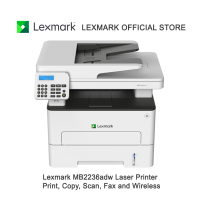
Lexmark MB2236adw Laser Printer (PrintScanCopy and Fax)
₱12,500.00
Buy on Lazada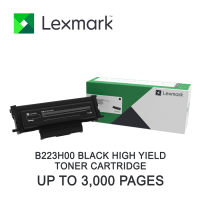
Lexmark MB2236adw / B2236dw B223H00 Black High Yield Toner Cartridge - Up to 3000 pages
₱5,500.00₱5,800.00
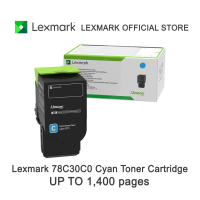
Lexmark CS421dn / CX421adn 78C30C0 Cyan Toner Cartridge - Up to 1400 pages
₱5,300.00
Buy on Lazada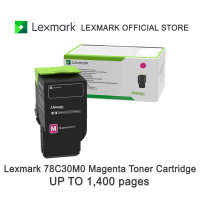
Lexmark CS421dn / CX421adn 78C30M0 Magenta Toner Cartridge - Up to 1400 pages
₱5,300.00
Buy on Lazada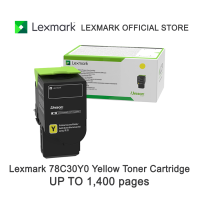
Lexmark CS421dn / CX421adn 78C30Y0 Yellow Toner Cartridge - Up to 1400 pages
₱5,300.00
Buy on Lazada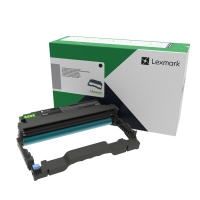
Lexmark MB2236adw / B2236dw B220Z00 Black Imaging Unit - Up to 12000 pages
₱5,500.00
Buy on Lazada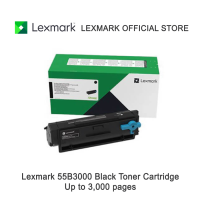
Lexmark MS431dn/MX431adn MX331adn- 55B3000 Black Toner Cartridge
₱5,200.00
Buy on Lazada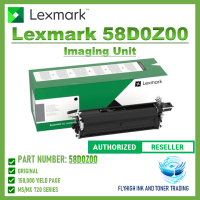
Lexmark 58D0Z00 Imaging Unit
₱7,500.00
Buy on LazadaAbout Lexmark
Overview
Lexmark is an American technology brand best known for printers, multifunction printers (MFPs), imaging systems, print-management software, document workflow solutions, and managed print services. Founded in 1991 as a spin-off from IBM, Lexmark evolved from a printer-hardware manufacturer into a broader provider of enterprise imaging, cloud, IoT, security, and workflow technologies.1
A significant shift in its corporate history occurred on July 1, 2025, when Xerox completed its acquisition of Lexmark for approximately US$1.5 billion. As of 2026, Lexmark operates as part of Xerox, although the Lexmark brand continues to be used for products and services.2
Quick facts
| Item | Information |
|---|---|
| Brand | Lexmark |
| Legal/company name | Lexmark International, Inc. |
| Founded | 1991 |
| Origin | Spun off from IBM |
| Headquarters | Lexington, Kentucky, United States |
| Industry | Printing, imaging, document management, IT solutions |
| Parent company | Xerox |
| Acquisition by Xerox | July 1, 2025 |
| Former public listing | NYSE, 1995–2016 |
| Global presence | 170+ countries |
| Main products | Printers, MFPs, scanners/imaging devices, supplies |
| Enterprise offerings | Managed print, cloud print management, workflow and document solutions |
| Primary customers | Businesses, governments, education, healthcare, manufacturing, retail and other organizations |
Lexmark describes its business as providing printing and imaging products, software, solutions, and services, with operations serving customers in more than 170 countries.3
History
IBM origins
Lexmark’s roots are closely connected to IBM’s printing and information-products business. In 1991, IBM spun off its printer-related operations to create Lexmark International, endowing the new company with a substantial technological heritage in electrophotographic printing, printers, supplies, and document-output technology.4 The company was established in Lexington, Kentucky, which remains its corporate headquarters. Lexmark subsequently developed into an independent technology company rather than remaining merely an IBM printer division.
Becoming a public company
Lexmark became publicly traded on the New York Stock Exchange in 1995 and operated as an independent listed company for over two decades. During this period, it became particularly associated with laser printers and business printing, competing against firms such as Hewlett-Packard, Canon, Xerox, Ricoh, Brother, and Epson.
Its business expanded beyond physical hardware to include print management, document capture, enterprise content management, workflow automation, software, managed print services, information security, and cloud services. This transition reflected the growing demand from enterprise customers for partners capable of managing the entire document and information lifecycle.
Expansion into software
A pivotal strategic change in Lexmark’s history was its expansion into enterprise software.
Perceptive Software
In 2010, Lexmark acquired Perceptive Software, an enterprise content-management software company. This acquisition facilitated Lexmark’s entry into document management, enterprise content management, workflow, information capture, and business-process automation.5
Kofax
In 2015, Lexmark acquired Kofax in a transaction valued at approximately US$1 billion. Kofax specialized in information capture, process automation, and related enterprise software.6 These acquisitions underscored a broader strategic intent: Lexmark sought to manage not only the printed document but also the digital information and business processes surrounding it. Consequently, modern Lexmark is better understood as an enterprise imaging and information-technology company rather than solely a printer manufacturer.
Going private
In 2016, Lexmark was acquired by an investor consortium led by Ninestar, taking the company private after approximately 21 years as a publicly traded entity.7 During its private ownership period from 2016 to 2025, Lexmark continued developing business printers, color laser printers, multifunction devices, managed print services, cloud services, print-security technologies, IoT-connected devices, and workflow software.
Acquisition by Xerox
The next major chapter began in 2024 when Xerox announced an agreement to acquire Lexmark. The acquisition was completed on July 1, 2025, with a transaction value of approximately US$1.5 billion including assumed liabilities.8
This deal united two major names in the printing industry. Lexmark contributed strengths in A4 printers and MFPs, color printing, enterprise and departmental printing, Asia-Pacific markets, managed print, connected imaging devices, and print software. Conversely, Xerox brought capabilities in production printing, A3 printing, digital workplace services, IT services, workflow, document technologies, and large-enterprise relationships. Xerox stated that the combined organization aims to provide a broader portfolio of printers, MFPs, managed print services, and digital/IT solutions.9
Lexmark today
Lexmark’s corporate status changed significantly following the acquisition.
Before July 2025
Prior to the acquisition, Lexmark was an independent company owned by the investor consortium led by Ninestar.
After July 2025
Lexmark became part of Xerox. The brand guidelines explicitly state that “Lexmark is now part of Xerox.”10 However, Xerox did not eliminate the Lexmark brand; its products and technologies continue to exist within the combined portfolio. For example, in 2026, Xerox continued selling and supporting Lexmark’s 9-Series A3 devices while integrating Lexmark technologies into its wider offerings.11
Products and solutions
Lexmark’s traditional core remains business printing and imaging.
Printers
Lexmark produces various types of business printers, including monochrome laser printers, color laser printers, small-workgroup printers, departmental printers, enterprise printers, A4 printers, and A3 printers. Historically, the company has concentrated heavily on the business and enterprise market rather than competing primarily in the consumer inkjet segment.
Multifunction printers
A significant portion of Lexmark’s portfolio consists of multifunction products (MFPs). These devices combine functions such as printing, scanning, copying, faxing, document routing, cloud connectivity, and secure print release. For businesses, an MFP serves as a networked document-processing workstation rather than merely a copier.
Software capabilities
Modern Lexmark solutions encompass extensive software functionality.
Print management
Organizations can control who can print, what users can print, where documents are printed, printing quotas, print costs, and secure document release. Lexmark’s cloud platform continues to receive updates in 2026, including capabilities for cloud fleet management, print quotas, print policies, and secure printing.12
Fleet management
Lexmark’s cloud-management technology allows IT departments to monitor and manage printer fleets remotely. Functions include device monitoring, supplies monitoring, printer enrollment, usage analytics, device tagging, remote management, and fleet reporting.
Document workflow
Lexmark operates in the space between paper documents and digital information. A typical workflow involves converting paper documents via scanning and OCR/capture into digital information that feeds into workflows and business applications. This focus explains why Lexmark increasingly describes itself in terms of cloud-enabled imaging and IoT technologies rather than just printing.13
Managed Print Services
Managed Print Services (MPS) is another major business area for Lexmark. Instead of simply purchasing printers, organizations can engage a managed-print provider to take responsibility for much of the printing environment. Lexmark manages the fleet through monitoring, maintenance, supplies, security, and analytics, resulting in lower administrative burden and potentially reduced printing costs. The company describes managed print as one of its established capabilities.14
Target customers
Lexmark is primarily a B2B technology brand serving various sectors.
Manufacturing
Factories and industrial companies use Lexmark systems for production documentation, shipping labels, inventory information, administrative printing, and workflow automation.
Healthcare
Hospitals and healthcare organizations utilize printing and document systems for patient documentation, forms, identification, administrative workflows, and secure printing.
Financial services
Banks and financial organizations rely on Lexmark for document management with an emphasis on security, compliance, workflow, and high-volume printing.
Retail
Retail is a key sector, particularly given the need for large numbers of networked devices in stores. Following their combination, Lexmark and Xerox have highlighted technologies for store operations, signage, and vision AI.15
Government
Government organizations are a major customer group. Lexmark states it has maintained a relationship with the U.S. government for more than 25 years, serving federal, state, and local government customers.16
Education
Schools, universities, and other educational institutions use Lexmark equipment for large-scale document production and administration.
Business printer positioning
There is a distinct difference between Lexmark and consumer-oriented printer brands. Lexmark has historically emphasized reliability, security, fleet management, productivity, and service over low-cost home printing. Its products are often designed for environments where printers are expected to operate continuously for years, making them relevant to offices, hospitals, factories, government agencies, schools, banks, retail chains, and large enterprises.
Security
Printer security is critical as modern printers are effectively network-connected computers with scanners, storage, operating systems, and cloud connectivity. Lexmark emphasizes security features across its devices and software, including secure print release, user authentication, access controls, encryption, network security, firmware security, device certificates, and security monitoring. Its 2026 software releases include support for secure print workflows and certificate validation.
Cloud and IoT strategy
Lexmark positions its products as connected devices. Modern enterprise printers communicate information regarding toner levels, device status, errors, usage, network connectivity, maintenance, and print volume to cloud-management systems. Lexmark describes this broader strategy as cloud-enabled imaging and IoT technologies. This represents a shift from viewing printers as standalone hardware to treating them as connected document-processing platforms that can be monitored and managed.
Sustainability
Sustainability is a key component of Lexmark’s corporate positioning. The company focuses on the circular economy throughout the printing lifecycle, encompassing product design, energy efficiency, efficient use of materials, reuse, recycling, and responsible end-of-life management.17 This is particularly relevant for enterprise customers operating thousands of devices, where small improvements in energy consumption, toner usage, paper usage, and equipment lifecycle yield significant benefits at scale.
Manufacturing and global reach
Lexmark is headquartered in Lexington, Kentucky, and serves customers in more than 170 countries. Historical manufacturing facilities have included locations in Boulder, Colorado, and Juárez, Mexico. The company’s international presence is particularly significant in the Asia-Pacific region, where Lexmark has historically held considerable strength. Xerox specifically identified Lexmark’s Asia-Pacific presence as a complementary strength in the combined organization.
Presence in Singapore and Asia
Lexmark maintains a presence in Singapore and markets its printing, imaging, software, and services throughout the region. Its Singapore operation describes Lexmark as an imaging and IoT solutions leader with offerings spanning printing, imaging, software, solutions, services, and sustainability.18 The Asia-Pacific market is especially important in the post-Xerox era because Xerox has identified Lexmark’s regional strength as complementary to its own global footprint.
Brand identity
Lexmark’s brand positioning has evolved considerably. While earlier identity was strongly associated with printers, toner, and business printing, the later identity emphasizes hardware, software, services, workflow, cloud, and IoT as an enterprise imaging and information technology company. Official brand guidelines identify four core characteristics: Focus, Expertise, Accessibility, and Authenticity. This reflects an effort to position Lexmark as a technology partner rather than simply a hardware supplier.
Relationship with Xerox
The current corporate structure places Lexmark under Xerox Holdings Corporation. While Lexmark remains an identifiable brand, it is no longer an independent corporate group. Xerox has been integrating Lexmark’s sales organization, products, and technologies into its broader business. In February 2026, Xerox announced a unified global print go-to-market structure combining Xerox and Lexmark sales capabilities.19 In June 2026, Xerox introduced new A4 color printers and MFPs under the Xerox brand using the combined capabilities of both companies.
Integration is also visible at the software level. Xerox announced that the Lexmark App reached end-of-life on February 27, 2026, with customers directed toward the Xerox Easy Assist App, which supports both Xerox and Lexmark printers.
Corporate status in 2026
As of August 2026, Lexmark is a historic American technology brand founded in 1991 as an IBM spin-off, headquartered in Lexington, Kentucky, and present in over 170 countries. It is a major business-printing and imaging company providing hardware, software, and managed services, and has been part of Xerox since July 1, 2025. It is no longer an independent publicly traded company, controlled by Ninestar, or a standalone competitor to Xerox.
Major milestones
| Year | Event |
|---|---|
| 1991 | Lexmark founded as a spin-off from IBM |
| 1995 | Lexmark becomes publicly traded on the NYSE |
| 2010 | Acquires Perceptive Software |
| 2015 | Acquires Kofax for approximately $1 billion |
| 2016 | Acquired by an investor consortium led by Ninestar; becomes private |
| 2024 | Xerox announces agreement to acquire Lexmark |
| July 1, 2025 | Xerox completes Lexmark acquisition |
| 2026 | Xerox continues integrating Lexmark products, technology and sales operations |
| June 2026 | First Xerox-branded A4 products incorporating the combined portfolio are introduced |
Competitive position
Historically, Lexmark has competed in various segments of the printing and document-technology market against companies including HP, Canon, Ricoh, Xerox, Konica Minolta, Kyocera, Brother, and Epson. The competitive set varies by category: home/consumer printing (HP, Canon, Epson, Brother); office laser printing (HP, Brother, Canon, Kyocera, Lexmark); enterprise MFP (Xerox, Ricoh, Canon, Konica Minolta, Kyocera, Lexmark); and Managed Print Services (Xerox, HP, Canon, Ricoh, Lexmark). Lexmark’s historical strength lies in business and enterprise printing, particularly where reliability, security, fleet management, and service are paramount.
Overall assessment
Lexmark illustrates the evolution of the printing industry from hardware-centric products to comprehensive ecosystems involving firmware, networking, cloud, security, software, analytics, workflow, and managed services. Today, Lexmark is best described as a long-established American enterprise printing and imaging technology brand, founded as an IBM spin-off in 1991 and now owned by Xerox. Its portfolio encompasses business printers and multifunction devices alongside print management, cloud, security, workflow, IoT, and managed print services.20
While its greatest historical strength remains business printing, its recent significance lies in its transformation into a broader information and workflow technology provider and its subsequent integration into Xerox. As of 2026, Lexmark is understood not as a standalone printer company, but as one of the technology legacies and product portfolios incorporated into the larger Xerox organization.
References
- Frequently Asked Questions | Lexmark United States
- Company Overview | Lexmark United States
- SEC
- Messaging guidelines
- About Us
- Lexmark Newsroom
- Better together: Lexmark and Xerox sign a transformative deal | Lexmark United States
- Company Overview
- Company Overview
- Xerox Expands Unified Market Approach with Broader A3 Portfolio Following Lexmark Acquisition | Xerox Newsroom
- Lexmark Cloud Release Notes
- Lexmark Support
- Xerox and Lexmark Debut Unified Retail Tech at NRF 2026 | Xerox Newsroom
- Lexmark Governance
- Brand Center overview
- About us | Lexmark Singapore
- Solutions and Software Bulletin
- About Us
- download
- XEROX NOMEIA CRISTIANA LANNES COMO GENERAL MANAGER NO BRASIL E REFORÇA ESTRATÉGIA APÓS AQUISIÇÃO DA LEXMARK – Notícias Xerox