Shop on Lazada
Loewe products
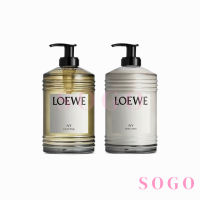
LOEWE Refreshing Body Care Set Body Wash 360 ml+Body Lotion 360 ml
₱3,517.84₱4,866.00
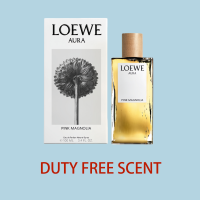
New Loewe Aura Pink Magnolia for women Eau De Parfum 100ML
₱3,120.00₱8,796.00
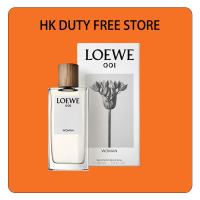
Loewe Eau De Parfum Woman 001 100ml
₱3,082.50₱8,455.00
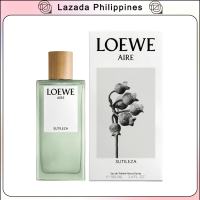
NEW Loewe Aire Sutileza Citrus Aromatic / Musk edt 100ml
₱3,425.00₱8,911.00
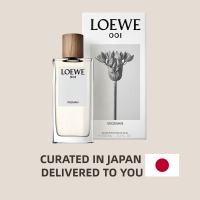
DIRECT FROM JP Loewe Woman 001 for WOMEN Eau De Parfum 100ML
₱2,326.50₱8,759.00
100% AUTHENTIC Loewe 001 - 100ML/Eau De ToiletteDISCOUNT EVENT
₱2,865.00₱5,856.00
100% AUTHENTIC Loewe 001 - 100ML/Eau De Parfum DISCOUNT EVENT
₱2,856.00₱5,988.00

【100% AUTHENTIC PERFUME】Loewe 001 100ml DISCOUNT EVENT Eau De Toilette
₱5,099.00₱6,000.00
About Loewe
Overview
Loewe is a Spanish luxury fashion house distinguished by its heritage in leather craftsmanship, ready-to-wear collections, accessories, and a sustained engagement with contemporary art and craft. Established in Madrid in 1846, it ranks among the world’s oldest luxury fashion houses and will mark its 180th anniversary in 2026 1. Today, Loewe operates as a global maison within the French luxury conglomerate LVMH while retaining a distinctly Spanish cultural identity 2.
The brand’s current creative direction is led by Jack McCollough and Lazaro Hernandez, who have overseen all collections since 2025. They succeeded Jonathan Anderson, whose tenure from 2013 to 2025 was instrumental in redefining the house for a modern audience.
Brand Profile
| Attribute | Detail |
|---|---|
| Full Name | Loewe |
| Founded | 1846 |
| Place of Origin | Madrid, Spain |
| Original Business | Leather craftsmanship |
| Industry | Luxury fashion & leather goods |
| Parent Company | LVMH |
| Headquarters | Madrid, Spain |
| Core Expertise | Leather, craftsmanship, fashion, accessories |
| Current Creative Directors | Jack McCollough & Lazaro Hernandez |
| Previous Creative Director | Jonathan Anderson (2013–2025) |
| Signature Emblem | The Loewe Anagram |
| Key Products | Puzzle, Amazona, Flamenco leather goods |
| Upcoming Milestone | 180th Anniversary (2026) |
Origins and Identity
Loewe is fundamentally a leather house that evolved into a comprehensive fashion maison. Unlike brands rooted primarily in haute couture, Loewe’s foundation lies in Spanish leather craftsmanship. The company traces its history to 1846, when a collective of artisans operated a workshop in Madrid. In 1872, German-born merchant Enrique Loewe Roessberg joined the business, eventually lending his surname to the house. This history created a unique cultural duality: a Spanish luxury house with a German name.
The brand notes that its name is pronounced approximately “lo-weh-vay,” distinguishing it from common mispronunciations 3. Throughout the early 20th century, Loewe expanded from small leather objects to handbags, luggage, and fashion, maintaining an identity centered on artisanal production rather than mass manufacturing. By 1970, Spanish artist Vicente Vela created the iconic Loewe Anagram, consisting of four interlocking Ls. This emblem represents the brand’s commitment to technical excellence and remains a primary visual identifier 4.
Acquisition by LVMH
LVMH acquired Loewe in 1996, integrating the Spanish leather house into a group that includes Louis Vuitton, Dior, Fendi, and Celine. Despite this global infrastructure, Loewe has maintained significant cultural distinction. Its identity continues to be anchored in Madrid, artisanal production, and a playful approach to design that differentiates it from other maisons within the portfolio.
The Jonathan Anderson Era (2013–2025)
Irish designer Jonathan Anderson transformed Loewe during his tenure as creative director beginning in 2013 5. Rather than treating the brand solely as a traditional luxury label, Anderson positioned it at the intersection of fashion, leather, art, craft, and culture. LVMH has described this period as a major rejuvenation of the house 6.
Anderson’s philosophy emphasized craftsmanship as a contemporary and intellectual pursuit. Under his direction, Loewe celebrated the process of making, turning manufacturing techniques into visible elements of the brand’s cultural identity 7. His work integrated film, literature, music, and collaborations with artists, resulting in a brand personality that balanced luxury with humor and experimentation 8. This era produced defining silhouettes and established Loewe as a significant global cultural force.
Iconic Handbags
Leather goods remain central to Loewe’s commercial and creative success. Several designs have achieved iconic status:
- Puzzle Bag: Arguably the defining piece of the Anderson era, this bag features geometric leather pieces that fold and intersect like a three-dimensional puzzle. It exemplifies the house’s philosophy of transforming technical craftsmanship into contemporary design.
- Amazona: Dating back to the 1970s, the Amazona represents the classic side of the house. It remains a key reference point for the brand’s heritage and was reinterpreted extensively for the 180th-anniversary celebrations in 2026.
- Flamenco: Known for its soft, pouch-like construction and drawstring details, the Flamenco offers a fluid counterpoint to the architectural Puzzle bag.
Other significant designs in the Loewe universe include the Gate, Hammock, Barcelona, Balloon, Paseo, and Squeeze. These models are frequently revisited through new materials, sizes, and artisanal techniques.
Craftsmanship and Art
If reduced to a single concept, Loewe’s greatest strength is craft. The house combines traditional leatherworking techniques transmitted across generations with modern technology and experimentation 9. This creates a dynamic tension between historical methods and contemporary design, ensuring that craftsmanship remains relevant to modern culture rather than static.
Art is equally integral to the brand’s identity. Loewe views craft and art as inseparable, frequently collaborating with contemporary artists, filmmakers, ceramicists, and cultural institutions 10. Consequently, campaigns and runway presentations often resemble art exhibitions more than conventional fashion advertising. The Loewe Foundation further institutionalizes this commitment through initiatives like the Loewe Foundation Craft Prize, which recognizes contemporary artisans and reinforces the idea that craft is a form of modern artistic expression.
Aesthetic and Cultural Positioning
Loewe’s aesthetic resists simple categorization, simultaneously embracing minimalism, eccentricity, luxury, and playfulness. Objects may combine expensive leatherwork with surreal or humorous shapes, challenging the notion that luxury must always be formal. While sometimes associated with “quiet luxury” due to its subtle branding and material quality, the brand also produces deliberately conceptual and artistic pieces, placing it somewhere between understated elegance and avant-garde fashion.
Despite its German surname and French ownership, Loewe’s cultural identity is profoundly Spanish. Madrid remains the spiritual home of the house, with collections frequently drawing on Spanish architecture, landscapes, Mediterranean color, and traditional techniques. The brand describes its current identity as combining an “intellectual and playful approach to craft” with the “sensual energy of Spanish lifestyle”.
New Creative Direction (2025–Present)
Following Jonathan Anderson’s departure, Jack McCollough and Lazaro Hernandez were appointed creative directors in 2025 11. Best known as the founders of Proenza Schouler, the American designers represent a significant transition for the house. Their direction builds upon Loewe’s established pillars of craft, leather, art, and Spanish lifestyle while introducing a new perspective on experimentation and intellectual fashion 12.
180th Anniversary
In 2026, Loewe celebrates its 180th anniversary, marking its evolution from a small Madrid workshop to an international creative powerhouse 13. The anniversary collection revisits historic icons such as the Amazona, Puzzle, and Flamenco alongside new interpretations of the brand’s craft vocabulary 14. This milestone highlights the brand’s enduring relevance: nearly two centuries of heritage supporting a vibrant, contemporary fashion identity.
Market Position
Loewe occupies a distinct niche within the luxury sector. While it shares a deep leatherworking tradition with houses like Hermès and Bottega Veneta, it differentiates itself through a stronger emphasis on contemporary art, cultural experimentation, and playful design.
| Brand | Core Historical Identity |
|---|---|
| Hermès | Leather goods, saddlery, craftsmanship |
| Louis Vuitton | Travel, trunks, leather goods |
| Dior | Couture and French fashion |
| Chanel | Couture, handbags, fashion |
| Gucci | Italian leather goods and fashion |
| Bottega Veneta | Italian leather craftsmanship |
| Loewe | Spanish leather craftsmanship + art + experimentation |
Ultimately, Loewe is defined by six pillars: leather expertise, artisanal craft, contemporary art, Spanish heritage, playfulness, and material experimentation. This combination has established it as a Madrid-born luxury house that successfully merges historical craftsmanship with modern cultural discourse 15.
References
- LOEWE
- LOEWE Turns 180: Celebrating Centuries of Leather Craft & Innovation – LOEWE
- Loewe, accessories, ready-to-wear – Fashion & Leat… – LVMH
- LOEWE presents Crafted World: Jonathan Anderson’s … – LVMH
- Allocator – Loewe – LOEW02505 – LVMH
- Merchandiser, SEAO – Loewe – LOEW02533 – LVMH
- Client Advisor, Visual Expert – Dallas – Loewe – L… – LVMH
- HR Generalist – Loewe – LOEW02525 – LVMH
- Fashion, art and craft for LOEWE Fall-Winter 2025 – LVMH
- Loewe, accessories, ready-to-wear – Fashion & Leat… – LVMH
- Sites-LOE_INT-Site
- LOEWE Turns 180: Celebrating Centuries of Leather Craft & Innovation – LOEWE
- LOEWE Turns 180: Celebrating Centuries of Leather Craft & Innovation – LOEWE
- LOEWE Turns 180: Celebrating Centuries of Leather Craft & Innovation – LOEWE
- LOEWE I Welcome Thailand