Shop on Lazada
HKS products
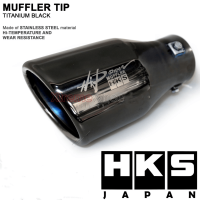
All Suv and Pick Up Original Hks Japan Made Titanium Muffler Tip SINGLE Wall
₱638.00₱888.00
Double Wall HKS JAPAN ORIGINAL BURN TIP FOR SUV AND PICK UP MUFFLER STAINLESS 3.0 with Original HKS BOX
₱588.00₱899.00

HKS Polyester Putty 4kg approx.
₱770.00₱1,000.00
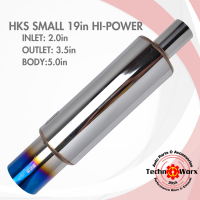
HKS Small Hypershort Jasma Quality Hipower Muffler Freeflow Free flow cars accessories spoon greddy
₱1,899.00₱4,999.00
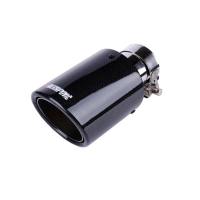
Double Wall HKS JAPAN ORIGINAL BURN TIP FOR SUV AND PICK UP MUFFLER STAINLESS 3.0 with Original HKS BOX
₱1,170.00₱2,200.00
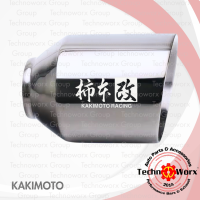
Greddy HKS Muffler Tip GUNMETAL BLACK Exhaust borla magnaflow kakimoto Original no sound chambered
₱999.00₱1,599.00
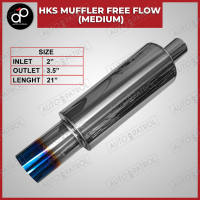
HKS Muffler Medium Freeflow Free Flow
₱2,650.00₱2,800.00
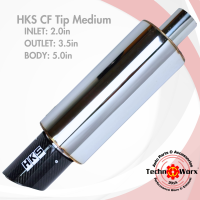
HKS Medium CF Orig Muffler Jasma Can Deep Free flow Japan titanium burnt high quality Stainless
₱2,599.00₱9,999.00
About HKS
Overview
HKS Co., Ltd., widely recognized simply as HKS, is a Japanese automotive engineering and aftermarket performance-parts manufacturer. The company is best known for its expertise in engine tuning, turbocharging, exhaust systems, suspension, engine electronics, and motorsport technology. Established in October 1973 and headquartered in Fujinomiya, Shizuoka, Japan, HKS has grown to become one of the most recognizable tuning brands globally 1.
The brand is deeply associated with the Japanese performance-car scene and the tuning of iconic vehicles from manufacturers such as Toyota, Nissan, Honda, Subaru, Mitsubishi, and Mazda. Its history is intrinsically linked to the evolution of Japan’s aftermarket tuning culture, having expanded from an initial focus on racing engines and turbocharger technology into a comprehensive range of performance components 2.
Quick facts
| Field | Information |
|---|---|
| Official name | HKS Co., Ltd. |
| Common name | HKS |
| Japanese | 株式会社エッチ・ケー・エス |
| Founded | October 1973 |
| Founder | Hiroyuki Hasegawa |
| Co-founder | Goichi Kitagawa |
| Headquarters | Fujinomiya, Shizuoka, Japan |
| Industry | Automotive / aftermarket performance |
| Main products | Turbochargers, exhausts, suspension, engine parts, electronics, intake systems |
| Core fields | Car tuning, motorsport, engine development, aftermarket engineering |
| Global presence | Japan, United States, Europe, China, Thailand and other markets |
| Current representative director | Daisuke Mizuguchi |
| Capital | ¥878.75 million |
| Employees | 417 consolidated, as of August 2025 |
| FY2025 consolidated sales | ¥8.97662 billion |
Corporate records list the headquarters address at 2266 Kamiide, Fujinomiya, Shizuoka, Japan 3.
Origin of the name
The name HKS is derived from the surnames and initials of the company’s founders and original financial backer:
- H — Hasegawa, referring to Hiroyuki Hasegawa
- K — Kitagawa, referring to Goichi Kitagawa
- S — Sigma, referring to Sigma Automotive Co., Ltd., which provided the startup capital
Hiroyuki Hasegawa was previously an engineer at Yamaha Motor Company. He and Kitagawa founded the company with the ambition of developing high-performance engines and components that surpassed the offerings of mainstream automobile manufacturers 4. In its earliest days, the company operated out of a dairy-farming shed near Mount Fuji, where it began the development and tuning of gasoline engines.
Founding and early history
HKS was established in October 1973 with the primary objective of developing, manufacturing, and selling race engines and engine parts. Hasegawa’s initial ambition was to construct an original racing engine capable of competing at the highest levels of motorsport 5.
An early significant project was the HKS-74E racing engine. Although the engine was completed, insufficient funding prevented the project from reaching the racing world. However, the engineering experience gained during this period was instrumental in establishing the company’s technical direction 6.
The breakthrough: Turbocharging
The company achieved a major commercial breakthrough in July 1974 with the introduction of a turbocharger kit for the L20 engine of the Nissan Skyline. This kit increased output significantly:
- 115 PS → 160 PS
- 16.5 kgm → 23.0 kgm
HKS describes this product as the world’s first commercial passenger-car turbocharger kit. Its success helped establish turbocharging as a cornerstone of the Japanese aftermarket performance industry 7. This early achievement defined the formula that would guide HKS for decades: taking a production automobile, engineering a higher-performance component, testing it under demanding conditions, and making the technology available to enthusiasts.
Role in Japanese tuning culture
HKS is more than a manufacturer of individual aftermarket parts; its history is deeply intertwined with the development of Japanese car tuning. During the 1970s and 1980s, as Japanese manufacturers increasingly produced performance-oriented cars, companies like HKS developed aftermarket technologies that allowed owners to extract substantially more performance from these vehicles.
HKS considers itself a pioneer of tuning and characterizes the history of the industry as closely connected to its own development 8. The company’s philosophy eventually evolved from individual engine modifications toward “total tuning”—optimizing multiple vehicle systems simultaneously rather than simply increasing engine power 9.
This holistic approach distinguishes the HKS methodology. Rather than focusing solely on horsepower, the traditional HKS approach encompasses a comprehensive system optimization:
engine → turbo → fuel → electronics → intake → exhaust → cooling → drivetrain → suspension → chassis → testing
Major product categories
HKS produces a broad range of automotive performance equipment across several key categories.
Turbochargers
Turbocharging remains one of the most recognizable specialties of HKS. The company develops:
- Turbocharger assemblies
- Turbo upgrade kits
- Turbo components
- Wastegate-related components
- Boost-control systems
- Turbocharger accessories
The company’s involvement with turbocharging dates back to its first commercial kit in 1974, and this technology subsequently became a foundation of its global reputation 10.
Exhaust systems
HKS is renowned for its aftermarket exhaust systems, which include:
- Cat-back exhausts
- Sports mufflers
- Performance exhaust systems
- Headers/manifolds
- Catalytic-converter-related components
- Racing exhaust systems
Exhaust technology became a critical part of product development during the 1980s when the company established dedicated manufacturing capabilities for mufflers.
Suspension
The company manufactures performance suspension systems designed for applications ranging from street driving to track use. The portfolio includes:
- Coilovers
- Shock absorbers
- Springs
- Adjustable suspension systems
The HIPERMAX family is particularly associated with the HKS suspension business. Manufacturing of suspension coil springs began in 1994, followed by shock absorbers in 1996 11. HKS emphasizes single-tube shock-absorber construction in its suspension technology.
Engine components
HKS develops various internal engine and supporting components, including:
- Pistons
- Camshafts
- Valve components
- Connecting/engine components
- Engine hardware
- Performance accessories
Beyond aftermarket components, the company has designed complete racing engines, including four-cylinder, V12, and other specialized powerplants.
Electronics and engine management
Electronic engine control is a historically significant area for HKS. Beginning in the early 1980s, the company developed products such as:
- F-CON fuel-control systems
- EVC electronic boost controllers
- Turbo timers
- Ignition systems
- Fuel-control equipment
- Other engine-management products
HKS became known for combining mechanical modifications with electronic control, enabling tuners to effectively manage the additional airflow and power generated by turbocharging and other upgrades 12.
Intake systems
The company also develops intake components, including air filters, intake kits, induction systems, and performance air boxes. The HKS Super Power Flow style of intake is particularly recognizable within Japanese tuning culture.
Motorsport activities
Motorsport has always been central to the identity of HKS. Rather than treating racing purely as a marketing tool, the company has historically used competition to develop and validate technology. Activities have included circuit racing, drag racing, touring-car racing, Formula-related engine development, drift competition, time attack, and other high-performance events. This competition-oriented engineering philosophy facilitates the transfer of racing technology into street products.
Notable racing projects
HKS M300
One of the company’s most famous early achievements was the HKS M300. Based on the Toyota Celica XX, this twin-turbocharged vehicle reached 301.25 km/h at Yatabe in 1983. HKS describes this as the first Japanese automobile to exceed 300 km/h in this context 13. This achievement was pivotal for the company’s reputation, demonstrating that an aftermarket tuning company could build a vehicle capable of extreme speeds.
HKS Drag 70 Supra
During the 1990s, HKS became heavily involved in drag racing. The HKS Drag 70 Supra utilized a highly modified Toyota 7M-G engine with twin turbochargers, producing approximately 850 PS in one configuration. In 1991, it recorded a 7.91-second quarter-mile pass, breaking the eight-second barrier in its competition context. This success helped establish HKS as one of Japan’s premier high-performance tuning companies 14.
HKS Zero-R
Perhaps the most legendary HKS road-car project is the HKS Zero-R. Instead of merely modifying an existing car with aftermarket components, HKS attempted to create an extremely high-performance complete vehicle based on the Nissan Skyline GT-R platform. Developed over two years, the Zero-R was designed to exceed 270 km/h and remains one of the most famous examples of Japanese tuner-car engineering.
Key vehicle platforms
Nissan Skyline GT-R
HKS maintains a strong historical relationship with the Nissan Skyline GT-R. The R32 GT-R served as a major development platform during the 1990s. HKS entered Japanese Group A racing with an R32 GT-R, achieving its first series victory at Sugo in 1992 15. Additionally, the HKS Drag R32 GT-R dominated the RRC and BE drag series from 1994 to 1996, cementing the GT-R/HKS combination in tuning culture 16.
Toyota
Toyota has been a significant development partner for HKS. Products and demonstration vehicles have been built around the Supra, Celica, Chaser, Mark II, Altezza, 86, and GR-related platforms. The HKS Racing Altezza, unveiled at the 2000 Tokyo Auto Salon, was a high-performance demonstration machine that achieved a notable lap time at Tsukuba Circuit 17. The HKS Drag 80 Supra, unveiled at the 2001 Tokyo Auto Salon, further demonstrated the company’s engine and drag-racing capabilities 18.
Drifting and the Toyota 86
In 2012, HKS entered the D1 Grand Prix full-time with a Toyota 86. This program allowed the company to develop and test components for the 86/BRZ platform under competition conditions, illustrating the use of motorsport as an engineering laboratory 19.
Specialized engine development
The engineering history of HKS extends beyond aftermarket bolt-on parts to include specialized engines such as four-cylinder racing engines, five-valve engines, motorcycle racing engines, ultra-light aircraft engines, and V12 racing engines.
The most ambitious project was the HKS 300E, a 3.5-liter V12, five-valve engine developed for Formula 1-related purposes in the early 1990s. HKS states that this engine produced approximately 680 PS at 13,500 rpm on commercial gasoline 20, illustrating the extent of the company’s engineering ambitions beyond conventional tuning.
Corporate identity and structure
HKS operates across three overlapping areas: aftermarket manufacturing, motorsport engineering, and automotive engineering/OEM work. The company notes that its activities have expanded beyond conventional aftermarket products into OEM component development and production, as well as alternative-fuel technologies 12. Consequently, HKS is accurately described as an automotive performance engineering company whose consumer-facing identity is built around tuning.
Current corporate status
According to current corporate information, HKS is based in Fujinomiya, Shizuoka, with major facilities including the Fujinomiya and Kitayama plants. As of August 2025, the company reported:
- 288 non-consolidated employees
- 417 consolidated employees
- ¥878.75 million capital
- ¥8.97662 billion consolidated sales for the fiscal year ending August 2025 16
The current representative director is Daisuke Mizuguchi.
International expansion
While founded in Japan, HKS has established a significant international footprint:
- 1981 — HKS USA established
- 1996 — HKS Europe established
- 2001 — HKS Thailand established as a Southeast Asian sales base
- 2012 — HKS Shanghai established
- 2017 — HKS USA established as a current consolidated subsidiary
- 2017 — Thailand manufacturing facility expanded
- 2019 — Guangzhou branch established
- 2020 — R&D section established in Thailand
- 2022 — Shanghai company renamed HKS (Shanghai) Automobile Technology Co., Ltd.
HKS Thailand
For Southeast Asia, HKS (Thailand) Co., Ltd. is particularly significant. Established in 2001 as a subsidiary and regional base, its activities include sales, technical support, aftermarket services, and manufacturing 14. The Thai facility handles exhaust-system production and supports tuning shops throughout the region. It has also developed products specifically for the local market, including exhaust systems and diesel engine-management applications.
Brand philosophy
The stated business philosophy of HKS is “The craftsmanship that appeals to people’s senses.” Since its founding, the company’s objective has been to help create cars that make driving fun 18. Under the newer THE HKS branding, the company emphasizes three concepts organized around design directions called Dimension X, Y, and Z:
- The impulse to drive
- Pursuit of every quality
- Creation of new frontiers
Distinctive characteristics
The reputation of HKS stems from several factors:
- Japanese engineering heritage: Originating during the formative period of Japan’s modern performance-car industry with over five decades of tuning technology development.
- Motorsport-derived development: Technologies tested in racing, drag racing, drifting, and high-speed applications.
- Full-system approach: A catalog covering turbocharging, exhaust, intake, electronics, suspension, and engine components rather than a single focus.
- Vehicle-platform knowledge: Extensive experience with Japanese performance platforms including the Skyline GT-R, Supra, Lancer Evolution, WRX/STI, Civic, and 86/BRZ.
- Global tuning culture: Instrumental in transforming “JDM tuning” from a domestic phenomenon into a global automotive subculture.
Within enthusiast culture, HKS is often mentioned alongside brands such as Tomei, Greddy/Trust, Blitz, Apexi, Cusco, Sard, and Mine’s. However, its broad product range—from turbochargers and exhausts to complete race engines—has kept the name prominent across different generations of enthusiasts.
Famous products
Key product families associated with the brand include:
| Product / family | Category |
|---|---|
| EVC | Electronic boost controller |
| F-CON | Engine/fuel management |
| HIPERMAX | Suspension/coilovers |
| Super Power Flow | Intake |
| GT Supercharger | Supercharging |
| GT Turbo | Turbochargers |
| Turbo Timer | Electronics |
| Hi-Power | Exhaust systems |
| Legamax | Exhaust |
| Muffler Series | Exhaust |
| Camshafts | Engine |
| Pistons | Engine |
| Power Editor / modern ECU products | Engine electronics |
Specific product names and availability vary by vehicle and market as the catalog evolves.
Environmental and alternative-fuel technology
HKS has extended its engineering expertise beyond traditional internal-combustion tuning to include environmental technologies. Projects have included CNG systems, natural-gas engines, alternative-fuel conversion, hybrid-related technology, and high-efficiency engines. For example, the company developed technology for converting diesel engines to CNG specifications 12. Recent corporate communications have also addressed decarbonization and a battery-swap EV truck demonstration project, indicating a continued expansion into electrification-related engineering.
Timeline
- 1973: HKS established in Japan to develop racing engines and engine components.
- 1974: Introduction of the pioneering passenger-car turbocharger kit.
- 1981: HKS USA established.
- 1982: Development of electronic engine-control products begins.
- 1983: HKS M300 exceeds 300 km/h at Yatabe 13.
- 1986: Development of the 2.0-liter, five-valve 186E racing engine.
- 1991: Introduction of the Zero-R.
- 1992: Development of the 3.5-liter V12 300E; competition with R32 GT-R in Japanese Group A racing 15.
- 1994–1996: Expansion of suspension business; major drag-racing success with R32 GT-R 16.
- 1999: Establishment of major R&D facility in Kitayama, Fujinomiya.
- 2000: Unveiling of HKS Racing Altezza 17.
- 2001: Unveiling of HKS Drag 80 Supra; establishment of HKS Thailand 18.
- 2012: Full-time entry into D1GP with Toyota 86; establishment of Shanghai operation 19.
- 2017: Establishment of current HKS USA subsidiary.
- 2022: Renaming of HKS Shanghai to HKS (Shanghai) Automobile Technology Co., Ltd.
- 2023: Celebration of 50th anniversary.
- 2025: Report of 417 consolidated employees and approximately ¥8.98 billion in consolidated annual sales for the fiscal year ending August 2025 20.
Reputation
HKS is generally regarded as one of the foundational Japanese performance-tuning brands. Its significance lies in its comprehensive history of developing racing engines, pioneering aftermarket turbocharging, creating electronic engine management systems, building record-setting cars, and competing in various motorsport disciplines. Positioned between a traditional tuning company, a motorsport engineering firm, and a global aftermarket manufacturer, HKS helped transform Japanese car tuning from a niche engineering activity into a global automotive culture. Its identity is built not merely on parts manufacturing, but on engineering complete performance solutions validated through motorsport.
References
- HKS HISTORY
- COMPANY|THE HKS
- GREETING
- For Immediate ReleaseNovember 14, 2025 HKS
- HKS Europe distributors of HKS performance automotive products for Honda, Toyota, Mazda, Nissan, Lexus and Subaru.
- HISTORY
- HKSの歴史 | HKS
- HKS (THAILAND) CO., LTD.
- HKS (THAILAND) CO., LTD.
- HKS GLOBAL SITE
- HKS and Defi (Nippon Seiki Co., Ltd.) Join Forces for Groundbreaking Product Launch | HKS High Performance Auto Parts
- COMPANY TOP
- 企業情報 – 沿革 | HKS
- HKS (THAILAND) CO., LTD.
- HKS (company)
- HKS Co., Ltd. | LinkedIn
- HKS history | 創業50周年の軌跡
- BLAND CONCEPT | HKSTUDIE OFFICIAL SITE
- News Page | HKS High Performance Auto Parts
- HKS USA