Shop on Lazada
Marantz products
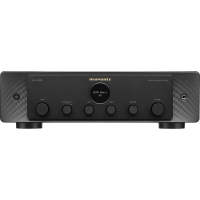
Marantz Model 40n Streaming Amplifier WiFi HDMI AirPlay Bluetooth HEOS Stereo Integrated Amp Made in Japan (black)
₱199,990.00₱201,990.00
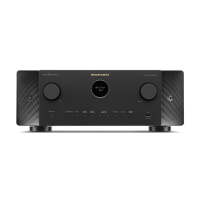
Marantz Cinema 60 7.2ch 8K AV Receiver Dolby Atmos HEOS WiFi AirPlay Premium Home Theater Amplifier - Cinema60 - Black
₱89,990.00₱91,990.00
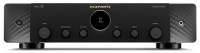
Marantz PM6007 Stereo Integrated Amplifier | 45W x 2 | Built-In DAC | Hi-Fi Home Audio | Black
₱62,990.00₱64,990.00

Marantz MM7055 5-channel power amplifier
₱79,990.00₱81,990.00
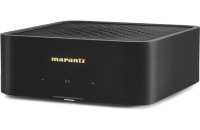
Marantz MODEL M1 - 2.1 channel 100 watts Stereo integrated amplifier with HEOS Built-in Bluetooth and Apple AirPlay 2 M1 MARANTZ M1
₱62,990.00₱64,990.00
Marantz MODEL M1 - 2.1 channel 100 watts Stereo integrated amplifier with wifi & bluetooth.
₱62,990.00₱64,990.00
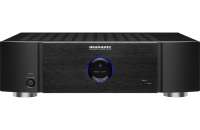
Marantz MM7025 Stereo power amplifier (2 channel amplifier)
₱53,990.00₱55,990.00
About Marantz
Overview
Marantz is an American-founded premium audio brand best known for high-fidelity amplifiers, receivers, CD/SACD players, network audio components, turntables, AV receivers, and home-cinema equipment. Founded by Saul B. Marantz in 1953, the company has become one of the most recognizable names in the history of modern hi-fi.1
Today, Marantz operates within HARMAN, following HARMAN’s September 2025 acquisition of Sound United, the former consumer-audio business of Masimo. Sound United’s portfolio included Marantz, Denon, Bowers & Wilkins, Polk Audio, Definitive Technology, Classé, and other audio brands.2
Basic Information
| Marantz | |
|---|---|
| Industry | Consumer electronics / Hi-fi / Home audio |
| Founded | 1953 |
| Founder | Saul B. Marantz |
| Origin | Queens, New York City, United States |
| Original product | Audio Consolette preamplifier |
| Specialization | Hi-fi and home audio |
| Major products | Amplifiers, CD/SACD players, network players, AV receivers, turntables, home cinema |
| Current corporate group | HARMAN |
| Former parent | Sound United / Masimo |
| Brand philosophy | “The Most Musical Sound” |
| Major manufacturing heritage | Japan, particularly Shirakawa |
| Website | Marantz.com |
The Founding of Marantz
The story begins with Saul Bernard Marantz, a music enthusiast, amateur musician, graphic artist, and electronics enthusiast living in New York.
In the early 1950s, Marantz was dissatisfied with the audio equipment available to consumers. Early LP records could use different recording equalization characteristics, meaning that reproducing them accurately could be difficult.
Rather than accepting the equipment available, Marantz decided to build his own solution.
Around 1952, he designed the Audio Consolette, a sophisticated tube-based preamplifier capable of accommodating different record equalization curves. The first unit was reportedly constructed on his kitchen table.
The Audio Consolette proved extremely popular among friends and fellow audio enthusiasts. The first 100 units sold quickly, and demand eventually became large enough for Marantz to establish a formal company.
Thus, in 1953, the Marantz Audio Company was born in Queens, New York.3
This is an important part of Marantz’s identity: the company was born from an enthusiast trying to solve a real musical problem rather than from a conventional mass-market electronics business.
The Early Golden Age: 1950s–1960s
Marantz quickly established itself as a serious high-fidelity manufacturer.
Model 1
In 1954, Marantz introduced the Model 1, a commercial development of the Audio Consolette.
It became an important early high-fidelity preamplifier and established the company’s reputation for sophisticated engineering and sound quality.4
Model 7
In 1958 came the legendary Model 7 preamplifier.
The Model 7 became one of the most famous products in early American hi-fi and remains a highly collectible vintage component.
Model 9
In 1960, Marantz introduced the Model 9 tube power amplifier.
It was designed as a high-performance stereo amplifier and is now regarded as one of the classic pieces of American tube audio.
Model 10B
In 1964, Marantz introduced the Model 10B FM stereo tuner, another landmark product.
Together, products such as the Model 7, Model 9 and Model 10B helped establish the classic Marantz reputation for:
- Sophisticated engineering
- Excellent build quality
- Powerful but refined sound
- Distinctive industrial design
- Premium construction5
The Famous Marantz Sound
One of the most important concepts associated with Marantz is its pursuit of what the company calls:
“The Most Musical Sound”
This philosophy has been part of Marantz’s modern branding for decades.
Rather than presenting audio reproduction purely as a matter of technical specifications, Marantz emphasizes the musical experience—natural tone, texture, dynamics, spaciousness and emotional engagement.
The company describes its objective as producing a realistic reproduction that brings the listener closer to the original musical performance.6
This is why Marantz has traditionally been associated with a particular sonic character often described by enthusiasts as:
- Warm
- Smooth
- Refined
- Musical
- Spacious
- Detailed without sounding excessively aggressive
It is worth emphasizing that these descriptions are subjective audiophile characterizations, not universal measurements. Different generations and models can sound substantially different.
Marantz and Japan
Although Marantz was founded in New York, Japan became enormously important to the brand’s development.
During the 1960s, Marantz began working with Japanese manufacturers to expand production and make its products more accessible.7
Over subsequent decades, Japanese engineering and manufacturing became deeply intertwined with Marantz’s identity.
One especially important location is Shirakawa Audio Works in Fukushima, Japan.
Marantz states that Shirakawa has been its manufacturing home since 2002, where engineers and craftsmen work on premium audio products.8
This produced an interesting cultural identity:
American origins + Japanese engineering/manufacturing + international audio culture.
That combination is one reason Marantz occupies a distinctive position in the hi-fi world.
The Philips Era and the Transition to Digital
The audio industry changed dramatically during the 1970s and 1980s.
The arrival of digital audio and the Compact Disc threatened to transform the traditional hi-fi market.
Marantz became involved in this transformation, particularly through its relationship with Philips, one of the pioneers of CD technology.
Marantz’s history records its development of CD players during the 1980s and the emergence of digital products alongside its traditional amplifiers and tuners.9
This was an important transition:
1950s–70s:
Tube amplifiers → transistor amplifiers → tuners → turntables
1980s onward:
CD → digital processing → AV → home theater → network audio → streaming
Marantz successfully survived this technological transition while maintaining its premium-audio identity.
The CD Era
Marantz became particularly well known for its CD players.
Models from the company’s CD history became highly regarded among enthusiasts, and later products such as the CD63 and CD6000 series became especially important.
The CD6000 family, launched around the turn of the millennium, became one of Marantz’s most successful affordable hi-fi product families and continued through numerous generations.10
This illustrates an important aspect of Marantz’s strategy:
Rather than restricting the brand to ultra-expensive equipment, it has historically offered products ranging from relatively accessible hi-fi components to extremely high-end equipment.
HDAM — One of Marantz’s Signature Technologies
One technology strongly associated with modern Marantz is HDAM, or Hyper Dynamic Amplifier Module.
Instead of relying exclusively on conventional integrated amplifier chips for certain signal-processing stages, Marantz developed its own discrete amplifier modules.
The company describes HDAM as a proprietary technology intended to provide high-speed signal handling and contribute to the characteristic Marantz sound.11
HDAM has appeared across numerous generations of Marantz equipment, including integrated amplifiers and digital products.
It is one of the clearest examples of Marantz attempting to differentiate itself through both engineering and sonic philosophy, rather than simply competing on specifications.
Marantz and Home Theater
Marantz was not limited to two-channel stereo.
As home theater became mainstream in the 1990s and 2000s, the company expanded heavily into:
- AV receivers
- AV preamplifiers
- Multi-channel amplifiers
- Surround processors
- Home-cinema systems
This allowed Marantz to compete in a rapidly expanding market where consumers wanted one system capable of handling both music and movies.
The company’s modern CINEMA series represents this side of the business. Marantz positions these products as combining its hi-fi heritage with contemporary immersive home cinema.12
Marantz’s Relationship with Denon
One of the most interesting chapters in Marantz’s corporate history is its connection with Denon.
Although Marantz and Denon have historically been separate brands with different origins and identities, they eventually became part of the same broader corporate organization.
This ultimately led to the creation of D&M Holdings, bringing the two famous Japanese-associated audio brands under one corporate umbrella.
Later, D&M became part of the wider organization that evolved into Sound United.
The two brands nevertheless maintained distinct identities:
Marantz
Generally positioned toward:
- Premium hi-fi
- Musicality
- Refined industrial design
- Stereo components
- High-end home cinema
Denon
Generally positioned toward:
- Broad consumer audio
- AV receivers
- Home theater
- Hi-fi
- Strong feature/value proposition
The brands therefore share technological and corporate history while remaining competitors in the eyes of many consumers.
Sound United
Marantz eventually became part of Sound United, a major consumer-audio group.
Sound United assembled a large portfolio of audio brands, including:
- Marantz
- Denon
- Bowers & Wilkins
- Polk Audio
- Definitive Technology
- Classé
- Boston Acoustics
- HEOS
Sound United was subsequently acquired by Masimo in 2022.13
The acquisition was unusual because Masimo was primarily known for medical technology rather than consumer audio.
Masimo envisioned opportunities to combine its health technology with connected consumer devices, although the strategic relationship became controversial and ultimately changed.
HARMAN Ownership
The most important recent corporate development is that HARMAN acquired Sound United from Masimo in 2025.
HARMAN announced completion of the acquisition on September 23, 2025. The transaction brought Marantz into HARMAN’s large audio portfolio alongside brands such as JBL, Harman Kardon, AKG and others.
So, as of 2026, the simplified corporate history is:
Saul Marantz → Marantz Company → Philips era → Marantz Japan / D&M → Sound United → Masimo → HARMAN
This means Marantz is currently part of HARMAN International, which itself is a wholly owned subsidiary of Samsung Electronics.
Marantz’s Product Categories Today
Marantz’s modern product lineup covers considerably more than traditional stereo amplifiers.
Integrated Amplifiers
These combine a preamplifier and power amplifier into one chassis.
Examples include the MODEL 30 and higher-end models.
The MODEL 30 is particularly significant because Marantz deliberately designed it as an all-analogue integrated amplifier, despite the dominance of digital audio.
Network Audio
Modern Marantz products can integrate:
- Network streaming
- Internet radio
- High-resolution music
- Streaming services
- Smartphone control
- Multi-room audio
Many network-enabled products work with HEOS, the networked audio platform associated with the Sound United family.
CD and SACD Players
Marantz remains unusual in today’s streaming-oriented market because it continues to develop dedicated physical-disc players.
The SACD 30n, for example, combines:
- CD playback
- SACD playback
- High-resolution digital audio
- Network streaming
It represents Marantz’s attempt to bridge traditional physical media and modern streaming.14
Turntables
Marantz also maintains a presence in vinyl.
The TT-15S1 is one of the brand’s notable modern turntables, positioned as a premium product with an emphasis on materials, engineering and visual design.15
AV Receivers and Home Cinema
The company’s CINEMA line targets premium home theater.
These products support modern surround-sound and immersive cinema formats while maintaining Marantz’s emphasis on musical playback.
The CINEMA 40, for example, is positioned as a high-performance home-cinema receiver built around Marantz’s heritage.16
Wireless Speakers
Marantz has also moved into premium wireless audio.
Its Horizon and Grand Horizon products represent a more contemporary interpretation of the Marantz brand, combining wireless functionality with luxury-oriented industrial design.
This is significant because it demonstrates that Marantz is no longer simply an old-school hi-fi component company.
Marantz Design Language
Marantz products have a very recognizable visual identity.
Traditional Marantz equipment often features:
- Symmetrical front panels
- Substantial metal construction
- Circular controls
- Large central displays
- Distinctive illuminated elements
- Minimalist typography
- The famous Marantz star
The company says its classic logotype has remained stylistically consistent for more than 70 years.
The Marantz star is particularly important.
It is not simply a decorative logo; it has become one of the visual symbols through which the company communicates its heritage.
Why Vintage Marantz Is So Famous
When people talk about “classic Marantz,” they are often referring to equipment from roughly the 1960s and 1970s.
Vintage Marantz components are particularly sought after because they combine:
Engineering + industrial design + collectability + historical importance.
Some famous vintage models include:
- Model 7
- Model 8
- Model 9
- Model 10B
- Model 10
- Model 18
- Model 19
- Model 22
- Model 2270
- Model 2325
- Model 2385
The larger 1970s receivers are especially recognizable for their substantial construction, analog displays and distinctive styling.
They have become part of the culture of vintage hi-fi collecting.
Marantz Model 9 and NASA
One of the most famous stories in Marantz history concerns the Model 9.
Marantz states that the Model 9’s amplifier architecture was sufficiently stable and reliable that it was selected and customized for use by NASA in connection with the Apollo-era program.
This is one of those stories that has become part of Marantz mythology.
The important point is not that Marantz was a major NASA contractor—it wasn’t—but that its amplifier technology was considered sufficiently robust for specialized applications associated with the space program.
The Marantz Philosophy
Marantz’s identity can essentially be summarized through five ideas:
1. Musicality
The company prioritizes the emotional and natural qualities of music, encapsulated by “The Most Musical Sound.”
2. Engineering
Marantz emphasizes carefully designed analog and digital circuitry rather than relying exclusively on generic solutions.
3. Craftsmanship
Particularly in its premium products, Marantz places significant emphasis on construction, materials and assembly.
4. Design
The company treats audio equipment as an object of industrial design rather than merely an electronic appliance.
5. Heritage
Marantz deliberately connects modern products with its 1950s–70s history.
What Makes Marantz Different from Other Hi-Fi Brands?
Marantz occupies an interesting position among audio companies.
| Brand | General identity |
|---|---|
| Marantz | Musical, refined, premium hi-fi + home cinema |
| Denon | Feature-rich hi-fi + AV/home theater |
| Yamaha | Broad musical instruments + audio/AV |
| Onkyo | AV/home theater + hi-fi |
| Cambridge Audio | British-oriented hi-fi |
| NAD | Performance-focused hi-fi |
| Rotel | Performance/value-oriented hi-fi |
| McIntosh | Ultra-premium American hi-fi |
| Luxman | High-end Japanese hi-fi |
| Accuphase | High-end Japanese precision hi-fi |
| Technics | Japanese hi-fi + DJ/vinyl heritage |
Marantz’s particular niche is the combination of premium aesthetics, musical presentation, heritage and modern functionality.
Marantz’s Reputation Among Audiophiles
Marantz has an unusually broad reputation.
Among traditional audiophiles, the name carries enormous historical weight because of its early tube amplifiers and preamplifiers.
Among modern consumers, the brand is better known for integrated amplifiers, CD players, network players and AV receivers.
Among collectors, vintage Marantz equipment can be highly desirable.
Thus, “Marantz” can mean three different things depending on the listener:
Vintage Marantz:
American tube/transistor hi-fi and collectible equipment.
Modern Marantz:
Premium Japanese-associated hi-fi and home cinema.
Luxury Marantz:
High-end components and increasingly sophisticated lifestyle products.
Marantz in the 2020s
Marantz has increasingly tried to modernize its identity without abandoning its historical DNA.
The company has moved toward:
- Streaming
- Network audio
- HEOS
- High-resolution digital audio
- SACD
- Premium wireless speakers
- Modern industrial design
- Immersive home cinema
- Luxury materials
At the same time, products such as the MODEL 30 demonstrate that Marantz still considers traditional analogue amplification important.17
This creates an interesting dual identity:
A 1953 hi-fi philosophy expressed through 21st-century technology.
Marantz’s Historical Timeline
1952
Saul Marantz develops the Audio Consolette.
1953
Marantz Audio Company is established in Queens, New York.
1954
Model 1 preamplifier introduced.
1958
Model 7 becomes a major Marantz preamplifier.
1960
Model 9 tube power amplifier introduced.
1964
Model 10B FM stereo tuner introduced.
1960s–70s
Marantz becomes one of America’s most recognizable hi-fi brands.
1966 onward
The company increasingly explores Japanese manufacturing partnerships.18
1980s
Marantz becomes heavily involved in the CD/digital-audio revolution.
1990s
Expansion into modern digital audio and home theater.
2001
Marantz Japan acquires the brand from Philips.19
2002
Shirakawa Audio Works becomes a major Marantz manufacturing center.20
2000s–2010s
Marantz expands into network audio and AV receivers.
2022
Sound United, owner of Marantz, is acquired by Masimo.21
2023
Marantz celebrates its 70th anniversary.
2025
HARMAN completes acquisition of Sound United, bringing Marantz into the HARMAN/Samsung group.22
2026
Marantz continues as a premium audio brand spanning stereo hi-fi, digital audio, home theater and luxury wireless products.
The Essence of Marantz
If you wanted to reduce 70+ years of Marantz history to one sentence:
Marantz is a New York-born hi-fi company founded by Saul Marantz in 1953 that became famous for pioneering high-fidelity amplification, developed a deep Japanese engineering and manufacturing heritage, survived the transition from tubes to transistors to CDs and streaming, and today represents premium musical audio and home cinema under HARMAN.
Its most important legacy isn’t simply a particular amplifier or receiver.
It is the idea that audio equipment should reproduce music in a way that feels natural, emotional and immersive while also being beautifully engineered and designed.
That is the underlying idea behind Marantz’s enduring slogan:
“The Most Musical Sound.”23
If you want to explore the history visually, Marantz’s own official seven-decade timeline is the best primary-source starting point.24
References
- The Marantz Timeline
- Born in New York
- Marantz Celebrates 70 Years of The Most Musical Sound
- World of Marantz
- A Mark of Performance
- A Mark of Performance
- The end of an era: the Marantz CD6000 series is one of modern hi-fi’s greatest hits – we look back through the evolution of this budget CD player range over the past two decades
- Masimo
- Marantz
- HARMAN absorbs Sound United, putting B&W, Denon and Marantz under one roof · Sound Technology
- sec.gov
- Harman now owns Bowers & Wilkins, Marantz and Denon as Masimo deal completes | What Hi-Fi?
- Harman International Completes Deal To Buy Sound United’s Audio Brands From Masimo
- [[Marantz]マランツ創業70周年と公式ウェブサイトリニューアルのお知らせ | 株式会社ディーアンドエムホールディングスのプレスリリース](https://prtimes.jp/main/html/rd/p/000000354.000003601.html)
- About Marantz and their history at AWE.
- sec.gov
- The Marantz Timeline
- Die Marantz-Timeline
- Marantz发展历程
- The Marantz Timeline Banner
- Marantz Celebrates 70 Years of The Most Musical Sound
- マランツのあゆみ
- True or fully Balanced Marantz products
- Questions on Marantz Products