Shop on Lazada
Mazda products
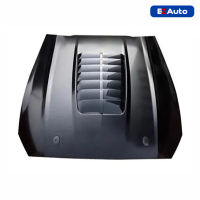
Ford Mustang GT500/2015-2022/6th Generation/Matte Black/GT500 Surround/Front Bumper/Rear Diffuser/2016 2017 2018 2019 2020 2021
₱44,440.00₱54,000.00
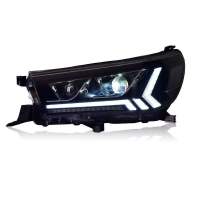
Toyota Hilux Headlight/2015-2019 Model/8th Generation/Facelift/REVO/Rocco/Modified/Front Bumper Light/Head Lamp/Front Light/Head Light/2016 2017 2018 EZAuto
₱32,219.00₱42,000.00
![[1 LITER] Mazda ATF FZ Fluid - Mazda CX5 ATF - Mazda 2 ATF - Mazda 3 ATF - Mazda CX7 ATF - Mazda CX9 ATF - Genuine Mazda Auto Parts - FOR SKYACTIV ONLY](https://ph-live.slatic.net/p/80787c28d486f6ca0c495f8eed646792.jpg_200x200q80.jpg)
[1 LITER] Mazda ATF FZ Fluid - Mazda CX5 ATF - Mazda 2 ATF - Mazda 3 ATF - Mazda CX7 ATF - Mazda CX9 ATF - Genuine Mazda Auto Parts - FOR SKYACTIV ONLY
₱782.00₱790.00
![[2015 - 2017] Mazda CX5 Shock Absorber REAR (1 PIECE) - Genuine Mazda Auto Parts - VIN REQUIRED](https://ph-live.slatic.net/p/e61c734a29160e1dd42fd4d147832f10.jpg_200x200q80.jpg)
[2015 - 2017] Mazda CX5 Shock Absorber REAR (1 PIECE) - Genuine Mazda Auto Parts - VIN REQUIRED
₱7,415.00₱7,490.00
![[2012 - 2023] Mazda CX5 Stabilizer Link FRONT - Genuine Mazda Auto Parts](https://ph-live.slatic.net/p/488582f6cd707ff5afc43653baa0f0ee.jpg_200x200q80.jpg)
[2012 - 2023] Mazda CX5 Stabilizer Link FRONT - Genuine Mazda Auto Parts
₱1,574.00₱1,590.00
Changan CS75 Plus Shock Absorber 2019-Present Model/Shock Spring/Coil Spring/Shock Absorber/Front Rear/Suspension/2020 2021 2022 2023 2024
₱8,077.00₱10,501.00
![[2012 - 2016 2.0L] Mazda CX5 Engine Support LH - Genuine Mazda Auto Parts - GHR939070B](https://ph-live.slatic.net/p/d5413b6e4b00758295051e1217257807.jpg_200x200q80.jpg)
[2012 - 2016 2.0L] Mazda CX5 Engine Support LH - Genuine Mazda Auto Parts - GHR939070B
₱9,395.00₱9,490.00
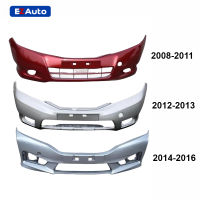
Honda City Bumper 2008-2016/Ballade/Front/Cover 2009 2010 2011 2012 2013 2014 2015 EZAuto
₱10,097.00₱14,399.00
About Mazda
Mazda Motor Corporation (Japanese: マツダ株式会社, Matsuda Kabushiki-gaisha), commonly referred to as Mazda, is a Japanese automobile manufacturer headquartered in Fuchū, Hiroshima Prefecture, Japan. The company develops and sells passenger cars, SUVs, sports cars, commercial vehicles, engines, and related automotive technologies worldwide. Mazda is particularly recognised for its emphasis on driving enjoyment, distinctive design, lightweight engineering, rotary-engine technology, and unconventional engineering solutions.1
Founded on January 30, 1920, Mazda is one of Japan’s older automobile manufacturers. However, it did not begin as a car company; its original business was manufacturing cork products. Over more than a century, it evolved from a small Hiroshima industrial company into a global automobile brand.2
Basic information
| Category | Information |
|---|---|
| Company | Mazda Motor Corporation |
| Japanese name | マツダ株式会社 |
| Founded | January 30, 1920 |
| Original name | Toyo Cork Kogyo Co., Ltd. |
| Headquarters | Fuchū, Hiroshima, Japan |
| Industry | Automotive |
| Main products | Passenger cars, SUVs, sports cars, commercial vehicles, engines |
| Current President & CEO | Masahiro Moro |
| Current Chairman | Kiyotaka Shobuda |
| Stock exchange | Tokyo Stock Exchange |
| Ticker | 7261 |
| Employees | 48,783 consolidated employees as of March 31, 2025 |
| FY2026 global sales | 1.223 million vehicles |
| FY2026 net sales | ¥4.9182 trillion |
The latest published results for the fiscal year ending March 31, 2026, reported global sales of approximately 1.223 million vehicles, consolidated net sales of ¥4.9182 trillion, operating income of ¥51.6 billion, and net income attributable to Mazda’s owners of ¥35.1 billion.5
As of July 1, 2026, Masahiro Moro serves as Mazda’s Representative Director, President and CEO.6
Origins: from cork to automobiles
Mazda’s story begins in Hiroshima in 1920, when Toyo Cork Kogyo Co., Ltd. was established. Its original business was the manufacture of cork and compressed cork products.3
In 1921, Jujiro Matsuda became the company’s second president. Under Matsuda, the company gradually moved away from its dependence on cork and towards machinery and engineering. A major factory fire in 1925 destroyed roughly 70% of its equipment, creating a serious crisis. Rather than abandoning the company, Matsuda used the opportunity to redirect the business toward mechanical manufacturing.4
In 1927, the company changed its name from Toyo Cork Kogyo to Toyo Kogyo Co., Ltd. It subsequently manufactured machine tools, rock drills, gauge blocks, and other industrial equipment.7
This engineering background became extremely important to Mazda’s later identity: unlike some automakers that began primarily as automobile assemblers, Mazda developed a reputation for engineering experimentation and technical independence.
Entering the automobile industry
Mazda’s first major step into automotive manufacturing came in 1931, when Toyo Kogyo began producing the Mazda-Go, a three-wheeled commercial truck.8
The Mazda-Go was designed as a relatively inexpensive and practical vehicle for transporting goods. It became successful in Japan and was also exported to markets including China and India.9
This was the first time the name Mazda appeared on one of the company’s vehicles. The name has a dual association:
- Matsuda — the surname of founder Jujiro Matsuda.
- Ahura Mazda — an ancient Persian deity associated with wisdom, intelligence and harmony.
Mazda itself describes the name as connecting the founder’s name with the concept of Ahura Mazda.10
World War II and Hiroshima
During World War II, Toyo Kogyo was ordered to produce military-related equipment and components for the Japanese military.11
The company survived the atomic bombing of Hiroshima in August 1945, although Hiroshima itself suffered catastrophic destruction. Mazda’s headquarters and facilities subsequently became involved in the city’s recovery. The company provided space for government organizations and participated in relief and reconstruction activities while restarting its own manufacturing operations.12
This experience became an important part of Mazda’s corporate identity. The company frequently describes its relationship with Hiroshima as a source of its “challenger spirit”—the idea of continuing to innovate despite difficult circumstances.13
From trucks to passenger cars
After World War II, Mazda continued producing three-wheeled commercial vehicles but gradually expanded into four-wheeled automobiles.
A major milestone came in 1960, with the introduction of the Mazda R360 Coupe, Mazda’s first four-wheeled passenger car. It was a small, lightweight two-door vehicle designed for Japan’s emerging mass automobile market.14
The R360 helped establish Mazda as a passenger-car manufacturer. During the 1960s, Mazda expanded its passenger-car lineup and began looking for technologies that could distinguish it from larger Japanese competitors such as Toyota and Nissan. That search led to one of the most important chapters in Mazda history.
The rotary-engine era
The Wankel rotary engine
In the 1960s, Mazda became deeply involved in developing the Wankel rotary engine, a fundamentally different type of internal-combustion engine from the conventional piston engine. Instead of using pistons moving up and down inside cylinders, a rotary engine uses a roughly triangular rotor rotating inside a specially shaped housing.
Mazda entered into technical cooperation concerning rotary-engine technology in the early 1960s and invested heavily in solving the engine’s durability, sealing, emissions and fuel-economy problems.15
The result was the Mazda Cosmo Sport 110S, introduced in 1967. Mazda describes it as the world’s first production sports car powered by a two-rotor rotary engine.16 This technology became one of the defining characteristics of Mazda.
Why rotary engines mattered to Mazda
Rotary engines offered several theoretical advantages:
- Compact dimensions
- Low weight
- Smooth operation
- High power relative to displacement
- High-revving characteristics
However, they also presented significant challenges, particularly fuel consumption, emissions and rotor-tip sealing. Mazda nevertheless continued developing the technology when many other manufacturers abandoned it.
The oil crisis and change of direction
The 1973 oil crisis exposed one of the rotary engine’s major weaknesses: relatively high fuel consumption. As fuel prices increased, demand for rotary-powered vehicles declined sharply. Mazda therefore had to reconsider its strategy.17
Rather than making every vehicle dependent on rotary engines, Mazda began developing a broader range of conventional piston-engine vehicles. At the same time, the company expanded internationally.
Ford and the globalization of Mazda
A major turning point occurred in 1979, when Ford Motor Company acquired a significant stake in Mazda and entered into a capital relationship with the Japanese manufacturer.18
The relationship deepened during the 1980s and 1990s. Mazda and Ford collaborated on vehicle platforms, engines, manufacturing, distribution, and global market development. Mazda also gained access to Ford’s international resources, while Ford benefited from Mazda’s engineering and compact-car expertise. However, Mazda remained an independently recognizable Japanese brand.
The Mazda MX-5 Miata
Perhaps the single most influential Mazda model is the Mazda MX-5, also known as the Miata in North America and the Roadster in Japan. Introduced in 1989, the MX-5 was designed around a simple idea: a relatively affordable, lightweight, rear-wheel-drive roadster focused primarily on driving enjoyment.
Its philosophy emphasized low weight, simple mechanical layout, front-engine/rear-wheel drive, responsive handling, open-top driving, and driver involvement. The MX-5 became enormously influential in the revival of the affordable roadster market. It also perfectly captured what would become Mazda’s broader philosophy: a car does not need enormous power to be enjoyable if it is lightweight, balanced and responsive.
The model remains in production today and is one of Mazda’s most recognizable products. Mazda’s latest company information lists the MX-5/Roadster as part of its global lineup.19
Le Mans victory
Another landmark in Mazda’s history occurred in 1991, when the Mazda 787B won the 24 Hours of Le Mans. The victory was historically significant because the 787B used a four-rotor rotary engine. It was the first—and remains the only—rotary-powered car to win the overall 24 Hours of Le Mans. It was also the first victory by a Japanese automobile manufacturer in the event. Mazda’s success became one of the defining achievements associated with rotary-engine technology.20
The bright orange-and-green 787B has subsequently become an icon of Japanese motorsport.
Ford era and Mazda’s independence
During the 1990s and early 2000s, Ford’s involvement in Mazda became substantial. However, Mazda later experienced significant financial and strategic difficulties. Ford gradually reduced its ownership, particularly during the global financial crisis. By the end of the 2000s, Mazda was again moving toward greater independence.
This forced Mazda to develop technologies and manufacturing strategies that would allow it to compete effectively despite being much smaller than giants such as Toyota, Volkswagen and General Motors.
The “Zoom-Zoom” era
In the early 2000s, Mazda adopted the “Zoom-Zoom” brand message. The phrase represented Mazda’s attempt to associate the brand with the excitement of movement and driving. It was particularly important because Mazda was trying to distinguish itself not simply through price or size, but through emotional appeal and driving experience.
The philosophy eventually evolved into more sophisticated concepts such as Jinba-ittai, Kodo design, and SKYACTIV Technology.
SKYACTIV Technology
Beginning around 2010, Mazda introduced its SKYACTIV technology family. SKYACTIV was not one single engine or transmission. Instead, it represented a broad approach covering engines, transmissions, vehicle structures, chassis, fuel efficiency, and aerodynamics.
The goal was to improve efficiency without sacrificing driving enjoyment. This became particularly important because Mazda was too small to compete purely through economies of scale. Instead, it attempted to extract high efficiency from relatively conventional technologies through detailed engineering.
Kodo design
Alongside SKYACTIV, Mazda introduced the Kodo – Soul of Motion design philosophy. Kodo seeks to make stationary vehicles appear as though they are moving even when parked. Mazda’s modern design language is characterized by long flowing surfaces, strong proportions, minimal visual clutter, emphasis on light and shadow, low and athletic silhouettes, and large carefully shaped body surfaces.
The CX-5, launched in 2012, became the first major production model representing Mazda’s new-generation design and SKYACTIV approach. It was highly successful internationally and helped transform Mazda’s product strategy toward SUVs and crossovers.21
Mazda’s relationship with Toyota
As the automotive industry entered the era of electrification, autonomous driving and connected vehicles, Mazda sought partnerships rather than attempting to develop every technology entirely by itself. Mazda entered into a business and capital alliance with Toyota Motor Corporation.
Toyota currently owns approximately 5.1% of Mazda’s shares, according to Mazda’s shareholder information as of March 31, 2026.22 The two companies have cooperated in areas including hybrid technology, electric vehicles, manufacturing, production facilities, and advanced automotive technologies. One example is the Mazda CX-50 Hybrid, which uses Toyota hybrid technology.
Mazda today
Today, Mazda is a relatively small global automaker compared with Toyota, Volkswagen, Hyundai Motor Group and other automotive giants. Rather than competing primarily on volume, Mazda increasingly emphasizes brand value and differentiation.
Its current corporate purpose is: “Enrich life-in-motion for those we serve.” Its 2030 vision is to become a car-loving company that creates moving experiences through the “Joy of Driving.”23
The company’s current lineup is centered heavily around SUVs and crossovers, while retaining passenger cars and the MX-5 sports car. Major current models include:
- Mazda2
- Mazda3
- CX-3
- CX-30
- CX-5
- CX-50
- CX-60
- CX-70
- CX-80
- CX-90
- MX-5
- BT-50
- EZ-6 / Mazda6e
- MX-30
The exact lineup differs by country.24
Mazda’s current electrification strategy
Mazda’s approach to electrification is somewhat different from manufacturers that have committed exclusively to battery-electric vehicles. The company describes its strategy as a “Multi-Solution” approach. Rather than immediately abandoning internal-combustion engines, Mazda intends to combine several technologies:
- Efficient gasoline engines
- Diesel engines in selected markets
- Mild hybrids
- Conventional hybrids
- Plug-in hybrids
- Battery-electric vehicles
- Rotary-engine technology in selected applications
Mazda calls the period leading toward 2030 the “dawn of electrification.”25 The company’s 2030 strategy estimates that battery-electric vehicles could represent roughly 25–40% of global sales by 2030, depending on government policy, infrastructure, consumer demand and other market conditions.26
Mazda is also developing the SKYACTIV-Z 2.5-liter four-cylinder gasoline engine. Mazda says it is intended to combine with a hybrid system and is planned for the next-generation CX-5 by the end of 2027. Mazda has also announced plans for a dedicated battery-EV platform, with a new Mazda-developed EV planned for 2027.27
Rotary engines are not completely dead
One of the most interesting aspects of modern Mazda is that the company has not completely abandoned the rotary engine. Mazda revived rotary technology in the MX-30 e-Skyactiv R-EV, where a rotary engine is used as a generator in a plug-in hybrid system rather than directly driving the wheels.
This is quite different from the RX-7 and RX-8 approach. The rotary engine’s compactness makes it attractive as a range-extender generator because it can be packaged relatively efficiently. Mazda’s current technology roadmap also discusses using accumulated combustion technology to support the future development of rotary-engine applications and emissions compliance.28
Mazda’s design and engineering philosophy
A major reason Mazda has maintained a loyal following despite its relatively small size is that it attempts to treat the automobile as more than a transportation appliance. Several concepts are central to the brand.
Jinba-ittai
Jinba-ittai can be roughly understood as “horse and rider as one.” The concept describes the desired relationship between driver and vehicle. Mazda uses it to express goals such as natural steering, predictable handling, responsive controls, good visibility, smooth power delivery, and a feeling of unity between driver and car. This philosophy is especially obvious in the MX-5, Mazda3 and other driver-focused models.
Lightweight engineering
Mazda has historically placed considerable emphasis on reducing unnecessary weight. The basic idea is simple: less weight leads to less power required, better efficiency, better handling, better braking, and greater driving enjoyment. This philosophy allows Mazda to pursue performance without simply increasing engine displacement or horsepower.
Human-centered design
Mazda also emphasizes designing vehicles around how people interact with them. This can be seen in its efforts to optimize driving position, pedal arrangement, steering-wheel placement, instrument visibility, seating, vehicle movement, and control interfaces.
Mazda’s major technological achievements
Mazda’s history is unusually rich in unconventional technologies. Some of its best-known achievements include:
1920s–1930s
- Transition from cork manufacturing to industrial machinery
- Development of machine tools
- Introduction of the Mazda-Go three-wheel truck
1960s
- Commercialization of rotary-engine technology
- Introduction of the Cosmo Sport
- Expansion into passenger cars
1970s–1980s
- Continued rotary-engine development
- International expansion
- Development of lightweight sports cars
1989
- Introduction of the MX-5
1991
- 787B wins Le Mans
2000s
- “Zoom-Zoom” brand philosophy
- Continued development of lightweight vehicles
2010s
- SKYACTIV technology
- Kodo design
- CX-5 and modern SUV strategy
2020s
- Hybrid and plug-in hybrid technology
- MX-30 EV and R-EV
- Large rear-wheel-drive-based products
- Electrification partnerships
- Development of next-generation EV and hybrid technologies
Mazda’s major models
Mazda R360 Coupe
Mazda’s first four-wheel passenger car, introduced in 1960. It was a tiny Japanese city car and an important step in Mazda’s transition into the passenger-car market.29
Mazda Cosmo Sport
Introduced in 1967, the Cosmo Sport became Mazda’s technological showcase for the rotary engine.
Mazda RX-7
One of the world’s best-known rotary sports cars. Its lightweight design and high-revving rotary engines made it a performance icon.
Mazda RX-8
The successor to the RX-7, notable for combining a rotary engine with unusual four-door/”freestyle” rear-hinged doors.
Mazda MX-5
Perhaps Mazda’s most famous modern model. The MX-5 became one of the world’s best-known lightweight sports cars and remains central to Mazda’s performance identity.
Mazda3
A compact passenger car sold as a sedan and hatchback. It represents Mazda’s mainstream philosophy of combining premium-looking design with driver-oriented engineering.
Mazda CX-5
Introduced in 2012, the CX-5 was a pivotal model for Mazda and became one of the company’s highest-volume global vehicles. Mazda’s FY2025 global sales were about 346,050 units for the CX-5.30
Mazda CX-50
A larger, more lifestyle-oriented crossover developed particularly with North American consumers in mind.
Mazda CX-60 / CX-70 / CX-80 / CX-90
These form Mazda’s newer large-vehicle family, using Mazda’s longitudinal-engine architecture and offering larger engines and electrified powertrains in selected markets.
Mazda’s brand identity
If Toyota is often associated with reliability and scale, Honda with engineering and practicality, Subaru with symmetrical AWD and outdoor lifestyle, and BMW with sport-luxury, Mazda has built its identity around something slightly different: driving enjoyment, design, and engineering individuality.
Mazda is not generally the largest Japanese automaker, nor does it attempt to be. Instead, its brand positioning emphasizes: “We make cars for people who enjoy cars.” This philosophy helps explain why Mazda has maintained products such as the MX-5 even while the global industry has moved heavily toward SUVs and crossovers.
Mazda vs. other Japanese automakers
| Brand | Typical strength / identity |
|---|---|
| Toyota | Scale, reliability, hybrid technology, broad lineup |
| Honda | Engineering, efficiency, practicality, sporty models |
| Nissan | Broad lineup, EV history, performance heritage |
| Subaru | AWD, safety, outdoors-oriented vehicles |
| Suzuki | Compact cars, value, small SUVs |
| Mitsubishi | SUVs, pickups, 4WD heritage |
| Mazda | Driving feel, design, lightweight engineering, individuality |
This is a broad characterization rather than a strict definition, as modern automakers overlap considerably.
Mazda’s competitive position
Mazda occupies an interesting position in the global automotive market. It is Japanese, relatively small, globally oriented, design-focused, engineering-driven, strongly associated with driving enjoyment, increasingly focused on SUVs, and transitioning toward electrification.
Its relatively small scale can be a disadvantage when competing with companies that sell millions more vehicles every year. Mazda’s response has been to pursue what it calls a Lean Asset Strategy: use partnerships, existing manufacturing assets and shared technologies where appropriate while concentrating Mazda’s own investment on areas that create distinctive brand value.31
This is essentially Mazda’s modern answer to the question of how a relatively small automaker can survive in an industry dominated by enormous corporations. Its answer is increasingly not scale, but differentiation and brand value. Mazda’s CEO has explicitly described this shift in its current brand strategy.
Mazda and Toyota partnership
The relationship with Toyota is particularly important to Mazda’s future. Toyota gives Mazda access to technologies and scale that would be difficult for Mazda to develop alone, while Mazda maintains its own product-development philosophy.
Examples include Toyota hybrid technology, collaboration in EV development, manufacturing cooperation, shared production infrastructure, and joint approaches to electrification. At the same time, Mazda continues to develop its own engines, chassis technologies, design language and driving philosophy. This creates an interesting balance: shared technology where necessary, Mazda-specific character where it matters.
Mazda’s corporate philosophy
Mazda currently describes its purpose as: “Enrich life-in-motion for those we serve.” Its 2030 vision is: “To be a car-loving company that creates moving experiences through the ‘Joy of Driving’.”32
These statements summarize a philosophy that has existed in different forms throughout Mazda’s history. From the Mazda-Go, to rotary engines, to the MX-5, to SKYACTIV, the company has repeatedly attempted to differentiate itself through engineering ideas that larger competitors did not necessarily pursue.
What makes Mazda unique?
If Mazda’s entire history had to be summarized in a few characteristics, they would be:
1. A very unusual origin
Mazda began as a cork manufacturer, not an automobile company.
2. A strong Hiroshima identity
The company grew alongside Hiroshima and places significant importance on its history of surviving and rebuilding after World War II.
3. Engineering experimentation
Mazda repeatedly pursued technologies that other manufacturers considered impractical.
4. Rotary engines
Mazda became the world’s most famous mass-production advocate of the Wankel rotary engine.
5. Lightweight cars
Mazda frequently emphasizes reducing weight rather than simply adding horsepower.
6. Driving involvement
The company puts unusual emphasis on the relationship between driver and vehicle.
7. The MX-5
The MX-5 became one of the most influential affordable sports cars ever produced.
8. Distinctive design
Kodo design has given Mazda a recognizable modern visual identity.
9. A small-company strategy
Mazda cannot compete with Toyota or Volkswagen on sheer volume, so it increasingly competes through brand value and specialization.
10. A flexible approach to electrification
Rather than immediately abandoning combustion engines, Mazda is pursuing a combination of hybrids, EVs, plug-in hybrids and further-developed combustion technology.33
Mazda today — in one paragraph
Mazda Motor Corporation is a Japanese automobile manufacturer founded in Hiroshima in 1920. Originally established as Toyo Cork Kogyo to manufacture cork products, the company moved into machinery and eventually automobiles, producing its first Mazda-branded three-wheeled truck in 1931. It became internationally famous for its innovative rotary-engine technology, particularly through cars such as the Cosmo Sport and RX-7, and achieved a historic victory at the 1991 24 Hours of Le Mans with the rotary-powered 787B. The 1989 MX-5 established Mazda as a leading manufacturer of lightweight, driver-focused sports cars, while the modern era has been defined by SKYACTIV engineering, Kodo design and the successful CX-series of SUVs. Today, Mazda remains a relatively small but highly distinctive global automaker, emphasizing design, driving enjoyment and engineering individuality while working with partners such as Toyota and Changan as it transitions toward electrification.34
Timeline
- 1920 — Toyo Cork Kogyo founded in Hiroshima
- 1921 — Jujiro Matsuda becomes president
- 1927 — Company renamed Toyo Kogyo
- 1931 — Mazda-Go three-wheel truck enters production
- 1945 — Hiroshima is devastated; Mazda contributes to postwar recovery
- 1960 — R360 Coupe introduced
- 1967 — Cosmo Sport with two-rotor engine introduced
- 1979 — Ford and Mazda establish capital relationship
- 1978 — RX-7 introduced
- 1989 — MX-5 introduced
- 1991 — Mazda 787B wins 24 Hours of Le Mans
- 2000s — “Zoom-Zoom” brand era
- 2010 — SKYACTIV technology and new-generation product strategy emerge
- 2012 — CX-5 introduced
- 2010s — Mazda and Toyota deepen their business relationship
- 2020 — Mazda celebrates its 100th anniversary
- 2022 onward — Mazda expands its large-platform SUVs and electrification strategy
- 2025 — Mazda announces its Lean Asset Strategy and Multi-Solution electrification approach
- 2026 — Mazda continues its transition toward hybrids and EVs while developing next-generation combustion technology and a dedicated EV platform.35
References
- HISTORY OF MAZDA | ABOUT MAZDA | MAZDA MOTOR CORPORATION GLOBAL WEBSITE
- COMPANY OUTLINE | ABOUT MAZDA | MAZDA MOTOR CORPORATION GLOBAL WEBSITE
- MAZDA 100TH ANNIVERSARY|MAZDA VIRTUAL MUSEUM|100 Years Timeline – Chapter 1|MAZDA
- IR FAQ | INVESTOR RELATIONS | MAZDA MOTOR CORPORATION GLOBAL WEBSITE
- LATEST RESULTS HIGHLIGHTS | BUSINESS PERFORMANCE AND FINANCIAL INFORMATION | INVESTOR RELATIONS | MAZDA MOTOR CORPORATION GLOBAL WEBSITE
- EXECUTIVE PROFILES | ABOUT MAZDA | MAZDA MOTOR CORPORATION GLOBAL WEBSITE
- HISTORICAL HIGHLIGHTS | HISTORY OF MAZDA | ABOUT MAZDA | MAZDA MOTOR CORPORATION GLOBAL WEBSITE
- HISTORY(1920-1979) | HISTORY OF MAZDA | ABOUT MAZDA | MAZDA MOTOR CORPORATION GLOBAL WEBSITE
- MAZDA NEWSROOM|Mazda Marks its 100th Anniversary|NEWS RELEASES
- Mazda Sales (Thailand) Co., Ltd. | บริษัท มาสด้า เซลส์ (ประเทศไทย) จำกัด
- History of Mazda | Mazda Canada
- CEO MESSAGE | ABOUT MAZDA | MAZDA MOTOR CORPORATION GLOBAL WEBSITE
- Mazda History | Heritage, Innovation & Evolution in Singapore
- C ONTENTSINTRODUCTION01 Corporate Profile02 A
- STOCK INFORMATION | STOCK AND BOND INFORMATION | INVESTOR RELATIONS | MAZDA MOTOR CORPORATION GLOBAL WEBSITE
- ABOUT MAZDA | MAZDA MOTOR CORPORATION GLOBAL WEBSITE
- MULTI-SOLUTION BRIEFING 2025 | 2030 VISION / MANAGEMENT POLICY UP TO 2030 | ABOUT MAZDA | MAZDA MOTOR CORPORATION GLOBAL WEBSITE
- 2030 VISION / MANAGEMENT POLICY UP TO 2030 | ABOUT MAZDA | MAZDA MOTOR CORPORATION GLOBAL WEBSITE
- MEDIUM-TERM PLAN & BUSINESS STRATEGY | MANAGEMENT POLICY | INVESTOR RELATIONS | MAZDA MOTOR CORPORATION GLOBAL WEBSITE
- Winning with Brand Value, Not Scale: CEO Moro on The Path Forward for Small Players | MAZDA MIRAI BASE | MAZDA MOTOR CORPORATION GLOBAL WEBSITE
- Believing in People, Reforming Culture: People As the Drivers of Brand Value | MAZDA MIRAI BASE | MAZDA MOTOR CORPORATION GLOBAL WEBSITE
- MAZDA MOTOR CORPORATION GLOBAL WEBSITE
- HISTORY OF MAZDA MARKS AND SYMBOLS | HISTORY OF MAZDA | ABOUT MAZDA | MAZDA MOTOR CORPORATION GLOBAL WEBSITE
- MAZDA NEWSROOM|EXECUTIVE PROFILES
- MAZDA NEWSROOM|Personnel Changes|NEWS RELEASES
- MAZDA NEWSROOM|Executive Personnel Changes|NEWS RELEASES
- MAJOR FACILITIES | ABOUT MAZDA | MAZDA MOTOR CORPORATION GLOBAL WEBSITE
- MAZDA NEWSROOM|Executive Personnel Lineup|NEWS RELEASES
- マツダの歩み | 歴史 | マツダについて | マツダ株式会社 企業サイト
- INTEGRATED REPORT | IR LIBRARY | INVESTOR RELATIONS | MAZDA MOTOR CORPORATION GLOBAL WEBSITE
- IR LIBRARY | INVESTOR RELATIONS | MAZDA MOTOR CORPORATION GLOBAL WEBSITE
- MAZDA NEWSROOM|Mazda Unveils MAZDA CX-6e New Battery EV in World Premiere|NEWS RELEASES
- SITE MAP | MAZDA MOTOR CORPORATION GLOBAL WEBSITE
- BACK NUMBERS | IR LIBRARY | INVESTOR RELATIONS | MAZDA MOTOR CORPORATION GLOBAL WEBSITE
- SUSTAINABILITY REPORT | SUSTAINABILITY | MAZDA MOTOR CORPORATION GLOBAL WEBSITE