Shop on Lazada
Chevrolet products

Chevrolet Trailblaizer Air Filter Cleaner/2012-2020 2nd Gen/Facelift/Holden/Housing Cleaner/Air Filter Cover/Air Filter Shell/2013 2014 2015 2016 2017 2018 2019 Trailblaizer
₱12,097.00₱36,298.00
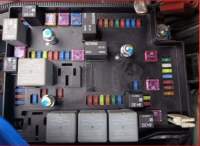
CHEVROLET Trailblazer(SUV) Fuse Box/2012-2015/2nd Generation/Engine Fuse/Relay/Wiring Fuse/2011 2013 2014/EZAuto
₱12,024.00₱19,020.00
![[2014 - 2020] Chevrolet Trailblazer Timing Belt Package - [2014 - 2020] Chevrolet Colorado Timing Belt Package - Genuine GM Auto Parts](https://ph-live.slatic.net/p/d1e84f39a82ec71355fc7e446f9d7073.jpg_200x200q80.jpg)
[2014 - 2020] Chevrolet Trailblazer Timing Belt Package - [2014 - 2020] Chevrolet Colorado Timing Belt Package - Genuine GM Auto Parts
₱13,000.00₱13,500.00

Chevrolet COLORADO or TRAILBLAZER 2013- NON-PROJECTOR Headlight Headlamp Head light Head lamp Passenger side (Right Side)
₱3,750.00₱9,740.00
Audi A4/S4 Car Front Bumper Mesh Hood Grille/2008-2012/Facelift/Honey Comb/Bumper Grille/Bumper Grilles Assembly/2009 2010 2011 EZAuto
₱8,986.00₱12,382.00

Chevrolet Colorado 2016 - 2024 LED DRL Black Headlight Headlamp Head Light Head Lamp Passenger Side (Right Side)
₱9,430.00₱16,910.00

Chevrolet Trailblazer 2017 to 2021 Fender flare Bushwacker
₱9,000.00₱10,000.00

Fuel Pump Assembly (Genuine) For Chevrolet Spark(Matiz) 1.2 (2011-2023)
₱8,761.80₱9,866.00
About Chevrolet
Chevrolet, commonly referred to as Chevy, is an American automobile marque and one of the four principal vehicle brands under General Motors (GM), alongside Buick, GMC, and Cadillac. Established in 1911, Chevrolet has evolved from a small domestic automaker into a major global brand, widely recognised for its pickup trucks, SUVs, performance cars, and mass-market passenger vehicles.2 The brand maintains a significant international footprint; for instance, Chevrolet Philippines notes that the marque is present in 79 countries worldwide.5
Brand overview
| Category | Information |
|---|---|
| Brand | Chevrolet |
| Common nickname | Chevy |
| Founded | 1911 |
| Founders | Louis Chevrolet and William C. Durant |
| Origin | United States |
| Headquarters / GM base | Detroit, Michigan, USA |
| Parent company | General Motors |
| Industry | Automotive |
| Products | Cars, pickup trucks, SUVs, electric vehicles, performance vehicles |
| Famous emblem | Chevrolet Bowtie |
| Notable models | Silverado, Suburban, Tahoe, Equinox, Traverse, Corvette, Camaro |
| Parent since | 1918 |
| Major markets | North America and numerous international markets |
Chevrolet currently serves as one of GM’s four primary automotive marques. The corporation’s broader portfolio also encompasses Buick, GMC, and Cadillac.3
Origins
The history of Chevrolet stems from the partnership between two distinct figures: Louis Chevrolet, a Swiss-born racing driver and engineer, and William C. Durant, the American entrepreneur who originally founded General Motors.
Louis Chevrolet had achieved fame as a racing driver and had previously worked with Buick. Durant recognised both his engineering talent and the commercial value of his name and racing reputation. After losing control of GM in 1910, Durant sought to rebuild his automotive empire.1
On November 3, 1911, the Chevrolet Motor Company was established in Detroit, Michigan, with Louis Chevrolet and William Durant at its helm. Historical records from GM describe Durant and Chevrolet as co-founders of the enterprise.2
The first Chevrolet vehicle was not an affordable family car. Louis Chevrolet’s initial design was the Classic Six, a relatively expensive six-cylinder automobile launched in 1912. However, Durant increasingly wanted Chevrolet to compete in the larger market for affordable automobiles, specifically against Ford’s Model T.2
Integration into General Motors
Chevrolet’s rapid commercial success provided Durant with the means to regain control of General Motors.
In 1916, Durant utilised the growing value of Chevrolet to acquire sufficient GM stock to retake control of the corporation. Two years later, in 1918, Chevrolet formally became part of General Motors as a GM division.2
This integration marked a fundamental turning point in the marque’s history. Rather than remaining an independent manufacturer, Chevrolet became GM’s primary mass-market brand, positioned below the more premium Buick and Cadillac divisions. This strategy eventually enabled GM to offer vehicles across different price points and market segments.
Expansion in the 1920s
During the 1920s, Chevrolet expanded rapidly. The company focused increasingly on affordable vehicles while retaining features that differentiated it from Ford, introducing innovations such as overhead-valve engines and broadening its model range.
By the late 1920s, Chevrolet had become one of America’s major automobile manufacturers. GM’s historical archive notes that Chevrolet reached one million vehicles produced in 1922, while centennial records indicate the brand built approximately one million cars in 1927.1
Chevrolet also began expanding internationally during this period. GM opened its first assembly plant outside North America in Copenhagen, Denmark, in 1923, supporting the broader international expansion of both GM and Chevrolet.1
The Bowtie logo
Perhaps the most recognisable element of Chevrolet’s identity is its Bowtie emblem. The gold-and-chrome Bowtie has become one of the world’s best-known automotive logos, representing Chevrolet across cars, trucks, advertising, racing, and merchandise.
While the exact historical origin of the Bowtie remains debated, the emblem became closely associated with Chevrolet during the early 20th century and has evolved considerably over the decades. Today, the Bowtie is essentially synonymous with the brand.
1930s–1940s: Utility and wartime production
During the 1930s, Chevrolet expanded beyond conventional passenger cars. A particularly significant development was the introduction of the Suburban in 1935. This vehicle helped establish a concept that would eventually become central to Chevrolet: a large, practical vehicle capable of carrying both passengers and cargo.
The Suburban is historically significant because its basic concept—combining passenger transport with substantial cargo capacity—anticipated the modern SUV. Chevrolet continues to sell the Suburban today.
During World War II, Chevrolet, like much of the American automotive industry, shifted substantial manufacturing capacity towards wartime production. Following the war, the brand returned to civilian vehicles, entering the postwar period with an increasingly broad range of automobiles and trucks.
1950s: Modern image and the Corvette
The 1950s were among the most important decades in Chevrolet history. As American consumers increasingly demanded larger, more powerful, and stylish cars, Chevrolet responded with dramatic new designs and increasingly potent engines.
Corvette
The decade produced one of Chevrolet’s most significant automobiles: the Chevrolet Corvette. The first-generation Corvette debuted in 1953 as a two-seat American sports car. It became Chevrolet’s flagship performance automobile and eventually developed into one of America’s most famous sports-car nameplates.
The Corvette’s importance extends beyond sales; it established the notion that an American mass-market automaker could produce a serious sports car capable of competing with European performance cars. The Corvette remains in production today.
The Small-Block V8
Chevrolet’s small-block V8, introduced in 1955, became one of the most influential engines in American automotive history. Its relatively compact dimensions, strong performance, and enormous tuning potential made it popular in everything from ordinary passenger cars to hot rods, racing cars, and performance vehicles.
The small-block V8 became closely associated with Chevrolet performance culture, helping to establish an identity that remains relevant today:
Everyday transportation + American performance + trucks + motorsport
1960s and the muscle-car era
The 1960s transformed Chevrolet into one of the central brands of the American muscle-car era. In 1966, Chevrolet introduced the Camaro, a sporty compact designed partly to compete with Ford’s Mustang. The Camaro quickly became an iconic American performance car.
Other notable Chevrolet performance cars from this era included:
- Chevelle SS
- Impala SS
- Nova
- Corvette
- El Camino
The Camaro and Corvette, in particular, became enduring symbols of American automotive performance.
Chevrolet trucks
Although Chevrolet is famous for sports cars, trucks are arguably even more important to the modern brand. Chevrolet has manufactured trucks for more than a century, gradually developing a major reputation for durability, utility, and towing capability.
Chevrolet Silverado
The most important modern nameplate is the Silverado. Introduced for Chevrolet’s full-size pickup line in 1998, it competes primarily with vehicles such as the Ford F-Series, Ram, Toyota Tundra, and GMC Sierra. The Silverado has become one of Chevrolet’s most important products and a cornerstone of the American pickup market.
SUVs and the Suburban tradition
Chevrolet has also become a major SUV manufacturer. Its SUV lineup has included models such as:
- Suburban
- Tahoe
- Traverse
- Equinox
- Trailblazer
- Blazer
The Suburban holds particular historical significance. Its lineage stretches back to 1935, making it one of the longest-running automotive nameplates in existence. Chevrolet describes its modern lineup as spanning cars, trucks, and SUVs, with technology, safety, and electrification becoming increasingly important to the brand.2
Motorsports
Motorsport has played a major role in Chevrolet’s identity. The brand has participated in numerous forms of racing, including:
- NASCAR
- IndyCar
- Sports-car racing
- Drag racing
- Endurance racing
- American grassroots racing
The Corvette has been particularly important in sports-car racing. Chevrolet’s racing activities have also influenced its road cars; performance technology, engine development, and aerodynamic knowledge gained through competition have contributed significantly to the brand’s performance image.
Cultural significance
During the 20th century, Chevrolet became more than an automobile manufacturer; it became embedded in American popular culture. The brand became associated with several broad concepts:
- Freedom: The automobile as a means of personal mobility.
- America: Chevrolet’s strong connection with American manufacturing and culture.
- Performance: Particularly through Corvette, Camaro, and V8-powered vehicles.
- Trucks: Chevrolet became deeply associated with working vehicles and pickup trucks.
- Family: Vehicles such as the Suburban and Tahoe became common choices for large families.
This broad identity allowed Chevrolet to occupy a much wider market than many specialised automotive brands.
Product philosophy
Historically, Chevrolet’s greatest strength has been its breadth. Rather than specialising in only one type of vehicle, Chevrolet has attempted to cover numerous segments:
Passenger vehicles
Designed for everyday transportation and commuting.
Trucks
Focused on work, towing, hauling, and recreation.
SUVs
Covering everything from compact crossovers to large family vehicles.
Performance cars
Led historically by the Corvette and Camaro.
Electric vehicles
An increasingly important part of Chevrolet’s future strategy.
This broad portfolio aligns with GM’s larger historical philosophy of offering vehicles for different consumers and price levels.1
Electrification
Like the rest of the automotive industry, Chevrolet has been moving towards electrification. The brand has introduced electric models and technologies intended to reduce dependence on traditional gasoline-powered vehicles. Examples include:
- Chevrolet Equinox EV
- Chevrolet Blazer EV
- Chevrolet Silverado EV
Chevrolet’s current corporate messaging emphasises electrification alongside connectivity, safety technology, and vehicle software.2 The electric Silverado is particularly significant because it applies Chevrolet’s electric strategy to one of its most important categories: the full-size pickup truck.
Current status
As of 2026, Chevrolet remains one of General Motors’ four principal automotive brands. GM’s current corporate structure identifies Chevrolet alongside Buick, GMC, and Cadillac, with vehicles marketed under these brands across GM’s North American and international operations.3
Chevrolet’s modern lineup is heavily centred on:
- Pickup trucks
- SUVs
- Electric vehicles
- Performance vehicles
- Family vehicles
- Commercial and utility vehicles
The brand continues to emphasise quality, safety, technology, and innovation in its official positioning.2
There have also been changes to Chevrolet’s international footprint. For example, GM announced in 2026 that it would discontinue Chevrolet sales in mainland China while continuing certain production and export activities through its joint-venture structure.4
Notable models
Some of the most historically significant Chevrolet nameplates include:
| Model | Significance |
|---|---|
| Classic Six | One of Chevrolet’s earliest automobiles |
| Suburban | Historic large SUV; introduced in 1935 |
| Corvette | Chevrolet’s iconic American sports car |
| Bel Air | Symbol of 1950s American automotive design |
| Impala | Major full-size Chevrolet |
| Camaro | Iconic American pony/muscle car |
| Chevelle | Famous 1960s–70s muscle car |
| El Camino | Car/pickup hybrid |
| Silverado | Chevrolet’s flagship full-size pickup |
| Tahoe | Major full-size SUV |
| Equinox | High-volume crossover SUV |
| Blazer | Historic SUV name revived for the modern market |
Corvette vs. Camaro
Two names are particularly important to Chevrolet’s performance history.
Corvette
The Corvette is Chevrolet’s dedicated sports-car line, emphasising performance, engineering, and sports-car technology. The modern Corvette has evolved dramatically from the original 1953 model. The C8 generation, introduced for the 2020 model year, moved to a mid-engine layout, representing one of the biggest technical changes in Corvette history.
Camaro
The Camaro was designed as a sporty, relatively affordable performance car and became a major rival to the Ford Mustang. Unlike the Corvette, the Camaro was positioned as a performance-oriented coupe that could serve as a more accessible everyday car. Chevrolet discontinued the sixth-generation Camaro after the 2024 model year, ending the latest production run of the nameplate.
Role within General Motors
Chevrolet occupies a unique position within GM. Historically, GM used different brands to target different portions of the market. Chevrolet became the company’s broadest mass-market brand, while Buick and Cadillac occupied progressively more premium territory, and GMC focused primarily on trucks and utility vehicles.
Today, Chevrolet remains crucial to GM’s global automotive business. In simple terms:
- Chevrolet: GM’s broad consumer/performance/truck brand
- GMC: GM’s truck and utility-focused brand
- Buick: GM’s premium-oriented brand
- Cadillac: GM’s luxury/performance brand
This positioning makes Chevrolet one of the foundations of the entire GM organisation.
Global presence
Although Chevrolet is strongly associated with the United States, it has never been exclusively American. GM expanded Chevrolet internationally throughout the 20th century, and the brand has had significant markets across the Americas, Asia, the Middle East, and other regions.
Chevrolet’s international presence has varied substantially over time. In some countries, it is a major mainstream brand, while in others, GM has reduced or ended direct Chevrolet sales. For example, Chevrolet has historically been particularly important in North America and Latin America, while its presence in Europe and Asia has changed considerably over the decades.
Chevrolet Philippines currently describes the brand as having a presence in 79 countries, illustrating the international reach Chevrolet has developed since its founding.5
Brand identity
Chevrolet’s identity can essentially be summarised through five themes:
🇺🇸 American
The brand has deep roots in American automotive culture.
🛻 Trucks
Silverado and other truck models are central to Chevrolet’s modern business.
🏎️ Performance
Corvette, Camaro, V8 engines, and motorsport provide Chevrolet with a strong performance heritage.
👨👩👧👦 Family
Suburban, Tahoe, Traverse, and Equinox give Chevrolet a strong family-vehicle presence.
⚡ Innovation
Electrification, advanced driver-assistance systems, connectivity, and vehicle software are increasingly important to the brand.2
Major milestones
| Year | Event |
|---|---|
| 1911 | Chevrolet founded by Louis Chevrolet and William Durant |
| 1912 | Classic Six enters production |
| 1916 | Durant uses Chevrolet to regain control of GM |
| 1918 | Chevrolet becomes a GM division |
| 1922 | Chevrolet reaches one million vehicles produced |
| 1923 | GM begins European assembly operations in Copenhagen |
| 1935 | Suburban introduced |
| 1953 | Corvette introduced |
| 1955 | Chevrolet’s famous small-block V8 debuts |
| 1966 | Camaro introduced |
| 1998 | Silverado name introduced for Chevrolet’s full-size pickup |
| 2020 | C8 Corvette begins its mid-engine era |
| 2020s | Chevrolet expands its electric-vehicle lineup |
| 2026 | Chevrolet remains one of GM’s four principal brands |
Historical dates are based primarily on GM’s heritage materials and Chevrolet’s official history pages.1
Competitive distinction
Chevrolet’s primary competitive advantage has historically been its combination of range and heritage. A single brand can offer a buyer an affordable crossover, a large family SUV, a pickup truck, a sports car, and an electric vehicle, all while maintaining a common brand identity.
Few automotive brands possess Chevrolet’s combination of:
- More than a century of history
- A major pickup-truck business
- A legendary sports-car nameplate
- Long-running SUV nameplates
- Mass-market vehicles
- Motorsport heritage
- A globally recognised logo
- The backing of General Motors
Summary
Chevrolet is one of the foundational brands of the American automobile industry. Its history began in 1911 with the partnership between racing driver and engineer Louis Chevrolet and businessman William C. Durant. After becoming part of General Motors in 1918, Chevrolet developed into GM’s principal mass-market brand.2
Over the following century, Chevrolet built an unusually diverse automotive legacy. The Suburban helped establish the large utility-vehicle concept; the Corvette became an American sports-car icon; the Camaro became a symbol of the muscle-car era; and the Silverado became one of America’s most important pickup trucks.
Today, Chevrolet is transitioning from a primarily gasoline-powered portfolio towards a mixture of internal-combustion, hybrid-related technologies in selected markets, and fully electric vehicles, while retaining the truck, SUV, and performance heritage that has defined the brand for generations.
Chevrolet is a century-old American automotive brand whose identity combines mainstream transportation, trucks, SUVs, performance, and increasingly electric technology under the iconic Bowtie emblem.