Shop on Lazada
Mega Prime products
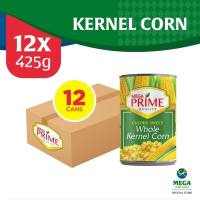
Mega Prime Kernel Corn Easy Open Can 425G By 12S
₱674.00
Buy on Lazada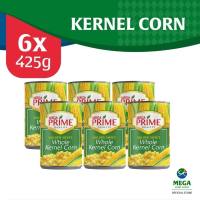
Mega Prime Kernel Corn Easy Open Can 425G By 6S
₱325.00
Buy on Lazada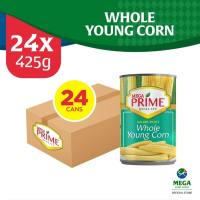
Mega Prime Young Corn Whole Easy Open Can 425G By 24S
₱1,847.00
Buy on Lazada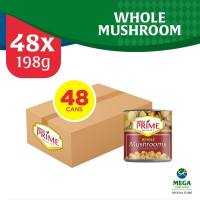
Mega Prime Whole Mushroom Easy Open Can 198G By 48S
₱2,145.00
Buy on Lazada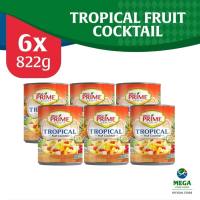
Mega Prime Tropical Fruit Cocktail In Extra Light Syrup 822G By 6S
₱784.00
Buy on Lazada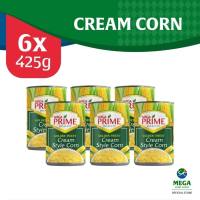
Mega Prime Cream Corn Easy Open Can 425G By 6S
₱337.00
Buy on Lazada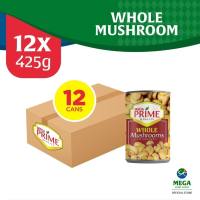
Mega Prime Whole Mushroom Easy Open Can 425G By 12S
₱903.00
Buy on Lazada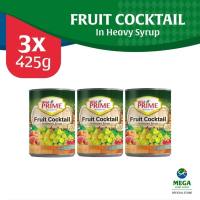
Mega Prime Fruit Cocktail Regular In Heavy Syrup Easy Open Can 425G By 3S
₱225.00
Buy on LazadaAbout Mega Prime
Overview
Mega Prime is a prominent Filipino food brand associated with Mega Prime Foods Inc. (MPFI), a major Philippine food manufacturer and the entity behind the broader Mega portfolio. The brand is particularly recognized for its range of canned and packaged food products, including canned vegetables and fruits, sauces, noodles, and other pantry staples. Mega Prime Foods describes its mission as providing Filipinos with food that is affordable, delicious, nutritious, accessible, and consistently innovative 1.
The Mega Prime brand forms part of a larger business history that began with fishing operations in the Philippines in 1975 and eventually developed into Mega Global Corporation. The company entered the consumer canned-food market with Mega Sardines in 2000, expanded into tuna and other categories, and subsequently established Mega Prime Foods Inc. as a dedicated food-manufacturing subsidiary in 2022 1.
| Category | Information |
|---|---|
| Brand | Mega Prime |
| Country of origin | Philippines |
| Industry | Food and consumer packaged goods |
| Associated company | Mega Prime Foods Inc. |
| Parent/business group | Mega Global Corporation |
| Headquarters | Quezon City, Philippines |
| Major categories | Canned vegetables, canned fruits, sauces, noodles, and other packaged foods |
| Related brands | Mega Sardines, Mega Tuna, Mega Creations, Mega Mackerel, Primo |
| Company origins | 1975 |
| Mega Sardines launch | 2000 |
| Mega Prime food-category entry | 2017 |
| Mega Prime Foods Inc. established | 2022 |
According to the company’s official history, Mega Global entered the canned fruits and vegetables category in 2017 with Mega Prime Quality. It subsequently expanded its portfolio into sauces and noodles in 2018 and other food categories in later years 1.
History
Early Origins
The history behind Mega Prime can be traced to 1975, when the business began as Wilmar Fishing in the Bicol region of the Philippines. The company’s early activities focused on fishing and supplying fish to the Philippine food-processing industry 1.
In 1995, the fishing operation relocated to Zamboanga, one of the Philippines’ major centers for sardine fishing, and became Mega Fishing Corporation. The business subsequently moved toward controlling more of the seafood-processing chain rather than simply supplying fish to other canneries 1.
A major step came in 1998, when the company began building its own canning facility in Zamboanga. The plant became operational in 2000 1.
Launch of Mega Sardines
In 2000, the company entered the consumer canned-food market with Mega Sardines. The product was positioned around the concept of providing fresh sardines in a can, supported by the company’s rapid fishing-to-processing system 1.
The company subsequently developed a distinctive manufacturing system known as its 12-Hour Catching-to-Canning Process, designed to minimize the time between catching the fish and processing it. This process became one of the most recognizable features of the Mega brand 1.
Mega also introduced packaging and processing innovations during the 2000s and 2010s, including easy-tear packaging, easy-open cans, fish-pump technology, and the use of zero-degree chilled seawater 1.
Expansion Beyond Sardines
The company gradually expanded beyond sardines.
In 2015, it launched Mega Tuna, entering the canned tuna market. According to the company’s history, Mega Tuna was made using 100% real tuna without extenders 1.
In 2017, Mega entered the canned fruits and vegetables category with Mega Prime Quality. This was an important development because it moved the Mega portfolio beyond its traditional seafood focus and into everyday pantry products 1.
The following year, in 2018, the company expanded further with Mega Prime Choices, covering sauces and noodles 1.
Mega Prime Foods Inc.
The corporate structure behind the brand changed significantly in 2022.
Mega Global Corporation introduced Mega Prime Foods Inc. (MPFI) as a new subsidiary, separating the consumer-food business from the fishing fleet and canning-operations side of the broader organization. The company described MPFI as its largest subsidiary and established it to professionalize its corporate structure and prepare for future growth 1.
Today, Mega Prime Foods Inc. manages the broader Mega consumer-food portfolio. Its official website lists brands and product lines including Mega Sardines, Mega Tuna, Mega Creations, Mega Prime, Mega Mackerel, and Primo 1.
Products and Product Categories
Mega Prime is positioned primarily as an everyday grocery and pantry brand rather than a single-product brand.
Its portfolio has included products in categories such as:
- Canned vegetables
- Canned fruits
- Sauces
- Noodles
- Canned seafood
- Frozen seafood
- Other packaged food products
The broader Mega portfolio also includes Mega Sardines and Mega Tuna, allowing the company to serve several different parts of the Filipino household pantry 1.
This expansion reflects a broader strategy: instead of being identified solely with canned sardines, Mega has sought to become a multi-category Filipino food company.
Brand Positioning
Mega Prime Foods positions its products around several characteristics:
Affordability.
The company emphasizes food products that provide value for Filipino consumers.
Nutrition.
Its stated purpose includes providing nutritious food and contributing to healthier Filipino households 1.
Accessibility.
The company says nutritious food should be accessible to Filipinos, making mass-market availability an important part of its positioning 1.
Quality.
Quality control and product standards are emphasized throughout Mega Prime Foods’ corporate materials.
Innovation.
Innovation has historically been a major part of the company’s identity, from its catching-to-canning technology to new packaging and product categories 1.
“Malasakit” Philosophy
One of the central concepts associated with Mega is “Malasakit,” a Filipino word broadly associated with deep care, concern, and compassion for others.
Mega Prime Foods identifies Malasakit as one of its core values, alongside:
- God-Centered
- Innovative Mindset
- Customer Mindfulness
- Integrity
The company says these principles guide both its business operations and its relationship with employees, customers, and communities 1.
This philosophy is also reflected in the company’s corporate-social-responsibility initiatives, including Mega Cares, Mega Shares, and its Mega Bigay Sustansya nutrition program 1.
Manufacturing and Innovation
A particularly important part of Mega’s corporate identity is its connection to fishing and manufacturing rather than simply food-brand marketing.
The company developed a vertically integrated system in which fishing, cold preservation, transportation, and canning are closely connected. Its signature 12-hour catching-to-canning process is designed to shorten the time between harvesting sardines and sealing them in cans 1.
Mega’s documented innovations include:
- Fish Pump Technology
- Zero-degree Chilled Sea Water
- Easy-open cans
- Easy-tear packaging
- Rapid catching-to-canning operations
- Zero-waste manufacturing initiatives
The company has described these technologies as important to maintaining freshness and product quality while improving manufacturing efficiency 1.
Corporate Expansion
Mega’s growth has also involved significant expansion of its physical infrastructure.
The company established a second canning plant in Talisayan, Zamboanga, in 2012. In 2019, it opened a Mega Global Distribution Center in Valenzuela. In 2023, Mega opened a manufacturing plant in Batangas 1.
These developments supported the company’s transition from a primarily seafood-focused operation into a broader consumer-food manufacturer.
Leadership
Mega Prime Foods is led by a new generation of the Tiu Lim family, which has been involved in the development of the business.
The company’s current leadership page identifies:
- Michelle Tiu Lim-Chan — Chief Executive Officer
- Malcolm Tiu Lim — Chief Technical and Innovations Officer
- Marvin Tiu Lim — Chief Growth and Development Officer
- Mark Tiu Lim — Chief Spiritual and People Officer 1
The company’s history and leadership structure reflect its origins as a family-founded Philippine enterprise and its transition into a larger professionally structured food company 1.
Corporate Identity
An important distinction is that “Mega,” “Mega Prime,” and “Mega Prime Foods Inc.” are not exactly interchangeable terms.
- Mega is the overarching consumer brand family.
- Mega Prime is one of the food brands/product lines within that portfolio.
- Mega Prime Foods Inc. (MPFI) is the corporate entity responsible for the consumer-food portfolio.
- Mega Global Corporation is the broader business group from which MPFI developed 1.
This distinction is particularly useful because older references to the company’s products may identify Mega Global Corporation as the organization behind Mega products, whereas newer corporate materials use Mega Prime Foods Inc.
Timeline
| Year | Development |
|---|---|
| 1975 | Wilmar Fishing established in Bicol |
| 1995 | Fishing operation relocated to Zamboanga and became Mega Fishing Corporation |
| 1998 | First Mega-owned canning plant began construction |
| 2000 | Mega Sardines launched |
| 2006 | Easy-tear sardine pouch introduced |
| 2011 | 12-hour catching-to-canning process and other manufacturing innovations highlighted |
| 2012 | Second canning plant established in Talisayan |
| 2014 | Company renamed Mega Global Corporation |
| 2015 | Mega Tuna launched |
| 2017 | Mega entered canned fruits and vegetables with Mega Prime Quality |
| 2018 | Mega Prime Choices sauces and noodles launched |
| 2019 | Mega Global Distribution Center opened in Valenzuela |
| 2021 | Primo beverage line and Mega Premium frozen-seafood line introduced |
| 2022 | Mega Prime Foods Inc. established as Mega Global’s largest subsidiary |
| 2023 | Mega manufacturing plant opened in Batangas |
| 2025 | Mega marked its 50th anniversary 1 |
Significance in the Philippines
Mega has become strongly associated with the Filipino mass-market food sector, particularly through Mega Sardines. The company itself has described Mega Sardines as the country’s No. 1 sardines brand, citing market research such as AC Nielsen’s 2015 retail audit and Kantar WorldPanel’s 2020 data 1.
The significance of Mega Prime’s broader strategy is that it represents a shift from a single-category canned-seafood business toward a diversified Filipino consumer-food company. Its products are designed around familiar, affordable pantry staples that can be incorporated into everyday Filipino meals.
In that sense, Mega Prime is not simply a canned-food label. It is part of a larger Filipino food-business ecosystem built around fishing, food manufacturing, distribution, consumer brands, innovation, and community programs.