Shop on Lazada
Method products
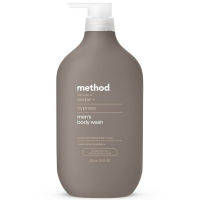
Method BodyWash | Method Men - 532 ml
₱1,349.00
Buy on Lazada
Method Men Body Wash 18 Oz Naturally Derived - Cruelty Free
₱1,590.00₱3,000.00
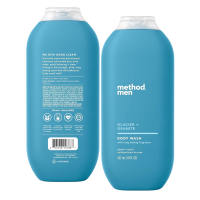
Method Men Body Wash 18oz Plant Based Cleansers Paraben & Phthalates Free
₱899.00₱1,250.00
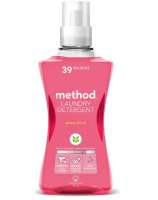
Method Concentrated Laundry Detergent Peony Blush Orchard Fruit 39 Washes 1.56 Liters- USA Goods
₱699.00₱1,099.00
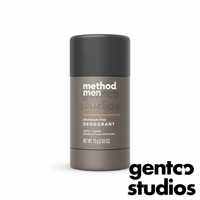
Method Mens Aluminum-Free Deodorant - 75g
₱1,074.00₱1,300.00
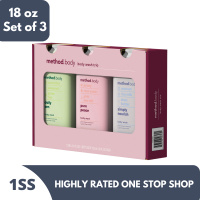
Method Body Wash Trio 3 x 18 oz
₱2,278.00₱2,599.00
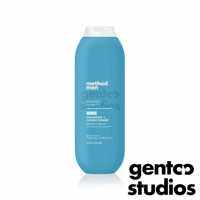
Method Men 2-in-1 Shampoo + Conditioner - 414ml
₱1,136.00₱1,500.00
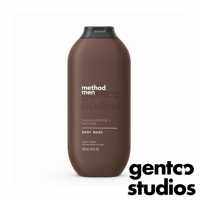
Method Men Body Wash 532ml - Paraben and Phthalate Free
₱1,136.00₱1,300.00
About Method
Method is an American household and personal-care brand best known for cleaning products that combine modern design, distinctive fragrances, effective formulas, and an emphasis on environmental considerations. The brand is particularly associated with colourful, minimalist packaging and the concept that cleaning products can be both functional and aesthetically pleasing. Today, Method is part of SC Johnson, the family-owned consumer-products company behind brands such as Windex, Glade, Pledge, Raid, and Ziploc.
Overview
| Information | |
|---|---|
| Brand name | Method |
| Industry | Household cleaning & personal care |
| Founded | 2001 |
| Founders | Adam Lowry and Eric Ryan |
| Original location | San Francisco, California, U.S. |
| Parent company | SC Johnson |
| Main categories | Home cleaning, dish care, laundry, hand wash, body care |
| Brand positioning | Design-conscious, effective, more environmentally considerate cleaning |
| Notable characteristics | Colourful packaging, fragrances, pump bottles, sustainability initiatives |
The brand was founded in 2001 by Adam Lowry and Eric Ryan. Lowry had a background in chemical engineering and environmental thinking, while Ryan brought experience in design and marketing. Their complementary skills became central to Method’s identity: Lowry focused on formulation and environmental impact, while Ryan focused on making cleaning products desirable and visually appealing.1
History
Founding
Method emerged at a time when household cleaning products were generally marketed as purely utilitarian items. Cleaning bottles tended to be hidden beneath sinks or in utility closets, while environmental positioning was often separated from mainstream consumer design.
Ryan and Lowry took a different approach. Their core idea was that people should not have to choose between an attractive product, an effective cleaner, and a product designed with environmental considerations in mind.
The founders have described their complementary roles by noting that Ryan understood consumers wanted cleaning products they would not mind displaying, while Lowry brought expertise in chemistry and environmental considerations.1 Consequently, the company treated the product itself as part of the consumer experience rather than merely a container for cleaning chemicals.
Early growth
Method initially concentrated on products such as hand soaps and household cleaners. Its distinctive packaging and branding helped it stand out from conventional cleaning brands. The company also benefited from distribution through major retailers, including Target, allowing Method to bring its design-oriented approach to a mass-market audience. McKinsey reported that Method reached approximately $100 million in sales relatively quickly after its founding.
Ecover acquisition
In 2012, Belgian green-cleaning company Ecover acquired Method. The deal helped Ecover expand its presence in the North American market and created one of the larger environmentally positioned cleaning-products groups at the time.2
Acquisition by SC Johnson
In 2017, SC Johnson acquired the Ecover and Method brands. This was a significant transition because Method moved from being an independent, sustainability-focused challenger brand to becoming part of a much larger multinational household-products company. Method remains a distinct brand within the SC Johnson portfolio.
Brand philosophy
Method’s philosophy can be summarised as making everyday cleaning products effective, attractive, enjoyable to use, and more thoughtfully designed. The company deliberately moved away from the traditional image of cleaning products as harsh-smelling industrial chemicals.
Instead, Method emphasises:
- Design — bottles are intended to look good enough to leave on a countertop.
- Fragrance — scent is an important part of the consumer experience.
- Usability — pump bottles, ergonomic shapes, and straightforward application are central to many products.
- Effectiveness — environmental positioning is not supposed to mean sacrificing cleaning performance.
- Ingredient consideration — the company evaluates ingredients for human-health and environmental considerations.
- Packaging innovation — Method has invested heavily in recycled and recyclable materials.
- Transparency — the company communicates information about ingredients and sustainability initiatives.
This combination is one reason Method is often discussed as an example of design-led disruption in the household-products industry.
Product categories
Method has expanded well beyond its original household-cleaning products.
Hand wash
Hand soap is one of Method’s most recognisable categories. Products include foaming hand wash, gel hand wash, refills, and various fragrances. The brand uses fragrance, colour, and bottle design heavily in this category, turning an ordinary sink-side product into part of the visual appearance of a bathroom or kitchen. SC Johnson also states that Method’s aluminium hand-wash dispensers can be refilled using tubs made with recycled plastic content.
Dish soap
Method sells dishwashing products designed around the same philosophy as its hand washes. Its dish-care range includes dish soap, pump dish soap, refills, and grease-fighting formulas. The packaging is particularly recognisable because of its pump-style bottles.3
Surface cleaners
Surface cleaning is another major part of Method’s portfolio. Products include all-purpose cleaners, glass cleaners, bathroom cleaners, tub and tile cleaners, shower cleaners, and antibacterial cleaners. The brand differentiates many of these products through fragrance and packaging rather than relying solely on conventional “industrial-strength” imagery.3
Laundry
Method also produces laundry detergents and related products. Its laundry packaging has become one of the brand’s recognisable product designs. SC Johnson reports that Method’s laundry-detergent bottles have been made from 100% post-consumer recycled plastic since 2021.
Personal care
Method has extended into personal-care products, including body and skin-care items. This extension aligns strategically with the brand’s original proposition—pleasant design, fragrance, and everyday sustainability—which applies to products used on the body as well as around the home. SC Johnson Professional also lists Method personal-care products alongside its professional cleaning portfolio.3
Design identity
Design is arguably Method’s most distinctive characteristic. Traditional cleaning brands historically emphasised messages such as power, disinfecting, toughness, and chemical effectiveness. Method helped popularise a different visual language centred on colour, simplicity, fragrance, lifestyle, and design.
Its bottles are often brightly coloured, sculptural, and minimalist. Rather than hiding them underneath the sink, consumers are encouraged to treat them almost like objects that belong on the counter. This was strategically important because the bottle itself became advertising. Instead of a consumer seeing a generic cleaning bottle, Method attempted to make the package recognisable from across the room. The result is a brand identity that is closer to contemporary consumer lifestyle brands than to traditional chemical-product companies.
Packaging
Packaging is a major component of Method’s sustainability strategy. Method states that it has transitioned its clear plastic packaging to 100% recycled recovered coastal plastic through SC Johnson’s partnership with Plastic Bank, with certain product-specific exceptions. The recovered plastic is collected through programmes designed to prevent plastic from entering oceans and landfills.4
SC Johnson says that more than 60% of Method’s plastic packaging uses post-consumer recycled (PCR) plastic, while Method hand-wash and laundry-detergent bottles have been made from 100% PCR plastic since 2021. The brand also promotes refill systems in some categories, particularly hand wash.
Sustainability
Sustainability is one of Method’s defining characteristics, although it is important to distinguish the brand’s claims and initiatives from the broader question of how environmentally sustainable any consumer cleaning product ultimately is. Method describes sustainability as an ongoing process rather than something it considers “finished.” Its current approach emphasises reducing waste and pollution; increasing recycled materials; designing products for a more circular economy; responsible ingredient selection; packaging reduction and reuse; responsible sourcing; and transparency.4
Recycled materials
One of Method’s most visible initiatives is its use of recycled plastic. Its partnership with Plastic Bank, through SC Johnson, is intended to collect plastic in communities near coastlines. Method says the programme has created hundreds of collection locations across countries including Indonesia, the Philippines, Thailand, and Brazil.4
Ingredients
Method says it evaluates ingredients based not simply on whether they are “natural” or “synthetic,” but on their broader environmental and human-health considerations. An interesting example is palm oil. Method notes that although plant-derived ingredients are sometimes perceived as automatically better, poorly sourced palm oil can contribute to deforestation and biodiversity loss. The company says it uses RSPO-certified sustainable palm oil while working towards alternatives.4
Certifications and partnerships
Method highlights several certifications and partnerships, including:
- Forest Stewardship Council (FSC) for relevant paper products;
- Leaping Bunny for its animal-testing policy;
- Ellen MacArthur Foundation involvement in circular-economy initiatives;
- Plastic Bank for recovered coastal plastic programmes.4
Manufacturing
A particularly notable part of Method’s history is its manufacturing facility in Chicago’s Pullman neighbourhood. Method opened a manufacturing plant there in 2015. The facility was notable not only because it brought manufacturing back into an urban area but also because the company incorporated environmental considerations into the facility’s design. The factory became part of Method’s broader brand story: sustainability was presented as something that should influence not just the bottle on a store shelf but also the way the product was manufactured.
Relationship with SC Johnson
Method today needs to be understood in the context of its ownership by SC Johnson. SC Johnson is a family-owned company headquartered in Racine, Wisconsin, with a history dating to 1886. The company owns a large portfolio of household brands, including Windex, Glade, Pledge, Raid, Ziploc, Scrubbing Bubbles, Mr Muscle, Method, Ecover, and Mrs. Meyer’s Clean Day.
Method therefore operates as a specialised brand within a much larger consumer-products company. This gives Method access to SC Johnson’s manufacturing capabilities, distribution network, research and development, supply chain, sustainability programmes, and international infrastructure. At the same time, Method retains its own distinctive branding and product identity.
Marketing strategy
Method’s marketing strategy is notable because it essentially reframed cleaning as a lifestyle category. Rather than stating “Our cleaner is powerful,” Method’s brand language tends to communicate ideas closer to “Cleaning can be beautiful, pleasant and responsible.” This distinction is subtle but commercially important.
The “against dirty” idea
Method became associated with the slogan “people against dirty,” turning “dirty” into the enemy rather than positioning the company around harsh chemicals or technical cleaning terminology. The company’s founders themselves are described on Method’s official site as the “brainparents” of Method and the people behind the “against dirty” concept.1 This gives the brand an unusually playful personality for a household-cleaning company.
Target market
Method primarily appeals to consumers who care about a combination of household cleanliness, product aesthetics, pleasant fragrances, ingredient awareness, sustainability, and modern lifestyle branding. Its positioning has historically been particularly attractive to younger, design-conscious consumers who might otherwise view household cleaning products as boring commodities. The key insight is that Method does not sell only the cleaning function; it sells an experience surrounding cleaning.
Competitive landscape
Method operates in a highly competitive market. Its competitors vary depending on the category and country, but the broader competitive landscape includes traditional cleaning giants and environmentally positioned brands such as Seventh Generation, Mrs. Meyer’s Clean Day, Ecover, Clorox, Lysol, Mr. Clean, Windex, and Dawn.
Method’s differentiation is not simply “eco-friendly cleaning.” Its strongest point of differentiation is the combination of sustainability, design, fragrance, lifestyle branding, and mainstream distribution. That combination is what made Method particularly influential.
Why Method became important
Method’s significance goes beyond its individual products. Before Method, the cleaning-products industry was heavily dominated by functional messaging. Method demonstrated that a cleaning product could compete through industrial design, branding, packaging, fragrance, and consumer experience. In other words, Method helped turn “a bottle of soap” into “a designed consumer product.”
That shift influenced the broader household-products market. Competitors increasingly adopted better-looking packaging, more sophisticated fragrances, sustainability claims, refill systems, and lifestyle-oriented marketing. Its approach is therefore often cited as an example of how design can disrupt a mature consumer-products category.
Criticism and limitations
A balanced overview should also mention that Method’s environmental positioning does not mean its products have zero environmental impact. Cleaning products still involve manufacturing, chemical ingredients, plastic or other packaging, transportation, water consumption, consumer disposal, and energy use. “Natural,” “plant-based,” “green,” or “eco-friendly” are also not interchangeable concepts, and environmental performance depends on the complete product lifecycle.
Method itself acknowledges that sustainability is an ongoing process and describes areas where it continues to improve.4 This is particularly relevant because the brand’s marketing has historically emphasised sustainability strongly. Evaluating Method therefore requires looking beyond its visual “green” identity at specific ingredients, packaging materials, certifications, and lifecycle impacts.
Brand personality
If Method were a person, its personality would probably be modern, playful, optimistic, design-conscious, environmentally aware, approachable, non-corporate in tone, and slightly irreverent. This is deliberately different from the stereotypical image of a household-cleaning company as clinical, technical, or utilitarian.
Key milestones
| Year | Event |
|---|---|
| 2001 | Adam Lowry and Eric Ryan found Method |
| 2000s | Method grows through distinctive design, sustainability positioning and retail distribution |
| 2012 | Ecover acquires Method |
| 2015 | Method opens its Pullman manufacturing facility in Chicago |
| 2017 | SC Johnson acquires Method and Ecover |
| 2021 | Method hand-wash and laundry bottles move to 100% PCR plastic, according to SC Johnson |
| Today | Method operates as part of SC Johnson’s global brand portfolio |
Summary
Method is a U.S.-founded household and personal-care brand established in 2001 by Adam Lowry and Eric Ryan. The company challenged conventional cleaning-product marketing by combining effective cleaning formulas with distinctive industrial design, appealing fragrances, and sustainability-oriented product development. Its products span hand wash, dish soap, surface cleaners, laundry, and personal care. After being acquired by Ecover in 2012, Method was acquired by SC Johnson in 2017 and now operates as one of SC Johnson’s consumer brands. Method’s identity remains strongly associated with colourful minimalist packaging, design-led branding, recycled-material packaging, and efforts towards more circular product systems.1
Method’s core idea
If reduced to one sentence, Method’s fundamental innovation was making cleaning products feel less like chemical commodities and more like beautifully designed lifestyle products—while attempting to reduce their environmental footprint. That is essentially the reason Method became one of the most recognisable “green design” brands in household cleaning.