Shop on Lazada
Miba products

Miba | Miba Ion Calcium Squeaky Clean Total Cleansing 500ml
₱1,006.37₱1,532.45
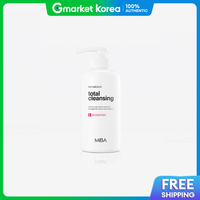
Miba | Miba Ion Calcium Squeaky Clean Total Cleansing 500ml
₱1,011.58₱1,528.49

Miba | Ion Calcium Water Drop Moisture Cream 100ml
₱866.65₱1,314.19

Miba | Skin Doctor Miba Ion Calcium T-Zero Shampoo 500ml
₱1,046.33₱1,563.49

Miba | Miba Ion Calcium Sun Care
₱893.16₱1,334.62

Miba | Miba King Cushion Season 3 / Ion Calcium Foundation Double Cushion Glow / 25g
₱1,657.08₱2,506.03
About Miba
Overview
Miba is an Austrian industrial technology group that develops and manufactures functionally critical components for the energy value chain. Its technologies are utilized across transportation, power generation, power transmission, energy storage, industrial machinery, and e-mobility sectors. Headquartered in Laakirchen, Upper Austria, the company has evolved from a small metalworking and vehicle-repair workshop into a global industrial enterprise.1
| Field | Information |
|---|---|
| Company | Miba |
| Legal group | Miba Group |
| Industry | Industrial manufacturing / engineering / energy technology |
| Founded | 1927 |
| Founder | Franz Mitterbauer |
| Headquarters | Laakirchen, Upper Austria, Austria |
| Brand introduced | 1955 |
| Name origin | Derived from the Mitterbauer family name |
| Main focus | Functionally critical components and technologies |
| Employees | About 7,400 worldwide |
| Sites | About 30 worldwide |
| Revenue | About €1.2 billion in the latest company figures |
| Major markets | Automotive, commercial vehicles, aviation, marine, energy, industrial equipment and e-mobility |
The company defines its business scope as encompassing technologies for the generation, transmission, storage, and use of energy. Key product categories include powder-metal components, bearings, friction materials, power-electronics components, coatings, and e-mobility solutions.
History
1927–1949: Foundation and early development
The history of Miba dates to 1927, when Franz Mitterbauer, then under 22 years of age, acquired a small metalworking shop in Laakirchen, Austria. The enterprise initially concentrated on general metalworking and mechanical repairs before expanding into motor-vehicle repair.1
In 1935, Mitterbauer officially registered the motor-vehicle repair business, which employed five staff members at the time. A significant technological milestone occurred in 1949 with the successful production of competitive lead-bronze engine bearings. The industrial manufacture of these bearings marked the transition of the company from a local repair service to a specialized component manufacturer.
1955: Establishment of the Miba brand
The Miba brand name was introduced in 1955. According to corporate records, the name is an abbreviation derived from the Mitterbauer family surname.1 By this period, the company had commenced international exports of its engine bearings, establishing the foundation for its future development as a global supplier.
1960s–1980s: Diversification
Over subsequent decades, Miba diversified its portfolio beyond engine bearings into sintered-metal technology, friction materials, industrial components, coatings, and specialized manufacturing technologies. A dedicated sinter plant opened in Vorchdorf, Austria, in 1972. In 1975, the company acquired the friction-materials business of the German firm Duria and relocated production to Vorchdorf.
Following the death of founder Franz Mitterbauer in 1983, his son Peter Mitterbauer assumed the role of chairman of the management board. Miba subsequently went public in 1986 through the issuance of non-voting preferred shares.
International expansion
From the late 1980s onwards, Miba expanded its manufacturing footprint internationally through greenfield investments and acquisitions in the United States, Brazil, China, India, Germany, Slovakia, and other European markets. Significant milestones in this expansion include:
- 1990: Serial production of sputter bearings began, and sintered-metal operations expanded into Slovakia.
- 1998: Acquisition of a 30% stake in a Brazilian sintered-component operation.
- 2001: Acquisition of an engine-bearing plant in McConnelsville, Ohio, USA.
- 2005: Establishment of Advanced Bearing Materials in the United States and acquisition of a coatings business that became High Tech Coatings.
- 2007: Opening of Miba Precision Components China in Suzhou for the production of engine bearings and sintered components.
- 2010: Expansion into high-power resistors, cooling systems, coatings, and additional friction-material technologies.
- 2011: Investment in Sintercom India to expand sintered-component production for the Indian automotive market.
This strategic growth transformed Miba from a domestic Austrian manufacturer into a global supplier of specialized industrial components.
Current strategic focus
While historically identified as an automotive component manufacturer, Miba now positions itself around the energy value chain. Its technologies aim to enhance the efficiency, reliability, and sustainability of systems involved in generating, transmitting, storing, and consuming energy. Components are deployed in diverse applications including:
- Cars and commercial vehicles
- Ships and marine engines
- Aircraft and aerospace systems
- Agricultural and construction machinery
- Power grids and wind turbines
- Battery and energy-storage systems
- Power-electronics systems
- Industrial machinery
The company typically operates as a business-to-business (B2B) supplier; while consumers may not encounter the Miba brand directly on finished goods, its components are often critical to the operational integrity and efficiency of the equipment.
Main technology areas
Bearings
Bearings represent one of Miba’s longest-standing areas of expertise, originating with the production of lead-bronze bearings in 1949. These technologies are currently used in engines and demanding mechanical systems requiring low friction and high durability. In 2018, the company expanded into industrial bearings through the acquisition of the Industrial Bearings segment of the John Crane Group, adding production facilities in the United States and Germany.
Powder-metal and sintered components
Miba is a specialist in powder metallurgy, a process involving the pressing and sintering of metal powders to create complex components with controlled material properties. These sintered components serve both automotive and industrial applications. The company established its dedicated sintering facility in Vorchdorf in 1972 and has since expanded this capability internationally.
Friction materials
Friction technology constitutes another core business area. Miba Frictec was established as a dedicated division in 1989 following the separation of friction-material manufacturing from sintered-metal operations. These materials are essential for clutches, brakes, transmissions, and heavy-duty equipment in agriculture, construction, and off-road sectors.
Coatings
Specialized surface coatings are developed to improve component performance and service life, particularly under conditions of high temperature, friction, wear, corrosion, or extreme mechanical load. Miba entered this field in the 2000s and inaugurated a High Tech Coatings competence center in Vorchdorf in 2008.
Power electronics
As electrical systems become more sophisticated, Miba has expanded into power-electronics components. In 2010, the company acquired an Austrian manufacturer of high-power resistors and a specialist in cooling systems for electronic components. These technologies support electrical power conversion, thermal management, and energy systems.
E-mobility and battery technology
Miba has increasingly focused on electromobility and energy storage. In 2022, Miba Battery Systems opened the VOLTfactory® #01 facility in Bad Leonfelden, Austria. Covering approximately 3,900 m², this plant represents a strategic shift from traditional combustion-engine components toward electrification and battery production technologies.
Energy transition strategy
Miba’s strategic direction has shifted from a historical focus on internal combustion engines to a broader engagement with the energy transition. The current framework encompasses energy generation, transmission, storage, conversion, and efficient use, covering both conventional and renewable energy sources.
In 2021, the company introduced the “Miba 100” strategy to guide development toward its centenary in 2027. This roadmap emphasizes sustainable and profitable growth through technologies aligned with the energy value chain.
Key milestones
| Year | Milestone |
|---|---|
| 1927 | Franz Mitterbauer takes over the metalworking shop in Laakirchen |
| 1935 | Motor-vehicle repair business officially registered |
| 1949 | Industrial production of lead-bronze engine bearings begins |
| 1955 | Miba brand name introduced |
| 1972 | Sinter plant opens in Vorchdorf |
| 1975 | Entry into friction-materials business |
| 1983 | Peter Mitterbauer succeeds founder Franz Mitterbauer |
| 1986 | Miba goes public |
| 1989 | Miba Frictec established |
| 1990 | Sputter bearings enter serial production; expansion into Slovakia |
| 2005 | Advanced Bearing Materials and High Tech Coatings activities established/acquired |
| 2007 | Manufacturing expansion into China |
| 2010 | Expansion into resistors, cooling systems and additional friction technologies |
| 2011 | Expansion into India |
| 2017 | 90th anniversary celebrated; Miba Forum headquarters opens |
| 2018 | Entry into industrial bearings via John Crane acquisition |
| 2021 | Miba 100 strategy introduced |
| 2022 | VOLTfactory® #01 battery-production facility opens |
| 2023 | Revenue exceeds €1 billion for the first time |
| 2024 | Several businesses, including EBG and DAU, renamed under the Miba brand |
For the 2022/23 business year, Miba reported revenue of €1.114 billion, surpassing the €1 billion threshold for the first time. Under its growth strategy, the company targets revenue of €1.5 billion by 2027.
Ownership and corporate structure
Despite its international scale, Miba retains a strong family-business heritage. Founded by Franz Mitterbauer and later led by his son Peter Mitterbauer, the company saw F. Peter Mitterbauer succeed as chairman of the management board in 2013. In 2015, Miba withdrew its stock-exchange listing to return to a private-company structure. This combination of family ownership, long-term industrial investment, and global operations remains central to the corporate identity.
Global presence
Miba maintains manufacturing and operational sites across multiple regions. Current corporate data indicates approximately 7,400 employees and 30 sites worldwide, with revenue figures cited at roughly €1.2 billion. The international footprint has been developed progressively through greenfield investments, acquisitions, and joint ventures. The company operates primarily as a B2B technology and component supplier rather than a consumer-facing brand.
Functional significance
The industrial importance of Miba stems from the functionally critical nature of its products. Although components such as bearings, friction materials, and power-electronic parts may be small relative to entire engines or turbines, their failure can result in significant equipment downtime. Consequently, the company prioritizes reliability, efficiency, durability, material science, precision manufacturing, and sustainability. These attributes contribute to the efficient generation, transmission, storage, and utilization of energy across various sectors.
Brand etymology
The name Miba is not an acronym for a specific technology or product but was created in 1955 from the Mitterbauer family name. Over time, it has come to signify a broader industrial identity combining Austrian engineering heritage, materials technology, precision manufacturing, and energy technology.
Evolution summary
- 1927: Small metalworking shop
- 1935: Vehicle repair business
- 1949: Engine-bearing manufacturer
- 1955: Miba brand established
- 1970s–1980s: Expansion into bearings, sintered metals, and friction materials
- 1990s–2000s: International expansion
- 2010s: Diversification into coatings and power electronics
- 2020s: Focus on energy systems, batteries, e-mobility, and power electronics
- 2027: Centenary anniversary and Miba 100 strategy target