Shop on Lazada
Mielle Organics products
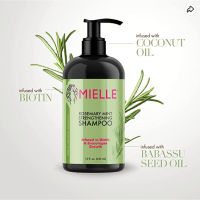
Mielle Organics Rosemary Mint Strengthening Shampoo/Hair Strengthening Oil/Hair Strengthening Masque
₱589.95₱1,399.00
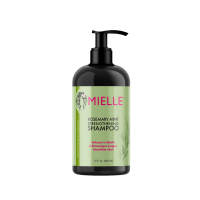
MIELLE ORGANICS Rosemary Mint Scalp & Hair Strengthening Oil Shampoo Dry Scalp Split
₱590.00₱1,090.00
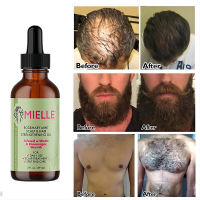
Mielle Rosemary Oil Original Hair Growth Serum Hair Strengthening Scalp Treatment Split Ends Treatment 59ml
₱289.00₱578.00
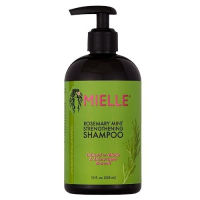
Mielle Organics Rosemary Mint Scalp & Hair Strengthening Oil 59ml Rosemary Oil
₱469.00₱998.00
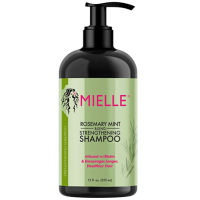
Mielle Organics Rosemary Mint Strengthening Shampoo/Hair Strengthening Oil/Hair Strengthening Masque/Conditiomer
₱438.32₱999.00
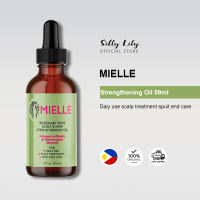
Mielle Hair Oil with Rosemary & Mint Nourishes Strengthens Hair Oil For Dry Damaged Hair Lightweight Non-Greasy 59ml
₱238.00₱476.00
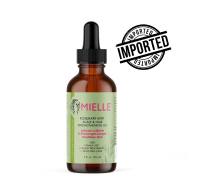
Mielle Organics Rosemary Oil - Authentic Imported from US
₱1,350.00
Buy on Lazada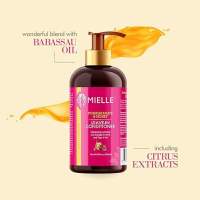
Mielle Organics Pomegranate & Honey Leave-In Conditioner Moisturizing Curl Primer and Detangler Repair Damage and Prevent Frizz Treatment For Thick Curly Hair Type 4 Hair 12-Fluid Ounces
₱1,350.00₱1,500.00
About Mielle Organics
Mielle Organics is an American beauty and hair-care brand best known for products formulated for textured, curly, coily, and natural hair. Founded in 2014 by entrepreneur and registered nurse Monique Rodriguez, the company grew from a home-based concept into a globally distributed beauty label.1 It has become particularly influential within the Black beauty and natural-hair-care market by combining botanical ingredients, hair-care education, social-media marketing, and community-focused initiatives.1
Today, Mielle Organics operates as an independent subsidiary of Procter & Gamble’s (P&G) Beauty business, following P&G’s agreement to acquire the brand announced in January 2023.1 Monique Rodriguez remains the company’s founder and CEO, while her husband, Melvin Rodriguez, serves as co-founder and COO.1
History
Founding
Mielle Organics was founded in 2014 by Monique Rodriguez, a registered nurse and mother who became interested in developing better hair-care solutions while addressing her own hair challenges.1 According to the company’s account, Rodriguez began experimenting with ingredients in her kitchen to address issues involving hair health, moisture, and growth. What began as a personal project eventually developed into a commercial beauty business.1
The original philosophy behind Mielle Organics centred on the idea that healthy ingredients contribute to healthier hair. This became closely associated with the company’s “root to results” approach and its emphasis on botanical ingredients.
Early growth
Mielle Organics initially gained traction through social media, word-of-mouth recommendations, beauty influencers, and educational content. Rather than positioning itself simply as another shampoo-and-conditioner company, the brand built a community around natural-hair education. This was particularly significant during the growth of the natural-hair movement in the 2010s, when more consumers were seeking products specifically formulated for curls, coils, and protective styles.
The company’s strategy combined ingredient-focused product development, education about textured-hair care, social-media and influencer marketing, community engagement, and products aimed at Black women and other consumers with textured hair. The company eventually expanded from a relatively small entrepreneurial venture into a major multicultural beauty brand.
Founders
Monique Rodriguez
Monique Rodriguez is the founder and CEO of Mielle Organics. Before becoming an entrepreneur, she worked as a registered nurse. Her experience as a consumer with textured hair became an important part of the founding story; Rodriguez has described starting the business from her kitchen while experimenting with ingredients to solve her own hair-care problems.1 Her leadership also became part of the broader identity of Mielle Organics as a Black-founded and woman-led beauty company.
Melvin Rodriguez
Melvin Rodriguez, Monique’s husband, is a co-founder and has served as chief operating officer (COO). Together, the couple built the business and developed its commercial and community strategy.
Products and product philosophy
The portfolio of Mielle Organics is primarily focused on hair care, although the brand’s broader positioning includes beauty and scalp care. The company emphasises formulations containing botanical and other functional ingredients. Its current product philosophy is based on ingredient-rich formulas, scalp health, hydration, and performance.
Major product categories include:
- Shampoos
- Conditioners
- Leave-in conditioners
- Hair oils
- Scalp treatments
- Hair masks and deep conditioners
- Curl creams
- Styling gels
- Edge products
- Detanglers
- Moisturizers
- Scalp-care products
The current portfolio is organized around several collections, including Rosemary Mint, Pomegranate & Honey, Kalahari Melon & Aloe Vera, Lavender & Lychee, Babassu & Mint, Avocado & Tamanu, Mango & Tulsi, Sea Moss, and Rice Water.
Rosemary Mint collection
One of the most recognizable product families from Mielle Organics is its Rosemary Mint line. The collection includes products such as:
- Rosemary Mint Scalp & Hair Strengthening Oil
- Rosemary Mint Strengthening Shampoo
- Rosemary Mint Strengthening Conditioner
- Rosemary Mint Strengthening Leave-In Conditioner
- Rosemary Mint hair and scalp treatments
The Rosemary Mint Scalp & Hair Strengthening Oil became particularly recognizable and is one of the products most closely associated with the brand. Mielle Organics states that the Rosemary Mint Oil was launched in 2017 and has been used by millions of consumers.1 The popularity of this collection helped make the brand recognizable beyond the traditional natural-hair market.
Pomegranate & Honey collection
Another major franchise is Pomegranate & Honey, which is especially associated with products for curly and coily hair. The collection includes products such as:
- Pomegranate & Honey Leave-In Conditioner
- Pomegranate & Honey Detangling Shampoo
- Pomegranate & Honey Detangling Conditioner
- Styling and moisturizing products
The collection is designed around moisture, detangling, and curl definition, making it particularly relevant to consumers with highly textured hair.
Target market
Mielle Organics historically positioned itself strongly toward Black women and consumers with textured hair, although the company says its products can be used by people with all hair types.1 Its core consumer base includes people with:
- Type 3 curly hair
- Type 4 coily hair
- Natural hair
- Chemically treated hair
- Protective styles
- Braids and twists
- Locs
- Dry or highly porous hair
- Scalp-care concerns
The branding has traditionally placed particular emphasis on Black women’s beauty experiences, representation, and community.
Brand identity
A major part of the success of Mielle Organics has been its ability to connect product marketing with cultural identity. Rather than marketing solely around technical claims, the company has frequently presented hair care as part of self-confidence, Black beauty, community, sisterhood, hair education, natural-hair acceptance, and individual expression. This can be seen in campaigns such as “From One Queen to Another,” which used the idea of women sharing beauty knowledge with one another and positioned product recommendations as a form of community and sisterhood.
“Healthy ingredients” positioning
Mielle Organics has historically emphasized the relationship between ingredients and hair health. Its brand messaging revolves around the idea that effective hair care begins with carefully selected ingredients. The company’s current mission describes its formulas as ingredient-rich and focused on scalp health, hydration, and visible results.
The brand’s visual and marketing language frequently highlights ingredients such as rosemary, mint, pomegranate, honey, babassu, avocado, tamanu, aloe vera, Kalahari melon, rice water, and sea moss. Importantly, “natural” or botanical ingredients should not automatically be interpreted as meaning a product is completely natural or organic in the regulatory sense. Marketing has historically emphasized natural and botanical ingredients, while products are formulated cosmetic products containing multiple ingredients.
Retail expansion
Growth was accompanied by significant expansion into mainstream retail. The brand has been sold through major U.S. retailers including Target, Walmart, CVS, Walgreens, Ulta Beauty, and Sally Beauty, alongside beauty-supply stores and other retailers. In its 2023 announcement, Mielle Organics said its products were available in more than 100,000 U.S. stores.1
Current company information states that the brand has expanded to more than 87 countries and more than 100,000 stores across the United States.
Investment and financial growth
Before joining P&G, Mielle Organics attracted outside investment during its rapid expansion. The company received funding from the New Voices Fund for Women of Color and subsequently received a nine-figure investment from Berkshire Partners, according to the 2023 announcement by Mielle Organics and P&G.
This investment was significant because the brand became an example of a Black-founded consumer brand achieving substantial institutional investment in an industry where Black female founders have historically faced significant barriers to capital.
Acquisition by Procter & Gamble
One of the most important events in the history of Mielle Organics occurred in January 2023, when Procter & Gamble announced that the brand would join P&G Beauty. P&G described the transaction as part of its effort to expand its portfolio and reach more consumers with textured hair.
The deal was especially notable because Mielle Organics had remained closely associated with Black entrepreneurship and the textured-hair community.
Mielle after P&G
Mielle Organics did not simply disappear into the P&G portfolio. Under the announced structure, the brand operates as an independent subsidiary of P&G Beauty, with Monique Rodriguez continuing as CEO and Melvin Rodriguez as COO.1 The current website continues to describe the company as Black-founded and Black-led, with Rodriguez continuing to lead the brand.
Current messaging also emphasizes that the partnership with P&G provides additional resources for expansion, research, innovation, and distribution.
Mielle Cares
Community investment has been another important component of the company’s identity. The Rodriguez family established Mielle Cares, a nonprofit initiative focused on supporting Black and Brown communities, particularly through education and economic opportunity.
When the P&G partnership was announced in 2023, both Mielle Organics and P&G committed $10 million each to expand the impact of Mielle Cares. This meant the partnership was presented not only as a commercial transaction but also as a mechanism for expanding the company’s community-oriented initiatives.
Innovation
Although Mielle Organics is strongly associated with botanical ingredients, the brand has also increasingly emphasized research, formulation technology, and product innovation. P&G has highlighted innovation work including products such as the Avocado & Tamanu Anti-Frizz Collection, which uses a proprietary “Cold Application Technology” approach, and the Rosemary Mint Scalp & Edge Cleansing Oil.
This reflects a broader evolution in the brand: from a small natural-hair company built around ingredient storytelling toward a larger beauty organization combining botanical ingredients with modern cosmetic formulation and R&D capabilities.
Manufacturing
Mielle Organics currently states that its products are made in the United States using globally sourced ingredients. This distinction is important: “made in the USA” does not mean that every raw material originates in the United States. The company explicitly describes its ingredients as globally sourced.
Relationship with the natural-hair movement
The development of Mielle Organics is closely connected to the growth of the natural-hair movement in the United States. Historically, mainstream beauty companies often offered relatively limited choices for consumers with tightly curled or coily hair. Brands such as Mielle Organics helped fill this gap by creating products and educational content specifically oriented toward textured hair.
The brand therefore became more than a conventional product company; it participated in a broader shift in beauty culture toward greater representation of Black consumers, acceptance of natural textures, specialized textured-hair formulations, Black-owned beauty entrepreneurship, community-driven beauty marketing, and social-media-led product discovery.
Controversies and public discussion
Mielle Organics has faced public discussion and scrutiny as the company grew. One major topic has involved consumer concerns about whether formulations changed after the P&G partnership. The company currently states that it has not changed the formulas of its favorite products since the 2023 P&G partnership and says that its manufacturing and quality-control processes remain subject to ongoing evaluation.
This distinction is important when discussing the brand: claims circulating online about product changes or effects should not automatically be treated as established facts. The current product-safety statement specifically addresses these concerns and maintains that formulas were not changed following the partnership.
Why Mielle became successful
The rise of Mielle Organics can be understood through several factors working together:
- A clearly defined consumer need — The company focused heavily on textured hair rather than attempting to serve everyone from the beginning.
- Strong founder story — Monique Rodriguez’s transition from registered nurse to beauty entrepreneur gave the company a distinctive entrepreneurial narrative.
- Ingredient-led branding — Ingredients became a major part of how consumers understood and remembered the products.
- Social-media marketing — The brand benefited from the way consumers discover and recommend hair products through social platforms.
- Community building — A relationship with consumers was developed that extended beyond individual products.
- Influencer and word-of-mouth marketing — Product recommendations helped turn individual products into recognizable “hero” products.
- Retail expansion — Placement in major retailers made the products accessible to a much larger audience.
- Cultural relevance — The brand emerged during a period when representation and specialized products for Black consumers were becoming increasingly important within mainstream beauty.
- Investment and corporate resources — Outside investment and eventually P&G’s infrastructure enabled the company to expand its reach considerably.
Current positioning
As of 2026, Mielle Organics presents itself as a global textured-hair brand focused on “every curl and every crown.” Its current mission emphasizes scalp health, hydration, ingredient-rich formulas, innovation, and performance.
The company says it now operates across 87+ countries, with 10 collections and distribution through more than 100,000 U.S. stores. Its portfolio has also expanded beyond the original natural-hair niche into a broader textured-hair-care ecosystem encompassing scalp care, daily care, styling, hydration, strengthening, and treatments.
Notable product franchises
Some of the most recognizable product lines include:
- Rosemary Mint — strengthening and scalp-focused products
- Pomegranate & Honey — moisture, detangling, and curl care
- Babassu & Mint — conditioning and moisture
- Avocado & Tamanu — anti-frizz and smoothing
- Kalahari Melon & Aloe Vera — deep hydration
- Mango & Tulsi — hair-strengthening and nourishing products
- Rice Water — strengthening-focused products
- Sea Moss — moisture and nourishment
- Lavender & Lychee — newer scalp-care products
- Essentials — everyday hair-care products
Corporate structure
The simplest way to understand the present corporate structure is:
Mielle Organics → P&G Beauty → Procter & Gamble
However, Mielle Organics continues to maintain its own brand identity rather than being marketed simply as another generic P&G hair-care line. P&G’s original announcement specifically described the brand as operating as an independent subsidiary.
Significance in the beauty industry
Mielle Organics is significant because its story represents the transition of a Black-founded, community-oriented beauty startup into a major global consumer brand. Its trajectory illustrates several broader developments in the beauty industry:
Kitchen startup → social-media brand → natural-hair phenomenon → major retail brand → global beauty company → P&G subsidiary
The company is therefore relevant not only as a hair-care manufacturer but also as a case study in Black entrepreneurship, multicultural marketing, textured-hair innovation, influencer commerce, beauty-industry representation, and the commercialization of the natural-hair movement.